Articles | Volume 4, issue 1
https://doi.org/10.5194/ar-4-265-2026
© Author(s) 2026. This work is distributed under
the Creative Commons Attribution 4.0 License.
the Creative Commons Attribution 4.0 License.
https://doi.org/10.5194/ar-4-265-2026
© Author(s) 2026. This work is distributed under
the Creative Commons Attribution 4.0 License.
the Creative Commons Attribution 4.0 License.
Research article
| 
01 Jul 2026
Research article |
| 01 Jul 2026
| 01 Jul 2026
Nascent titanium-/silicon-containing particle formation in corona-discharge-assisted combustion
Chanakya Bagya Ramesh
Department of Chemical, Environmental, and Materials Engineering, University of Miami, Coral Gables, Florida, 33146, United States
Frank Daoru Han
Department of Mechanical and Aerospace Engineering, Missouri University of Science and Technology, Rolla, Missouri, 65409, United States

Department of Chemical, Environmental, and Materials Engineering, University of Miami, Coral Gables, Florida, 33146, United States
Related authors
Yang Wang, Chanakya Bagya Ramesh, Scott E. Giangrande, Jerome Fast, Xianda Gong, Jiaoshi Zhang, Ahmet Tolga Odabasi, Marcus Vinicius Batista Oliveira, Alyssa Matthews, Fan Mei, John E. Shilling, Jason Tomlinson, Die Wang, and Jian Wang
Atmos. Chem. Phys., 23, 15671–15691, https://doi.org/10.5194/acp-23-15671-2023, https://doi.org/10.5194/acp-23-15671-2023, 2023
Short summary
Short summary
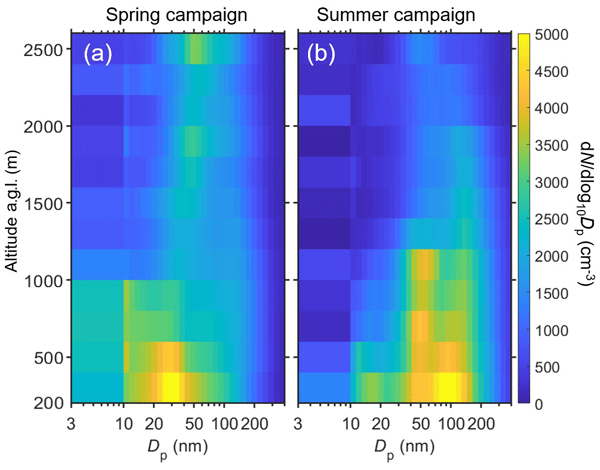
We report the vertical profiles of aerosol properties over the Southern Great Plains (SGP), a region influenced by shallow convective clouds, land–atmosphere interactions, boundary layer turbulence, and the aerosol life cycle. We examined the processes that drive the aerosol population and distribution in the lower troposphere over the SGP. This study helps improve our understanding of aerosol–cloud interactions and the model representation of aerosol processes.
Yuhang Guo, Chongai Kuang, Darielle Dexheimer, Manish Shrivastava, Ogochukwu Enekwizu, Yang Wang, Jingbo Mao, Gan Luo, Fangqun Yu, and Jie Zhang
EGUsphere, https://doi.org/10.5194/egusphere-2026-4905, https://doi.org/10.5194/egusphere-2026-4905, 2026
This preprint is open for discussion and under review for Atmospheric Chemistry and Physics (ACP).
Short summary
Short summary
Aerosol particle size distributions can vary greatly with height, but these vertical changes are rarely measured directly. Using a tethered balloon, we measured particle size distributions from the ground to about 1.2 kilometers in two contrasting environments. We found that atmospheric mixing strongly shapes their vertical structure, storage overnight, and redistribution the next day. These observations improve our understanding of how aerosol populations evolve in the lower atmosphere.
Huiping Lu, Jiaoshi Zhang, Jingyi Zhang, Shengqian Zhou, Yang Wang, Jianguo Liu, and Huaqiao Gui
EGUsphere, https://doi.org/10.5194/egusphere-2026-848, https://doi.org/10.5194/egusphere-2026-848, 2026
Short summary
Short summary
A new deep-learning framework is developed to map the modal parameters of hygroscopic growth factor probability density function (GF-PDF) to raw instrument responses, thereby providing an accurate and efficient solution for parameterizing aerosol hygroscopic properties.
Yang Wang, Chanakya Bagya Ramesh, Scott E. Giangrande, Jerome Fast, Xianda Gong, Jiaoshi Zhang, Ahmet Tolga Odabasi, Marcus Vinicius Batista Oliveira, Alyssa Matthews, Fan Mei, John E. Shilling, Jason Tomlinson, Die Wang, and Jian Wang
Atmos. Chem. Phys., 23, 15671–15691, https://doi.org/10.5194/acp-23-15671-2023, https://doi.org/10.5194/acp-23-15671-2023, 2023
Short summary
Short summary
We report the vertical profiles of aerosol properties over the Southern Great Plains (SGP), a region influenced by shallow convective clouds, land–atmosphere interactions, boundary layer turbulence, and the aerosol life cycle. We examined the processes that drive the aerosol population and distribution in the lower troposphere over the SGP. This study helps improve our understanding of aerosol–cloud interactions and the model representation of aerosol processes.
Qian Xiao, Jiaoshi Zhang, Yang Wang, Luke D. Ziemba, Ewan Crosbie, Edward L. Winstead, Claire E. Robinson, Joshua P. DiGangi, Glenn S. Diskin, Jeffrey S. Reid, K. Sebastian Schmidt, Armin Sorooshian, Miguel Ricardo A. Hilario, Sarah Woods, Paul Lawson, Snorre A. Stamnes, and Jian Wang
Atmos. Chem. Phys., 23, 9853–9871, https://doi.org/10.5194/acp-23-9853-2023, https://doi.org/10.5194/acp-23-9853-2023, 2023
Short summary
Short summary
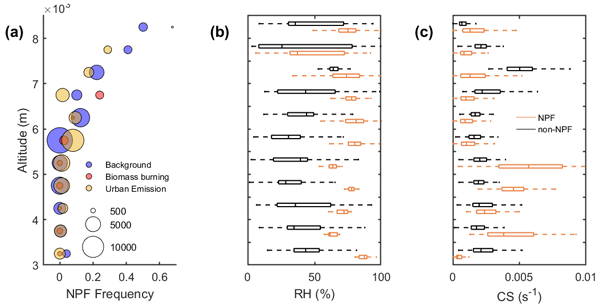
Using recent airborne measurements, we show that the influences of anthropogenic emissions, transport, convective clouds, and meteorology lead to new particle formation (NPF) under a variety of conditions and at different altitudes in tropical marine environments. NPF is enhanced by fresh urban emissions in convective outflow but is suppressed in air masses influenced by aged urban emissions where reactive precursors are mostly consumed while particle surface area remains relatively high.
Weixing Hao, Fan Mei, Susanne Hering, Steven Spielman, Beat Schmid, Jason Tomlinson, and Yang Wang
Atmos. Meas. Tech., 16, 3973–3986, https://doi.org/10.5194/amt-16-3973-2023, https://doi.org/10.5194/amt-16-3973-2023, 2023
Short summary
Short summary
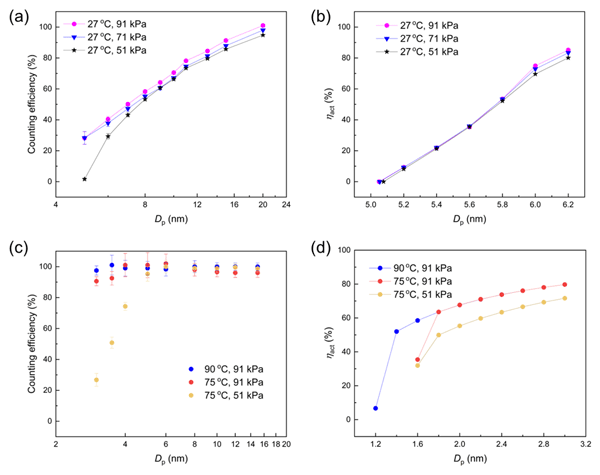
Airborne aerosol instrumentation plays a crucial role in understanding the spatial distribution of ambient aerosol particles. This study investigates a versatile water-based condensation particle counter through simulations and experiments. It provides valuable insights to improve versatile water-based condensation particle counter (vWCPC) aerosol measurement and operation for the community.
Jiaoshi Zhang, Yang Wang, Steven Spielman, Susanne Hering, and Jian Wang
Atmos. Meas. Tech., 15, 2579–2590, https://doi.org/10.5194/amt-15-2579-2022, https://doi.org/10.5194/amt-15-2579-2022, 2022
Short summary
Short summary
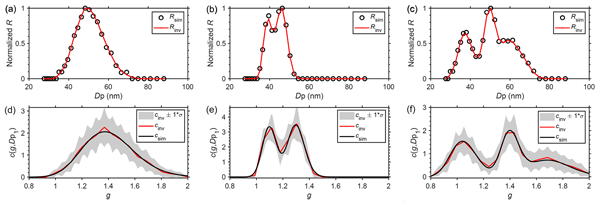
New nonparametric, regularized methods are developed to invert the growth factor probability density function (GF-PDF) from humidity-controlled fast integrated mobility spectrometer measurements. These algorithms are computationally efficient, require no prior assumptions of the GF-PDF distribution, and reduce the error in inverted GF-PDF. They can be applied to humidified tandem differential mobility analyzer data. Among all algorithms, Twomey’s method retrieves GF-PDF with the smallest error.
Jay M. Tomlin, Kevin A. Jankowski, Daniel P. Veghte, Swarup China, Peiwen Wang, Matthew Fraund, Johannes Weis, Guangjie Zheng, Yang Wang, Felipe Rivera-Adorno, Shira Raveh-Rubin, Daniel A. Knopf, Jian Wang, Mary K. Gilles, Ryan C. Moffet, and Alexander Laskin
Atmos. Chem. Phys., 21, 18123–18146, https://doi.org/10.5194/acp-21-18123-2021, https://doi.org/10.5194/acp-21-18123-2021, 2021
Short summary
Short summary
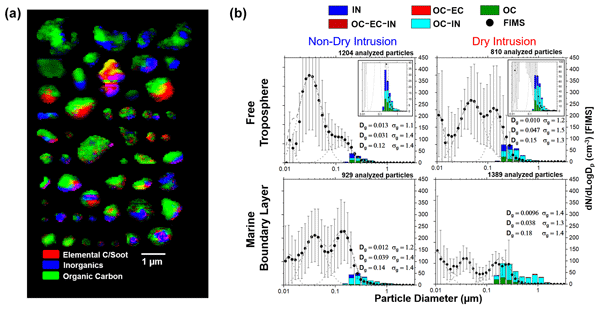
Analysis of individual atmospheric particles shows that aerosol transported from North America during meteorological dry intrusion episodes may have a substantial impact on the mixing state and particle-type population over the mid-Atlantic, as organic contribution and particle-type diversity are significantly enhanced during these periods. These observations need to be considered in current atmospheric models.
Cited articles
Adachi, M., Okuyama, K., and Seinfeld, J. H.: Experimental studies of ion-induced nucleation, J. Aerosol Sci., 23, 327–337, 1992.
Adachi, M., Kusumi, M., and Tsukui, S.: Ion-induced nucleation in nanoparticle synthesis by ionization chemical vapor deposition, Aerosol Sci. Technol., 38, 496–505, https://doi.org/10.1080/02786820490460734, 2004.
Alavi, M., Hamblin, M., Mozafari, M., Rose Alencar de Menezes, I., and Douglas Melo Coutinho, H.: Surface modification of SiO2 nanoparticles for bacterial decontaminations of blood products, Cellular, Molecular and Biomedical Reports, 2, 87–97, https://doi.org/10.55705/cmbr.2022.338888.1039, 2022.
Altendorfner, F., Kuhl, J., Zigan, L., and Leipertz, A.: Study of the influence of electric fields on flames using planar LIF and PIV techniques, P. Combust. Inst., 33, 3195–3201, https://doi.org/10.1016/j.proci.2010.05.112, 2011.
Bagya Ramesh, C. and Wang, Y.: Ions Generated from a Premixed Methane-Air Flame: Mobility Size Distributions and Charging Characteristics, Combust. Sci. Technol., 196, 4041–4056, https://doi.org/10.1080/00102202.2023.2203818, 2024.
Bagya Ramesh, C., Han, F. D., and Wang, Y.: Nascent Titanium/Silicon-Containing Particle Formation in Corona Discharge Assisted Combustion, Zenodo [data set], https://doi.org/10.5281/zenodo.19796408, 2026.
Belhi, M., Domingo, P., and Vervisch, P.: Direct numerical simulation of the effect of an electric field on flame stability, Combust. Flame, 157, 2286–2297, https://doi.org/10.1016/j.combustflame.2010.07.007, 2010.
Bisetti, F. and El Morsli, M.: Calculation and analysis of the mobility and diffusion coefficient of thermal electrons in methane/air premixed flames, Combust. Flame, 159, 3518–3521, https://doi.org/10.1016/j.combustflame.2012.08.002, 2012.
Botero, M. L., Adkins, E. M., González-Calera, S., Miller, H., and Kraft, M.: PAH structure analysis of soot in a non-premixed flame using high-resolution transmission electron microscopy and optical band gap analysis, Combust. Flame, 164, 250–258, https://doi.org/10.1016/j.combustflame.2015.11.022, 2016.
Bradley, D. and Nasser, S. H.: Electrical Coronas and Burner Flame Stability, Combust. Flame, 55, 53–58, https://doi.org/10.1016/0010-2180(84)90148-2, 1984.
Braun, J. H., Baidins, A., and Marganski, R. E.: TiO2 pigment technology: a review, Prog. Org. Coat., 20, 105–138, https://doi.org/10.1016/0033-0655(92)80001-D, 1992.
Carbone, F., Barone, A. C., De Filippo, A., Beretta, F., D'Anna, A., and D'Alessio, A.: Coagulation and Adhesion of Nanoparticles generated in flame from droplets of Nickel Nitrate aqueous solutions, Chem. Eng. Trans., 16, 87–94, 2008.
Carbone, F., Canagaratna, M. R., Lambe, A. T., Jayne, J. T., Worsnop, D. R., and Gomez, A.: Detection of weakly bound clusters in incipiently sooting flames via ion seeded dilution and collision charging for (APi-TOF) mass spectrometry analysis, Fuel, 289, 119820, https://doi.org/10.1016/j.fuel.2020.119820, 2021.
Cha, M. S., Lee, S. M., Kim, K. T., and Chung, S. H.: Soot suppression by nonthermal plasma in coflow jet diffusion flames using a dielectric barrier discharge, Combust. Flame, 141, 438–447, https://doi.org/10.1016/j.combustflame.2005.02.002, 2005.
Commodo, M., Kaiser, K., De Falco, G., Minutolo, P., Schulz, F., D'Anna, A., and Gross, L.: On the early stages of soot formation: Molecular structure elucidation by high-resolution atomic force microscopy, Combust. Flame, 205, 154–164, https://doi.org/10.1016/j.combustflame.2019.03.042, 2019.
De Giorgi, M. G., Ficarella, A., Sciolti, A., Pescini, E., Campilongo, S., and Di Lecce, G.: Improvement of lean flame stability of inverse methane/air diffusion flame by using coaxial dielectric plasma discharge actuators, Energy, 126, 689–706, https://doi.org/10.1016/j.energy.2017.03.048, 2017.
Ehn, A., Petersson, P., Zhu, J. J., Li, Z. S., Aldén, M., Nilsson, E. J. K., Larfeldt, J., Larsson, A., Hurtig, T., Zettervall, N., and Fureby, C.: Investigations of microwave stimulation of a turbulent low-swirl flame, P. Combust. Inst., 36, 4121–4128, https://doi.org/10.1016/j.proci.2016.06.164, 2017.
Fang, J., Wang, Y., Attoui, M., Chadha, T. S., Ray, J. R., Wang, W. N., Jun, Y. S., and Biswas, P.: Measurement of Sub-2 nm clusters of pristine and composite metal oxides during nanomaterial synthesis in flame aerosol reactors, Anal. Chem., 86, 7523–7529, https://doi.org/10.1021/ac5012816, 2014.
Fernández de la Mora, J. and Kozlowski, J.: Hand-held differential mobility analyzers of high resolution for 1–30 nm particles: Design and fabrication considerations, J. Aerosol Sci., 57, 45–53, https://doi.org/10.1016/j.jaerosci.2012.10.009, 2013.
Fialkov, A. B.: Investigations on ions in flames, Prog. Energy Combust. Sci., 23, 399–528, https://doi.org/10.1016/s0360-1285(97)00016-6, 1997.
Friedlander, S. K.: Smoke, Dust, and Haze: Fundamentals of Aerosol Behavior, Oxford University Press, New York, ISBN 9780195129991, 2000.
Galley, D., Pilla, G., Lacoste, D., Ducruix, S., Lacas, F., Veynante, D., and Laux, C. O.: Plasma-Enhanced Combustion of a Lean Premixed Air-Propane Turbulent Flame using a Nanosecond Repetitively Pulsed Plasma, in: 43rd AIAA Aerospace Sciences Meeting and Exhibit, 1193, https://doi.org/10.2514/6.2005-1193, 2005.
Gan, Y., Luo, Y., Wang, M., Shi, Y., and Yan, Y.: Effect of alternating electric fields on the behaviour of small-scale laminar diffusion flames, Appl. Therm. Eng., 89, 306–315, https://doi.org/10.1016/j.applthermaleng.2015.06.041, 2015.
Gröhn, A. J., Pratsinis, S. E., Sánchez-Ferrer, A., Mezzenga, R., and Wegner, K.: Scale-up of nanoparticle synthesis by flame spray pyrolysis: The high-temperature particle residence time, Ind. Eng. Chem. Res., 53, 10734–10742, https://doi.org/10.1021/ie501709s, 2014.
Jang, H. D.: Generation of silica nanoparticles from tetraethylorthosilicate (TEOS) vapor in a diffusion flame, Aerosol Sci. Technol., 30, 477–488, https://doi.org/10.1080/027868299304516, 1999.
Ju, Y. and Sun, W.: Plasma assisted combustion: Dynamics and chemistry, Prog. Energy Combust. Sci., 48, 21–83, https://doi.org/10.1016/j.pecs.2014.12.002, 2015a.
Ju, Y. and Sun, W.: Plasma assisted combustion: Progress, challenges, and opportunities, Combust. Flame, 162, 529–532, https://doi.org/10.1016/j.combustflame.2015.01.017, 2015b.
Kammler, H. K., Jossen, R., Morrison, P. W., Pratsinis, S. E., and Beaucage, G.: The effect of external electric fields during flame synthesis of titania, Powder Technol., 135–136, 310–320, https://doi.org/10.1016/j.powtec.2003.08.023, 2003.
Kim, S. K., Chang, H., Cho, K., Kil, D. S., Cho, S. W., Jang, H. D., Choi, J. W., and Choi, J.: Enhanced photocatalytic property of nanoporous TiO2/SiO 2 micro-particles prepared by aerosol assisted co-assembly of nanoparticles, Mater. Lett., 65, 3330–3332, https://doi.org/10.1016/j.matlet.2011.02.028, 2011.
Larriba, C., Hogan, C. J., Attoui, M., Borrajo, R., Garcia, J. F., and De La Mora, J. F.: The mobility-volume relationship below 3.0 nm examined by tandem mobility-mass measurement, Aerosol Sci. Technol., 45, 453–467, https://doi.org/10.1080/02786826.2010.546820, 2011.
Li, S., Ren, Y., Biswas, P., and Tse, S. D.: Flame aerosol synthesis of nanostructured materials and functional devices: Processing, modeling, and diagnostics, Prog. Energy Combust. Sci., 55, 1–59, https://doi.org/10.1016/j.pecs.2016.04.002, 2016.
Li, Y. H., Chen, C. T., and Fang, H. K.: Effects of a microwave-induced corona discharge plasma on premixed methane-air flames, Energy, 188, 116007, https://doi.org/10.1016/j.energy.2019.116007, 2019.
Liao, Y. H. and Zhao, X. H.: Plasma-Assisted Stabilization of Lifted Non-premixed Jet Flames, Energy and Fuels, 32, 3967–3974, https://doi.org/10.1021/acs.energyfuels.7b03940, 2018.
Liu, B. Y. H. and Yeh, H.-C.: On the Theory of Charging of Aerosol Particles in an Electric Field, J. Appl. Phys., 39, 1396–1402, https://doi.org/10.1016/0021-9797(69)90368-3, 1968.
Lovejoy, E. R., Curtius, J., and Froyd, K. D.: Atmospheric ion-induced nucleation of sulfuric acid and water, J. Geophys. Res.-Atmos., 109, D08204, https://doi.org/10.1029/2003JD004460, 2004.
Mäkelä, J. M., Jokinen, V., Mattila, T., Ukkonen, A., and Keskinen, J.: Mobility distribution of acetone cluster ions, J. Aerosol Sci., 27, 175–190, https://doi.org/10.1016/0021-8502(95)00560-9, 1996.
Nanomaterials Market Size And Share Report, https://www.grandviewresearch.com/industry-analysis/nanotechnology-and-nanomaterials-market (last access: 22 June 2025), 2025.
Niu, F., Li, S., Zong, Y., and Yao, Q.: Catalytic behavior of flame-made Pd/TiO2 nanoparticles in methane oxidation at low temperatures, J. Phys. Chem. C, 118, 19165–19171, https://doi.org/10.1021/jp504859d, 2014.
Ohisa, H., Kimura, I., and Horisawa, H.: Control of Soot Emission of a Turbulent Diffusion Flame by DC or AC Corona Discharges, Combust. Flame, 116, 653–661, 1999.
Pratsinis, S. E.: Flame aerosol synthesis of ceramic powders, Prog. Energy Combust. Sci., 24, 197–219, https://doi.org/10.1016/S0360-1285(97)00028-2, 1998.
Ren, Y., Cui, W., and Li, S.: Electrohydrodynamic instability of premixed flames under manipulations of dc electric fields, Phys. Rev. E, 97, 013103, https://doi.org/10.1103/PhysRevE.97.013103, 2018.
Rittler, A., Deng, L., Wlokas, I., and Kempf, A. M.: Large eddy simulations of nanoparticle synthesis from flame spray pyrolysis, P. Combust. Inst., 36, 1077–1087, https://doi.org/10.1016/j.proci.2016.08.005, 2017.
Rosocha, L. A., Coates, D. M., Platts, D., and Stange, S.: Plasma-enhanced combustion of propane using a silent discharge, Phys. Plasmas, 11, 2950–2956, https://doi.org/10.1063/1.1688788, 2004.
Saito, M., Arai, T., and Arai, M.: Control of Soot Emitted from Acetylene Diffusion Flames by Applying an Electric Field, Combust. Flame, 119, 356–366, 1999.
Schulz, F., Commodo, M., Kaiser, K., De Falco, G., Minutolo, P., Meyer, G., D'Anna, A., and Gross, L.: Insights into incipient soot formation by atomic force microscopy, P. Combust. Inst., 37, 885–892, https://doi.org/10.1016/j.proci.2018.06.100, 2019.
Serrano-Bayona, R., Chu, C., Liu, P., and Roberts, W. L.: Flame Synthesis of Carbon and Metal-Oxide Nanoparticles: Flame Types, Effects of Combustion Parameters on Properties and Measurement Methods, Materials, 16, 1192, https://doi.org/10.3390/ma16031192, 2023.
Siefering, K. L. and Griffin, G. L.: Growth Kinetics of CVD TiO2: Influence of Carrier Gas, J. Electrochem. Soc., 137, 1206–1208, https://doi.org/10.1149/1.2086632, 1990.
Spicer, P. T., Artelt, C., Sanders, S., and Pratsinis, S. E.: Flame synthesis of composite carbon black-fumed silica nanostructured particles, J. Aerosol Sci., 29, 647–659, https://doi.org/10.1016/S0021-8502(97)10023-4, 1998.
Su, H. C., Goyal, H., Clark, L., Kook, S., Hawkes, E., Chan, Q. N., Padala, S., Le, M. K., and Ikeda, Y.: In-Cylinder Soot Reduction Using Microwave Generated Plasma in an Optically Accessible Small-Bore Diesel Engine, SAE Technical Papers, 2018-01-0246, https://doi.org/10.4271/2018-01-0246, 2018.
Tang, Y., Simeni Simeni, M., Yao, Q., and Adamovich, I. V.: Non-premixed counterflow methane flames in DC/AC/NS electric fields, Combust. Flame, 240, 112051, https://doi.org/10.1016/j.combustflame.2022.112051, 2022.
Thimsen, E., Rastgar, N., and Biswas, P.: Nanostructured TiO2 films with controlled morphology synthesized in a single step process: Performance of dye-sensitized solar cells and photo watersplitting, J. Phys. Chem. C, 112, 4134–4140, https://doi.org/10.1021/jp710422f, 2008.
Ude, S. and De La Mora, J. F.: Molecular monodisperse mobility and mass standards from electrosprays of tetra-alkyl ammonium halides, J. Aerosol Sci., 36, 1224–1237, https://doi.org/10.1016/j.jaerosci.2005.02.009, 2005.
Vemury, S. and Pratsinis, S. E.: Corona-assisted flame synthesis of ultrafine titania particles, Appl. Phys. Lett., 66, 3275–3277, https://doi.org/10.1063/1.113402, 1995.
Veronesi, S., Commodo, M., Basta, L., De Falco, G., Minutolo, P., Kateris, N., Wang, H., D'Anna, A., and Heun, S.: Morphology and electronic properties of incipient soot by scanning tunneling microscopy and spectroscopy, Combust. Flame, 243, 111980, https://doi.org/10.1016/j.combustflame.2021.111980, 2022.
Vincent-Randonnier, A., Larigaldie, S., Magre, P., and Sabel'nikov, V.: Experimental study of a methane diffusion flame under dielectric barrier discharge assistance, IEEE T. Plasma Sci., 35, 223–232, https://doi.org/10.1109/TPS.2007.893249, 2007.
Vishnyakov, V. I., Kiro, S. A., and Ennan, A. A.: Heterogeneous ion-induced nucleation in thermal dusty plasmas, J. Phys. D Appl. Phys., 44, 215201, https://doi.org/10.1088/0022-3727/44/21/215201, 2011.
Wang, Y.: Sub 2 nm Particle Characterization in Systems with Aerosol Formation and Growth, Ph.D. thesis, Washington University in St. Louis, USA, 276 pp., https://doi.org/10.7936/K7BV7F1F, 2017.
Wang, Y., Fang, J., Attoui, M., Chadha, T. S., Wang, W. N., and Biswas, P.: Application of Half Mini DMA for sub 2 nm particle size distribution measurement in an electrospray and a flame aerosol reactor, J. Aerosol Sci., 71, 52–64, https://doi.org/10.1016/j.jaerosci.2014.01.007, 2014.
Wang, Y., Liu, P., Fang, J., Wang, W. N., and Biswas, P.: Kinetics of sub-2 nm TiO2 particle formation in an aerosol reactor during thermal decomposition of titanium tetraisopropoxide, J. Nanopart. Res., 17, 147, https://doi.org/10.1007/s11051-015-2964-y, 2015.
Wang, Y., Sharma, G., Koh, C., Kumar, V., Chakrabarty, R., and Biswas, P.: Influence of flame-generated ions on the simultaneous charging and coagulation of nanoparticles during combustion, Aerosol Sci. Technol., 51, 833–844, https://doi.org/10.1080/02786826.2017.1304635, 2017a.
Wang, Y., Kangasluoma, J., Attoui, M., Fang, J., Junninen, H., Kulmala, M., Petäjä, T., and Biswas, P.: Observation of incipient particle formation during flame synthesis by tandem differential mobility analysis-mass spectrometry (DMA-MS), P. Combust. Inst., 36, 745–752, https://doi.org/10.1016/j.proci.2016.07.005, 2017b.
Wang, Y., Kangasluoma, J., Attoui, M., Fang, J., Junninen, H., Kulmala, M., Petäjä, T., and Biswas, P.: The high charge fraction of flame-generated particles in the size range below 3 nm measured by enhanced particle detectors, Combust. Flame, 176, 72–80, https://doi.org/10.1016/j.combustflame.2016.10.003, 2017c.
Xiong, G., Kulkarni, A., Dong, Z., Li, S., and Tse, S. D.: Electric-field-assisted stagnation-swirl-flame synthesis of porous nanostructured titanium-dioxide films, P. Combust. Inst., 36, 1065–1075, https://doi.org/10.1016/j.proci.2016.08.079, 2017.
Yang, Y., Chen, H., Li, C., and Wang, P.: Ion induced nucleation of charged droplets enhanced by external electric field, Phys. Plasmas, 31, https://doi.org/10.1063/5.0196881, 2024.
Zhao, B., Yang, Z., Wang, J., Johnston, M. V., and Wang, H.: Analysis of soot nanoparticles in a laminar premixed ethylene flame by scanning mobility particle sizer, Aerosol Sci. Technol., 37, 611–620, https://doi.org/10.1080/02786820300908, 2003.
Zhao, H., Liu, X., and Tse, S. D.: Control of nanoparticle size and agglomeration through electric-field- enhanced flame synthesis, J. Nanopart. Res., 10, 907–923, https://doi.org/10.1007/s11051-007-9330-7, 2008.
Short summary
We have attempted for the first time to elucidate the mechanism of inorganic particle formation and growth in sub-10 nm size. Results show that by introducing corona discharge into a flame, based on precursor concentration, we can either promote or suppress particle formation and growth. This can help better understand the effect of plasmas on combustion synthesis of nanoparticles.
We have attempted for the first time to elucidate the mechanism of inorganic particle formation...


Altmetrics
Final-revised paper
Preprint