Articles | Volume 4, issue 2
https://doi.org/10.5194/ar-4-345-2026
© Author(s) 2026. This work is distributed under
the Creative Commons Attribution 4.0 License.
the Creative Commons Attribution 4.0 License.
https://doi.org/10.5194/ar-4-345-2026
© Author(s) 2026. This work is distributed under
the Creative Commons Attribution 4.0 License.
the Creative Commons Attribution 4.0 License.
Research article
| 
20 Jul 2026
Research article |
| 20 Jul 2026
| 20 Jul 2026
From seeding to detachment: leveraging deep learning to quantify the transport of tyre wear microplastics in a wind tunnel
Bashir Olasunkanmi Ayinde
CORRESPONDING AUTHOR

Micrometeorology Group, University of Bayreuth, Bayreuth, Germany
Wolfgang Babel
Micrometeorology Group, University of Bayreuth, Bayreuth, Germany
Bayreuth Centre for Ecology and Environmental Research, University of Bayreuth, Bayreuth, Germany
Johannes Olesch
Micrometeorology Group, University of Bayreuth, Bayreuth, Germany
Bayreuth Centre for Ecology and Environmental Research, University of Bayreuth, Bayreuth, Germany
Daniel Wagner
Department of Macromolecular Chemistry II, University of Bayreuth, Bayreuth, Germany
Seema Agarwal
Department of Macromolecular Chemistry II, University of Bayreuth, Bayreuth, Germany
Christian Laforsch
Chair of Animal Ecology I, University of Bayreuth, Bayreuth, Germany
Julian Brehm
Chair of Animal Ecology I, University of Bayreuth, Bayreuth, Germany
Anke Nölscher
Atmospheric Chemistry, Bayreuth Centre of Ecology and Environmental Research (BayCEER), University of Bayreuth, Bayreuth, Germany
now at: Institute of Climate and Energy Systems, ICE-3: Troposphere, Forschungszentrum Jülich GmbH, Jülich, Germany
now at: Institute of Geophysics and Meteorology, University of Cologne, Cologne, Germany
Christoph Karl Thomas
Micrometeorology Group, University of Bayreuth, Bayreuth, Germany
Bayreuth Centre for Ecology and Environmental Research, University of Bayreuth, Bayreuth, Germany
Related authors
No articles found.
Duong H. Do, Astrid Kerkweg, Yarê Baker, Birger Bohn, Hendrik Fuchs, Quanfu He, Thorsten Hohaus, Sungah Kang, Timo Kirfel, Finja Löher, Niklas Diepenthal, Anke C. Nölscher, Anna Novelli, Alexander Pschera, Felix Wieser, Sören R. Zorn, Andreas Wahner, and Domenico Taraborrelli
EGUsphere, https://doi.org/10.5194/egusphere-2026-4522, https://doi.org/10.5194/egusphere-2026-4522, 2026
Short summary
Short summary
This work builds a chamber simulation tool that mimics how air chemistry changes inside laboratory reactors, including injected gases, changing light, gas and liquid reactions, wall effects, and dilution. Tests in several chambers reproduced measured changes in reactive species, nitrogen compounds, and ozone, and helped capture how organic particles form. The same chemistry can be reused in larger, global air simulations to assess real-world impact.
Elisabeth Eckenberger, Andreas Mittereder, Nadine Gawlitta, Martin Sklorz, Dieter Brüggemann, Ralf Zimmermann, and Anke Christine Nölscher
Atmos. Meas. Tech., 19, 4035–4047, https://doi.org/10.5194/amt-19-4035-2026, https://doi.org/10.5194/amt-19-4035-2026, 2026
Short summary
Short summary
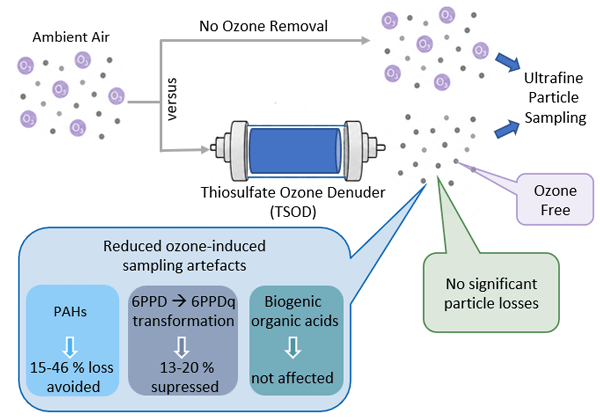
Ozone in sampling air can alter the chemical composition of collected ultrafine particles, leading to an inaccurate air quality assessment. We addressed this by developing a ceramic device coated with sodium thiosulfate that eliminates ozone before it reaches the filter. Our results show this tool effectively preserves ozone-sensitive components, such as polycyclic aromatic hydrocarbons, without particle losses. This contributes to more reliable data for air quality research.
Andrew W. Seidl, Aina Johannessen, Alena Dekhtyareva, Jannis M. Huss, Marius O. Jonassen, Alexander Schulz, Ove Hermansen, Christoph K. Thomas, and Harald Sodemann
Earth Syst. Sci. Data, 18, 1969–1993, https://doi.org/10.5194/essd-18-1969-2026, https://doi.org/10.5194/essd-18-1969-2026, 2026
Short summary
Short summary
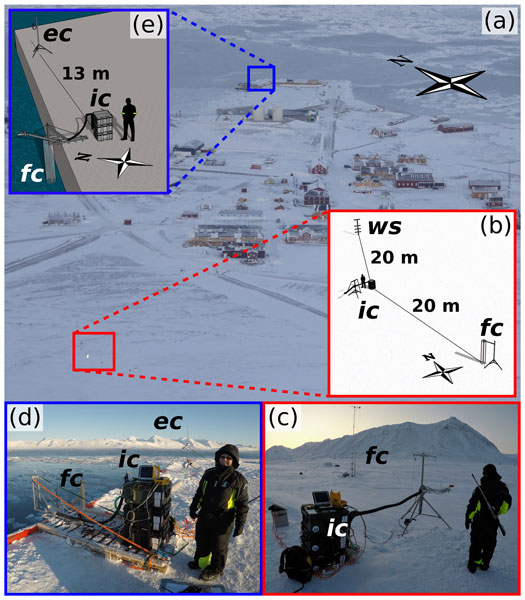
ISLAS2020 set out to measure the stable water isotopic composition of Arctic moisture. By not only measuring at different sites around Ny-Ålesund, Svalbard, but also measuring at variable heights above surface level, we aim to characterize processes that produce or modify the isotopic composition. We also collect precipitation samples from sites that were typically downstream of Ny-Ålesund, so as to capture the isotopic composition during removal from the atmospheric water cycle.
Mohammad Abdoli, Reza Pirkhoshghiyafeh, and Christoph K. Thomas
Atmos. Meas. Tech., 18, 6417–6433, https://doi.org/10.5194/amt-18-6417-2025, https://doi.org/10.5194/amt-18-6417-2025, 2025
Short summary
Short summary
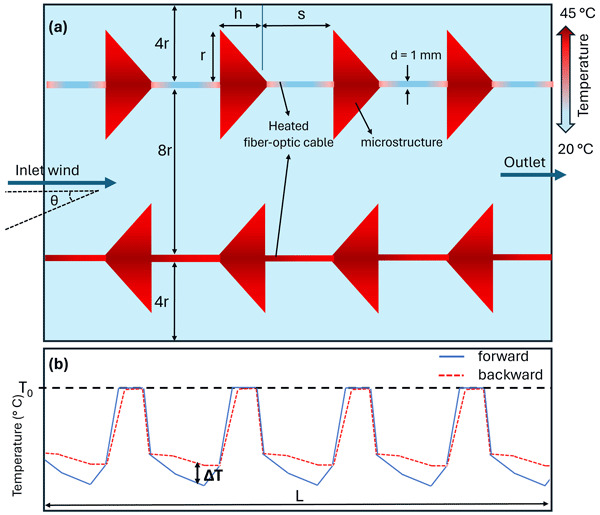
We used computer simulations to improve how fiber-optic cables measure wind direction. These heated cables have small cones attached to sense how air moves around them. We found that hollow cone designs detect airflow more accurately than earlier versions. This helps us better understand air movement near the ground and could improve the physical foundations of weather and climate models.
Elisabeth Eckenberger, Andreas Mittereder, Nadine Gawlitta, Jürgen Schnelle-Kreis, Martin Sklorz, Dieter Brüggemann, Ralf Zimmermann, and Anke C. Nölscher
Aerosol Research, 3, 45–64, https://doi.org/10.5194/ar-3-45-2025, https://doi.org/10.5194/ar-3-45-2025, 2025
Short summary
Short summary
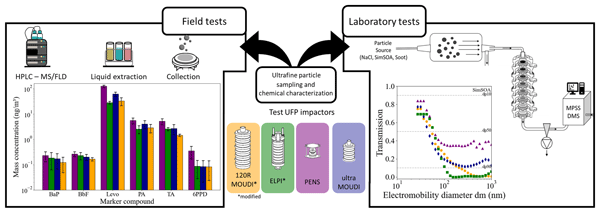
We assessed the performance of four cascade impactors for collecting and analyzing organic markers in airborne ultrafine particles (UFPs) under lab and field conditions. The cutoff was influenced by the impactor design and aerosol mixture. Two key factors caused variations in mass concentrations: the evaporation of semi-volatile compounds and the "bounce-off" of larger particles and fragments. Our findings reveal the challenges of analyzing organic marker mass concentrations in airborne UFPs.
Luiz A. T. Machado, Jürgen Kesselmeier, Santiago Botía, Hella van Asperen, Meinrat O. Andreae, Alessandro C. de Araújo, Paulo Artaxo, Achim Edtbauer, Rosaria R. Ferreira, Marco A. Franco, Hartwig Harder, Sam P. Jones, Cléo Q. Dias-Júnior, Guido G. Haytzmann, Carlos A. Quesada, Shujiro Komiya, Jost Lavric, Jos Lelieveld, Ingeborg Levin, Anke Nölscher, Eva Pfannerstill, Mira L. Pöhlker, Ulrich Pöschl, Akima Ringsdorf, Luciana Rizzo, Ana M. Yáñez-Serrano, Susan Trumbore, Wanda I. D. Valenti, Jordi Vila-Guerau de Arellano, David Walter, Jonathan Williams, Stefan Wolff, and Christopher Pöhlker
Atmos. Chem. Phys., 24, 8893–8910, https://doi.org/10.5194/acp-24-8893-2024, https://doi.org/10.5194/acp-24-8893-2024, 2024
Short summary
Short summary
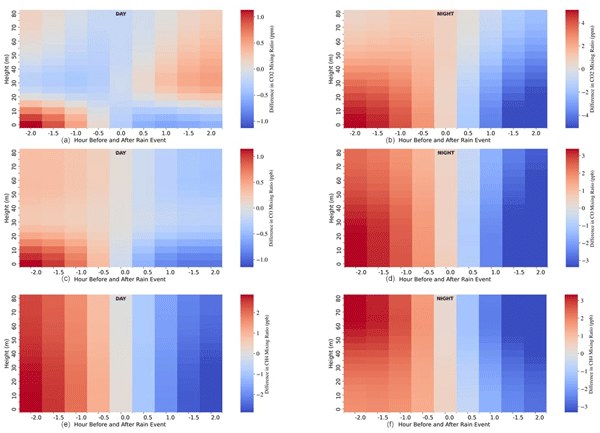
Composite analysis of gas concentration before and after rainfall, during the day and night, gives insight into the complex relationship between trace gas variability and precipitation. The analysis helps us to understand the sources and sinks of trace gases within a forest ecosystem. It elucidates processes that are not discernible under undisturbed conditions and contributes to a deeper understanding of the trace gas life cycle and its intricate interactions with cloud dynamics in the Amazon.
Finja Löher, Esther Borrás, Amalia Muñoz, and Anke Christine Nölscher
Atmos. Meas. Tech., 17, 4553–4579, https://doi.org/10.5194/amt-17-4553-2024, https://doi.org/10.5194/amt-17-4553-2024, 2024
Short summary
Short summary
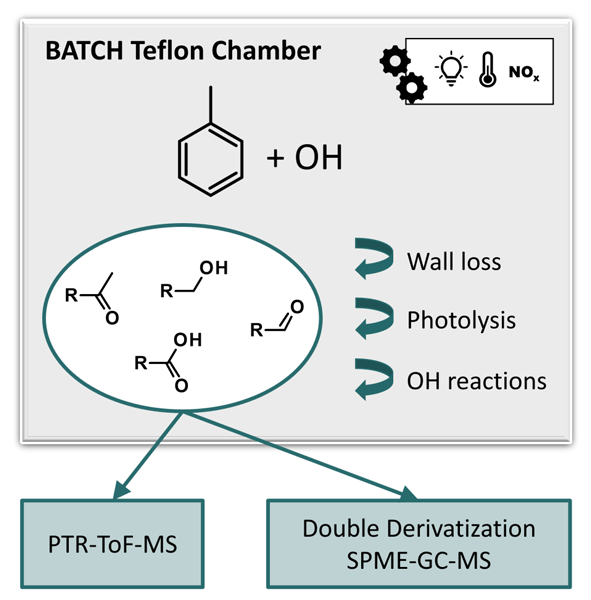
We constructed and characterized a new indoor Teflon atmospheric simulation chamber. We evaluated wall losses, photolysis rates, and secondary reactions of multifunctional photooxidation products in the chamber. To measure these products on-line, we combined chromatographic and mass spectrometric analyses to obtain both isomeric information and a high temporal resolution. For method validation, we studied the formation yields of the main ring-retaining products of toluene.
Eike Maximilian Esders, Christoph Georgi, Wolfgang Babel, Andreas Held, and Christoph Karl Thomas
Aerosol Research, 2, 235–243, https://doi.org/10.5194/ar-2-235-2024, https://doi.org/10.5194/ar-2-235-2024, 2024
Short summary
Short summary
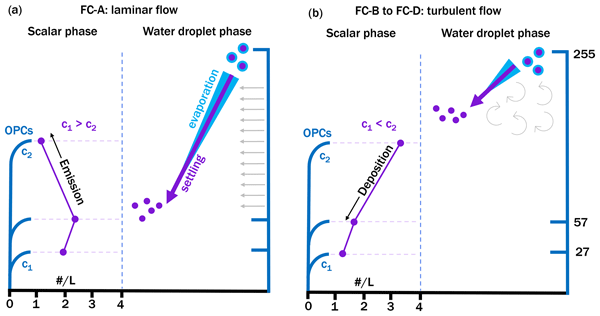
Our study explores how tiny plastic particles, known as microplastics (MPs), move through the air. We focus on their journey in a wind tunnel to mimic atmospheric transport. Depending on the air speed and the height of their release, they move downwards or upwards. These results suggest that MPs behave like mineral particles and that we can expect MPs to accumulate where natural dust also accumulates in the environment, offering insights for predicting the spread and impacts of MPs.
Julius Seidler, Markus N. Friedrich, Christoph K. Thomas, and Anke C. Nölscher
Atmos. Chem. Phys., 24, 137–153, https://doi.org/10.5194/acp-24-137-2024, https://doi.org/10.5194/acp-24-137-2024, 2024
Short summary
Short summary
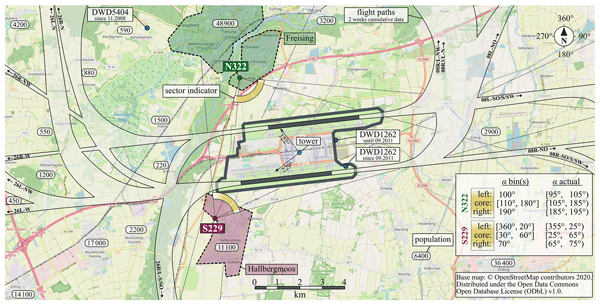
Here, we study the transport of ultrafine particles (UFPs) from an airport to two new adjacent measuring sites for 1 year. The number of UFPs in the air and the diurnal variation are typical urban. Winds from the airport show increased number concentrations. Additionally, considering wind frequencies, we estimate that, from all UFPs measured at the two sites, 10 %–14 % originate from the airport and/or other UFP sources from between the airport and site.
Eike Maximilian Esders, Sebastian Sittl, Inka Krammel, Wolfgang Babel, Georg Papastavrou, and Christoph Karl Thomas
Atmos. Chem. Phys., 23, 15835–15851, https://doi.org/10.5194/acp-23-15835-2023, https://doi.org/10.5194/acp-23-15835-2023, 2023
Short summary
Short summary
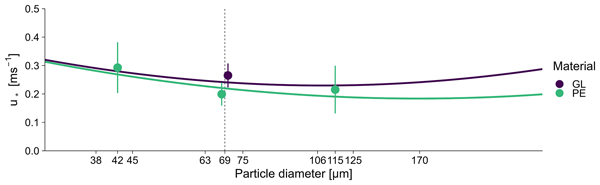
Do microplastics behave differently from mineral particles when they are exposed to wind? We observed plastic and mineral particles in a wind tunnel and measured at what wind speeds the particles start to move. The results indicate that microplastics start to move at smaller wind speeds as they weigh less and are less sticky. Hence, we think that microplastics also move more easily in the environment.
Mohammad Abdoli, Karl Lapo, Johann Schneider, Johannes Olesch, and Christoph K. Thomas
Atmos. Meas. Tech., 16, 809–824, https://doi.org/10.5194/amt-16-809-2023, https://doi.org/10.5194/amt-16-809-2023, 2023
Short summary
Short summary
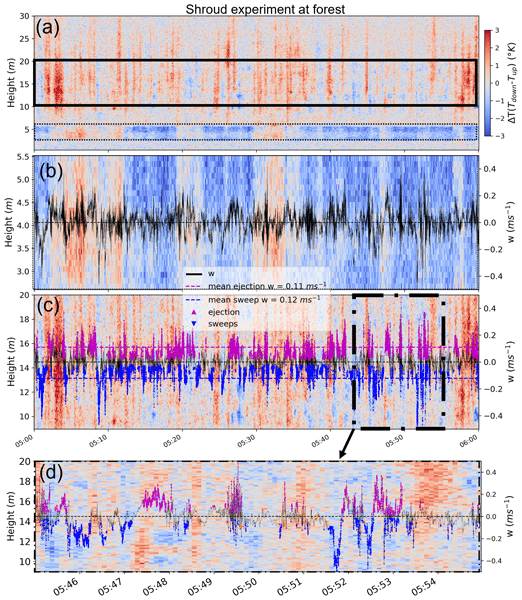
In this study, we compute the distributed sensible heat flux using a distributed temperature sensing technique, whose magnitude, sign, and temporal dynamics compare reasonably well to estimates from classical eddy covariance measurements from sonic anemometry. Despite the remaining uncertainty in computed fluxes, the results demonstrate the potential of the novel method to compute spatially resolving sensible heat flux measurement and encourage further research.
Nina Leiter, Maximilian Wohlschläger, Martin Versen, and Christian Laforsch
J. Sens. Sens. Syst., 11, 129–136, https://doi.org/10.5194/jsss-11-129-2022, https://doi.org/10.5194/jsss-11-129-2022, 2022
Short summary
Short summary
In this contribution the frequency domain fluorescence lifetime imaging microscopy (FD-FLIM) technique is evaluated for post-consumer wood sorting. The measured data were processed using algorithmic decision trees to identify the wood species and post-consumer wood category. The experimental results revealed the high potential of the FD-FLIM technique for automated post-consumer wood sorting.
Wolfgang Fischer, Christoph K. Thomas, Nikita Zimov, and Mathias Göckede
Biogeosciences, 19, 1611–1633, https://doi.org/10.5194/bg-19-1611-2022, https://doi.org/10.5194/bg-19-1611-2022, 2022
Short summary
Short summary
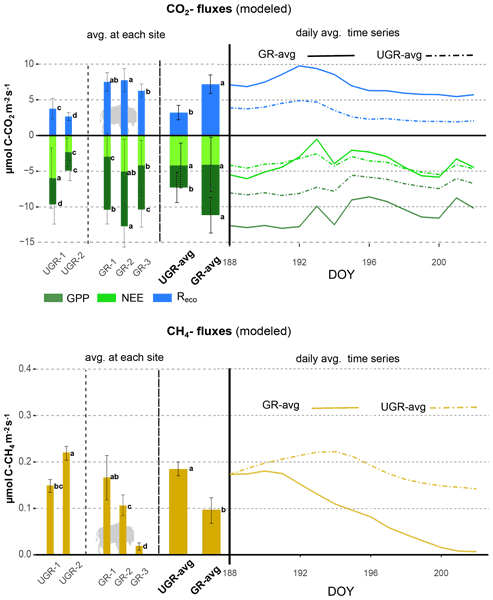
Arctic permafrost ecosystems may release large amounts of carbon under warmer future climates and may therefore accelerate global climate change. Our study investigated how long-term grazing by large animals influenced ecosystem characteristics and carbon budgets at a Siberian permafrost site. Our results demonstrate that such management can contribute to stabilizing ecosystems to keep carbon in the ground, particularly through drying soils and reducing methane emissions.
Karl Lapo, Anita Freundorfer, Antonia Fritz, Johann Schneider, Johannes Olesch, Wolfgang Babel, and Christoph K. Thomas
Earth Syst. Sci. Data, 14, 885–906, https://doi.org/10.5194/essd-14-885-2022, https://doi.org/10.5194/essd-14-885-2022, 2022
Short summary
Short summary
The layer of air near the surface is poorly understood during conditions with weak winds. Further, it is even difficult to observe. In this experiment we used distributed temperature sensing to observe air temperature and wind speed at thousands of points simultaneously every couple of seconds. This incredibly rich data set can be used to examine and understand what drives the mixing between the atmosphere and surface during these weak-wind periods.
Cited articles
Arthur, C., Baker, J. E., and Bamford, H.: Proceedings of the International Research Workshop on the Occurrence, Effects, and Fate of Microplastic Marine Debris, 9–11 September 2008, University of Washington Tacoma, Tacoma, WA, USA, NOAA Technical Memorandum NOS-OR&R-30, National Oceanic and Atmospheric Administration, NOAA Institutional Repository record noaa:2509, 2009. a
Astorayme, M. A., Vázquez-Rowe, I., and Kahhat, R.: The use of artificial intelligence algorithms to detect macroplastics in aquatic environments: A critical review, Sci. Total Environ., 945, 173843, https://doi.org/10.1016/j.scitotenv.2024.173843, 2024. a
Ayinde, B. O., Musa, M. R., and Ayinde, A.-A. O.: Application of machine learning models and landsat 8 data for estimating seasonal pm 2.5 concentrations, Environmental Analysis, Health and Toxicology, 39, e2024011, https://doi.org/10.5620/eaht.2024011, 2024. a
Ayinde, B. O., Babel, W., Olesch, J., Agarwal, S., Wagner, D., Nölscher, A., and Thomas, C.: Quantifying the detachment dynamics of microplastic car tire-wear particles using a deep learning framework in a laboratory wind tunnel, EGU General Assembly 2025, Vienna, Austria, 27 April–2 May 2025, EGU25-11439, https://doi.org/10.5194/egusphere-egu25-11439, 2025. a
Ayinde, B. O., Wolfgang, B., Olesch, J., Wagner, D., Agarwal, S., Laforsch, C., Nölscher, A., and Thomas, C. K.: Dataset and script used for the publication: From seeding to detachment: leveraging deep learning to quantify the transport of tyre wear microplastics in a wind tunnel, Zenodo [data set], https://doi.org/10.5281/zenodo.20589718, 2026. a
Baensch-Baltruschat, B., Kocher, B., Stock, F., and Reifferscheid, G.: Tyre and road wear particles (TRWP)-A review of generation, properties, emissions, human health risk, ecotoxicity, and fate in the environment, Sci. Total Environ., 733, 137823, https://doi.org/10.1016/j.scitotenv.2020.137823, 2020. a
Bagnold, R. A.: The Physics of Blown Sand and Desert Dunes, Springer, https://doi.org/10.1007/978-94-009-5682-7, 1971. a
Barth, T., Preuß, J., Müller, G., and Hampel, U.: Single particle resuspension experiments in turbulent channel flows, J. Aerosol Sci., 71, 40–51, https://doi.org/10.1016/j.jaerosci.2014.01.006, 2014. a
Beattie, N. S., Moir, R. S., Chacko, C., Buffoni, G., Roberts, S. H., and Pearsall, N. M.: Understanding the effects of sand and dust accumulation on photovoltaic modules, Renew. Energ., 48, 448–452, https://doi.org/10.1016/j.renene.2012.06.007, 2012. a
Beji, A., Deboudt, K., Muresan, B., Khardi, S., Flament, P., Fourmentin, M., and Lumiere, L.: Physical and chemical characteristics of particles emitted by a passenger vehicle at the tire-road contact, Chemosphere, 340, 139874, https://doi.org/10.1016/j.chemosphere.2023.139874, 2023. a
Benali Amjoud, A. and Amrouch, M.: Convolutional neural networks backbones for object detection, in: Image and Signal Processing: 9th International Conference, ICISP 2020, Marrakesh, Morocco, 4–6 June 2020, Proceedings 9, 282–289, Springer, https://doi.org/10.1007/978-3-030-51935-3_30, 2020. a
Bigalke, M., Fieber, M., Foetisch, A., Reynes, J., and Tollan, P.: Microplastics in agricultural drainage water: a link between terrestrial and aquatic microplastic pollution, Sci. Total Environ., 806, 150709, https://doi.org/10.1016/j.scitotenv.2021.150709, 2022. a
Bondorf, L., Löber, M., Grein, T., Köhler, L., Epple, F., Schripp, T., Aigner, M., and Philipps, F.: Characterization of airborne tire particle emissions under realistic conditions on the chassis dynamometer, on the test track, and on the road, Aerosol Sci. Tech., 59, 623–634, https://doi.org/10.1080/02786826.2025.2464215, 2025. a
Braaten, D. and Shaw, R.: Particle resuspension in a turbulent boundary layer-observed and modeled, J. Aerosol Sci., 21, 613–628, https://doi.org/10.1016/0021-8502(90)90117-g, 1990. a
Cadle, S. and Williams, R.: Gas and particle emissions from automobile tires in laboratory and field studies, JAPCA J. Air Waste Ma., 28, 502–507, https://doi.org/10.1080/00022470.1978.10470623, 1978. a
Chanchangi, Y. N., Ghosh, A., Sundaram, S., and Mallick, T. K.: An analytical indoor experimental study on the effect of soiling on PV, focusing on dust properties and PV surface material, Sol. Energy, 203, 46–68, https://doi.org/10.1016/j.solener.2020.03.089, 2020. a
Chazhoor, A. A. P., Ho, E. S., Gao, B., and Woo, W. L.: Deep transfer learning benchmark for plastic waste classification, Intelligence & Robotics, 2, 1–19, https://doi.org/10.20517/ir.2021.15, 2022. a, b
Chepil, W.: Dynamics of wind erosion: I. Nature of movement of soil by wind, Soil Sci., 60, 305–320, https://doi.org/10.1097/00010694-194510000-00004, 1945. a
Cox, E.: A method of assigning numerical and percentage values to the degree of roundness of sand grains, J. Paleontol., 1, 179–183, https://www.jstor.org/stable/1298056 (last access: 16 July 2026), 1927. a
Del Bello, E., Taddeucci, J., Merrison, J. P., Rasmussen, K. R., Andronico, D., Ricci, T., Scarlato, P., and Iversen, J. J.: Field-based measurements of volcanic ash resuspension by wind, Earth Planet. Sc. Lett., 554, 116684, https://doi.org/10.1016/j.epsl.2020.116684, 2021. a, b, c
Dong, Z., Mu, Q., and Liu, X.: Defining the threshold wind velocity for moistened sediments, J. Geophys. Res.-Sol. Ea., 112, https://doi.org/10.1029/2006jb004476, 2007. a
Esders, E. M., Georgi, C., Babel, W., and Thomas, C.: Quantitative detection of aerial suspension of particles with a full-frame visual camera for atmospheric wind tunnel studies, Aerosol Sci. Tech., 56, 530–544, https://doi.org/10.1080/02786826.2022.2048789, 2022. a, b, c
Esders, E. M., Sittl, S., Krammel, I., Babel, W., Papastavrou, G., and Thomas, C. K.: Is transport of microplastics different from mineral particles? Idealized wind tunnel studies on polyethylene microspheres, Atmos. Chem. Phys., 23, 15835–15851, https://doi.org/10.5194/acp-23-15835-2023, 2023. a, b, c, d, e, f, g, h, i
ESDU: Characteristics of wind speed in the lower layers of the atmosphere near the ground: strong winds (neutral atmosphere), ESDU Data Item No. 72026, Engineering Sciences Data Unit, London, 1972. a
Fang, C. and Sill, B.: Aerodynamic roughness length: correlation with roughness elements, J. Wind Eng. Ind. Aerod., 41, 449–460, https://doi.org/10.1016/0167-6105(92)90444-f, 1992. a
Firdauz, S. S., Rachmawati, E., and Sulistiyo, M. D.: Mask Detection on Motorcyclists Using YOLOv4, Building of Informatics, Technology and Science (BITS), 4, https://doi.org/10.47065/bits.v4i4.2980, 2023. a
Foken, T. and Mauder, M.: Micrometeorology, vol. 2, Springer, https://doi.org/10.1007/978-3-642-25440-6, 2008. a
Garratt, J. R.: The atmospheric boundary layer, Earth-Sci. Rev., 37, 89–134, https://doi.org/10.1016/0012-8252(94)90026-4, 1994. a
Goossens, D. and Van Kerschaever, E.: Aeolian dust deposition on photovoltaic solar cells: the effects of wind velocity and airborne dust concentration on cell performance, Sol. Energ., 66, 277–289, https://doi.org/10.1016/s0038-092x(99)00028-6, 1999. a
Gregory, M. R.: Plastic “scrubbers” in hand cleansers: a further (and minor) source for marine pollution identified, Mar. Pollut. Bull., 32, 867–871, https://doi.org/10.1016/s0025-326x(96)00047-1, 1996. a
Grigoratos, T. and Martini, G.: Brake wear particle emissions: a review, Environ. Sci. Pollut. Res., 22, 2491–2504, https://doi.org/10.1007/s11356-014-3696-8, 2015. a
Gualtieri, M., Andrioletti, M., Mantecca, P., Vismara, C., and Camatini, M.: Impact of tire debris on in vitro and in vivo systems, Part. Fibre Toxicol., 2, 1–14, https://doi.org/10.1186/1743-8977-2-1, 2005. a
Gunawardana, C., Goonetilleke, A., Egodawatta, P., Dawes, L., and Kokot, S.: Source characterisation of road dust based on chemical and mineralogical composition, Chemosphere, 87, 163–170, https://doi.org/10.1016/j.chemosphere.2011.12.012, 2012. a
Hajdowska, K., Student, S., and Borys, D.: Graph based method for cell segmentation and detection in live-cell fluorescence microscope imaging, Biomed, Signal Proces,, 71, 103071, https://doi.org/10.1016/j.bspc.2021.103071, 2022. a
Hesse, D., Feißel, T., Kunze, M., Bachmann, E., Bachmann, T., and Gramstat, S.: Comparison of methods for sampling particulate emissions from tires under different test environments, Atmosphere, 13, 1262, https://doi.org/10.3390/atmos13081262, 2022. a
Hillenbrand, T., Toussaint, D., Böhm, E., Fuchs, S., Scherer, U., Rudolphi, A., Hoffmann, M., Kreißig, J., and Kotz, C.: Einträge von Kupfer, Zink und Blei in Gewässer und Böden, Forschungsbericht 202 242 20/02, 279 pp., 2005. a
Horton, A. A. and Dixon, S. J.: Microplastics: An introduction to environmental transport processes, WIRes Water, 5, e1268, https://doi.org/10.1002/wat2.1268, 2018. a
Hu, R., Johnson, P. L., and Meneveau, C.: Modeling the resuspension of small inertial particles in turbulent flow over a fractal-like multiscale rough surface, Phys. Rev. Fluids, 8, 024304, https://doi.org/10.1103/physrevfluids.8.024304, 2023. a
Hui, M., Larsen, A., and Xiang, H.: Wind turbulence characteristics study at the Stonecutters Bridge site: Part I – Mean wind and turbulence intensities, J. Wind Eng. Ind. Aerod., 97, 22–36, https://doi.org/10.1016/j.jweia.2008.11.002, 2009. a
Hussain, M.: YOLO-v1 to YOLO-v8, the rise of YOLO and its complementary nature toward digital manufacturing and industrial defect detection, Machines, 11, 677, https://doi.org/10.3390/machines11070677, 2023. a
Iversen, J. D. and White, B. R.: Saltation threshold on earth, mars and venus, Sedimentology, 29, 111–119, https://doi.org/10.1111/j.1365-3091.1982.tb01713.x, 1982. a
Järlskog, I., Jaramillo-Vogel, D., Rausch, J., Gustafsson, M., Strömvall, A.-M., and Andersson-Sköld, Y.: Concentrations of tire wear microplastics and other traffic-derived non-exhaust particles in the road environment, Environ. Int., 170, 107618, https://doi.org/10.1016/j.envint.2022.107618, 2022. a
Jia, T., Peng, Z., Yu, J., Piaggio, A. L., Zhang, S., and de Kreuk, M. K.: Detecting the interaction between microparticles and biomass in biological wastewater treatment process with Deep Learning method, Sci. Total Environ., 951, 175813, https://doi.org/10.2139/ssrn.4829923, 2024. a
Jiang, L., Fan, G., Li, Z., Kai, X., Zhang, D., Chen, Z., Humphries, S., Heness, G., and Yeung, W. Y.: An approach to the uniform dispersion of a high volume fraction of carbon nanotubes in aluminum powder, Carbon, 49, 1965–1971, https://doi.org/10.1016/j.carbon.2011.01.021, 2011. a
Kassab, A. S., Ugaz, V. M., King, M. D., and Hassan, Y. A.: High resolution study of micrometer particle detachment on different surfaces, Aerosol Sci. Technol., 47, 351–360, https://doi.org/10.1080/02786826.2012.752789, 2013. a, b, c, d
Kernchen, S., Schmalz, H., Löder, M. G., Georgi, C., Einhorn, A., Greiner, A., Nölscher, A. C., Laforsch, C., and Held, A.: Atmospheric deposition studies of microplastics in Central Germany, Air Qual. Atmos. Hlth., 17, 2247–2261, https://doi.org/10.1007/s11869-024-01571-w, 2024. a
Kim, J., Yang, S. I., Moon, H., Hong, J., Hong, J., Choi, W., Son, H., Lee, B.-c., Kim, G.-B., and Kim, Y.: Potential release of nano-carbon black from tire-wear particles through the weathering effect, J. Ind. Eng. Chem., 96, 322–329, https://doi.org/10.1016/j.jiec.2021.01.036, 2021. a
Kim, Y., Wellum, G., Mello, K., Strawhecker, K. E., Thoms, R., Giaya, A., and Wyslouzil, B. E.: Effects of relative humidity and particle and surface properties on particle resuspension rates, Aerosol Sci. Tech., 50, 339–352, https://doi.org/10.1080/02786826.2016.1152350, 2016. a
Klöckner, P., Seiwert, B., Weyrauch, S., Escher, B. I., Reemtsma, T., and Wagner, S.: Comprehensive characterization of tire and road wear particles in highway tunnel road dust by use of size and density fractionation, Chemosphere, 279, 130530, https://doi.org/10.1016/j.chemosphere.2021.130530, 2021. a
Kok, J. F., Parteli, E. J., Michaels, T. I., and Karam, D. B.: The physics of wind-blown sand and dust, Rep. Prog. Phys., 75, 106901, https://doi.org/10.1088/0034-4885/75/10/106901, 2012. a, b
Kouadio, E. K., Goriaux, M., Laguionie, P., and Ruban, V.: Metal particle seeding on urban surface samples, Environ. Sci. Pollut. Res., 29, 30837–30849, https://doi.org/10.1007/s11356-021-13789-7, 2022. a
Kozmar, H.: Characteristics of natural wind simulations in the TUM boundary layer wind tunnel, Theor. Appl. Climatol., 106, 95–104, https://doi.org/10.1007/s00704-011-0417-9, 2011. a
Kreider, M. L., Panko, J. M., McAtee, B. L., Sweet, L. I., and Finley, B. L.: Physical and chemical characterization of tire-related particles: Comparison of particles generated using different methodologies, Sci. Total Environ., 408, 652–659, https://doi.org/10.1016/j.scitotenv.2009.10.016, 2010. a, b
Laermanns, H., Lehmann, M., Klee, M., J. Löder, M. G., Gekle, S., and Bogner, C.: Tracing the horizontal transport of microplastics on rough surfaces, Microplastics and Nanoplastics, 1, 1–12, https://doi.org/10.1186/s43591-021-00010-2, 2021. a
Laforsch, C., Ramsperger, A. F., Mondellini, S., and Galloway, T. S.: Microplastics: a novel suite of environmental contaminants but present for decades, edited by: Reichl, F. X. and Schwenk, M., Regulatory Toxicology, 1185–1210, Springer, Berlin, Heidelberg, https://doi.org/10.1007/978-3-642-36206-4_138-1, 2021. a
Laglbauer, B. J., Franco-Santos, R. M., Andreu-Cazenave, M., Brunelli, L., Papadatou, M., Palatinus, A., Grego, M., and Deprez, T.: Macrodebris and microplastics from beaches in Slovenia, Mar. Pollut. Bull., 89, 356–366, https://doi.org/10.1016/j.marpolbul.2014.09.036, 2014. a
Lee, Y., Lee, C., Lee, H.-J., and Kim, J.-S.: Fast detection of objects using a YOLOv3 network for a vending machine, in: 2019 IEEE International Conference on Artificial Intelligence Circuits and Systems (AICAS), IEEE, 132–136, https://doi.org/10.1109/aicas.2019.8771517, 2019. a
Li, H., Yang, S., Zhang, R., Yu, P., Fu, Z., Wang, X., Kadoch, M., and Yang, Y.: Detection of floating objects on water surface using YOLOv5s in an edge computing environment, Water, 16, 86, https://doi.org/10.3390/w16010086, 2023. a
Liang, C., Jia, Z., and Chen, R.: An automated particle size analysis method for SEM images of powder coating particles, Coatings, 13, 1547, https://doi.org/10.3390/coatings13091547, 2023. a
Lim, J., Shin, G., and Shin, D.: Fast detection and classification of microplastics below 10 µm using CNN with Raman spectroscopy, Anal. Chem., 96, 6819–6825, https://doi.org/10.1021/acs.analchem.4c00823, 2024. a
Lim, Y. K., Lee, C. H., Lee, K.-W., Hong, S. H., and Baek, S. H.: Impact of Heterosigma akashiwo on the environmental behavior of microplastics: Aggregation, sinking, and resuspension dynamics, J. Hazard. Mater., 487, 137242, https://doi.org/10.1016/j.jhazmat.2025.137242, 2025. a
Liu, Z., Zheng, C., Wu, Y., Flay, R. G., and Zhang, K.: Wind tunnel simulation of wind flows with the characteristics of thousand-meter high ABL, Build. Environ., 152, 74–86, https://doi.org/10.1016/j.buildenv.2019.02.012, 2019. a
Loth, E.: Compressibility and rarefaction effects on drag of a spherical particle, AIAA J., 46, 2219–2228, https://doi.org/10.2514/1.28943, 2008. a
Luke, J., Joseph, R., and Balaji, M.: Impact of image size on accuracy and generalization of convolutional neural networks, Int. J. Res. Anal. Rev., 6, 70–80, 2019. a
Luo, Z., Zhou, X., Su, Y., Wang, H., Yu, R., Zhou, S., Xu, E. G., and Xing, B.: Environmental occurrence, fate, impact, and potential solution of tire microplastics: Similarities and differences with tire wear particles, Sci. Total Environ., 795, 148902, https://doi.org/10.1016/j.scitotenv.2021.148902, 2021. a
Marsh, B. P., Chada, N., Sanganna Gari, R. R., Sigdel, K. P., and King, G. M.: The Hessian blob algorithm: Precise particle detection in atomic force microscopy imagery, Sci. Rep., 8, 978, https://doi.org/10.1038/s41598-018-19379-x, 2018. a
Marwood, C., McAtee, B., Kreider, M., Ogle, R. S., Finley, B., Sweet, L., and Panko, J.: Acute aquatic toxicity of tire and road wear particles to alga, daphnid, and fish, Ecotoxicology, 20, 2079–2089, https://doi.org/10.1007/s10646-011-0750-x, 2011. a
Mennekes, D. and Nowack, B.: Tire wear particle emissions: measurement data where are you?, Sci. Total Environ., 830, 154655, https://doi.org/10.1016/j.scitotenv.2022.154655, 2022. a
Messer, C., Khurana, R., and Bedi, S.: Classification of Uncertainty in Nuclei Segmentation From H&E Images, Tech. rep., Stanford University, https://cs231n.stanford.edu/2024/papers/classification-of-uncertainty-in-nuclei-segmentation-from-he-ima.pdf (last access: 16 July 2026), 2024. a
Osuoha, J. O., Anyanwu, B. O., and Ejileugha, C.: Pharmaceuticals and personal care products as emerging contaminants: Need for combined treatment strategy, Journal of Hazardous Materials Advances, 9, 100206, https://doi.org/10.1016/j.hazadv.2022.100206, 2023. a
Piehl, S., Leibner, A., Löder, M. G., Dris, R., Bogner, C., and Laforsch, C.: Identification and quantification of macro-and microplastics on an agricultural farmland, Sci. Rep., 8, 17950, https://doi.org/10.1038/s41598-018-36172-y, 2018. a
Prume, J. A., Gorka, F., and Löder, M. G.: From sieve to microscope: an efficient technique for sample transfer in the process of microplastics' quantification, MethodsX, 8, 101341, https://doi.org/10.1016/j.mex.2021.101341, 2021. a
Qasem, H., Betts, T. R., Mullejans, H., AlBusairi, H., and Gottschalg, R.: Dust-induced shading on photovoltaic modules, Progress in Photovoltaics: Research and Applications, 22, 218–226, https://doi.org/10.1002/pip.2230, 2014. a
Shao, Y.: Physics and modelling of wind erosion, 2nd edn., Springer Dordrecht, https://doi.org/10.1007/978-1-4020-8895-7, 2008. a
Shao, Y. and Li, A.: Numerical modelling of saltation in the atmospheric surface layer, Bound.-Lay. Meteorol., 91, 199–225, https://doi.org/10.1023/a:1001816013475, 1999. a
Sharma, M. M., Chamoun, H., Sarma, D. S. R., and Schechter, R. S.: Factors controlling the hydrodynamic detachment of particles from surfaces, J. Colloid Interf. Sci., 149, 121–134, https://doi.org/10.1016/0021-9797(92)90398-6, 1992. a
Sommer, F., Dietze, V., Baum, A., Sauer, J., Gilge, S., Maschowski, C., and Gieré, R.: Tire abrasion as a major source of microplastics in the environment, Aerosol Air Qual. Res., 18, 2014–2028, https://doi.org/10.4209/aaqr.2018.03.0099, 2018. a
Sundt, P., Schulze, P.-E., and Syversen, F.: Sources of microplastic pollution to the marine environment, Report M-321/2015, Mepex for the Norwegian Environment Agency (Miljødirektoratet), 108 pp., https://www.miljodirektoratet.no/publikasjoner/2015/februar/sources-of-microplastic-pollution-to-the-marine-environment/ (last access: 16 July 2026), 2014. a, b
Thammasanya, T., Patiam, S., Rodcharoen, E., and Chotikarn, P.: A new approach to classifying polymer type of microplastics based on Faster-RCNN-FPN and spectroscopic imagery under ultraviolet light, Sci. Rep., 14, 3529, https://doi.org/10.1038/s41598-024-53251-5, 2024. a
Theron, F., Debba, D., and Le Coq, L.: Local experimental methodology for the study of microparticles resuspension in ventilated duct during fan acceleration, J. Aerosol Sci., 140, 105477, https://doi.org/10.1016/j.jaerosci.2019.105477, 2020. a, b
Thomas, C. K., Law, B. E., Irvine, J., Martin, J. G., Pettijohn, J. C., and Davis, K. J.: Seasonal hydrology explains interannual and seasonal variation in carbon and water exchange in a semiarid mature ponderosa pine forest in central Oregon, J. Geophys. Res.-Biogeo., 114, https://doi.org/10.1029/2009jg001010, 2009. a
Trush, A., Pospíšil, S., and Kozmar, H.: Comparison of turbulence integral length scale determination methods, Adv. Fluid Mech. XIII, 128, 113, https://doi.org/10.2495/afm200111, 2020. a
Turner, A. and Rice, L.: Toxicity of tire wear particle leachate to the marine macroalga, Ulva lactuca, Environ. Pollut., 158, 3650–3654, https://doi.org/10.1016/j.envpol.2010.08.001, 2010. a
Valenzuela-Aracena, K., Oger, L., Unac, R. O., and Vidales, A. M.: Resuspension due to vertical oscillations: experiments and numerical modeling, Granul. Matter, 21, 51, https://doi.org/10.1007/s10035-019-0906-6, 2019. a
van Calcar, C. and van Emmerik, T.: Abundance of plastic debris across European and Asian rivers, EGU General Assembly 2020, Online, 4–8 May 2020, EGU2020-707, https://doi.org/10.5194/egusphere-egu2020-707, 2019. a
Wang, H.-C.: Effects of inceptive motion on particle detachment from surfaces, Aerosol Sci. Tech., 13, 386–393, https://doi.org/10.1080/02786829008959453, 1990. a
Wik, A., Lycken, J., and Dave, G.: Sediment quality assessment of road runoff detention systems in Sweden and the potential contribution of tire wear, Water Air Soil Poll., 194, 301–314, https://doi.org/10.1007/s11270-008-9718-8, 2008. a
Xu, J. and Wang, Z.: Efficient and accurate microplastics identification and segmentation in urban waters using convolutional neural networks, Sci. Total Environ., 911, 168696, https://doi.org/10.1016/j.scitotenv.2023.168696, 2024. a
Xu, S., Tang, H., Li, J., Wang, L., Zhang, X., and Gao, H.: A yolow algorithm of water-crossing object detection, Appl. Sci., 13, 8890, https://doi.org/10.3390/app13158890, 2023. a
You, S. and Wan, M. P.: A new turbulent-burst-based model for particle resuspension from rough surfaces in turbulent flow, Aerosol Sci. Tech., 48, 1031–1042, https://doi.org/10.1080/02786826.2014.955908, 2014. a
Zailan, N. A., Azizan, M. M., Hasikin, K., Mohd Khairuddin, A. S., and Khairuddin, U.: An automated solid waste detection using the optimized YOLO model for riverine management, Front. Public Health, 10, 907280, https://doi.org/10.3389/fpubh.2022.907280, 2022. a
Zeng, T., Zhu, Y., and Lam, E. Y.: Deep learning for digital holography: a review, Opt. Express, 29, 40572–40593, https://doi.org/10.1364/oe.443367, 2021. a
Zhang, Z., Li, P., Hu, W., Li, J., Li, H., Wang, R., Li, Q., Zou, X., Zhou, B., and Chang, C.: Electric forces can enhance the emission of microplastics into air, Environ. Pollut., 126405, https://doi.org/10.1016/j.envpol.2025.126405, 2025. a
Zhao, S., Zhou, H., and Yang, H.: Smart Monitoring Method for Land-Based Sources of Marine Outfalls Based on an Improved YOLOv8 Model, Water, 16, 3285, https://doi.org/10.3390/w16223285, 2024. a, b
Zhu, Y., Yeung, C. H., and Lam, E. Y.: Microplastic pollution monitoring with holographic classification and deep learning, Journal of Physics: Photonics, 3, 024013, https://doi.org/10.1088/2515-7647/abf250, 2021. a
Short summary
The dynamics of how tyre wear particles behave prior to their entrainment are still poorly understood. In wind tunnel experiments, the particle detachment from an idealized glass substrate was monitored. For particle sizes above 80 μm, smaller and more rounded particles were mobilized by wind shear first, whereas larger and more angular particles require stronger wind shear, highlighting strong surface adhesion and particle morphology as the major factors influencing microplastic detachment.
The dynamics of how tyre wear particles behave prior to their entrainment are still poorly...


Altmetrics
Final-revised paper
Preprint