Articles | Volume 4, issue 2
https://doi.org/10.5194/ar-4-577-2026
© Author(s) 2026. This work is distributed under
the Creative Commons Attribution 4.0 License.
the Creative Commons Attribution 4.0 License.
https://doi.org/10.5194/ar-4-577-2026
© Author(s) 2026. This work is distributed under
the Creative Commons Attribution 4.0 License.
the Creative Commons Attribution 4.0 License.
Research article
| 
10 Nov 2026
Research article |
| 10 Nov 2026
| 10 Nov 2026
Measurements of NaCl in ambient air with a capture vaporizer-ToF-ACSM
Marije van den Born
CORRESPONDING AUTHOR

Centre for Isotope Research (CIO), Energy and Sustainability Research Institute Groningen (ESRIG), University of Groningen, Groningen, 9747 AG, the Netherlands
Hengjia Ou
Guangzhou Institute of Tropical and Marine Meteorology, China Meteorological Administration, Guangzhou 510640, China
Jan Mulder
Centre for Isotope Research (CIO), Energy and Sustainability Research Institute Groningen (ESRIG), University of Groningen, Groningen, 9747 AG, the Netherlands
Jinglan Fu
Centre for Isotope Research (CIO), Energy and Sustainability Research Institute Groningen (ESRIG), University of Groningen, Groningen, 9747 AG, the Netherlands
Institute of Meteorology and Climate Research – Atmospheric Aerosol Research, Karlsruhe Institute of Technology, Karlsruhe, Germany
Harald Saathoff
Institute of Meteorology and Climate Research – Atmospheric Aerosol Research, Karlsruhe Institute of Technology, Karlsruhe, Germany
Ulrike Dusek
Centre for Isotope Research (CIO), Energy and Sustainability Research Institute Groningen (ESRIG), University of Groningen, Groningen, 9747 AG, the Netherlands
Related authors
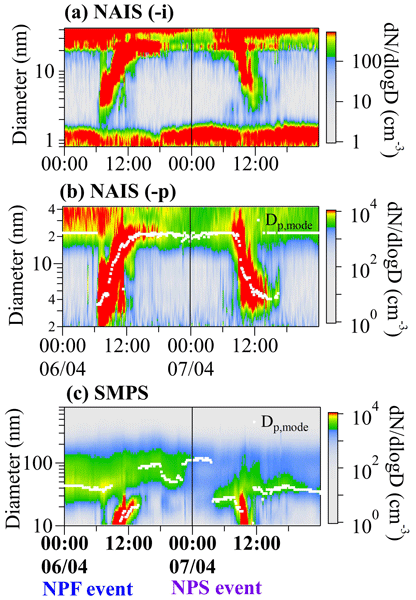
Vijay P. Kanawade, Neha Deot, Mihai Ciobanu, Aliki Christodoulou, Marije van den Born, Chengfeng Liu, Alkistis Papetta, Rima Baalbaki, Michael Pikridas, Spyros Bezantakos, Anchal Garg, Chrysanthos Savvides, Efstratios Bourtsoukidis, George Biskos, Franco Marenco, Jean Sciare, and Tuija Jokinen
Atmos. Chem. Phys., 26, 8839–8854, https://doi.org/10.5194/acp-26-8839-2026, https://doi.org/10.5194/acp-26-8839-2026, 2026
Short summary
Short summary
Only a small fraction of airborne particles acts as seeds for cloud droplets and influence climate, yet the processes controlling their abundance remain unclear. Field measurements in Cyprus reveal that particles smaller than 20 nanometers can rapidly shrink. This shrinkage was linked to dilution and possible evaporation of organic compounds, identifying a previously overlooked nanoparticle sink that may reduce cloud-forming particles and weaken aerosol-driven cooling.
Ardit Arifi, Hailing Jia, Guangliang Fu, Athanasios Tsikerdekis, Nick Schutgens, Anne Kubin, Yusuf Bhatti, Ulrike Dusek, and Otto Hasekamp
EGUsphere, https://doi.org/10.5194/egusphere-2026-5361, https://doi.org/10.5194/egusphere-2026-5361, 2026
This preprint is open for discussion and under review for Atmospheric Chemistry and Physics (ACP).
Short summary
Short summary
Aerosols are tiny particles that affect climate by scattering and absorbing sunlight and altering clouds. Much of the uncertainty in their climate effect comes from poorly known emissions. Here we provide a new global estimate of aerosol emissions using PACE/SPEXone satellite observations of aerosol amount, size, and absorption. Combining these with a global aerosol climate model through data assimilation, we find a substantial update to current estimates, suggesting stronger aerosol cooling.
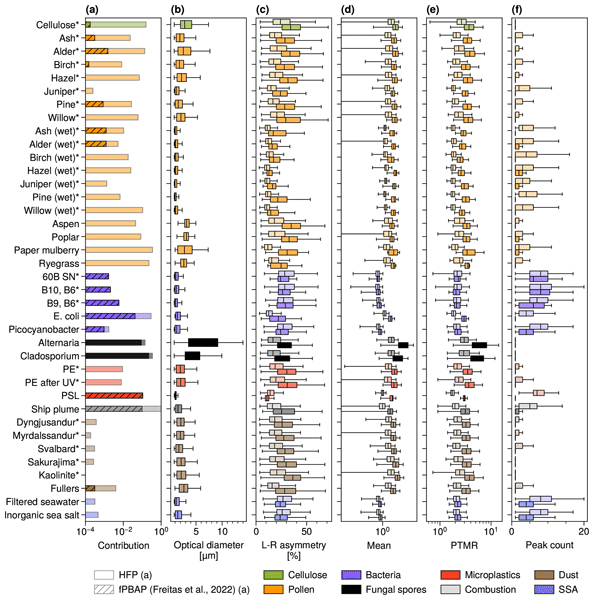
Aiden Jönsson, Jinglan Fu, Gabriel Pereira Freitas, Ian Crawford, Pavla Dagsson-Waldhauserová, Radovan Krejci, Yutaka Tobo, Karl Espen Yttri, and Paul Zieger
Atmos. Chem. Phys., 26, 13617–13643, https://doi.org/10.5194/acp-26-13617-2026, https://doi.org/10.5194/acp-26-13617-2026, 2026
Short summary
Short summary
Coarse-mode aerosols, like dust and bioaerosols, play important roles in environmental and climate processes. We measured fluorescence and morphological properties of key coarse-mode particle types, compared them with previous characterizations, and trained machine learning models with these data to classify unknown particles. This algorithm improves bioaerosol identification and successfully reproduces the annual bioaerosol cycle previously identified in a year of observations from Svalbard.
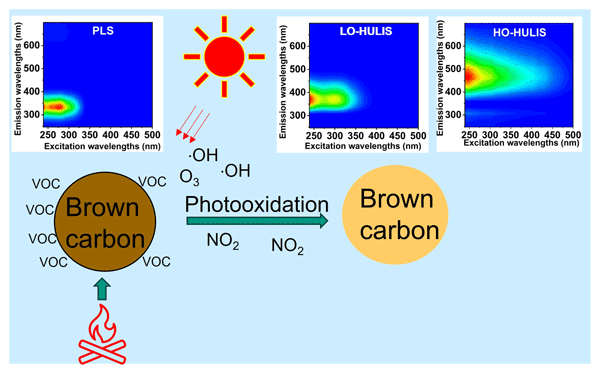
Feng Jiang, Jun Zhang, David M. Bell, Kun Li, Nadine Borduas-Dedekind, Andre S. H. Prevot, Hongbiao Cui, Harald Saathoff, and Thomas Leisner
Atmos. Chem. Phys., 26, 11733–11746, https://doi.org/10.5194/acp-26-11733-2026, https://doi.org/10.5194/acp-26-11733-2026, 2026
Short summary
Short summary
We studied chemical compositions and chromophores of brown carbon aerosol from combustion emission before and after photooxidation using an oxidative flow reactor. The chromophore and chemical composition of brown carbon were determined by excitation-emission spectroscopy and mass spectrometry. This work helps to get a better understanding of evolution process of the chromophores from primary combustion emissions during the real atmospheric transportation.
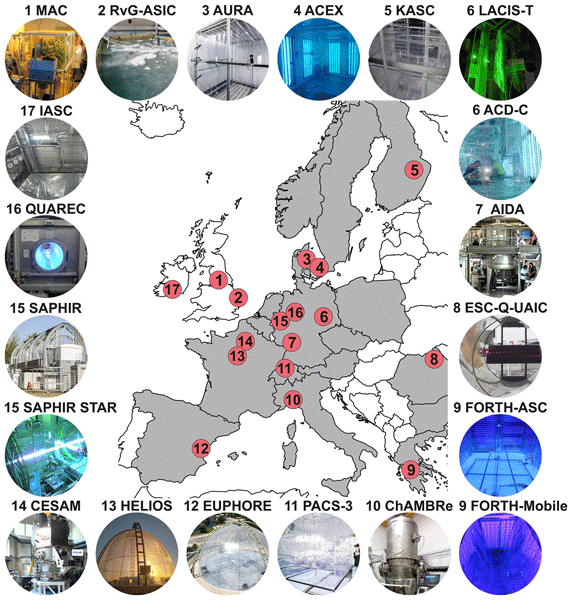
Hendrik Fuchs, Niklas Illmann, Amalia Muñoz, Mila Ródenas, Bénédicte Picquet-Varrault, M. Rami Alfarra, Cecilia Arsene, Iustinian G. Bejan, David M. Bell, Merete Bilde, Alexander Böhmländer, Mixtli Campos-Pineda, Mathieu Cazaunau, Patrice Coll, Véronique Daële, Claudia Di Biagio, Michael Flynn, Paola Formenti, Hartmut Herrmann, Kristina Höhler, Thorsten Hohaus, Matthew S. Johnson, Eija Juurola, Niku Kivekäs, Jan Kaiser, Christos Kaltsonoudis, Paolo Laj, Dario Massabò, Federico Mazzei, Gordon McFiggans, Max R. McGillen, Abdelwahid Mellouki, Peter Mettke, Ottmar Möhler, Falk Mothes, Dennis Niedermeier, Anna Novelli, Romeo I. Olariu, Spyros N. Pandis, Iulia Patroescu-Klotz, Rosa Maria Petracca Altieri, Paolo Prati, Claudiu Roman, Albert A. Ruth, Harald Saathoff, Silvio Schmalfuß, Frank Stratmann, Virginia Vernocchi, Aristeidis Voliotis, Jens Voigtländer, Annele Virtanen, Andreas Wahner, Robert Wagner, John Wenger, Sören Zorn, Peter Wiesen, and Jean-Francois Doussin
Atmos. Meas. Tech., 19, 4165–4199, https://doi.org/10.5194/amt-19-4165-2026, https://doi.org/10.5194/amt-19-4165-2026, 2026
Short summary
Short summary
Atmospheric simulation chambers enable experiments to be conducted under controlled conditions, improving our understanding of, and ability to predict, changes in the composition of the atmosphere. This is important for assessing air quality and its effects on human health, climate, the environment, and the economy. This paper describes the chambers of the European ACTRIS research infrastructure and discusses topics and directions that can be addressed in future chamber experiments.
Vijay P. Kanawade, Neha Deot, Mihai Ciobanu, Aliki Christodoulou, Marije van den Born, Chengfeng Liu, Alkistis Papetta, Rima Baalbaki, Michael Pikridas, Spyros Bezantakos, Anchal Garg, Chrysanthos Savvides, Efstratios Bourtsoukidis, George Biskos, Franco Marenco, Jean Sciare, and Tuija Jokinen
Atmos. Chem. Phys., 26, 8839–8854, https://doi.org/10.5194/acp-26-8839-2026, https://doi.org/10.5194/acp-26-8839-2026, 2026
Short summary
Short summary
Only a small fraction of airborne particles acts as seeds for cloud droplets and influence climate, yet the processes controlling their abundance remain unclear. Field measurements in Cyprus reveal that particles smaller than 20 nanometers can rapidly shrink. This shrinkage was linked to dilution and possible evaporation of organic compounds, identifying a previously overlooked nanoparticle sink that may reduce cloud-forming particles and weaken aerosol-driven cooling.
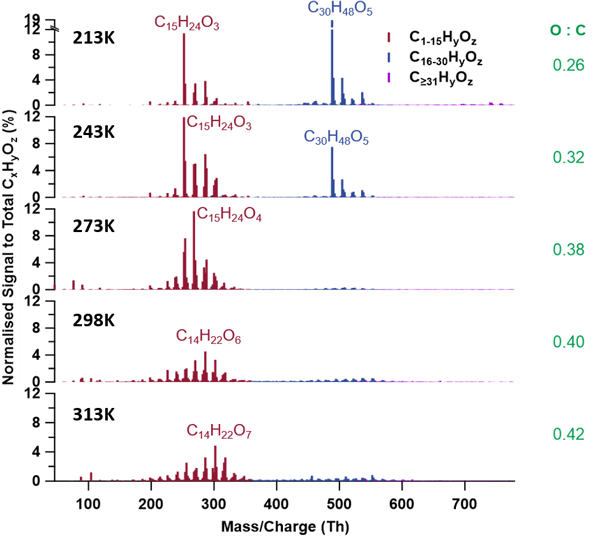
Linyu Gao, Stella E. I. Manavi, Claudia Mohr, Junwei Song, Cheng Wu, Thomas Leisner, Spyros N. Pandis, and Harald Saathoff
Atmos. Chem. Phys., 26, 8875–8892, https://doi.org/10.5194/acp-26-8875-2026, https://doi.org/10.5194/acp-26-8875-2026, 2026
Short summary
Short summary
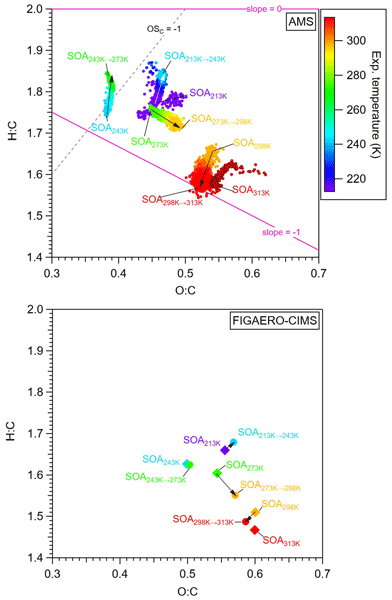
We investigate how temperature (213–313K) affects secondary organic aerosol (SOA) particles derived from isoprene and α-pinene mixtures. Isoprene's suppression on α-pinene dimer formation varied with temperatures. Particles formed at higher temperatures are more oxidized yet more volatile than those formed at lower temperatures and then warmed. This work highlights the need to consider both temperature and biogenic vapor interaction to accurately describe SOA formation, aging, and global burden.
Katrin Zenker, Peter Redl, Anne Kasper-Giebl, and Ulrike Dusek
EGUsphere, https://doi.org/10.5194/egusphere-2026-2593, https://doi.org/10.5194/egusphere-2026-2593, 2026
Short summary
Short summary
This study presents size-resolved mass concentrations of inorganic ions, levoglucosan, and total carbon of aerosol particles from a coastal station at the Dutch Wadden Sea as well as isotopic signatures (13C and 14C) of organic carbon. Aerosol advected out to the North Sea consists mainly of ammonium nitrate and carbonaceous material. Fossil sources contribute a small mass fraction to organic carbon. 13C signatures differ strongly from those of primary sources, highlighting secondary processes.
Stijn S. A. van Rijn, Haiyan Ni, Martijn A. R. Goudberg, Merel R. van Helten, Anatoli Mokhov, and Ulrike Dusek
Aerosol Research Discuss., https://doi.org/10.5194/ar-2026-21, https://doi.org/10.5194/ar-2026-21, 2026
Revised manuscript under review for AR
Short summary
Short summary
Combusting hydrogen alongside carbon-based fuels has been proposed to reduce CO2 emissions. In this work, we investigate how this affects the emitted particles, using a model flame. Increasing hydrogen leads to smaller particles containing a higher of organic material and less of the of the strongly light absorbing elemental carbon. However, the organic material shows considerable light absorption at shorter visible wavelength and in the UV.
Yanxia Li, Hengheng Zhang, Xuefeng Shi, Yaowei Li, Sophie Abou-Rizk, Jessica B. Smith, Zhaojin An, Adrian Wenzel, Junwei Song, Thomas Leisner, Frank Keutsch, Jia Chen, and Harald Saathoff
EGUsphere, https://doi.org/10.5194/egusphere-2026-2195, https://doi.org/10.5194/egusphere-2026-2195, 2026
Short summary
Short summary
Urban ultrafine particles (<100 nm) sources and growth mechanisms remain poorly constrained. Measurements in a Munich street canyon reveal that UFP number concentrations peak at night due to traffic and cooking emissions trapped under a shallow boundary layer. Particle growth is instead driven by condensation of organic vapours with strong seasonal shifts: biogenic and barbeque charcoal biomass-burning compounds dominate in summer, while combustion-related organics control winter growth.
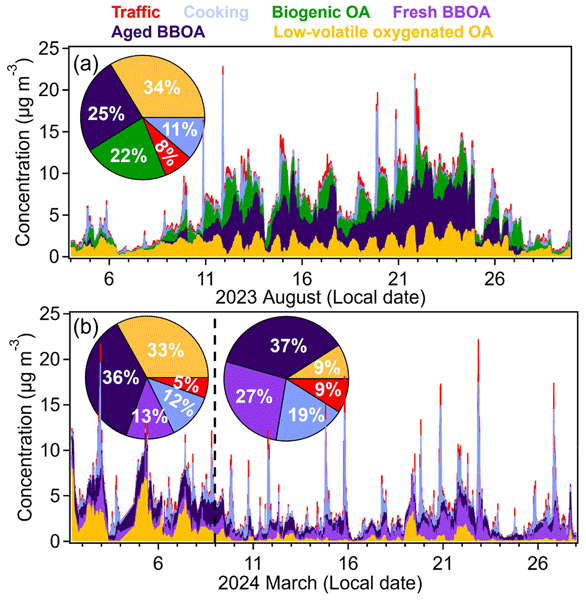
Yanxia Li, Hengheng Zhang, Xuefeng Shi, Yaowei Li, Sophie Abou-Rizk, Jessica B. Smith, Zhaojin An, Adrian Wenzel, Junwei Song, Thomas Leisner, Frank Keutsch, Jia Chen, and Harald Saathoff
Atmos. Chem. Phys., 26, 5813–5837, https://doi.org/10.5194/acp-26-5813-2026, https://doi.org/10.5194/acp-26-5813-2026, 2026
Short summary
Short summary
We analyzed Munich air samples across seasons to identify pollution sources. Traffic contributes less to particles than expected, while biomass burning dominates year-round. Summer barbecuing and winter heating release significant pollution. Monoterpene emissions from plants produce particles at night. Effective air quality improvement requires year-round strategies targeting biomass burning, not just vehicles. Understanding each city's pollution patterns is essential for public health.
Peng Yao, Rupert Holzinger, Beatriz Sayuri Oyama, Agne Masalaite, Dipayan Paul, Haiyan Ni, Hanne Noto, Dušan Materić, Maria de Fátima Andrade, Ru-Jin Huang, and Ulrike Dusek
Atmos. Chem. Phys., 26, 5005–5018, https://doi.org/10.5194/acp-26-5005-2026, https://doi.org/10.5194/acp-26-5005-2026, 2026
Short summary
Short summary
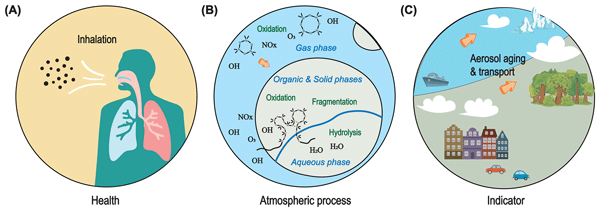
We identify a previously unrecognized class of synthetic organic compounds, large molecular methylsiloxanes, in ambient aerosols across diverse environments in three countries. These compounds are present at substantial levels, primarily originating from traffic emissions related to engine lubrication. Their high abundance and significant daily human exposure suggest potential, yet still poorly understood, implications for both health and climate.
Hengheng Zhang, Gholam Ali Hoshyaripour, Heike Vogel, Frank Wagner, Thomas Leisner, Jochen Förstner, and Harald Saathoff
EGUsphere, https://doi.org/10.5194/egusphere-2025-5980, https://doi.org/10.5194/egusphere-2025-5980, 2026
Short summary
Short summary
We studied several major dust storms that traveled from the Sahara to Europe using ground-based light measurements, sunlight sensors, particle counters, and a modern weather and dust model. We reveal when the dust arrived, how it moved and mixed in the air, and why each event behaved differently. Our results help improve forecasts of dust episodes that influence air quality, visibility, and solar energy across Europe.
Marco Zanatta, Pia Bogert, Patrick Ginot, Yiwei Gong, Gholam Ali Hoshyaripour, Yaqiong Hu, Feng Jiang, Paolo Laj, Yanxia Li, Claudia Linke, Ottmar Möhler, Harald Saathoff, Martin Schnaiter, Nsikanabasi Silas Umo, Franziska Vogel, and Robert Wagner
Aerosol Research, 3, 477–502, https://doi.org/10.5194/ar-3-477-2025, https://doi.org/10.5194/ar-3-477-2025, 2025
Short summary
Short summary
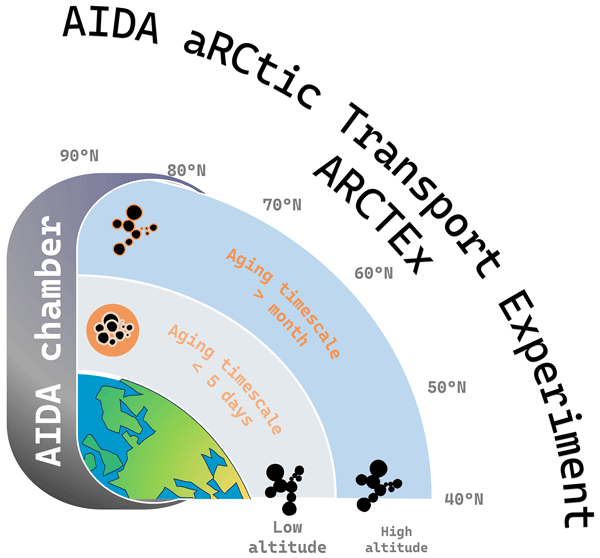
Back carbon is an atmospheric pollutant from combustion and contributes to the Arctic warming. However, its properties change as it travels through the atmosphere, affecting its impact. We recreated Arctic transport conditions in a laboratory to study how black carbon evolves over time. Our findings show that temperature and altitude strongly influence its transformation, providing key insights for improving climate models and understanding Arctic pollution.
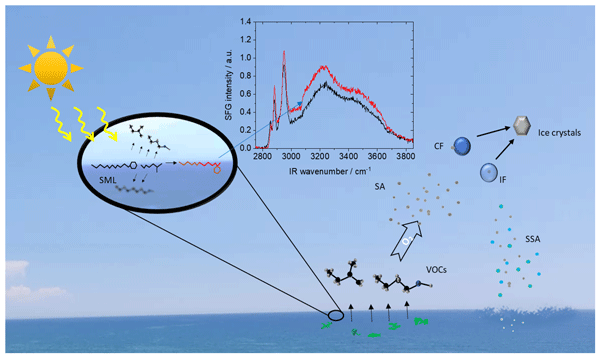
Ahmed Abdelmonem, Dana Glikman, Yiwei Gong, Björn Braunschweig, Harald Saathoff, Johannes Lützenkirchen, and Mohammed H. Fawey
Atmos. Chem. Phys., 25, 13019–13035, https://doi.org/10.5194/acp-25-13019-2025, https://doi.org/10.5194/acp-25-13019-2025, 2025
Short summary
Short summary
This study examines how environmental factors (sunlight, pH, salinity, and surface chemistry) affect air–water interface reactions. Using a surface-specific technique, sum-frequency generation (SFG) spectroscopy, we found that compounds like 4-benzoylbenzoic acid (4-BBA) not only act as photosensitizers but also generate new surface-active products under UV light. These reactions have implications for oceans, lakes, and clouds, providing crucial insights for modeling natural processes.
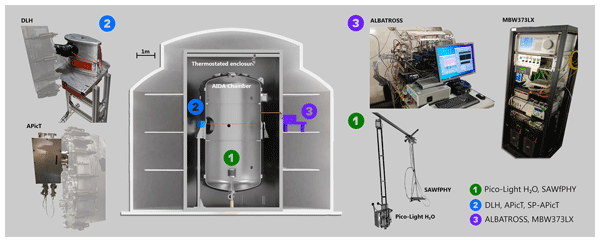
Simone Brunamonti, Harald Saathoff, Albert Hertzog, Glenn Diskin, Masatomo Fujiwara, Karen Rosenlof, Ottmar Möhler, Béla Tuzson, Lukas Emmenegger, Nadir Amarouche, Georges Durry, Fabien Frérot, Jean-Christophe Samake, Claire Cenac, Julio Lopez, Paul Monnier, and Mélanie Ghysels
Atmos. Meas. Tech., 18, 5321–5348, https://doi.org/10.5194/amt-18-5321-2025, https://doi.org/10.5194/amt-18-5321-2025, 2025
Short summary
Short summary
Water vapor is a strong greenhouse gas, and accurate measurements of its concentration in the upper atmosphere (~8–25 km altitude) are crucial for reliable climate predictions. We investigated the performance of four airborne hygrometers, deployed on aircraft or stratospheric balloon platforms and based on different techniques, in a climate simulation chamber. The results demonstrate the high accuracy and reliability of the involved sensors for atmospheric monitoring and research applications.
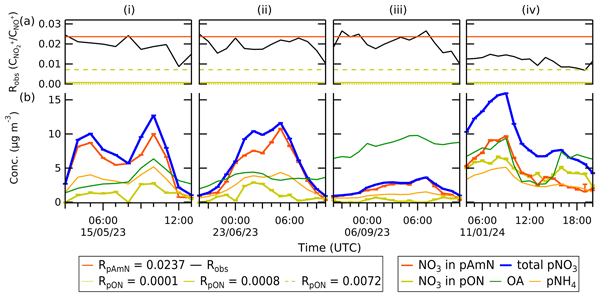
Farhan R. Nursanto, Douglas A. Day, Roy Meinen, Rupert Holzinger, Harald Saathoff, Jinglan Fu, Jan Mulder, Ulrike Dusek, and Juliane L. Fry
Atmos. Meas. Tech., 18, 3051–3072, https://doi.org/10.5194/amt-18-3051-2025, https://doi.org/10.5194/amt-18-3051-2025, 2025
Short summary
Short summary
It is of increasing importance to monitor nitrate pollution that can harm ecosystems. However, commonly used aerosol monitoring equipment cannot distinguish inorganic from organic forms of nitrate, which may have different consequences for the environment. We describe a method to differentiate types of nitrates that can be applied to ambient monitoring to improve understanding of its formation and impact.
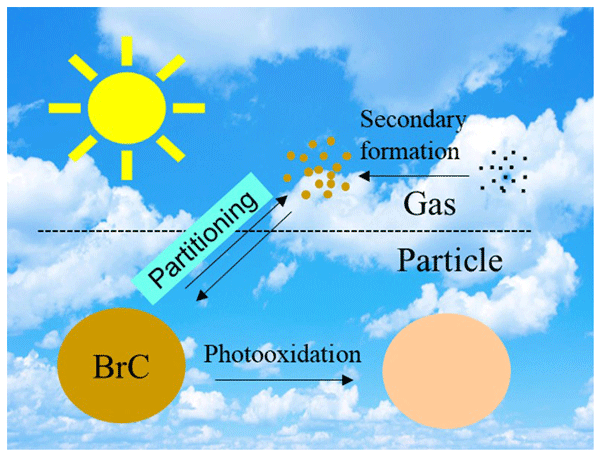
Feng Jiang, Harald Saathoff, Uzoamaka Ezenobi, Junwei Song, Hengheng Zhang, Linyu Gao, and Thomas Leisner
Atmos. Chem. Phys., 25, 1917–1930, https://doi.org/10.5194/acp-25-1917-2025, https://doi.org/10.5194/acp-25-1917-2025, 2025
Short summary
Short summary
The chemical composition of brown carbon in the particle and gas phase was determined by mass spectrometry. BrC in the gas phase was mainly controlled by secondary formation and particle-to-gas partitioning. BrC in the particle phase was mainly from secondary formation. This work helps to get a better understanding of diurnal variations and the sources of brown carbon aerosol at a rural location in central Europe.
Junwei Song, Georgios I. Gkatzelis, Ralf Tillmann, Nicolas Brüggemann, Thomas Leisner, and Harald Saathoff
Atmos. Chem. Phys., 24, 13199–13217, https://doi.org/10.5194/acp-24-13199-2024, https://doi.org/10.5194/acp-24-13199-2024, 2024
Short summary
Short summary
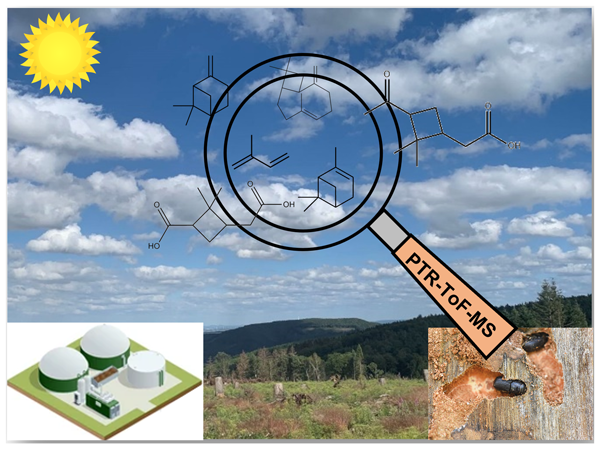
Biogenic volatile organic compounds (BVOCs) and organic aerosol (OA) particles were measured online in a stressed spruce-dominated forest. OA was mainly attributed to the monoterpene oxidation products. The mixing ratios of BVOCs were higher than the values previously measured in other temperate forests. The results demonstrate that BVOCs are influenced not only by meteorology and biogenic emissions but also by local anthropogenic emissions and subsequent chemical transformation processes.
Xiaoli Shen, David M. Bell, Hugh Coe, Naruki Hiranuma, Fabian Mahrt, Nicholas A. Marsden, Claudia Mohr, Daniel M. Murphy, Harald Saathoff, Johannes Schneider, Jacqueline Wilson, Maria A. Zawadowicz, Alla Zelenyuk, Paul J. DeMott, Ottmar Möhler, and Daniel J. Cziczo
Atmos. Chem. Phys., 24, 10869–10891, https://doi.org/10.5194/acp-24-10869-2024, https://doi.org/10.5194/acp-24-10869-2024, 2024
Short summary
Short summary
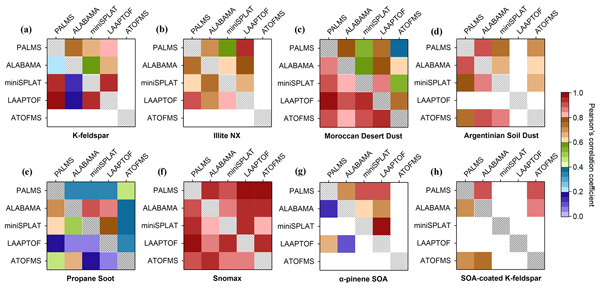
Single-particle mass spectrometry (SPMS) is commonly used to measure the chemical composition and mixing state of aerosol particles. Intercomparison of SPMS instruments was conducted. All instruments reported similar size ranges and common spectral features. The instrument-specific detection efficiency was found to be more dependent on particle size than type. All differentiated secondary organic aerosol, soot, and soil dust but had difficulties differentiating among minerals and dusts.
Hengheng Zhang, Wei Huang, Xiaoli Shen, Ramakrishna Ramisetty, Junwei Song, Olga Kiseleva, Christopher Claus Holst, Basit Khan, Thomas Leisner, and Harald Saathoff
Atmos. Chem. Phys., 24, 10617–10637, https://doi.org/10.5194/acp-24-10617-2024, https://doi.org/10.5194/acp-24-10617-2024, 2024
Short summary
Short summary
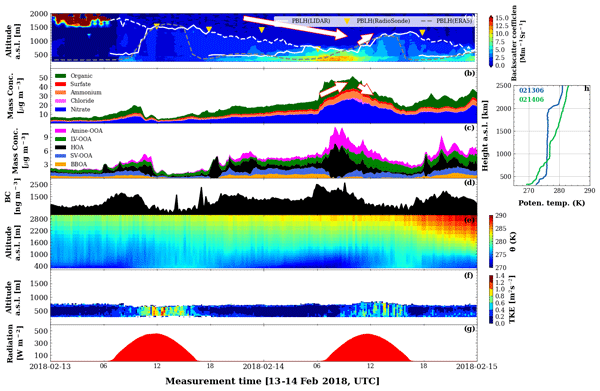
Our study unravels how stagnant winter conditions elevate aerosol levels in Stuttgart. Cloud cover at night plays a pivotal role, impacting morning air quality. Validating a key model, our findings aid accurate air quality predictions, crucial for effective pollution mitigation in urban areas.
Xinya Liu, Diego Alves Gouveia, Bas Henzing, Arnoud Apituley, Arjan Hensen, Danielle van Dinther, Rujin Huang, and Ulrike Dusek
Atmos. Chem. Phys., 24, 9597–9614, https://doi.org/10.5194/acp-24-9597-2024, https://doi.org/10.5194/acp-24-9597-2024, 2024
Short summary
Short summary
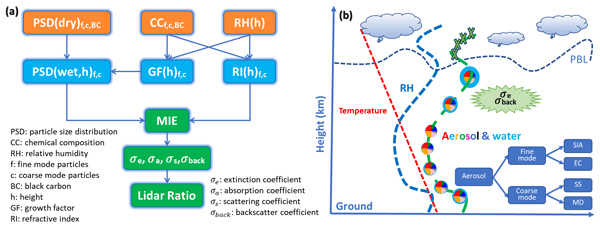
The vertical distribution of aerosol optical properties is important for their effect on climate. This is usually measured by lidar, which has limitations, most notably the assumption of a lidar ratio. Our study shows that routine surface-level aerosol measurements are able to predict this lidar ratio reasonably well within the lower layers of the atmosphere and thus provide a relatively simple and cost-effective method to improve lidar measurements.
Junwei Song, Harald Saathoff, Feng Jiang, Linyu Gao, Hengheng Zhang, and Thomas Leisner
Atmos. Chem. Phys., 24, 6699–6717, https://doi.org/10.5194/acp-24-6699-2024, https://doi.org/10.5194/acp-24-6699-2024, 2024
Short summary
Short summary
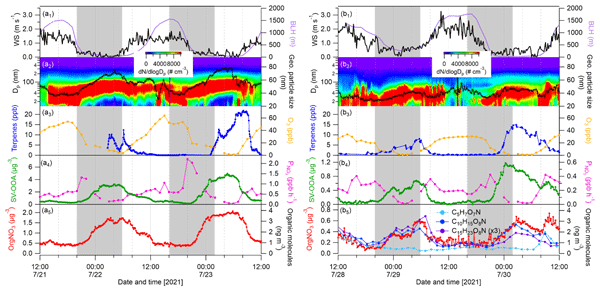
This study presents concurrent online measurements of organic gas and particles (VOCs and OA) at a forested site in summer. Both VOCs and OA were largely contributed by oxygenated organic compounds. Semi-volatile oxygenated OA and organic nitrate formed from monoterpenes and sesquiterpenes contributed significantly to nighttime particle growth. The results help us to understand the causes of nighttime particle growth regularly observed in summer in central European rural forested environments.
Hengheng Zhang, Christian Rolf, Ralf Tillmann, Christian Wesolek, Frank Gunther Wienhold, Thomas Leisner, and Harald Saathoff
Aerosol Research, 2, 135–151, https://doi.org/10.5194/ar-2-135-2024, https://doi.org/10.5194/ar-2-135-2024, 2024
Short summary
Short summary
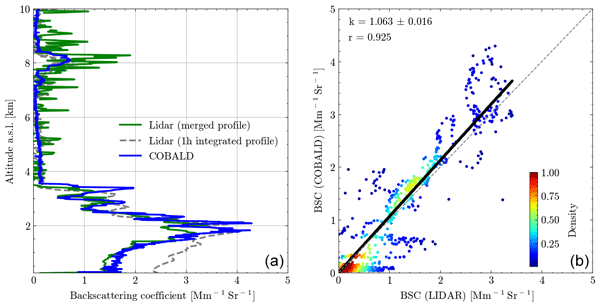
Our study employs advanced tools, including scanning lidar, balloons, and UAVs, to explore aerosol particles in the atmosphere. The scanning lidar offers distinctive near-ground-level insights, enriching our comprehension of aerosol distribution from ground level to the free troposphere. This research provides valuable data for comparing remote sensing and in situ aerosol measurements, advancing our understanding of aerosol impacts on radiative transfer, clouds, and air quality.
Xinya Liu, Bas Henzing, Arjan Hensen, Jan Mulder, Peng Yao, Danielle van Dinther, Jerry van Bronckhorst, Rujin Huang, and Ulrike Dusek
Atmos. Chem. Phys., 24, 3405–3420, https://doi.org/10.5194/acp-24-3405-2024, https://doi.org/10.5194/acp-24-3405-2024, 2024
Short summary
Short summary
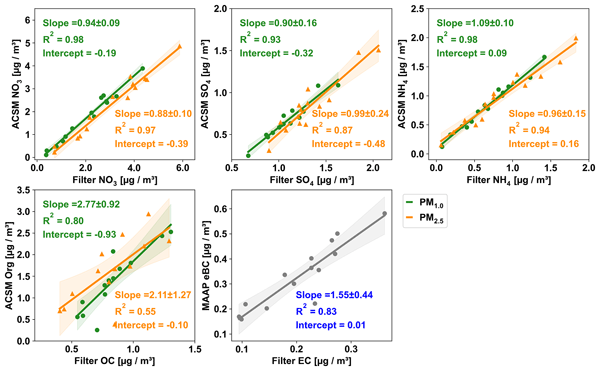
We evaluated the time-of-flight aerosol chemical speciation monitor (TOF-ACSM) following the implementation of the PM2.5 aerodynamic lens and a capture vaporizer (CV). The results showed that it significantly improved the accuracy and precision of ACSM in the field observations. The paper elucidates the measurement outcomes of various instruments and provides an analysis of their biases. This comprehensive evaluation is expected to benefit the ACSM community and other aerosol field measurements.
Feng Jiang, Kyla Siemens, Claudia Linke, Yanxia Li, Yiwei Gong, Thomas Leisner, Alexander Laskin, and Harald Saathoff
Atmos. Chem. Phys., 24, 2639–2649, https://doi.org/10.5194/acp-24-2639-2024, https://doi.org/10.5194/acp-24-2639-2024, 2024
Short summary
Short summary
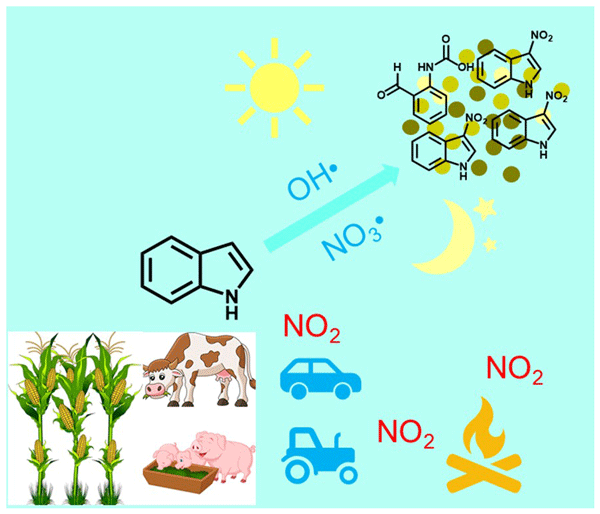
We investigated the optical properties, chemical composition, and formation mechanisms of secondary organic aerosol (SOA) and brown carbon (BrC) from the oxidation of indole with and without NO2 in the Aerosol Interaction and Dynamics in the Atmosphere (AIDA) simulation chamber. This work is one of the very few to link the optical properties and chemical composition of indole SOA with and without NO2 by simulation chamber experiments.
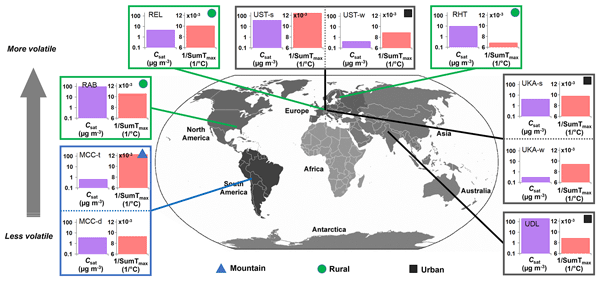
Wei Huang, Cheng Wu, Linyu Gao, Yvette Gramlich, Sophie L. Haslett, Joel Thornton, Felipe D. Lopez-Hilfiker, Ben H. Lee, Junwei Song, Harald Saathoff, Xiaoli Shen, Ramakrishna Ramisetty, Sachchida N. Tripathi, Dilip Ganguly, Feng Jiang, Magdalena Vallon, Siegfried Schobesberger, Taina Yli-Juuti, and Claudia Mohr
Atmos. Chem. Phys., 24, 2607–2624, https://doi.org/10.5194/acp-24-2607-2024, https://doi.org/10.5194/acp-24-2607-2024, 2024
Short summary
Short summary
We present distinct molecular composition and volatility of oxygenated organic aerosol particles in different rural, urban, and mountain environments. We do a comprehensive investigation of the relationship between the chemical composition and volatility of oxygenated organic aerosol particles across different systems and environments. This study provides implications for volatility descriptions of oxygenated organic aerosol particles in different model frameworks.
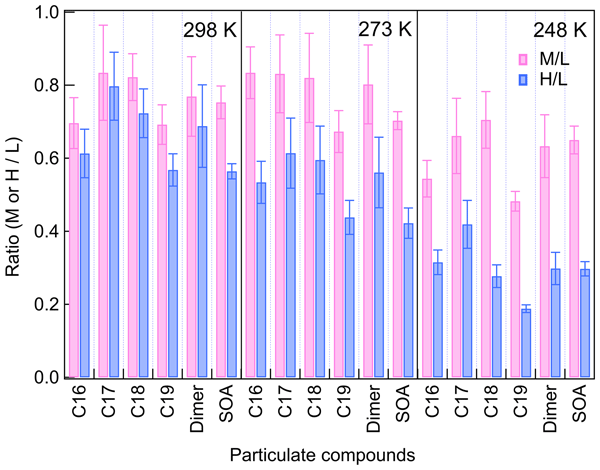
Yiwei Gong, Feng Jiang, Yanxia Li, Thomas Leisner, and Harald Saathoff
Atmos. Chem. Phys., 24, 167–184, https://doi.org/10.5194/acp-24-167-2024, https://doi.org/10.5194/acp-24-167-2024, 2024
Short summary
Short summary
This study investigates the role of the important atmospheric reactive intermediates in the formation of dimers and aerosol in monoterpene ozonolysis at different temperatures. Through conducting a series of chamber experiments and utilizing chemical kinetic and aerosol dynamic models, the SOA formation processes are better described, especially for colder regions. The results can be used to improve the chemical mechanism modeling of monoterpenes and SOA parameterization in transport models.
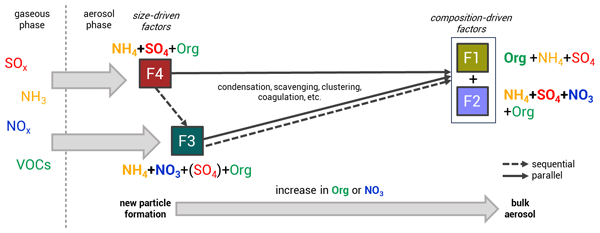
Farhan R. Nursanto, Roy Meinen, Rupert Holzinger, Maarten C. Krol, Xinya Liu, Ulrike Dusek, Bas Henzing, and Juliane L. Fry
Atmos. Chem. Phys., 23, 10015–10034, https://doi.org/10.5194/acp-23-10015-2023, https://doi.org/10.5194/acp-23-10015-2023, 2023
Short summary
Short summary
Particulate matter (PM) is a harmful air pollutant that depends on the complex mixture of natural and anthropogenic emissions into the atmosphere. Thus, in different regions and seasons, the way that PM is formed and grows can differ. In this study, we use a combined statistical analysis of the chemical composition and particle size distribution to determine what drives particle formation and growth across seasons, using varying wind directions to elucidate the role of different sources.
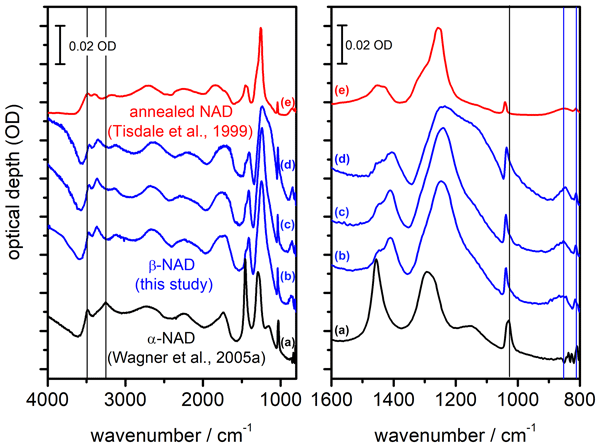
Robert Wagner, Alexander D. James, Victoria L. Frankland, Ottmar Möhler, Benjamin J. Murray, John M. C. Plane, Harald Saathoff, Ralf Weigel, and Martin Schnaiter
Atmos. Chem. Phys., 23, 6789–6811, https://doi.org/10.5194/acp-23-6789-2023, https://doi.org/10.5194/acp-23-6789-2023, 2023
Short summary
Short summary
Polar stratospheric clouds (PSCs) play an important role in the depletion of stratospheric ozone. They can consist of different chemical species, including crystalline nitric acid hydrates. We found that mineral dust or meteoric ablation material can efficiently catalyse the formation of a specific phase of nitric acid dihydrate crystals. We determined predominant particle shapes and infrared optical properties of these crystals, which are important inputs for remote sensing detection of PSCs.
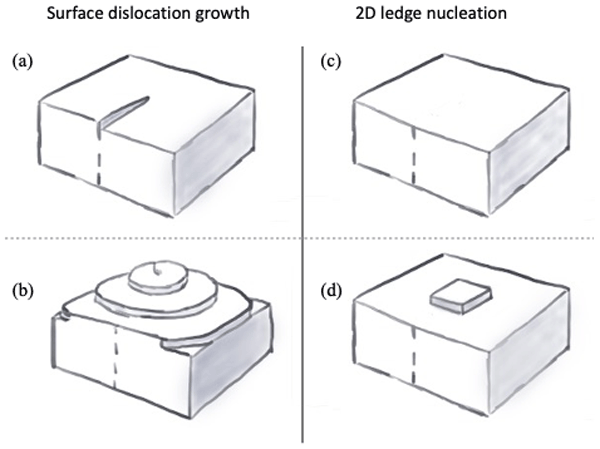
Kara D. Lamb, Jerry Y. Harrington, Benjamin W. Clouser, Elisabeth J. Moyer, Laszlo Sarkozy, Volker Ebert, Ottmar Möhler, and Harald Saathoff
Atmos. Chem. Phys., 23, 6043–6064, https://doi.org/10.5194/acp-23-6043-2023, https://doi.org/10.5194/acp-23-6043-2023, 2023
Short summary
Short summary
This study investigates how ice grows directly from vapor in cirrus clouds by comparing observations of populations of ice crystals growing in a cloud chamber against models developed in the context of single-crystal laboratory studies. We demonstrate that previous discrepancies between different experimental measurements do not necessarily point to different physical interpretations but are rather due to assumptions that were made in terms of how experiments were modeled in previous studies.
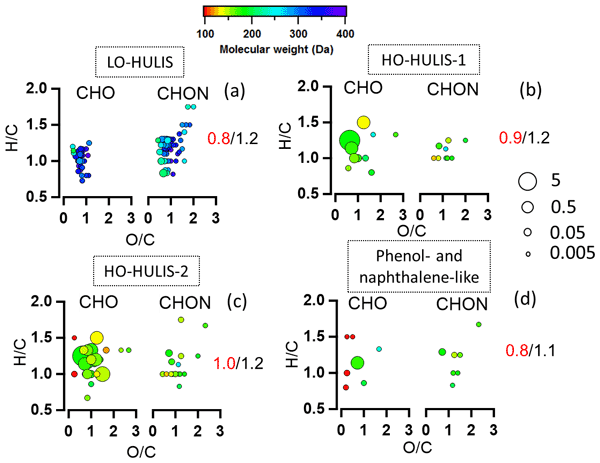
Feng Jiang, Junwei Song, Jonas Bauer, Linyu Gao, Magdalena Vallon, Reiner Gebhardt, Thomas Leisner, Stefan Norra, and Harald Saathoff
Atmos. Chem. Phys., 22, 14971–14986, https://doi.org/10.5194/acp-22-14971-2022, https://doi.org/10.5194/acp-22-14971-2022, 2022
Short summary
Short summary
We studied brown carbon aerosol during typical summer and winter periods in downtown Karlsruhe in southwestern Germany. The chromophore and chemical composition of brown carbon was determined by excitation–emission spectroscopy and mass spectrometry. The chromophore types and sources were substantially different in winter and summer. Humic-like chromophores of different degrees of oxidation dominated and were associated with molecules of different molecular weight and nitrogen content.
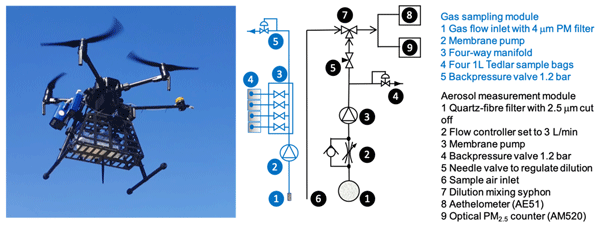
Roland Vernooij, Patrik Winiger, Martin Wooster, Tercia Strydom, Laurent Poulain, Ulrike Dusek, Mark Grosvenor, Gareth J. Roberts, Nick Schutgens, and Guido R. van der Werf
Atmos. Meas. Tech., 15, 4271–4294, https://doi.org/10.5194/amt-15-4271-2022, https://doi.org/10.5194/amt-15-4271-2022, 2022
Short summary
Short summary
Landscape fires are a substantial emitter of greenhouse gases and aerosols. Previous studies have indicated savanna emission factors to be highly variable. Improving fire emission estimates, and understanding future climate- and human-induced changes in fire regimes, requires in situ measurements. We present a drone-based method that enables the collection of a large amount of high-quality emission factor measurements that do not have the biases of aircraft or surface measurements.
Linyu Gao, Junwei Song, Claudia Mohr, Wei Huang, Magdalena Vallon, Feng Jiang, Thomas Leisner, and Harald Saathoff
Atmos. Chem. Phys., 22, 6001–6020, https://doi.org/10.5194/acp-22-6001-2022, https://doi.org/10.5194/acp-22-6001-2022, 2022
Short summary
Short summary
We study secondary organic aerosol (SOA) from β-caryophyllene (BCP) ozonolysis with and without nitrogen oxides over 213–313 K in the simulation chamber. The yields and the rate constants were determined at 243–313 K. Chemical compositions varied at different temperatures, indicating a strong impact on the BCP ozonolysis pathways. This work helps to better understand the SOA from BCP ozonolysis for conditions representative of the real atmosphere from the boundary layer to the upper troposphere.
Magdalena Vallon, Linyu Gao, Feng Jiang, Bianca Krumm, Jens Nadolny, Junwei Song, Thomas Leisner, and Harald Saathoff
Atmos. Meas. Tech., 15, 1795–1810, https://doi.org/10.5194/amt-15-1795-2022, https://doi.org/10.5194/amt-15-1795-2022, 2022
Short summary
Short summary
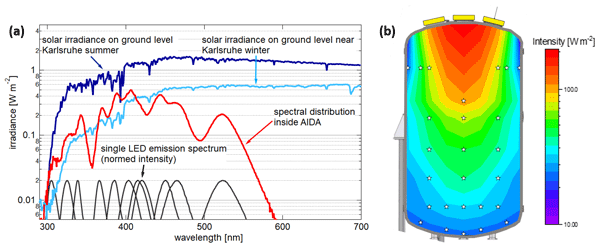
A LED-based light source has been constructed for the AIDA simulation chamber at the Karlsruhe Institute of Technology. It allows aerosol formation and ageing studies under atmospherically relevant illumination intensities and spectral characteristics at temperatures from –90 °C to 30 °C with the possibility of changing the photon flux and irradiation spectrum at any point. The first results of photolysis experiments with 2,3-pentanedione, iron oxalate and a brown carbon component are shown.
Roland Vernooij, Ulrike Dusek, Maria Elena Popa, Peng Yao, Anupam Shaikat, Chenxi Qiu, Patrik Winiger, Carina van der Veen, Thomas Callum Eames, Natasha Ribeiro, and Guido R. van der Werf
Atmos. Chem. Phys., 22, 2871–2890, https://doi.org/10.5194/acp-22-2871-2022, https://doi.org/10.5194/acp-22-2871-2022, 2022
Short summary
Short summary
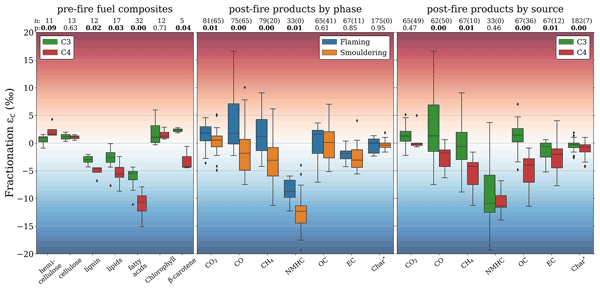
Landscape fires are a major source of greenhouse gases and aerosols, particularly in sub-tropical savannas. Stable carbon isotopes in emissions can be used to trace the contribution of C3 plants (e.g. trees or shrubs) and C4 plants (e.g. savanna grasses) to greenhouse gases and aerosols if the process is well understood. This helps us to link individual vegetation types to emissions, identify biomass burning emissions in the atmosphere, and improve the reconstruction of historic fire regimes.
Lucía Caudillo, Birte Rörup, Martin Heinritzi, Guillaume Marie, Mario Simon, Andrea C. Wagner, Tatjana Müller, Manuel Granzin, Antonio Amorim, Farnoush Ataei, Rima Baalbaki, Barbara Bertozzi, Zoé Brasseur, Randall Chiu, Biwu Chu, Lubna Dada, Jonathan Duplissy, Henning Finkenzeller, Loïc Gonzalez Carracedo, Xu-Cheng He, Victoria Hofbauer, Weimeng Kong, Houssni Lamkaddam, Chuan P. Lee, Brandon Lopez, Naser G. A. Mahfouz, Vladimir Makhmutov, Hanna E. Manninen, Ruby Marten, Dario Massabò, Roy L. Mauldin, Bernhard Mentler, Ugo Molteni, Antti Onnela, Joschka Pfeifer, Maxim Philippov, Ana A. Piedehierro, Meredith Schervish, Wiebke Scholz, Benjamin Schulze, Jiali Shen, Dominik Stolzenburg, Yuri Stozhkov, Mihnea Surdu, Christian Tauber, Yee Jun Tham, Ping Tian, António Tomé, Steffen Vogt, Mingyi Wang, Dongyu S. Wang, Stefan K. Weber, André Welti, Wang Yonghong, Wu Yusheng, Marcel Zauner-Wieczorek, Urs Baltensperger, Imad El Haddad, Richard C. Flagan, Armin Hansel, Kristina Höhler, Jasper Kirkby, Markku Kulmala, Katrianne Lehtipalo, Ottmar Möhler, Harald Saathoff, Rainer Volkamer, Paul M. Winkler, Neil M. Donahue, Andreas Kürten, and Joachim Curtius
Atmos. Chem. Phys., 21, 17099–17114, https://doi.org/10.5194/acp-21-17099-2021, https://doi.org/10.5194/acp-21-17099-2021, 2021
Short summary
Short summary
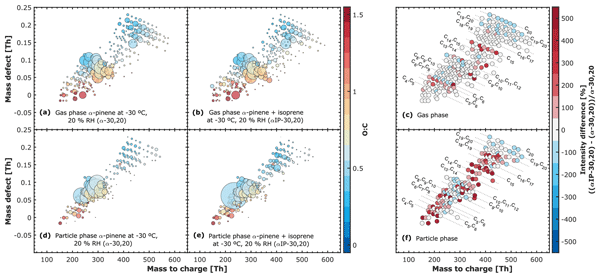
We performed experiments in the CLOUD chamber at CERN at low temperatures to simulate new particle formation in the upper free troposphere (at −30 ºC and −50 ºC). We measured the particle and gas phase and found that most of the compounds present in the gas phase are detected as well in the particle phase. The major compounds in the particles are C8–10 and C18–20. Specifically, we showed that C5 and C15 compounds are detected in a mixed system with isoprene and α-pinene at −30 ºC, 20 % RH.
Larissa Lacher, Hans-Christian Clemen, Xiaoli Shen, Stephan Mertes, Martin Gysel-Beer, Alireza Moallemi, Martin Steinbacher, Stephan Henne, Harald Saathoff, Ottmar Möhler, Kristina Höhler, Thea Schiebel, Daniel Weber, Jann Schrod, Johannes Schneider, and Zamin A. Kanji
Atmos. Chem. Phys., 21, 16925–16953, https://doi.org/10.5194/acp-21-16925-2021, https://doi.org/10.5194/acp-21-16925-2021, 2021
Short summary
Short summary
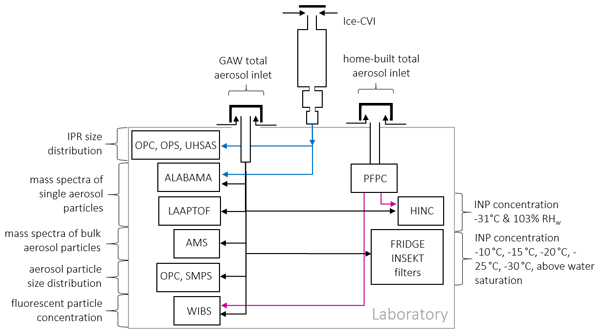
We investigate ice-nucleating particle properties at Jungfraujoch during the 2017 joint INUIT/CLACE field campaign, to improve the knowledge about those rare particles in a cloud-relevant environment. By quantifying ice-nucleating particles in parallel to single-particle mass spectrometry measurements, we find that mineral dust and aged sea spray particles are potential candidates for ice-nucleating particles. Our findings are supported by ice residual analysis and source region modeling.
Cited articles
Alfarra, M. R., Prevot, A. S. H., Szidat, S., Sandradewi, J., Weimer, S., Lanz, V. A., Schreiber, D., Mohr, M., and Baltensperger, U.: Identification of the Mass Spectral Signature of Organic Aerosols from Wood Burning Emissions, Environ. Sci. Technol., 41, 5770–5777, https://doi.org/10.1021/es062289b, 2007.
Bahreini, R., Jimenez, J. L., Wang, J., Flagan, R. C., Seinfeld, J. H., Jayne, J. T., and Worsnop, D. R.: Aircraft-based aerosol size and composition measurements during ACE-Asia using an Aerodyne aerosol mass spectrometer, J. Geophys. Res.-Atmos., 108, https://doi.org/10.1029/2002JD003226, 2003.
Bates, T. S., Quinn, P. K., Frossard, A. A., Russell, L. M., Hakala, J., Petäjä, T., Kulmala, M., Covert, D. S., Cappa, C. D., Li, S.-M., Hayden, K. L., Nuaaman, I., McLaren, R., Massoli, P., Canagaratna, M. R., Onasch, T. B., Sueper, D., Worsnop, D. R., and Keene, W. C.: Measurements of ocean derived aerosol off the coast of California, J. Geophys. Res.-Atmos., 117, https://doi.org/10.1029/2012JD017588, 2012.
Bellouin, N., Quaas, J., Gryspeerdt, E., Kinne, S., Stier, P., Watson-Parris, D., Boucher, O., Carslaw, K. S., Christensen, M., Daniau, A. -L., Dufresne, J. -L., Feingold, G., Fiedler, S., Forster, P., Gettelman, A., Haywood, J. M., Lohmann, U., Malavelle, F., Mauritsen, T., McCoy, D. T., Myhre, G., Mülmenstädt, J., Neubauer, D., Possner, A., Rugenstein, M., Sato, Y., Schulz, M., Schwartz, S. E., Sourdeval, O., Storelvmo, T., Toll, V., Winker, D., and Stevens, B.: Bounding Global Aerosol Radiative Forcing of Climate Change, Rev. Geophys., 58, e2019RG000660, https://doi.org/10.1029/2019RG000660, 2020.
Bunz, H., Möhler, O., Naumann, K.-H., Saathoff, H., Schöck, W., and Schurath, U.: The novel aerosol chamber facility AIDA: status and first results, in: Proceedings of the 7th European Symposium on the Physico-Chemical Behaviour of Atmospheric Pollutants, edited by: Larsen, B., Versino, B., and Angeletti, G., EUR 17482, 673–677, 1996.
Canagaratna, M. R., Jayne, J. T., Jimenez, J. L., Allan, J. D., Alfarra, M. R., Zhang, Q., Onasch, T. B., Drewnick, F., Coe, H., Middlebrook, A., Delia, A., Williams, L. R., Trimborn, A. M., Northway, M. J., DeCarlo, P. F., Kolb, C. E., Davidovits, P., and Worsnop, D. R.: Chemical and microphysical characterization of ambient aerosols with the aerodyne aerosol mass spectrometer, Mass Spectrom. Rev., 26, 185–222, https://doi.org/10.1002/mas.20115, 2007.
Freney, E., Sellegri, K., Nicosia, A., Williams, L. R., Rinaldi, M., Trueblood, J. T., Prévôt, A. S. H., Thyssen, M., Grégori, G., Haëntjens, N., Dinasquet, J., Obernosterer, I., Van Wambeke, F., Engel, A., Zäncker, B., Desboeufs, K., Asmi, E., Timonen, H., and Guieu, C.: Mediterranean nascent sea spray organic aerosol and relationships with seawater biogeochemistry, Atmos. Chem. Phys., 21, 10625–10641, https://doi.org/10.5194/acp-21-10625-2021, 2021.
Fröhlich, R., Cubison, M. J., Slowik, J. G., Bukowiecki, N., Prévôt, A. S. H., Baltensperger, U., Schneider, J., Kimmel, J. R., Gonin, M., Rohner, U., Worsnop, D. R., and Jayne, J. T.: The ToF-ACSM: a portable aerosol chemical speciation monitor with TOFMS detection, Atmos. Meas. Tech., 6, 3225–3241, https://doi.org/10.5194/amt-6-3225-2013, 2013.
Lee, L. A., Reddington, C. L., and Carslaw, K. S.: On the relationship between aerosol model uncertainty and radiative forcing uncertainty, P. Natl. Acad. Sci. USA, 113, 5820–5827, https://doi.org/10.1073/pnas.1507050113, 2016.
Liu, X., Henzing, B., Hensen, A., Mulder, J., Yao, P., van Dinther, D., van Bronckhorst, J., Huang, R., and Dusek, U.: Measurement report: Evaluation of the TOF-ACSM-CV for PM1.0 and PM2.5 measurements during the RITA-2021 field campaign, Atmos. Chem. Phys., 24, 3405–3420, https://doi.org/10.5194/acp-24-3405-2024, 2024.
Mallet, M., Cravigan, L., Miljevic, B., Vaattovaara, P., Deschaseaux, E., Swan, H., Jones, G., and Ristovski, Z.: Sea spray aerosol in the Great Barrier Reef and the presence of nonvolatile organics, J. Geophys. Res.-Atmos., 121, 7088–7099, https://doi.org/10.1002/2016JD024966, 2016.
Ng, N. L., Herndon, S. C., Trimborn, A., Canagaratna, M. R., Croteau, P. L., Onasch, T. B., Sueper, D., Worsnop, D. R., Zhang, Q., Sun, Y. L., and Jayne, J. T.: An Aerosol Chemical Speciation Monitor (ACSM) for Routine Monitoring of the Composition and Mass Concentrations of Ambient Aerosol, Aerosol Sci. Technol., 45, 780–794, https://doi.org/10.1080/02786826.2011.560211, 2011.
Nuaaman, I., Li, S.-M., Hayden, K. L., Onasch, T. B., Massoli, P., Sueper, D., Worsnop, D. R., Bates, T. S., Quinn, P. K., and McLaren, R.: Separating refractory and non-refractory particulate chloride and estimating chloride depletion by aerosol mass spectrometry in a marine environment, Atmos. Chem. Phys. Discuss., 15, 2085–2118, https://doi.org/10.5194/acpd-15-2085-2015, 2015.
O'Dowd, C. D. and Smith, M. H.: Physicochemical properties of aerosols over the northeast Atlantic: Evidence for wind-speed-related submicron sea-salt aerosol production, J. Geophys. Res.-Atmos., 98, 1137–1149, https://doi.org/10.1029/92JD02302, 1993.
O'Dowd, C. D., Jimenez, J. L., Bahreini, R., Flagan, R. C., Seinfeld, J. H., Hämeri, K., Pirjola, L., Kulmala, M., Jennings, S. G., and Hoffmann, T.: Marine aerosol formation from biogenic iodine emissions, Nature, 417, 632–636, https://doi.org/10.1038/nature00775, 2002.
Ovadnevaite, J., Ceburnis, D., Canagaratna, M., Berresheim, H., Bialek, J., Martucci, G., Worsnop, D. R., and O'Dowd, C.: On the effect of wind speed on submicron sea salt mass concentrations and source fluxes, J. Geophys. Res.-Atmos., 117, https://doi.org/10.1029/2011JD017379, 2012.
Petters, S. S., Kjærgaard, E. R., Hasager, F., Massling, A., Glasius, M., and Bilde, M.: Morphology and hygroscopicity of nanoplastics in sea spray, Phys. Chem. Chem. Phys., 25, 32430–32442, https://doi.org/10.1039/D3CP03793B, 2023.
Rolph, G., Stein, A., and Stunder, B.: Real-time Environmental Applications and Display sYstem: READY, Environ. Model. Softw., 95, 210–228, https://doi.org/10.1016/j.envsoft.2017.06.025, 2017.
Saathoff, H., Naumann, K.-H., Möhler, O., Jonsson, Å. M., Hallquist, M., Kiendler-Scharr, A., Mentel, Th. F., Tillmann, R., and Schurath, U.: Temperature dependence of yields of secondary organic aerosols from the ozonolysis of α-pinene and limonene, Atmos. Chem. Phys., 9, 1551–1577, https://doi.org/10.5194/acp-9-1551-2009, 2009.
Schmale, J., Schneider, J., Nemitz, E., Tang, Y. S., Dragosits, U., Blackall, T. D., Trathan, P. N., Phillips, G. J., Sutton, M., and Braban, C. F.: Sub-Antarctic marine aerosol: dominant contributions from biogenic sources, Atmos. Chem. Phys., 13, 8669–8694, https://doi.org/10.5194/acp-13-8669-2013, 2013.
Schneider, J., Weimer, S., Drewnick, F., Borrmann, S., Helas, G., Gwaze, P., Schmid, O., Andreae, M. O., and Kirchner, U.: Mass spectrometric analysis and aerodynamic properties of various types of combustion-related aerosol particles, Int. J. Mass Spectrom., 258, 37–49, https://doi.org/10.1016/j.ijms.2006.07.008, 2006.
Stein, A. F., Draxler, R. R., Rolph, G. D., Stunder, B. J. B., Cohen, M. D., and Ngan, F.: NOAA's HYSPLIT Atmospheric Transport and Dispersion Modeling System, B. Am. Meteorol. Soc., 96, 2059–2077, https://doi.org/10.1175/BAMS-D-14-00110.1, 2015.
Sutresna, A., Keywood, M., Paton-Walsh, C., Simmons, J., Mynard, C., Dang, Q., Mochida, M., Ohata, S., Afsana, S., Kunwar, B., Kawamura, K., Humphries, R., Dunne, E., Ward, J., Harnwell, J., Reisen, F., Emmerson, K., Griffiths, A., Williams, A., Schofield, R., and Rayner, P.: Interference of sea salt in capture vaporizer-ToF-ACSM measurements of biomass burning organic aerosols in coastal locations, Environ. Sci. Atmospheres, 4, 634–644, https://doi.org/10.1039/D3EA00171G, 2024.
Timonen, H., Cubison, M., Aurela, M., Brus, D., Lihavainen, H., Hillamo, R., Canagaratna, M., Nekat, B., Weller, R., Worsnop, D., and Saarikoski, S.: Applications and limitations of constrained high-resolution peak fitting on low resolving power mass spectra from the ToF-ACSM, Atmos. Meas. Tech., 9, 3263–3281, https://doi.org/10.5194/amt-9-3263-2016, 2016.
van den Born, M.: Dataset for “Measurements of NaCl in Ambient Air with a Capture Vaporizer-ToF-ACSM”, Zenodo [data set], https://doi.org/10.5281/zenodo.23694652, 2026.
Wagner, R., Ickes, L., Bertram, A. K., Els, N., Gorokhova, E., Möhler, O., Murray, B. J., Umo, N. S., and Salter, M. E.: Heterogeneous ice nucleation ability of aerosol particles generated from Arctic sea surface microlayer and surface seawater samples at cirrus temperatures, Atmos. Chem. Phys., 21, 13903–13930, https://doi.org/10.5194/acp-21-13903-2021, 2021.
Xu, W., Croteau, P., Williams, L., Canagaratna, M., Onasch, T., Cross, E., Zhang, X., Robinson, W., Worsnop, D., and Jayne, J.: Laboratory characterization of an aerosol chemical speciation monitor with PM2.5 measurement capability, Aerosol Sci. Technol., 51, 69–83, https://doi.org/10.1080/02786826.2016.1241859, 2017.
Xu, W., Lambe, A., Silva, P., Hu, W., Onasch, T., Williams, L., Croteau, P., Zhang, X., Renbaum-Wolff, L., Fortner, E., Jimenez, J. L., Jayne, J., Worsnop, D., and Canagaratna, M.: Laboratory evaluation of species-dependent relative ionization efficiencies in the Aerodyne Aerosol Mass Spectrometer, Aerosol Sci. Technol., 52, 626–641, https://doi.org/10.1080/02786826.2018.1439570, 2018.
Zhang, Q., Jimenez, J. L., Canagaratna, M. R., Ulbrich, I. M., Ng, N. L., Worsnop, D. R., and Sun, Y.: Understanding atmospheric organic aerosols via factor analysis of aerosol mass spectrometry: a review, Anal. Bioanal. Chem., 401, 3045–3067, https://doi.org/10.1007/s00216-011-5355-y, 2011.
Zheng, Y., Cheng, X., Liao, K., Li, Y., Li, Y. J., Huang, R.-J., Hu, W., Liu, Y., Zhu, T., Chen, S., Zeng, L., Worsnop, D. R., and Chen, Q.: Characterization of anthropogenic organic aerosols by TOF-ACSM with the new capture vaporizer, Atmos. Meas. Tech., 13, 2457–2472, https://doi.org/10.5194/amt-13-2457-2020, 2020.
Zorn, S. R., Drewnick, F., Schott, M., Hoffmann, T., and Borrmann, S.: Characterization of the South Atlantic marine boundary layer aerosol using an aerodyne aerosol mass spectrometer, Atmos. Chem. Phys., 8, 4711–4728, https://doi.org/10.5194/acp-8-4711-2008, 2008.
Short summary
Sea spray aerosol plays an important role in climate and atmospheric chemistry, yet sea salt is rarely quantified by online mass spectrometers due to its refractory nature. This study shows that a capture vaporizer time-of-flight aerosol chemical speciation monitor can detect sea salt aerosol using Na and NaCl fragments. Laboratory and field results demonstrate robust real-time measurements of NaCl surface area, while accurate mass concentrations require particle size information.
Sea spray aerosol plays an important role in climate and atmospheric chemistry, yet sea salt is...


Altmetrics
Final-revised paper
Preprint