Articles | Volume 4, issue 2
https://doi.org/10.5194/ar-4-603-2026
© Author(s) 2026. This work is distributed under
the Creative Commons Attribution 4.0 License.
https://doi.org/10.5194/ar-4-603-2026
© Author(s) 2026. This work is distributed under
the Creative Commons Attribution 4.0 License.
Research article
| 
25 Nov 2026
Research article |
| 25 Nov 2026
Contributions of fine and coarse particles to light absorption at an urban traffic site during street dust season

Atmospheric Composition Research, Finnish Meteorological Institute, 00101, Helsinki, Finland
Atmospheric Composition Research, Finnish Meteorological Institute, 00101, Helsinki, Finland
Jussi Hoivala
Aerosol Physics Laboratory, Physics Unit, Faculty of Engineering and Natural Sciences, Tampere University, 33014, Tampere, Finland
Minna Aurela
Atmospheric Composition Research, Finnish Meteorological Institute, 00101, Helsinki, Finland
Aki Virkkula
Atmospheric Composition Research, Finnish Meteorological Institute, 00101, Helsinki, Finland
Jarkko V. Niemi
Helsinki Region Environmental Services Authority, 00066, Helsinki, Finland
Hanna E. Manninen
Helsinki Region Environmental Services Authority, 00066, Helsinki, Finland
Topi Rönkkö
Aerosol Physics Laboratory, Physics Unit, Faculty of Engineering and Natural Sciences, Tampere University, 33014, Tampere, Finland
Hilkka Timonen
Atmospheric Composition Research, Finnish Meteorological Institute, 00101, Helsinki, Finland
Sanna Saarikoski
Atmospheric Composition Research, Finnish Meteorological Institute, 00101, Helsinki, Finland
Related authors
Sami D. Harni, Delun Li, Ville Silvonen, Laura Salo, Teemu Lepistö, Toni Tykkä, Mohamed Elsayed, Luis Barreira, Sanna Saarikoski, Ilpo Kulmala, Jarkko V. Niemi, Heidi Hellén, Arto Säämänen, Topi Rönkkö, and Hilkka Timonen
Aerosol Research Discuss., https://doi.org/10.5194/ar-2026-32, https://doi.org/10.5194/ar-2026-32, 2026
Preprint under review for AR
Short summary
Short summary
In this study, indoor and outdoor pollutant concentrations were measured in a mechanically ventilated building in the immediate vicinity of a busy international airport. The measurement period included a strong long-range transport event. Clear differences in indoor outdoor ratios were observed between different pollutants and between normal and long-range transport periods. This study highlights the significance of a intake filtration system in indoor pollutant concentration management.
Sanna Saarikoski, Minna Aurela, Jarkko V. Niemi, Luis M. F. Barreira, Jussi Hoivala, Hanna Manninen, Topi Rönkkö, and Hilkka Timonen
Atmos. Chem. Phys., 26, 11817–11833, https://doi.org/10.5194/acp-26-11817-2026, https://doi.org/10.5194/acp-26-11817-2026, 2026
Short summary
Short summary
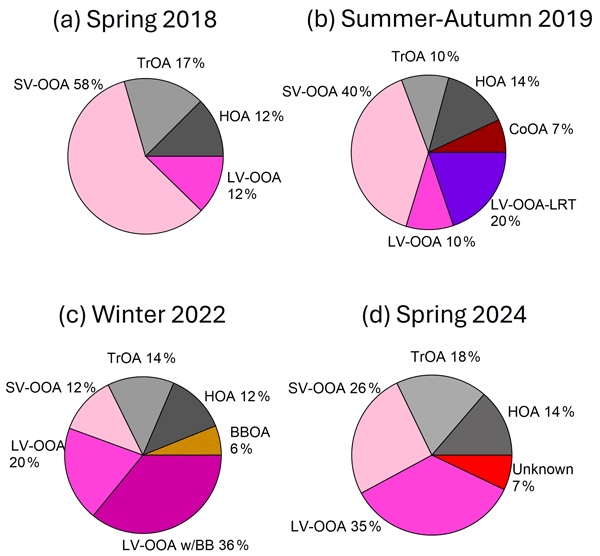
This study analyzed submicron organic aerosol (OA) at a Helsinki traffic site (2018–2024) using aerosol mass spectrometer. Findings show that traffic OA includes both hydrocarbons (HOA) and oxygenated traffic-related OA (TrOA). TrOA peaks later in morning than HOA, likely due to atmospheric processing or modern vehicle emissions. Using only HOA to estimate traffic primary OA may cause a 50 % underestimation indicating that traffic OA is complicated, involving both primary and secondary aerosols.
Katariina Kylämäki, Milja Jäppi, Leïla Simon, Wojciech Honkisz, Petteri Marjanen, Laura Salo, Teemu Lepistö, Henna Lintusaari, Luis Barreira, Hannu Kuutti, Matti Rissanen, Piotr Bielaczyc, Hilkka Timonen, Päivi Aakko-Saksa, and Topi Rönkkö
EGUsphere, https://doi.org/10.5194/egusphere-2026-224, https://doi.org/10.5194/egusphere-2026-224, 2026
Short summary
Short summary
Oxidation flow reactors (OFRs) simulate atmospheric aging of e.g. anthropogenic emissions. In this study, we aged exhaust from passenger cars in two OFRs with different designs. On average, the OFRs produced comparable particle size distributions and emission factors. However, there were differences between the OFRs in secondary particle formation depending on the fuel and technology of the car and the differences were mostly explained by OFR design.
Arya Mukherjee, Anni Hartikainen, Markus Somero, Viljami Luostari, Mika Ihalainen, Christopher P. Rüger, Timo Kekäläinen, Ville H. Nissinen, Luis M. F. Barreira, Hanna Koponen, Tuukka Kokkola, Delun Li, Lejish Vettikkat, Pasi Yli-Pirilä, Muhammad Shahzaib, Meri M. Ruppel, Ville Vakkari, Kerneels Jaars, Stefan J. Siebert, Angela Buchholz, Kajar Köster, Pieter G. van Zyl, Hilkka Timonen, Niko Kinnunen, Janne Jänis, Annele Virtanen, Aki Virkkula, and Olli Sippula
Atmos. Chem. Phys., 25, 16747–16774, https://doi.org/10.5194/acp-25-16747-2025, https://doi.org/10.5194/acp-25-16747-2025, 2025
Short summary
Short summary
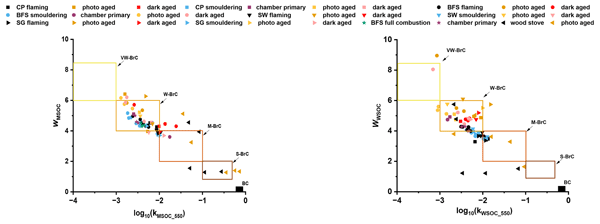
Warming climate is predicted to increase boreal and peatland fires in Northern Eurasia. Limited studies have characterized light absorbing aerosol emissions from these biomasses, thus necessitating this work. Brown carbon (BrC) emitted from laboratory-scale biomass burning had weak light absorptivities based on their complex refractive index values. A combustion temperature dependent light absorptivity continuum existed for emitted BrC. Photochemical aging decreased BrC light absorptivity.
Kimmo Teinilä, Sanna Saarikoski, Henna Lintusaari, Teemu Lepistö, Petteri Marjanen, Minna Aurela, Heidi Hellén, Toni Tykkä, Markus Lampimäki, Janne Lampilahti, Luis Barreira, Timo Mäkelä, Leena Kangas, Juha Hatakka, Sami Harni, Joel Kuula, Jarkko V. Niemi, Harri Portin, Jaakko Yli-Ojanperä, Ville Niemelä, Milja Jäppi, Katrianne Lehtipalo, Joonas Vanhanen, Liisa Pirjola, Hanna E. Manninen, Tuukka Petäjä, Topi Rönkkö, and Hilkka Timonen
Atmos. Chem. Phys., 25, 4907–4928, https://doi.org/10.5194/acp-25-4907-2025, https://doi.org/10.5194/acp-25-4907-2025, 2025
Short summary
Short summary
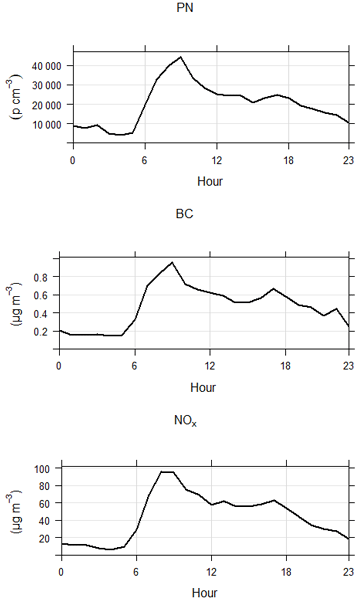
Physical and chemical properties of particulate matter and concentrations of trace gases were measured in a street canyon in Helsinki, Finland, and an urban background site in January–February 2022 to investigate the effect of wintertime conditions on pollutants. State-of-the-art instruments and a mobile laboratory were used, and the measurement data were analysed further with modelling tools like positive matrix factorization and the Pollution Detection Algorithm.
Teemu Lepistö, Henna Lintusaari, Laura Salo, Ville Silvonen, Luis M. F. Barreira, Jussi Hoivala, Lassi Markkula, Jarkko V. Niemi, Jakub Ondracek, Kimmo Teinilä, Hanna E. Manninen, Sanna Saarikoski, Hilkka Timonen, Miikka Dal Maso, and Topi Rönkkö
Aerosol Research, 2, 271–289, https://doi.org/10.5194/ar-2-271-2024, https://doi.org/10.5194/ar-2-271-2024, 2024
Short summary
Short summary
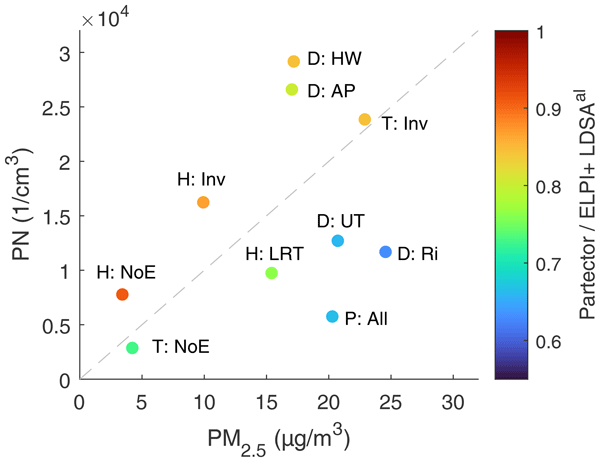
The performances of different particle lung-deposited surface area (LDSAal) measurement methods (Partector, ELPI+, SMPS/DMPS) were compared in ambient conditions. As LDSAal is a health-relevant metric and rather easy to utilise in air quality monitoring, it is crucial to know how the different methods agree, as there are clear differences in their operation. In all, a comparison of different methods can be complicated; still, the methods agree rather well in terms of local pollution (< 400 nm).
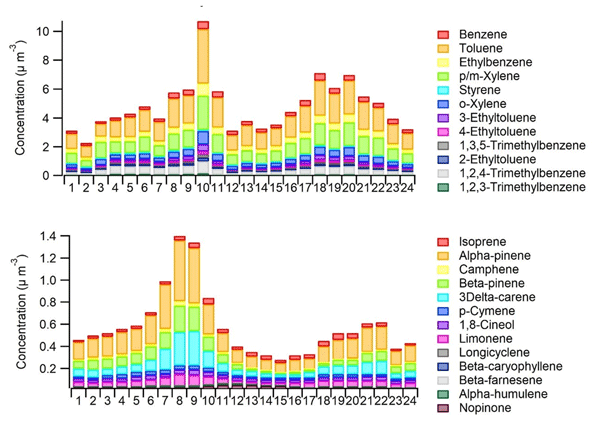
Sanna Saarikoski, Heidi Hellén, Arnaud P. Praplan, Simon Schallhart, Petri Clusius, Jarkko V. Niemi, Anu Kousa, Toni Tykkä, Rostislav Kouznetsov, Minna Aurela, Laura Salo, Topi Rönkkö, Luis M. F. Barreira, Liisa Pirjola, and Hilkka Timonen
Atmos. Chem. Phys., 23, 2963–2982, https://doi.org/10.5194/acp-23-2963-2023, https://doi.org/10.5194/acp-23-2963-2023, 2023
Short summary
Short summary
This study elucidates properties and sources of volatile organic compounds (VOCs) and organic aerosol (OA) in a traffic environment. Anthropogenic VOCs (aVOCs) were clearly higher than biogenic VOCs (bVOCs), but bVOCs produced a larger portion of oxidation products. OA consisted mostly of oxygenated OA, representing secondary OA (SOA). SOA was partly associated with bVOCs, but it was also related to long-range transport. Primary OA originated mostly from traffic.
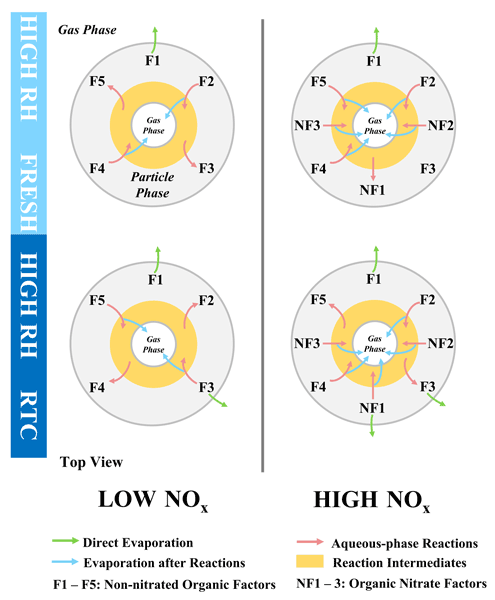
Zijun Li, Angela Buchholz, Luis M. F. Barreira, Arttu Ylisirniö, Liqing Hao, Iida Pullinen, Siegfried Schobesberger, and Annele Virtanen
Atmos. Chem. Phys., 23, 203–220, https://doi.org/10.5194/acp-23-203-2023, https://doi.org/10.5194/acp-23-203-2023, 2023
Short summary
Short summary
Interaction between NOx and biogenic emissions can be important in suburban areas. Our study showed that the addition of NOx during α-pinene SOA formation produced considerable amounts of organic nitrates and affected the composition of non-nitrated organic compounds. The compositional difference consequently altered the primary type of aqueous-phase processes during the isothermal particle evaporation.
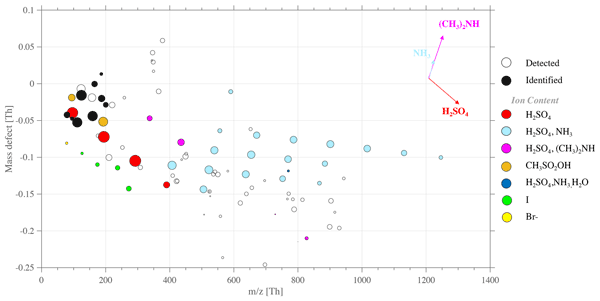
Lauriane L. J. Quéléver, Lubna Dada, Eija Asmi, Janne Lampilahti, Tommy Chan, Jonathan E. Ferrara, Gustavo E. Copes, German Pérez-Fogwill, Luis Barreira, Minna Aurela, Douglas R. Worsnop, Tuija Jokinen, and Mikko Sipilä
Atmos. Chem. Phys., 22, 8417–8437, https://doi.org/10.5194/acp-22-8417-2022, https://doi.org/10.5194/acp-22-8417-2022, 2022
Short summary
Short summary
Understanding how aerosols form is crucial for correctly modeling the climate and improving future predictions. This work provides extensive analysis of aerosol particles and their precursors at Marambio Station, Antarctic Peninsula. We show that sulfuric acid, ammonia, and dimethylamine are key contributors to the frequent new particle formation events observed at the site. We discuss nucleation mechanisms and highlight the need for targeted measurement to fully understand these processes.
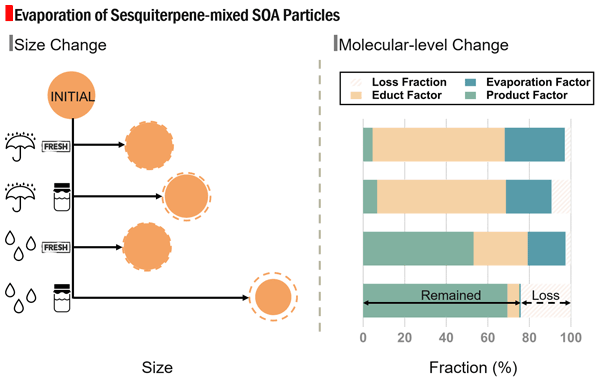
Zijun Li, Angela Buchholz, Arttu Ylisirniö, Luis Barreira, Liqing Hao, Siegfried Schobesberger, Taina Yli-Juuti, and Annele Virtanen
Atmos. Chem. Phys., 21, 18283–18302, https://doi.org/10.5194/acp-21-18283-2021, https://doi.org/10.5194/acp-21-18283-2021, 2021
Short summary
Short summary
We compared the evolution of two types of secondary organic aerosol (SOA) particles during isothermal evaporation. The sesquiterpene SOA particles demonstrated higher resilience to evaporation than α-pinene SOA particles generated under comparable conditions. In-depth analysis showed that under high-relative-humidity conditions, particulate water drove the evolution of particulate constituents by reducing the particle viscosity and initiating chemical aqueous-phase processes.
Delun Li, Krista Luoma, Jonas Svensson, Meri M. Ruppel, Ilpo Marja-Aho, Hans Moosmüller, and Aki Virkkula
EGUsphere, https://doi.org/10.5194/egusphere-2026-6632, https://doi.org/10.5194/egusphere-2026-6632, 2026
This preprint is open for discussion and under review for Atmospheric Chemistry and Physics (ACP).
Short summary
Short summary
Particles from burning birch wood and peat were deposited onto snow to study how they change during melting. Among these particles, there are significant amount that can absorb sunlight and accelerate snowmelt, but their light-absorbing properties changed over time. As melting progressed, water-soluble material moved deeper into the snow, while other particles remained mostly near the surface. These findings help explain how particles change in snow and may affect its absorption of sunlight.
Lauri K. Savolainen, Teemu Lepistö, Heidi Hellén, Henna Lintusaari, Milja Jäppi, Jarkko V. Niemi, Kimmo Teinilä, Minna Aurela, Markus Lampimäki, Anu Kousa, Janne Lampilahti, Katrianne Lehtipalo, Tuukka Petäjä, Miikka Dal Maso, Hanna E. Manninen, Hilkka Timonen, and Topi Rönkkö
Atmos. Chem. Phys., 26, 14823–14841, https://doi.org/10.5194/acp-26-14823-2026, https://doi.org/10.5194/acp-26-14823-2026, 2026
Short summary
Short summary
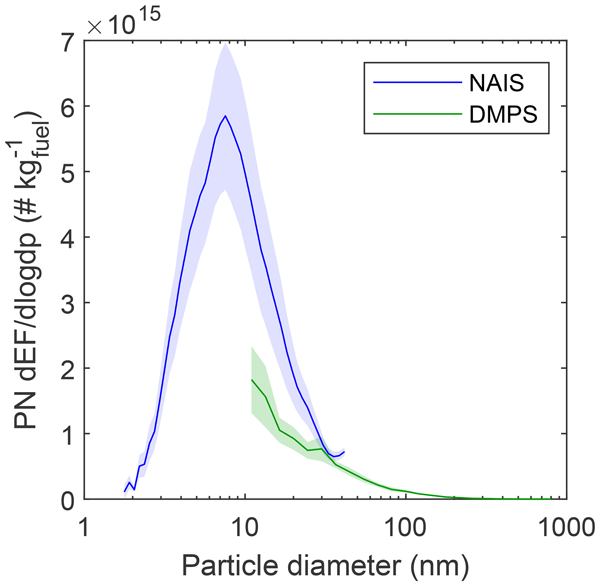
The study investigates vehicle fleet emissions of road traffic. Despite technological advances, road traffic is still an important pollution source in urban areas, especially when considering unregulated, but health-relevant, emerging pollutants. We report fuel consumption normalized vehicle fleet emission factors for various regulated and unregulated air pollutants. Also, we show that road traffic has inverse and indirect effects on urban aerosol which are not generally well understood.
Sami D. Harni, Delun Li, Ville Silvonen, Laura Salo, Teemu Lepistö, Toni Tykkä, Mohamed Elsayed, Luis Barreira, Sanna Saarikoski, Ilpo Kulmala, Jarkko V. Niemi, Heidi Hellén, Arto Säämänen, Topi Rönkkö, and Hilkka Timonen
Aerosol Research Discuss., https://doi.org/10.5194/ar-2026-32, https://doi.org/10.5194/ar-2026-32, 2026
Preprint under review for AR
Short summary
Short summary
In this study, indoor and outdoor pollutant concentrations were measured in a mechanically ventilated building in the immediate vicinity of a busy international airport. The measurement period included a strong long-range transport event. Clear differences in indoor outdoor ratios were observed between different pollutants and between normal and long-range transport periods. This study highlights the significance of a intake filtration system in indoor pollutant concentration management.
Charlotte G. Stapleton, Mikko Sipilä, Arundathi Chandrasekharan, Joonas Merikanto, Kimmo Neitola, Tuomo Nieminen, Risto Makkonen, Jorma Joutsensaari, Aki Virkkula, and Antti-Pekka Hyvärinen
EGUsphere, https://doi.org/10.5194/egusphere-2026-5001, https://doi.org/10.5194/egusphere-2026-5001, 2026
This preprint is open for discussion and under review for Atmospheric Chemistry and Physics (ACP).
Short summary
Short summary
Article presents observations of cloud condensation nuclei (CCN) in the Finnish sub-Arctic. At Pallastunturi, aerosol-cloud interactions have been measured since 2005. Based on these measurements, a simple model was developed to predict the CCN at Värriö for 1998–2021. The CCN concentrations have decreased about 50 % during the measurement period, especially during early spring, when polluted air from the south reaches the Arctic. A global climate model reproduced the observed long-term trend.
Sanna Saarikoski, Minna Aurela, Jarkko V. Niemi, Luis M. F. Barreira, Jussi Hoivala, Hanna Manninen, Topi Rönkkö, and Hilkka Timonen
Atmos. Chem. Phys., 26, 11817–11833, https://doi.org/10.5194/acp-26-11817-2026, https://doi.org/10.5194/acp-26-11817-2026, 2026
Short summary
Short summary
This study analyzed submicron organic aerosol (OA) at a Helsinki traffic site (2018–2024) using aerosol mass spectrometer. Findings show that traffic OA includes both hydrocarbons (HOA) and oxygenated traffic-related OA (TrOA). TrOA peaks later in morning than HOA, likely due to atmospheric processing or modern vehicle emissions. Using only HOA to estimate traffic primary OA may cause a 50 % underestimation indicating that traffic OA is complicated, involving both primary and secondary aerosols.
Aino Ovaska, Daniel Holmberg, Elio Rauth, Mansour Alghamdi, Paulo Artaxo, Eija Asmi, John Backman, Benjamin Bergmans, Matthew Boyer, Liezl Bredenkamp, Maurizio Busetto, Delano Campos De Oliveira, Juan Andrés Casquero-Vera, Darius Ceburnis, Tak Chan, Tommy Chan, Sebastien Conil, Daniele Contini, Suzanne Crumeyrolle, Valentin Duflot, Kostas Eleftheriadis, Johan Esveld, Ekaterina Ezhova, Markus Fiebig, Shahzad Gani, Olga Garmash, Francisco Gómez-Moreno, Roy M. Harrison, Andras Hoffer, Rakesh Hooda, Antti Hyvärinen, Tareq Hussein, Jorma Joutsensaari, Nikos Kalivitis, Heinz Kaminski, Jutta Kesti, Radovan Krejci, Adam Kristensson, Chongai Kuang, Markku Kulmala, Lauri Laakso, Ari Leskinen, Heikki Lihavainen, Andreas Massling, Maik Merkel, Steffen Noe, Jakub Ondracek, Noemí Perez, Jean-Eudes Petit, Tuukka Petäjä, Michael Pikridas, Christopher Pöhlker, Mira Pöhlker, Jean-Philippe Putaud, Ximeng Qi, Cristina Reche, Sergio Rodríguez, Petr Roztocil, Jean Sciare, Karine Sellegri, Dongjie Shang, Ashish Singh, Mikko Sipilä, Henrik Skov, Mar Sorribas, Tamanna Subba, Junying Sun, Peter Tunved, Ville Vakkari, Pieter G. Van Zyl, Aki Virkkula, Jens Voigtländer, Kay Weinhold, Alfred Wiedensohler, Hee-Jung Yoo, Putian Zhou, Kai Puolamäki, Tuomo Nieminen, Veli-Matti Kerminen, Victoria A. Sinclair, and Pauli Paasonen
Earth Syst. Sci. Data Discuss., https://doi.org/10.5194/essd-2026-415, https://doi.org/10.5194/essd-2026-415, 2026
Preprint under review for ESSD
Short summary
Short summary
All clouds form around aerosol particles, and their abundance influences cloud properties. In turn, clouds affect climate by changing how energy moves through the atmosphere, making them important for climate change. To better understand these interactions, we need accurate information on how many aerosol particles are in the atmosphere. Therefore, we have developed a new 21-year global dataset of particle concentrations relevant for cloud formation.
Heidi Hellén, Toni Tykkä, Elli Suhonen, Kimmo Teinilä, Teemu Lepistö, Jarkko V. Niemi, Topi Rönkkö, Hilkka Timonen, and Arnaud P. Praplan
EGUsphere, https://doi.org/10.5194/egusphere-2026-4128, https://doi.org/10.5194/egusphere-2026-4128, 2026
Short summary
Short summary
This study presents a new approach to quantify anthropogenic terpene emissions by measuring VOCs during winter, when biogenic emissions are negligible. Measurements in Helsinki showed that although anthropogenic terpenes accounted for less than 1 % of VOC mass, they made a disproportionately large contribution to atmospheric reactivity. The findings highlight the importance of including anthropogenic terpene emissions in urban air quality studies and atmospheric chemistry models.
Kimmo Teinilä, Teemu Lepistö, Jarkko V. Niemi, Harri Portin, Anssi Julkunen, Anu Kousa, Joel Kuula, Hanna E. Manninen, Pasi Aalto, Tuukka Petäjä, Topi Rönkkö, Erkka Saukko, and Hilkka Timonen
Atmos. Meas. Tech., 19, 4505–4516, https://doi.org/10.5194/amt-19-4505-2026, https://doi.org/10.5194/amt-19-4505-2026, 2026
Short summary
Short summary
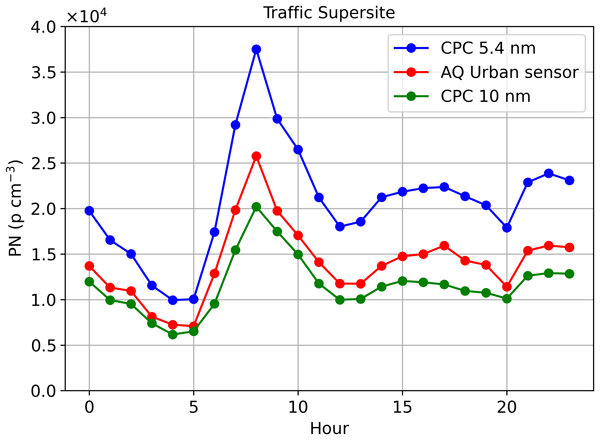
Particle number concentrations were measured with condensation particle counters and diffusion-based sensors at two different urban environments in Helsinki in 2022. The measurement sites were traffic related and background urban sites. The aim of the study was to investigate suitability of using diffusion-based sensors in urban air quality monitoring to obtain particle number concentrations and challenges related to this.
Teemu Lepistö, Hilkka Timonen, Topi Rönkkö, and Miikka Dal Maso
Atmos. Chem. Phys., 26, 4215–4230, https://doi.org/10.5194/acp-26-4215-2026, https://doi.org/10.5194/acp-26-4215-2026, 2026
Short summary
Short summary
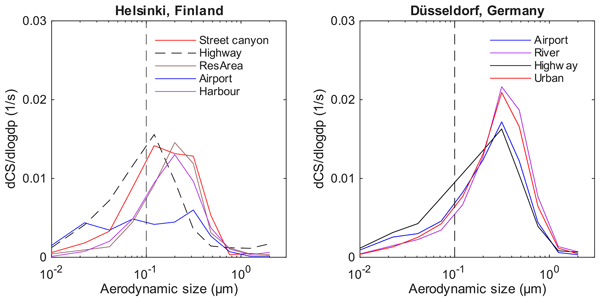
Condensation of vapour molecules onto aerosol particles is a key process regarding aerosol health and climate effects. The condensation sink (CS) estimates the attachment rate of vapour molecules onto existing particles. Here, we explore the concept of size-resolved CS as many of the effects related to condensation are dependent on the size of the existing particles. Our results show clear location-dependent differences in the CS size distributions which may have not been considered before.
Katariina Kylämäki, Milja Jäppi, Leïla Simon, Wojciech Honkisz, Petteri Marjanen, Laura Salo, Teemu Lepistö, Henna Lintusaari, Luis Barreira, Hannu Kuutti, Matti Rissanen, Piotr Bielaczyc, Hilkka Timonen, Päivi Aakko-Saksa, and Topi Rönkkö
EGUsphere, https://doi.org/10.5194/egusphere-2026-224, https://doi.org/10.5194/egusphere-2026-224, 2026
Short summary
Short summary
Oxidation flow reactors (OFRs) simulate atmospheric aging of e.g. anthropogenic emissions. In this study, we aged exhaust from passenger cars in two OFRs with different designs. On average, the OFRs produced comparable particle size distributions and emission factors. However, there were differences between the OFRs in secondary particle formation depending on the fuel and technology of the car and the differences were mostly explained by OFR design.
Amit Singh Chandel, Chandan Sarangi, Nurun Nahar, Saqib Ahmad Zargar, Poul Cherian, Xena Mansoura, Vijay P. Kanawade, Bhishma Tyagi, Antti-Pekka Hyvärinen, Aki Virkkula, Harendra S. Negi, Swarup China, and Rakesh K. Hooda
EGUsphere, https://doi.org/10.5194/egusphere-2026-424, https://doi.org/10.5194/egusphere-2026-424, 2026
Short summary
Short summary
Dust storms reaching the western Himalayas often mix with pollution during transport. Using high-altitude measurements from May 2023, we show that this polluted dust has altered intrinsic optical properties, scattering and absorbing more sunlight than clean dust, with important implications for atmospheric heating and regional climate.
Fanni Mylläri, Niina Kuittinen, Minna Aurela, Teemu Lepistö, Paavo Heikkilä, Laura Salo, Lassi Markkula, Panu Karjalainen, Joel Kuula, Sami Harni, Katriina Kyllönen, Satu Similä, Katriina Kirvelä, Joakim Autio, Marko Palonen, Jouni Valtatie, Anna Häyrinen, Hilkka Timonen, and Topi Rönkkö
Aerosol Research, 4, 23–35, https://doi.org/10.5194/ar-4-23-2026, https://doi.org/10.5194/ar-4-23-2026, 2026
Short summary
Short summary
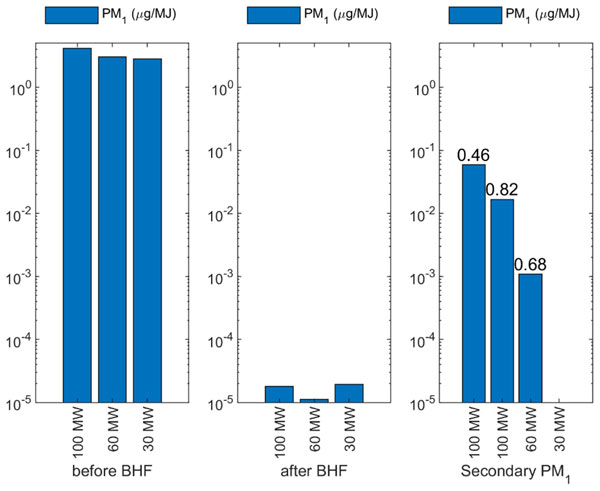
This study examined particle emissions from a large-scale biomass heating plant. Efficient flue gas cleaning, especially with bag-house filters, significantly reduced primary emissions. However, the potential for secondary aerosol formation was found to be 100–1000 times higher than primary emissions, highlighting the need for further research to support air quality and climate goals.
Sami D. Harni, Lasse Johansson, Jarkko V. Niemi, Ville Silvonen, Juan Andrés Casquero-Vera, Anu Kousa, Krista Luoma, Viet Le, David Brus, Konstantinos Doulgeris, Topi Rönkkö, Hanna E. Manninen, Tuukka Petäjä, and Hilkka Timonen
Atmos. Chem. Phys., 25, 18719–18738, https://doi.org/10.5194/acp-25-18719-2025, https://doi.org/10.5194/acp-25-18719-2025, 2025
Short summary
Short summary
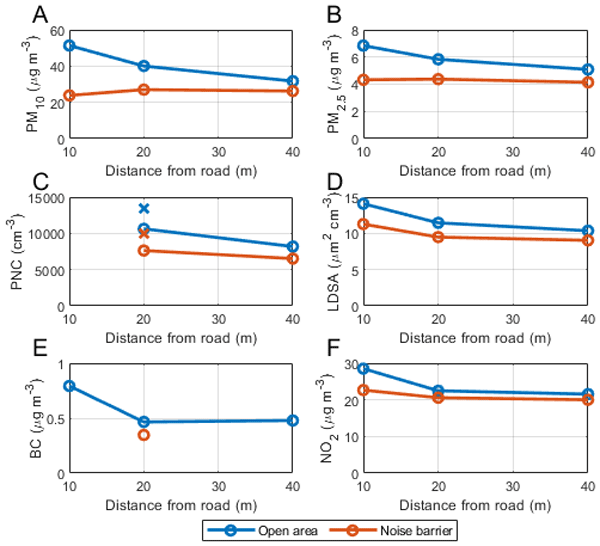
A three-month-long measurement campaign was conducted at Espoo, Finland, in spring 2023. The measurement campaign studied the effect of the noise barrier on pollutant concentration gradients on the side of a major highway. The studied pollutants included PM10, PM2.5, lung deposited surface area (LDSA), particle number concentration (PNC), NO2, and black carbon (BC). The noise barrier was found to be effective in reducing, especially the concentration of particulate pollutants.
Arya Mukherjee, Anni Hartikainen, Markus Somero, Viljami Luostari, Mika Ihalainen, Christopher P. Rüger, Timo Kekäläinen, Ville H. Nissinen, Luis M. F. Barreira, Hanna Koponen, Tuukka Kokkola, Delun Li, Lejish Vettikkat, Pasi Yli-Pirilä, Muhammad Shahzaib, Meri M. Ruppel, Ville Vakkari, Kerneels Jaars, Stefan J. Siebert, Angela Buchholz, Kajar Köster, Pieter G. van Zyl, Hilkka Timonen, Niko Kinnunen, Janne Jänis, Annele Virtanen, Aki Virkkula, and Olli Sippula
Atmos. Chem. Phys., 25, 16747–16774, https://doi.org/10.5194/acp-25-16747-2025, https://doi.org/10.5194/acp-25-16747-2025, 2025
Short summary
Short summary
Warming climate is predicted to increase boreal and peatland fires in Northern Eurasia. Limited studies have characterized light absorbing aerosol emissions from these biomasses, thus necessitating this work. Brown carbon (BrC) emitted from laboratory-scale biomass burning had weak light absorptivities based on their complex refractive index values. A combustion temperature dependent light absorptivity continuum existed for emitted BrC. Photochemical aging decreased BrC light absorptivity.
Joel Kuula, Juho Karhu, Tommi Mikkonen, Aki Virkkula, Hilkka Timonen, Tuomas Hieta, and Markku Vainio
Aerosol Research Discuss., https://doi.org/10.5194/ar-2025-38, https://doi.org/10.5194/ar-2025-38, 2025
Preprint withdrawn
Short summary
Short summary
Black carbon particles absorb sunlight and warm the climate, but their properties change in the atmosphere. We measured how changes in soot particle shape affect size-resolved light absorption. Our results show that compacted particles absorb more light, although this effect can reverse due to competing physical processes.
Sander Mirme, Rima Balbaaki, Hanna Elina Manninen, Paap Koemets, Eva Sommer, Birte Rörup, Yusheng Wu, Joao Almeida, Sebastian Ehrhart, Stefan Karl Weber, Joschka Pfeifer, Juha Kangasluoma, Markku Kulmala, and Jasper Kirkby
Atmos. Meas. Tech., 18, 5717–5728, https://doi.org/10.5194/amt-18-5717-2025, https://doi.org/10.5194/amt-18-5717-2025, 2025
Short summary
Short summary
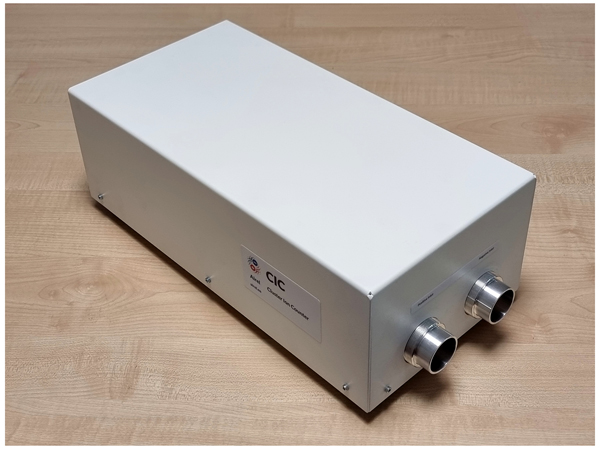
The Cluster Ion Counter (CIC, Airel OÜ) is a novel instrument that simultaneously measures positive and negative ion concentrations below 5 nm. It provides high detection efficiency, low noise, a rapid time response, and excellent reliability, confirmed in lab experiments and at the CERN CLOUD chamber. Its design enables precise, robust long-term measurements, facilitating versatile applications in diverse environments, from laboratory settings to field and potential airborne research.
Frans Graeffe, Kalle Kupi, Hilkka Timonen, and Mikael Ehn
Atmos. Chem. Phys., 25, 10837–10851, https://doi.org/10.5194/acp-25-10837-2025, https://doi.org/10.5194/acp-25-10837-2025, 2025
Short summary
Short summary
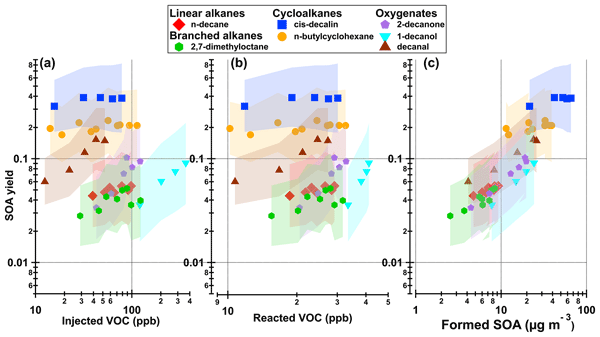
Alkanes are a major part of anthropogenic emissions in urban areas, and known for producing secondary organic aerosol (SOA). We measured SOA yields of seven alkanes and their oxygenated derivatives in oxidation flow reactor (OFR) measurements to assess their role in SOA formation. In addition, we observed that cyclic structure enhances SOA production. Furthermore, our observations indicate that multi-generational hydroxyl radical (OH) oxidation is important in the SOA formation.
Henri Oikarinen, Anni Hartikainen, Pauli Simonen, Miska Olin, Ukko-Ville Mäkinen, Petteri Marjanen, Laura Salo, Ville Silvonen, Sampsa Martikainen, Jussi Hoivala, Mika Ihalainen, Pasi Miettinen, Pasi Yli-Pirilä, Olli Sippula, Santtu Mikkonen, and Panu Karjalainen
Atmos. Meas. Tech., 18, 4271–4292, https://doi.org/10.5194/amt-18-4271-2025, https://doi.org/10.5194/amt-18-4271-2025, 2025
Short summary
Short summary
Fuel-operated auxiliary heaters are used in vehicles to provide extra heating to improve passenger comfort and vehicle functionality in cold climates. Currently heater emissions are not regulated as part of vehicle emissions, so this research was done to assess harmful gaseous and airborne particle emissions from them. Heaters were found to be major source of particles, especially when particles formed after combustion were accounted for, and large carbon monoxide emissions were also observed.
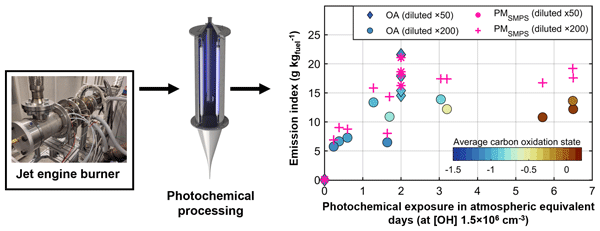
Anni Hartikainen, Mika Ihalainen, Deeksha Shukla, Marius Rohkamp, Arya Mukherjee, Quanfu He, Sandra Piel, Aki Virkkula, Delun Li, Tuukka Kokkola, Seongho Jeong, Hanna Koponen, Uwe Etzien, Anusmita Das, Krista Luoma, Lukas Schwalb, Thomas Gröger, Alexandre Barth, Martin Sklorz, Thorsten Streibel, Hendryk Czech, Benedikt Gündling, Markus Kalberer, Bert Buchholz, Andreas Hupfer, Thomas Adam, Thorsten Hohaus, Johan Øvrevik, Ralf Zimmermann, and Olli Sippula
Atmos. Chem. Phys., 25, 9275–9294, https://doi.org/10.5194/acp-25-9275-2025, https://doi.org/10.5194/acp-25-9275-2025, 2025
Short summary
Short summary
Photochemical reactions altered the properties of kerosene-operated jet engine burner exhaust emissions, which were studied in a laboratory using an oxidation flow reactor. Particle mass increased 300-fold as particles and gases became more oxidized. Light absorption increased, but the total direct radiative forcing efficiency was estimated to have shifted from positive to negative. The results highlight the importance of considering secondary aerosol formation when assessing the impacts of aviation.
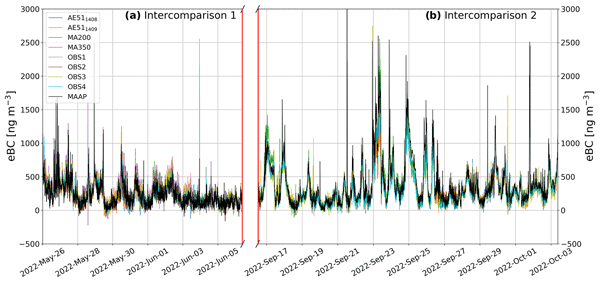
J. Tapio Elomaa, Krista Luoma, Sami D. Harni, Aki Virkkula, Hilkka Timonen, and Tuukka Petäjä
Aerosol Research, 3, 293–314, https://doi.org/10.5194/ar-3-293-2025, https://doi.org/10.5194/ar-3-293-2025, 2025
Short summary
Short summary
Black carbon (BC) is a pollutant from combustion that affects the climate and is harmful to health. We tested four different small BC sensors with a reference in Helsinki. The sensors compared well with the reference. As a sensor network they were able to capture differences in BC. Changes in temperature (T) and relative humidity (RH) caused error in the measurements. To reduce the effects of T and RH on BC sensors, more robust boxes should be developed, or corrections should be applied.
Kimmo Teinilä, Sanna Saarikoski, Henna Lintusaari, Teemu Lepistö, Petteri Marjanen, Minna Aurela, Heidi Hellén, Toni Tykkä, Markus Lampimäki, Janne Lampilahti, Luis Barreira, Timo Mäkelä, Leena Kangas, Juha Hatakka, Sami Harni, Joel Kuula, Jarkko V. Niemi, Harri Portin, Jaakko Yli-Ojanperä, Ville Niemelä, Milja Jäppi, Katrianne Lehtipalo, Joonas Vanhanen, Liisa Pirjola, Hanna E. Manninen, Tuukka Petäjä, Topi Rönkkö, and Hilkka Timonen
Atmos. Chem. Phys., 25, 4907–4928, https://doi.org/10.5194/acp-25-4907-2025, https://doi.org/10.5194/acp-25-4907-2025, 2025
Short summary
Short summary
Physical and chemical properties of particulate matter and concentrations of trace gases were measured in a street canyon in Helsinki, Finland, and an urban background site in January–February 2022 to investigate the effect of wintertime conditions on pollutants. State-of-the-art instruments and a mobile laboratory were used, and the measurement data were analysed further with modelling tools like positive matrix factorization and the Pollution Detection Algorithm.
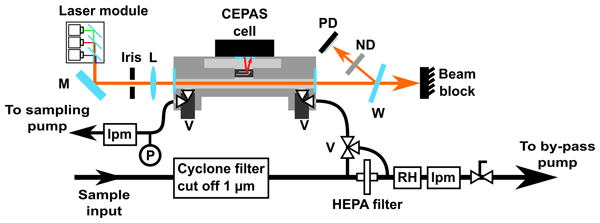
Juho Karhu, Tommi Mikkonen, Joel Kuula, Aki Virkkula, Erkki Ikonen, Markku Vainio, Hilkka Timonen, and Tuomas Hieta
Aerosol Research, 3, 113–124, https://doi.org/10.5194/ar-3-113-2025, https://doi.org/10.5194/ar-3-113-2025, 2025
Short summary
Short summary
We present a new photoacoustic instrument for simultaneous measurement of aerosol light absorption at multiple wavelengths. High performance is reached by using an optically read cantilever microphone, which allows for highly sensitive absorption measurements at a compact size. Performance in field conditions is demonstrated with black carbon monitoring at an air quality measurement station, where our results agree well with reference instruments deployed at the site.
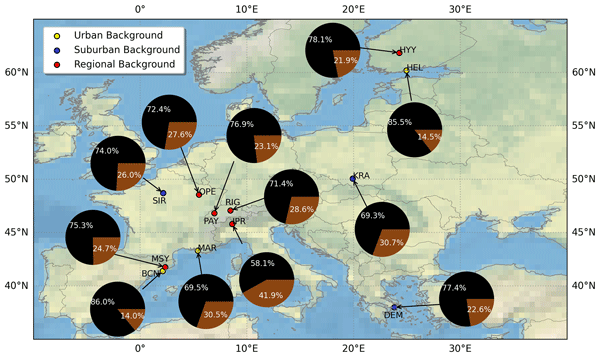
Hector Navarro-Barboza, Jordi Rovira, Vincenzo Obiso, Andrea Pozzer, Marta Via, Andres Alastuey, Xavier Querol, Noemi Perez, Marjan Savadkoohi, Gang Chen, Jesus Yus-Díez, Matic Ivancic, Martin Rigler, Konstantinos Eleftheriadis, Stergios Vratolis, Olga Zografou, Maria Gini, Benjamin Chazeau, Nicolas Marchand, Andre S. H. Prevot, Kaspar Dallenbach, Mikael Ehn, Krista Luoma, Tuukka Petäjä, Anna Tobler, Jaroslaw Necki, Minna Aurela, Hilkka Timonen, Jarkko Niemi, Olivier Favez, Jean-Eudes Petit, Jean-Philippe Putaud, Christoph Hueglin, Nicolas Pascal, Aurélien Chauvigné, Sébastien Conil, Marco Pandolfi, and Oriol Jorba
Atmos. Chem. Phys., 25, 2667–2694, https://doi.org/10.5194/acp-25-2667-2025, https://doi.org/10.5194/acp-25-2667-2025, 2025
Short summary
Short summary
Brown carbon (BrC) absorbs ultraviolet (UV) and visible light, influencing climate. This study explores BrC's imaginary refractive index (k) using data from 12 European sites. Residential emissions are a major organic aerosol (OA) source in winter, while secondary organic aerosol (SOA) dominates in summer. Source-specific k values were derived, improving model accuracy. The findings highlight BrC's climate impact and emphasize source-specific constraints in atmospheric models.
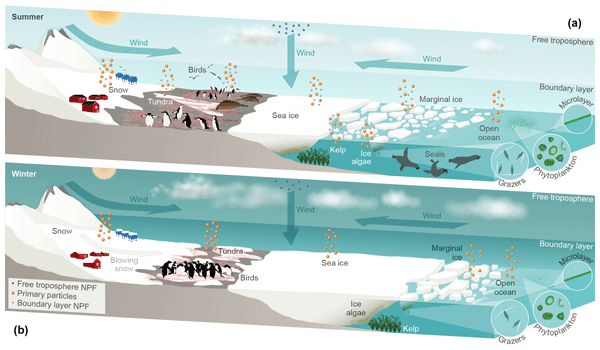
James Brean, David C. S. Beddows, Eija Asmi, Aki Virkkula, Lauriane L. J. Quéléver, Mikko Sipilä, Floortje Van Den Heuvel, Thomas Lachlan-Cope, Anna Jones, Markus Frey, Angelo Lupi, Jiyeon Park, Young Jun Yoon, Rolf Weller, Giselle L. Marincovich, Gabriela C. Mulena, Roy M. Harrison, and Manuel Dall'Osto
Atmos. Chem. Phys., 25, 1145–1162, https://doi.org/10.5194/acp-25-1145-2025, https://doi.org/10.5194/acp-25-1145-2025, 2025
Short summary
Short summary
Our results emphasise how understanding the geographical variation in surface types across the Antarctic is key to understanding secondary aerosol sources.
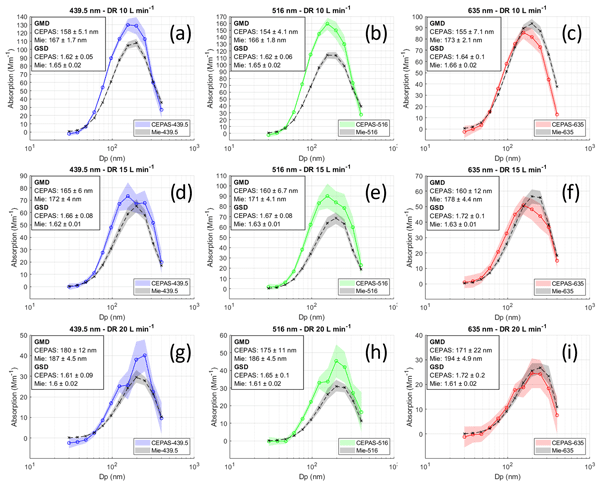
Joel Kuula, Juho Karhu, Tommi Mikkonen, Patrick Grahn, Aki Virkkula, Hilkka Timonen, Tuomas Hieta, and Markku Vainio
Aerosol Research, 3, 1–13, https://doi.org/10.5194/ar-3-1-2025, https://doi.org/10.5194/ar-3-1-2025, 2025
Short summary
Short summary
We developed a new method to measure how particles absorb light as they change in size, which is critical for understanding their climate impact. Our approach uses a sensitive instrument that measures light absorption directly from particles in real time. By pairing this with a device that sorts particles by size, we achieved accurate size-resolved measurements. Our findings closely match theoretical models, offering a promising tool for future research into how particles influence climate.
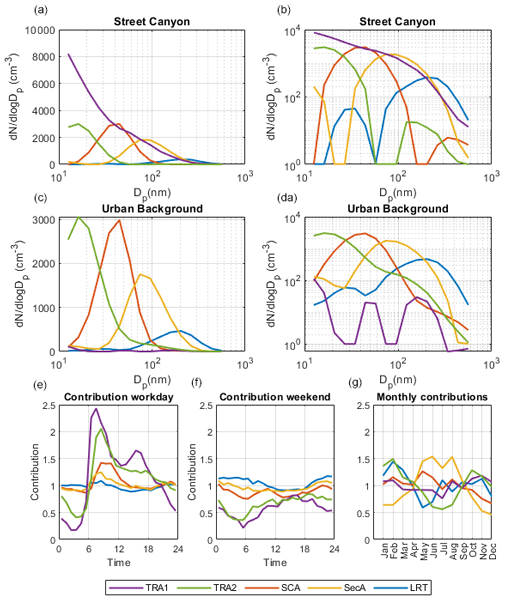
Sami D. Harni, Minna Aurela, Sanna Saarikoski, Jarkko V. Niemi, Harri Portin, Hanna Manninen, Ville Leinonen, Pasi Aalto, Phil K. Hopke, Tuukka Petäjä, Topi Rönkkö, and Hilkka Timonen
Atmos. Chem. Phys., 24, 12143–12160, https://doi.org/10.5194/acp-24-12143-2024, https://doi.org/10.5194/acp-24-12143-2024, 2024
Short summary
Short summary
In this study, particle number size distribution data were used in a novel way in positive matrix factorization analysis to find aerosol source profiles in the area. Measurements were made in Helsinki at a street canyon and urban background sites between February 2015 and June 2019. Five different aerosol sources were identified. These sources underline the significance of traffic-related emissions in urban environments despite recent improvements in emission reduction technologies.
Teemu Lepistö, Henna Lintusaari, Laura Salo, Ville Silvonen, Luis M. F. Barreira, Jussi Hoivala, Lassi Markkula, Jarkko V. Niemi, Jakub Ondracek, Kimmo Teinilä, Hanna E. Manninen, Sanna Saarikoski, Hilkka Timonen, Miikka Dal Maso, and Topi Rönkkö
Aerosol Research, 2, 271–289, https://doi.org/10.5194/ar-2-271-2024, https://doi.org/10.5194/ar-2-271-2024, 2024
Short summary
Short summary
The performances of different particle lung-deposited surface area (LDSAal) measurement methods (Partector, ELPI+, SMPS/DMPS) were compared in ambient conditions. As LDSAal is a health-relevant metric and rather easy to utilise in air quality monitoring, it is crucial to know how the different methods agree, as there are clear differences in their operation. In all, a comparison of different methods can be complicated; still, the methods agree rather well in terms of local pollution (< 400 nm).
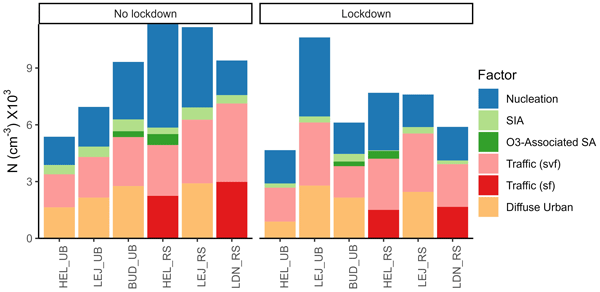
Alex Rowell, James Brean, David C. S. Beddows, Tuukka Petäjä, Máté Vörösmarty, Imre Salma, Jarkko V. Niemi, Hanna E. Manninen, Dominik van Pinxteren, Thomas Tuch, Kay Weinhold, Zongbo Shi, and Roy M. Harrison
Atmos. Chem. Phys., 24, 9515–9531, https://doi.org/10.5194/acp-24-9515-2024, https://doi.org/10.5194/acp-24-9515-2024, 2024
Short summary
Short summary
Different sources of airborne particles in the atmospheres of four European cities were distinguished by recognising their particle size distributions using a statistical procedure, positive matrix factorisation. The various sources responded differently to the changes in emissions associated with COVID-19 lockdowns, and the reasons are investigated. While traffic emissions generally decreased, particles formed from reactions of atmospheric gases decreased in some cities but increased in others.
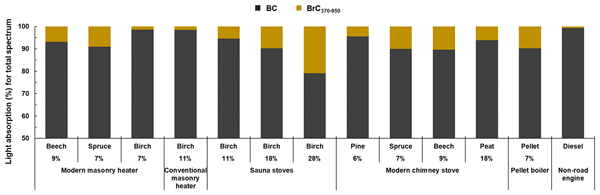
Satish Basnet, Anni Hartikainen, Aki Virkkula, Pasi Yli-Pirilä, Miika Kortelainen, Heikki Suhonen, Laura Kilpeläinen, Mika Ihalainen, Sampsa Väätäinen, Juho Louhisalmi, Markus Somero, Jarkko Tissari, Gert Jakobi, Ralf Zimmermann, Antti Kilpeläinen, and Olli Sippula
Atmos. Chem. Phys., 24, 3197–3215, https://doi.org/10.5194/acp-24-3197-2024, https://doi.org/10.5194/acp-24-3197-2024, 2024
Short summary
Short summary
Brown carbon (BrC) emissions were estimated, for residential wood combustion (RWC) from various northern European appliances, utilizing an extensive seven-wavelength aethalometer dataset and thermal–optical carbon analysis. The contribution of BrC370–950 to the absorption of visible light varied between 1 % and 21 %, and was linked with fuel moisture content and combustion efficiency. This study provides important information required for assessing the climate effects of RWC emissions.
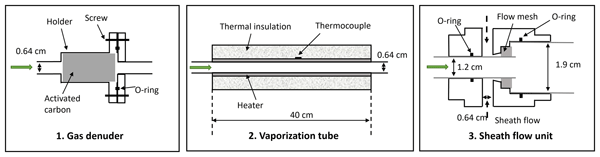
Jian Zhao, Valter Mickwitz, Yuanyuan Luo, Ella Häkkinen, Frans Graeffe, Jiangyi Zhang, Hilkka Timonen, Manjula Canagaratna, Jordan E. Krechmer, Qi Zhang, Markku Kulmala, Juha Kangasluoma, Douglas Worsnop, and Mikael Ehn
Atmos. Meas. Tech., 17, 1527–1543, https://doi.org/10.5194/amt-17-1527-2024, https://doi.org/10.5194/amt-17-1527-2024, 2024
Short summary
Short summary
Organic aerosol constitutes a significant portion of atmospheric fine particles but is less characterized due to its vast number of constituents. Recently, we developed a system for online measurements of particle-phase highly oxygenated organic molecules (HOMs). In this work, we systematically characterized the system, developed a new unit to enhance its performance, and demonstrated the essential role of thermograms in inferring volatility and quantifying HOMs in organic aerosols.
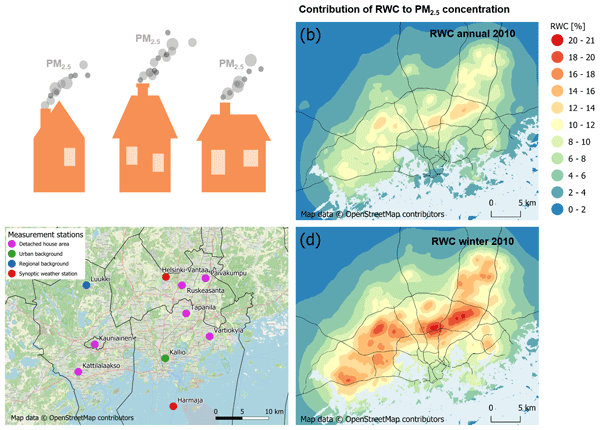
Leena Kangas, Jaakko Kukkonen, Mari Kauhaniemi, Kari Riikonen, Mikhail Sofiev, Anu Kousa, Jarkko V. Niemi, and Ari Karppinen
Atmos. Chem. Phys., 24, 1489–1507, https://doi.org/10.5194/acp-24-1489-2024, https://doi.org/10.5194/acp-24-1489-2024, 2024
Short summary
Short summary
Residential wood combustion is a major source of fine particulate matter. This study has evaluated the contribution of residential wood combustion to fine particle concentrations and its year-to-year and seasonal variation in te Helsinki metropolitan area. The average concentrations attributed to wood combustion in winter were up to 10- or 15-fold compared to summer. Wood combustion caused 12 % to 14 % of annual fine particle concentrations. In winter, the contribution ranged from 16 % to 21 %.
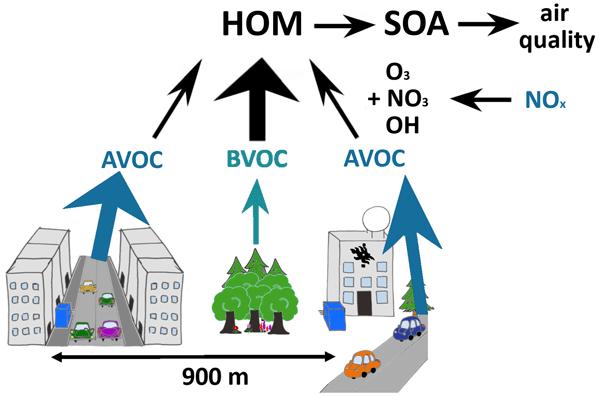
Magdalena Okuljar, Olga Garmash, Miska Olin, Joni Kalliokoski, Hilkka Timonen, Jarkko V. Niemi, Pauli Paasonen, Jenni Kontkanen, Yanjun Zhang, Heidi Hellén, Heino Kuuluvainen, Minna Aurela, Hanna E. Manninen, Mikko Sipilä, Topi Rönkkö, Tuukka Petäjä, Markku Kulmala, Miikka Dal Maso, and Mikael Ehn
Atmos. Chem. Phys., 23, 12965–12983, https://doi.org/10.5194/acp-23-12965-2023, https://doi.org/10.5194/acp-23-12965-2023, 2023
Short summary
Short summary
Highly oxygenated organic molecules (HOMs) form secondary organic aerosol that affects air quality and health. In this study, we demonstrate that in a moderately polluted city with abundant vegetation, the composition of HOMs is largely controlled by the effect of NOx on the biogenic volatile organic compound oxidation. Comparing the results from two nearby stations, we show that HOM composition and formation pathways can change considerably within small distances in urban environments.
Jean-Philippe Putaud, Enrico Pisoni, Alexander Mangold, Christoph Hueglin, Jean Sciare, Michael Pikridas, Chrysanthos Savvides, Jakub Ondracek, Saliou Mbengue, Alfred Wiedensohler, Kay Weinhold, Maik Merkel, Laurent Poulain, Dominik van Pinxteren, Hartmut Herrmann, Andreas Massling, Claus Nordstroem, Andrés Alastuey, Cristina Reche, Noemí Pérez, Sonia Castillo, Mar Sorribas, Jose Antonio Adame, Tuukka Petaja, Katrianne Lehtipalo, Jarkko Niemi, Véronique Riffault, Joel F. de Brito, Augustin Colette, Olivier Favez, Jean-Eudes Petit, Valérie Gros, Maria I. Gini, Stergios Vratolis, Konstantinos Eleftheriadis, Evangelia Diapouli, Hugo Denier van der Gon, Karl Espen Yttri, and Wenche Aas
Atmos. Chem. Phys., 23, 10145–10161, https://doi.org/10.5194/acp-23-10145-2023, https://doi.org/10.5194/acp-23-10145-2023, 2023
Short summary
Short summary
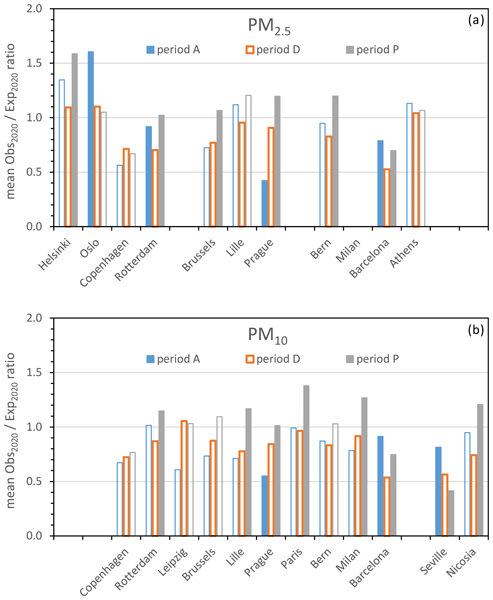
Many European people are still exposed to levels of air pollution that can affect their health. COVID-19 lockdowns in 2020 were used to assess the impact of the reduction in human mobility on air pollution across Europe by comparing measurement data with values that would be expected if no lockdown had occurred. We show that lockdown measures did not lead to consistent decreases in the concentrations of fine particulate matter suspended in the air, and we investigate why.

Jonas Elm, Aladár Czitrovszky, Andreas Held, Annele Virtanen, Astrid Kiendler-Scharr, Benjamin J. Murray, Daniel McCluskey, Daniele Contini, David Broday, Eirini Goudeli, Hilkka Timonen, Joan Rosell-Llompart, Jose L. Castillo, Evangelia Diapouli, Mar Viana, Maria E. Messing, Markku Kulmala, Naděžda Zíková, and Sebastian H. Schmitt
Aerosol Research, 1, 13–16, https://doi.org/10.5194/ar-1-13-2023, https://doi.org/10.5194/ar-1-13-2023, 2023
Joschka Pfeifer, Naser G. A. Mahfouz, Benjamin C. Schulze, Serge Mathot, Dominik Stolzenburg, Rima Baalbaki, Zoé Brasseur, Lucia Caudillo, Lubna Dada, Manuel Granzin, Xu-Cheng He, Houssni Lamkaddam, Brandon Lopez, Vladimir Makhmutov, Ruby Marten, Bernhard Mentler, Tatjana Müller, Antti Onnela, Maxim Philippov, Ana A. Piedehierro, Birte Rörup, Meredith Schervish, Ping Tian, Nsikanabasi S. Umo, Dongyu S. Wang, Mingyi Wang, Stefan K. Weber, André Welti, Yusheng Wu, Marcel Zauner-Wieczorek, Antonio Amorim, Imad El Haddad, Markku Kulmala, Katrianne Lehtipalo, Tuukka Petäjä, António Tomé, Sander Mirme, Hanna E. Manninen, Neil M. Donahue, Richard C. Flagan, Andreas Kürten, Joachim Curtius, and Jasper Kirkby
Atmos. Chem. Phys., 23, 6703–6718, https://doi.org/10.5194/acp-23-6703-2023, https://doi.org/10.5194/acp-23-6703-2023, 2023
Short summary
Short summary
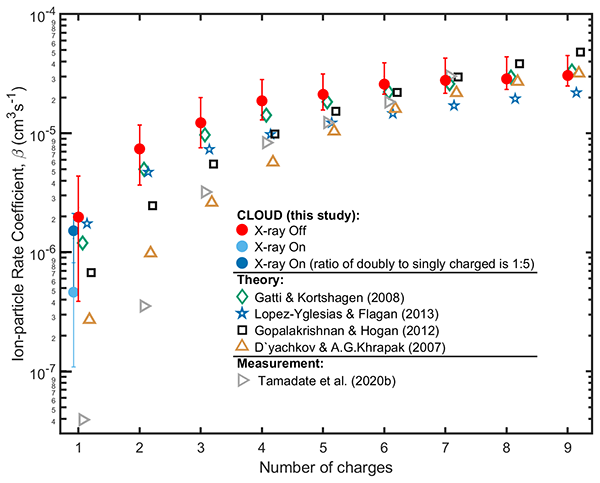
Attachment rate coefficients between ions and charged aerosol particles determine their lifetimes and may also influence cloud dynamics and aerosol processing. Here we present novel experiments that measure ion–aerosol attachment rate coefficients for multiply charged aerosol particles under atmospheric conditions in the CERN CLOUD chamber. Our results provide experimental discrimination between various theoretical models.
Lucía Caudillo, Mihnea Surdu, Brandon Lopez, Mingyi Wang, Markus Thoma, Steffen Bräkling, Angela Buchholz, Mario Simon, Andrea C. Wagner, Tatjana Müller, Manuel Granzin, Martin Heinritzi, Antonio Amorim, David M. Bell, Zoé Brasseur, Lubna Dada, Jonathan Duplissy, Henning Finkenzeller, Xu-Cheng He, Houssni Lamkaddam, Naser G. A. Mahfouz, Vladimir Makhmutov, Hanna E. Manninen, Guillaume Marie, Ruby Marten, Roy L. Mauldin, Bernhard Mentler, Antti Onnela, Tuukka Petäjä, Joschka Pfeifer, Maxim Philippov, Ana A. Piedehierro, Birte Rörup, Wiebke Scholz, Jiali Shen, Dominik Stolzenburg, Christian Tauber, Ping Tian, António Tomé, Nsikanabasi Silas Umo, Dongyu S. Wang, Yonghong Wang, Stefan K. Weber, André Welti, Marcel Zauner-Wieczorek, Urs Baltensperger, Richard C. Flagan, Armin Hansel, Jasper Kirkby, Markku Kulmala, Katrianne Lehtipalo, Douglas R. Worsnop, Imad El Haddad, Neil M. Donahue, Alexander L. Vogel, Andreas Kürten, and Joachim Curtius
Atmos. Chem. Phys., 23, 6613–6631, https://doi.org/10.5194/acp-23-6613-2023, https://doi.org/10.5194/acp-23-6613-2023, 2023
Short summary
Short summary
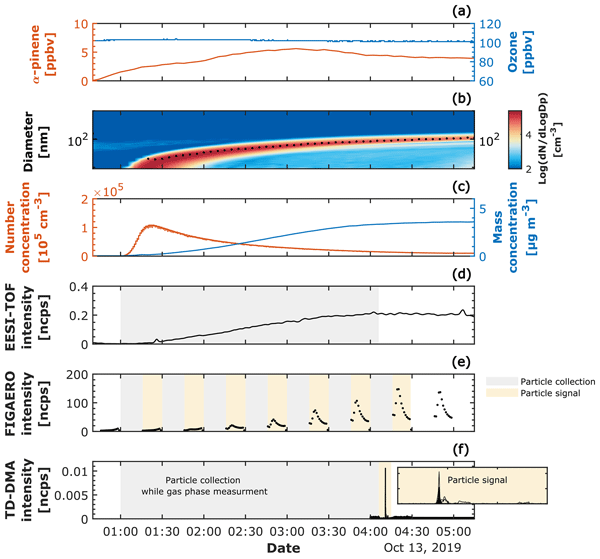
In this study, we present an intercomparison of four different techniques for measuring the chemical composition of nanoparticles. The intercomparison was performed based on the observed chemical composition, calculated volatility, and analysis of the thermograms. We found that the methods generally agree on the most important compounds that are found in the nanoparticles. However, they do see different parts of the organic spectrum. We suggest potential explanations for these differences.
Ella Häkkinen, Jian Zhao, Frans Graeffe, Nicolas Fauré, Jordan E. Krechmer, Douglas Worsnop, Hilkka Timonen, Mikael Ehn, and Juha Kangasluoma
Atmos. Meas. Tech., 16, 1705–1721, https://doi.org/10.5194/amt-16-1705-2023, https://doi.org/10.5194/amt-16-1705-2023, 2023
Short summary
Short summary
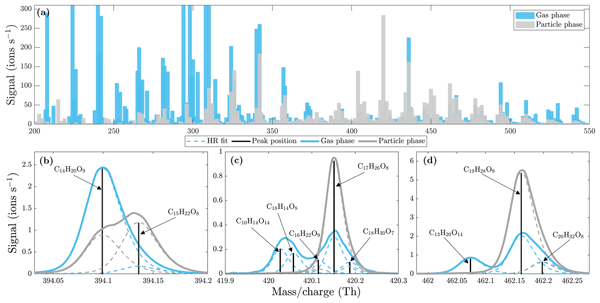
Highly oxygenated compounds contribute to the formation and growth of atmospheric organic aerosol and thus impact the global climate. Knowledge of their transformations and fate after condensing into the particle phase has been limited by the lack of suitable detection techniques. Here, we present an online method for measuring highly oxygenated compounds from organic aerosol. We evaluate the performance of the method and demonstrate that the method is applicable to different organic species.
Sanna Saarikoski, Heidi Hellén, Arnaud P. Praplan, Simon Schallhart, Petri Clusius, Jarkko V. Niemi, Anu Kousa, Toni Tykkä, Rostislav Kouznetsov, Minna Aurela, Laura Salo, Topi Rönkkö, Luis M. F. Barreira, Liisa Pirjola, and Hilkka Timonen
Atmos. Chem. Phys., 23, 2963–2982, https://doi.org/10.5194/acp-23-2963-2023, https://doi.org/10.5194/acp-23-2963-2023, 2023
Short summary
Short summary
This study elucidates properties and sources of volatile organic compounds (VOCs) and organic aerosol (OA) in a traffic environment. Anthropogenic VOCs (aVOCs) were clearly higher than biogenic VOCs (bVOCs), but bVOCs produced a larger portion of oxidation products. OA consisted mostly of oxygenated OA, representing secondary OA (SOA). SOA was partly associated with bVOCs, but it was also related to long-range transport. Primary OA originated mostly from traffic.
Zijun Li, Angela Buchholz, Luis M. F. Barreira, Arttu Ylisirniö, Liqing Hao, Iida Pullinen, Siegfried Schobesberger, and Annele Virtanen
Atmos. Chem. Phys., 23, 203–220, https://doi.org/10.5194/acp-23-203-2023, https://doi.org/10.5194/acp-23-203-2023, 2023
Short summary
Short summary
Interaction between NOx and biogenic emissions can be important in suburban areas. Our study showed that the addition of NOx during α-pinene SOA formation produced considerable amounts of organic nitrates and affected the composition of non-nitrated organic compounds. The compositional difference consequently altered the primary type of aqueous-phase processes during the isothermal particle evaporation.
Lauriane L. J. Quéléver, Lubna Dada, Eija Asmi, Janne Lampilahti, Tommy Chan, Jonathan E. Ferrara, Gustavo E. Copes, German Pérez-Fogwill, Luis Barreira, Minna Aurela, Douglas R. Worsnop, Tuija Jokinen, and Mikko Sipilä
Atmos. Chem. Phys., 22, 8417–8437, https://doi.org/10.5194/acp-22-8417-2022, https://doi.org/10.5194/acp-22-8417-2022, 2022
Short summary
Short summary
Understanding how aerosols form is crucial for correctly modeling the climate and improving future predictions. This work provides extensive analysis of aerosol particles and their precursors at Marambio Station, Antarctic Peninsula. We show that sulfuric acid, ammonia, and dimethylamine are key contributors to the frequent new particle formation events observed at the site. We discuss nucleation mechanisms and highlight the need for targeted measurement to fully understand these processes.
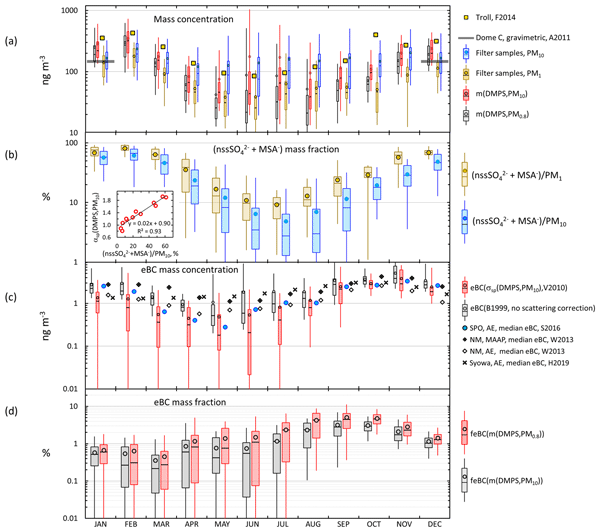
Aki Virkkula, Henrik Grythe, John Backman, Tuukka Petäjä, Maurizio Busetto, Christian Lanconelli, Angelo Lupi, Silvia Becagli, Rita Traversi, Mirko Severi, Vito Vitale, Patrick Sheridan, and Elisabeth Andrews
Atmos. Chem. Phys., 22, 5033–5069, https://doi.org/10.5194/acp-22-5033-2022, https://doi.org/10.5194/acp-22-5033-2022, 2022
Short summary
Short summary
Optical properties of surface aerosols at Dome C, Antarctica, in 2007–2013 and their potential source areas are presented. The equivalent black carbon (eBC) mass concentrations were compared with eBC measured at three other Antarctic sites: the South Pole (SPO) and two coastal sites, Neumayer and Syowa. Transport analysis suggests that South American BC emissions are the largest contributor to eBC at Dome C.
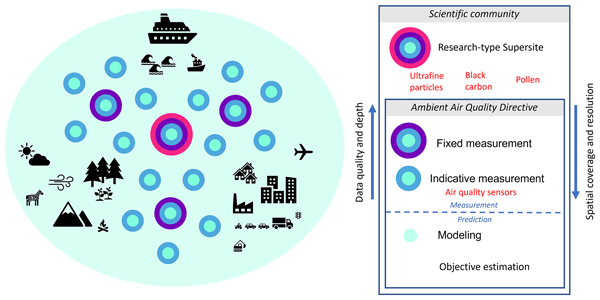
Joel Kuula, Hilkka Timonen, Jarkko V. Niemi, Hanna E. Manninen, Topi Rönkkö, Tareq Hussein, Pak Lun Fung, Sasu Tarkoma, Mikko Laakso, Erkka Saukko, Aino Ovaska, Markku Kulmala, Ari Karppinen, Lasse Johansson, and Tuukka Petäjä
Atmos. Chem. Phys., 22, 4801–4808, https://doi.org/10.5194/acp-22-4801-2022, https://doi.org/10.5194/acp-22-4801-2022, 2022
Short summary
Short summary
Modern and up-to-date policies and air quality management strategies are instrumental in tackling global air pollution. As the European Union is preparing to revise Ambient Air Quality Directive 2008/50/EC, this paper initiates discussion on selected features of the directive that we believe would benefit from a reassessment. The scientific community has the most recent and deepest understanding of air pollution; thus, its contribution is essential.
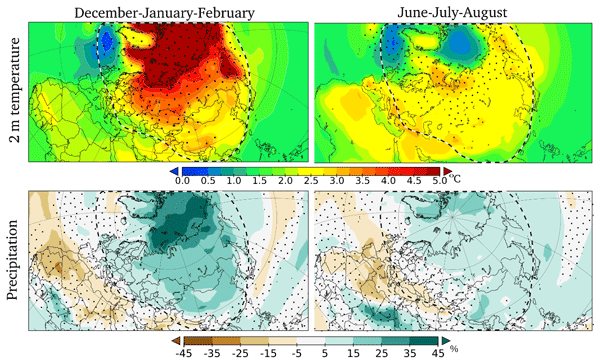
Hanna K. Lappalainen, Tuukka Petäjä, Timo Vihma, Jouni Räisänen, Alexander Baklanov, Sergey Chalov, Igor Esau, Ekaterina Ezhova, Matti Leppäranta, Dmitry Pozdnyakov, Jukka Pumpanen, Meinrat O. Andreae, Mikhail Arshinov, Eija Asmi, Jianhui Bai, Igor Bashmachnikov, Boris Belan, Federico Bianchi, Boris Biskaborn, Michael Boy, Jaana Bäck, Bin Cheng, Natalia Chubarova, Jonathan Duplissy, Egor Dyukarev, Konstantinos Eleftheriadis, Martin Forsius, Martin Heimann, Sirkku Juhola, Vladimir Konovalov, Igor Konovalov, Pavel Konstantinov, Kajar Köster, Elena Lapshina, Anna Lintunen, Alexander Mahura, Risto Makkonen, Svetlana Malkhazova, Ivan Mammarella, Stefano Mammola, Stephany Buenrostro Mazon, Outi Meinander, Eugene Mikhailov, Victoria Miles, Stanislav Myslenkov, Dmitry Orlov, Jean-Daniel Paris, Roberta Pirazzini, Olga Popovicheva, Jouni Pulliainen, Kimmo Rautiainen, Torsten Sachs, Vladimir Shevchenko, Andrey Skorokhod, Andreas Stohl, Elli Suhonen, Erik S. Thomson, Marina Tsidilina, Veli-Pekka Tynkkynen, Petteri Uotila, Aki Virkkula, Nadezhda Voropay, Tobias Wolf, Sayaka Yasunaka, Jiahua Zhang, Yubao Qiu, Aijun Ding, Huadong Guo, Valery Bondur, Nikolay Kasimov, Sergej Zilitinkevich, Veli-Matti Kerminen, and Markku Kulmala
Atmos. Chem. Phys., 22, 4413–4469, https://doi.org/10.5194/acp-22-4413-2022, https://doi.org/10.5194/acp-22-4413-2022, 2022
Short summary
Short summary
We summarize results during the last 5 years in the northern Eurasian region, especially from Russia, and introduce recent observations of the air quality in the urban environments in China. Although the scientific knowledge in these regions has increased, there are still gaps in our understanding of large-scale climate–Earth surface interactions and feedbacks. This arises from limitations in research infrastructures and integrative data analyses, hindering a comprehensive system analysis.
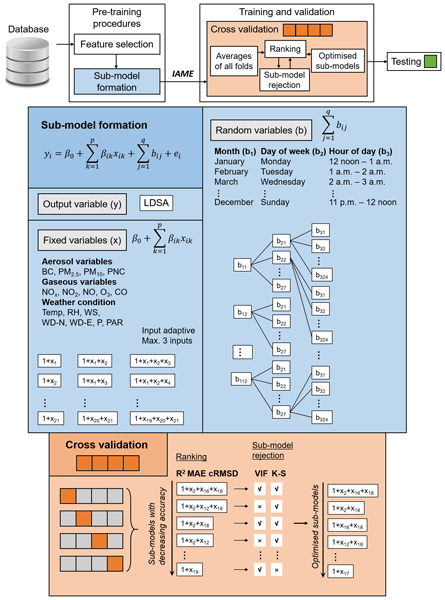
Pak Lun Fung, Martha A. Zaidan, Jarkko V. Niemi, Erkka Saukko, Hilkka Timonen, Anu Kousa, Joel Kuula, Topi Rönkkö, Ari Karppinen, Sasu Tarkoma, Markku Kulmala, Tuukka Petäjä, and Tareq Hussein
Atmos. Chem. Phys., 22, 1861–1882, https://doi.org/10.5194/acp-22-1861-2022, https://doi.org/10.5194/acp-22-1861-2022, 2022
Short summary
Short summary
We developed an input-adaptive mixed-effects model, which was automatised to select the best combination of input variables, including up to three fixed effect variables and three time indictors as random effect variables. We tested the model to estimate lung-deposited surface area (LDSA), which correlates well with human health. The results show the inclusion of time indicators improved the sensitivity and the accuracy of the model so that it could serve as a network of virtual sensors.
Miska Olin, David Patoulias, Heino Kuuluvainen, Jarkko V. Niemi, Topi Rönkkö, Spyros N. Pandis, Ilona Riipinen, and Miikka Dal Maso
Atmos. Chem. Phys., 22, 1131–1148, https://doi.org/10.5194/acp-22-1131-2022, https://doi.org/10.5194/acp-22-1131-2022, 2022
Short summary
Short summary
An emission factor particle size distribution was determined from the measurements at an urban traffic site. It was used in updating a pre-existing emission inventory, and regional modeling was performed after the update. Emission inventories typically underestimate nanoparticle emissions due to challenges in determining them with high certainty. This update reveals that the simulated aerosol levels have previously been underestimated especially for urban areas and for sub-50 nm particles.
Jutta Kesti, John Backman, Ewan J. O'Connor, Anne Hirsikko, Eija Asmi, Minna Aurela, Ulla Makkonen, Maria Filioglou, Mika Komppula, Hannele Korhonen, and Heikki Lihavainen
Atmos. Chem. Phys., 22, 481–503, https://doi.org/10.5194/acp-22-481-2022, https://doi.org/10.5194/acp-22-481-2022, 2022
Short summary
Short summary
In this study we combined aerosol particle measurements at the surface with a scanning Doppler lidar providing vertical profiles of the atmosphere to study the effect of different boundary layer conditions on aerosol particle properties in the understudied Arabian Peninsula region. The instrumentation used in this study enabled us to identify periods when pollution from remote sources was mixed down to the surface and initiated new particle formation in the growing boundary layer.
Zijun Li, Angela Buchholz, Arttu Ylisirniö, Luis Barreira, Liqing Hao, Siegfried Schobesberger, Taina Yli-Juuti, and Annele Virtanen
Atmos. Chem. Phys., 21, 18283–18302, https://doi.org/10.5194/acp-21-18283-2021, https://doi.org/10.5194/acp-21-18283-2021, 2021
Short summary
Short summary
We compared the evolution of two types of secondary organic aerosol (SOA) particles during isothermal evaporation. The sesquiterpene SOA particles demonstrated higher resilience to evaporation than α-pinene SOA particles generated under comparable conditions. In-depth analysis showed that under high-relative-humidity conditions, particulate water drove the evolution of particulate constituents by reducing the particle viscosity and initiating chemical aqueous-phase processes.
Lucía Caudillo, Birte Rörup, Martin Heinritzi, Guillaume Marie, Mario Simon, Andrea C. Wagner, Tatjana Müller, Manuel Granzin, Antonio Amorim, Farnoush Ataei, Rima Baalbaki, Barbara Bertozzi, Zoé Brasseur, Randall Chiu, Biwu Chu, Lubna Dada, Jonathan Duplissy, Henning Finkenzeller, Loïc Gonzalez Carracedo, Xu-Cheng He, Victoria Hofbauer, Weimeng Kong, Houssni Lamkaddam, Chuan P. Lee, Brandon Lopez, Naser G. A. Mahfouz, Vladimir Makhmutov, Hanna E. Manninen, Ruby Marten, Dario Massabò, Roy L. Mauldin, Bernhard Mentler, Ugo Molteni, Antti Onnela, Joschka Pfeifer, Maxim Philippov, Ana A. Piedehierro, Meredith Schervish, Wiebke Scholz, Benjamin Schulze, Jiali Shen, Dominik Stolzenburg, Yuri Stozhkov, Mihnea Surdu, Christian Tauber, Yee Jun Tham, Ping Tian, António Tomé, Steffen Vogt, Mingyi Wang, Dongyu S. Wang, Stefan K. Weber, André Welti, Wang Yonghong, Wu Yusheng, Marcel Zauner-Wieczorek, Urs Baltensperger, Imad El Haddad, Richard C. Flagan, Armin Hansel, Kristina Höhler, Jasper Kirkby, Markku Kulmala, Katrianne Lehtipalo, Ottmar Möhler, Harald Saathoff, Rainer Volkamer, Paul M. Winkler, Neil M. Donahue, Andreas Kürten, and Joachim Curtius
Atmos. Chem. Phys., 21, 17099–17114, https://doi.org/10.5194/acp-21-17099-2021, https://doi.org/10.5194/acp-21-17099-2021, 2021
Short summary
Short summary
We performed experiments in the CLOUD chamber at CERN at low temperatures to simulate new particle formation in the upper free troposphere (at −30 ºC and −50 ºC). We measured the particle and gas phase and found that most of the compounds present in the gas phase are detected as well in the particle phase. The major compounds in the particles are C8–10 and C18–20. Specifically, we showed that C5 and C15 compounds are detected in a mixed system with isoprene and α-pinene at −30 ºC, 20 % RH.
Cited articles
ACTRIS: ACTRIS Standard Procedures for In-Situ Aerosol Sampling, Measurements, and Analyses at ACTRIS Observatories, Version 1.0, Aerosol, Clouds and Trace Gases Research Infrastructure (ACTRIS), https://www.actris-ecac.eu/files/ACTRIS_standard_procedures_for_aerosol_in-situ_measurements.pdf (last access: 5 November 2026), 2024.
Al-Abadleh, H. A., Motaghedi, F., Mohammed, W., Rana, M. S., Malek, K. A., Rastogi, D., Asa-Awuku, A. A., and Guzman, M. I.: Reactivity of aminophenols in forming nitrogen-containing brown carbon from iron-catalyzed reactions, Commun. Chem., 5, 112, https://doi.org/10.1038/s42004-022-00732-1, 2022.
Al-Abadleh, H. A., Kubicki, J. D., and Meskhidze, N.: A perspective on iron (Fe) in the atmosphere: air quality, climate, and the ocean, Environ. Sci.: Processes Impacts, 25, 151–164, https://doi.org/10.1039/D2EM00176D, 2023.
Ansari, K. and Ramachandran, S.: Enhancing accuracy in identifying absorbing aerosol types and their radiative impacts, npj Clim. Atmos. Sci., 8, 351, https://doi.org/10.1038/s41612-025-01167-w, 2025.
Apicella, B., Catapano, F., Di Iorio, S., Magno, A., and Russo, C.: Non-exhaust emissions: physical and chemical characterization of brake wear particles, Atmos. Res., 336, 108909, https://doi.org/10.1016/j.atmosres.2026.108909, 2026.
Arnott, W. P., Hamasha, K., Moosmüller, H., Sheridan, P. J., and Ogren, J. A.: Towards Aerosol Light-Absorption Measurements with a 7-Wavelength Aethalometer: Evaluation with a Photoacoustic Instrument and 3-Wavelength Nephelometer, Aerosol Sci. Technol., 39, 17–29, https://doi.org/10.1080/027868290901972, 2005.
Aurela, M., Saarnio, K., Niemi, J. V., Turunen, E., Teinilä, K., Kousa, A., Manninen, H. E., Hoivala, J., Vestenius, M., Rönkkö, T., Järvinen, A., Timonen, H., and Saarikoski, S.: Composition and sources of atmospheric trace elements at three urban sites in Helsinki, Finland, Atmos. Environ., 382, 122233, https://doi.org/10.1016/j.atmosenv.2026.122233, 2026.
Banerji, S., Luoma, K., Ylivinkka, I., Ahonen, L., Kerminen, V.-M., and Petäjä, T.: Measurement report: Optical properties of supermicron aerosol particles in a boreal environment, Atmos. Chem. Phys., 25, 16895–16914, https://doi.org/10.5194/acp-25-16895-2025, 2025.
Barreira, L. M. F., Helin, A., Aurela, M., Teinilä, K., Friman, M., Kangas, L., Niemi, J. V., Portin, H., Kousa, A., Pirjola, L., Rönkkö, T., Saarikoski, S., and Timonen, H.: In-depth characterization of submicron particulate matter inter-annual variations at a street canyon site in northern Europe, Atmos. Chem. Phys., 21, 6297–6314, https://doi.org/10.5194/acp-21-6297-2021, 2021.
Barreira, L. M. F., Aurela, M., Saarikoski, S., Li, D., Teinilä, K., Virkkula, A., Niemi, J. V., Manninen, H. E., Pirjola, L., Petäjä, T., Rönkkö, T., and Timonen, H.: Characterizing winter-time brown carbon: Insights into chemical and light-absorption properties in residential and traffic environments, Sci. Total Environ., 955, 177089, https://doi.org/10.1016/j.scitotenv.2024.177089, 2024.
Bond, T. C. and Bergstrom, R. W.: Light Absorption by Carbonaceous Particles: An Investigative Review, Aerosol Sci. Technol., 40, 27–67, https://doi.org/10.1080/02786820500421521, 2006.
Bond, T. C., Anderson, T. L., and Campbell, D.: Calibration and Intercomparison of Filter-Based Measurements of Visible Light Absorption by Aerosols, Aerosol Sci. Technol., 30, 582–600, https://doi.org/10.1080/027868299304435, 1999.
Canagaratna, M. R., Jayne, J. T., Jimenez, J. L., Allan, J. D., Alfarra, M. R., Zhang, Q., Onasch, T. B., Drewnick, F., Coe, H., Middlebrook, A., Delia, A., Williams, L. R., Trimborn, A. M., Northway, M. J., DeCarlo, P. F., Kolb, C. E., Davidovits, P., and Worsnop, D. R.: Chemical and microphysical characterization of ambient aerosols with the aerodyne aerosol mass spectrometer, Mass Spectrom. Rev., 26, 185–222, https://doi.org/10.1002/mas.20115, 2007.
Chan, L. Y., Lau, W. L., Lee, S. C., and Chan, C. Y.: Commuter exposure to particulate matter in public transportation modes in Hong Kong, Atmos. Environ., 36, 3363–3373, https://doi.org/10.1016/S1352-2310(02)00318-7, 2002.
Cui, W., Wang, Z., Feng, W., Qin, C., Liao, H., Wang, Y., and Xie, M.: Evaluating coarse PM composition and sources based on bulk and molecular speciation of PM2.5 and PM10 in Nanjing, East China, J. Environ. Sci., 152, 155–166, https://doi.org/10.1016/j.jes.2024.04.038, 2025.
Deboudt, K., Gloter, A., Mussi, A., and Flament, P.: Red-ox speciation and mixing state of iron in individual African dust particles, J. Geophys. Res.-Atmos., 117, https://doi.org/10.1029/2011JD017298, 2012.
Di Biagio, C., Formenti, P., Balkanski, Y., Caponi, L., Cazaunau, M., Pangui, E., Journet, E., Nowak, S., Andreae, M. O., Kandler, K., Saeed, T., Piketh, S., Seibert, D., Williams, E., and Doussin, J.-F.: Complex refractive indices and single-scattering albedo of global dust aerosols in the shortwave spectrum and relationship to size and iron content, Atmos. Chem. Phys., 19, 15503–15531, https://doi.org/10.5194/acp-19-15503-2019, 2019.
Drinovec, L., Močnik, G., Zotter, P., Prévôt, A. S. H., Ruckstuhl, C., Coz, E., Rupakheti, M., Sciare, J., Müller, T., Wiedensohler, A., and Hansen, A. D. A.: The ”dual-spot” Aethalometer: an improved measurement of aerosol black carbon with real-time loading compensation, Atmos. Meas. Tech., 8, 1965–1979, https://doi.org/10.5194/amt-8-1965-2015, 2015.
Drinovec, L., Gregorič, A., Zotter, P., Wolf, R., Bruns, E. A., Prévôt, A. S. H., Petit, J.-E., Favez, O., Sciare, J., Arnold, I. J., Chakrabarty, R. K., Moosmüller, H., Filep, A., and Močnik, G.: The filter-loading effect by ambient aerosols in filter absorption photometers depends on the coating of the sampled particles, Atmos. Meas. Tech., 10, 1043–1059, https://doi.org/10.5194/amt-10-1043-2017, 2017.
European Union: Directive (EU) 2024/2881 of the European Parliament and of the Council of 23 October 2024 on ambient air quality and cleaner air for Europe (recast), OJ L, 2024/2881, 20.11.2024, European Union, https://eur-lex.europa.eu/eli/dir/2024/2881/oj/eng (last access: 5 November 2026), 2024.
Go, S., Lyapustin, A., Schuster, G. L., Choi, M., Ginoux, P., Chin, M., Kalashnikova, O., Dubovik, O., Kim, J., da Silva, A., Holben, B., and Reid, J. S.: Inferring iron-oxide species content in atmospheric mineral dust from DSCOVR EPIC observations, Atmos. Chem. Phys., 22, 1395–1423, https://doi.org/10.5194/acp-22-1395-2022, 2022.
Helin, A., Niemi, J. V., Virkkula, A., Pirjola, L., Teinilä, K., Backman, J., Aurela, M., Saarikoski, S., Rönkkö, T., Asmi, E., and Timonen, H.: Characteristics and source apportionment of black carbon in the Helsinki metropolitan area, Finland, Atmos. Environ., 190, 87–98, https://doi.org/10.1016/j.atmosenv.2018.07.022, 2018.
Helin, A., Virkkula, A., Backman, J., Pirjola, L., Sippula, O., Aakko-Saksa, P., Väätäinen, S., Mylläri, F., Järvinen, A., Bloss, M., Aurela, M., Jakobi, G., Karjalainen, P., Zimmermann, R., Jokiniemi, J., Saarikoski, S., Tissari, J., Rönkkö, T., Niemi, J. V., and Timonen, H.: Variation of Absorption Ångström Exponent in Aerosols From Different Emission Sources, J. Geophys. Res.-Atmos., 126, e2020JD034094, https://doi.org/10.1029/2020JD034094, 2021.
Hernández, I. M., González, L. T., Mancilla, Y., Longoria-Rodríguez, F. E., Alfaro, J. M., Pérez-Rodríguez, M., and Mendoza, A.: Assessing black carbon sources with aethalometer data and ambient ΔBC/ΔCO ratios analysis, Sci. Rep., 15, 35716, https://doi.org/10.1038/s41598-025-19646-8, 2025.
Ito, A., Lin, G., and Penner, J. E.: Radiative forcing by light-absorbing aerosols of pyrogenetic iron oxides, Sci. Rep., 8, 7347, https://doi.org/10.1038/s41598-018-25756-3, 2018.
Jayne, J. T., Leard, D. C., Zhang, X., Davitovits, P., Smith, K. A., Kolb, C. E., and Worsnop, D. R.: Development of an Aerosol Mass Spectrometer for Size and Composition Analysis of Submicron Particles, Aerosol Sci. Technol., 33, 49–70, https://doi.org/10.1080/027868200410840, 2000.
Kahnert, M. and Kanngießer, F.: Modelling optical properties of atmospheric black carbon aerosols, J. Quant. Spectrosc. Radiat. Transfer, 244, 106849, https://doi.org/10.1016/j.jqsrt.2020.106849, 2020.
Kakavas, S. and Pandis, S. N.: Effects of urban dust emissions on fine and coarse PM levels and composition, Atmos. Environ., 246, 118006, https://doi.org/10.1016/j.atmosenv.2020.118006, 2021.
Khardi, S.: Emission Factors of Tyre Wear Particles Emitted by Light Road Vehicles in Real Driving Conditions: A New Challenge for Clean Road Transport to Improve Urban Air Quality, Atmosphere, 15, 665, https://doi.org/10.3390/atmos15060665, 2024.
Kozawa, K. H., Park, S. S., Mara, S. L., and Herner, J. D.: Verifying Emission Reductions from Heavy-Duty Diesel Trucks Operating on Southern California Freeways, Environ. Sci. Technol., 48, 1475–1483, https://doi.org/10.1021/es4044177, 2014.
Kupiainen, K., Ritola, R., Stojiljkovic, A., Pirjola, L., Malinen, A., and Niemi, J.: Contribution of mineral dust sources to street side ambient and suspension PM10 samples, Atmos. Environ., 147, 178–189, https://doi.org/10.1016/j.atmosenv.2016.09.059, 2016.
Lee, M. G., Ryu, H., Hyun, M., Chung, W., Hong, J., Kim, H., Kwon, J.-T., Lee, J., and Kim, Y.: Mass flow analysis of tire-wear particles, including carbon black, and implications for road dust management, Atmos. Environ., 351, 121184, https://doi.org/10.1016/j.atmosenv.2025.121184, 2025.
Lepistö, T., Lintusaari, H., Salo, L., Silvonen, V., Barreira, L. M. F., Hoivala, J., Markkula, L., Niemi, J. V., Ondracek, J., Teinilä, K., Manninen, H. E., Saarikoski, S., Timonen, H., Dal Maso, M., and Rönkkö, T.: Comparison of size distribution and electrical particle sensor measurement methods for particle lung deposited surface area (LDSAal) in ambient measurements with varying conditions, Aerosol Research, 2, 271–289, https://doi.org/10.5194/ar-2-271-2024, 2024.
Li, J., Liu, C., Yin, Y., and Kumar, K. R.: Numerical investigation on the Ångström exponent of black carbon aerosol, J. Geophys. Res.-Atmos., 121, 3506–3518, https://doi.org/10.1002/2015JD024718, 2016.
Lin, P., Bluvshtein, N., Rudich, Y., Nizkorodov, S. A., Laskin, J., and Laskin, A.: Molecular Chemistry of Atmospheric Brown Carbon Inferred from a Nationwide Biomass Burning Event, Environ. Sci. Technol., 51, 11561–11570, https://doi.org/10.1021/acs.est.7b02276, 2017.
Liu, C., Chung, C. E., Yin, Y., and Schnaiter, M.: The absorption Ångström exponent of black carbon: from numerical aspects, Atmos. Chem. Phys., 18, 6259–6273, https://doi.org/10.5194/acp-18-6259-2018, 2018.
Liu, D., Whitehead, J., Alfarra, M. R., Reyes-Villegas, E., Spracklen, D. V., Reddington, C. L., Kong, S., Williams, P. I., Ting, Y.-C., Haslett, S., Taylor, J. W., Flynn, M. J., Morgan, W. T., McFiggans, G., Coe, H., and Allan, J. D.: Black-carbon absorption enhancement in the atmosphere determined by particle mixing state, Nat. Geosci., 10, 184–188, https://doi.org/10.1038/ngeo2901, 2017.
Liu, T., Sun, J., Liu, B., Li, M., Deng, Y., Jing, W., and Yang, J.: Factors Influencing O3 Concentration in Traffic and Urban Environments: A Case Study of Guangzhou City, Int. J. Environ. Res. Public Health, 19, 12961, https://doi.org/10.3390/ijerph191912961, 2022a.
Liu, Y., Wu, S., Chen, H., Federici, M., Perricone, G., Li, Y., Lv, G., Munir, S., Luo, Z., and Mao, B.: Brake wear induced PM10 emissions during the world harmonised light-duty vehicle test procedure-brake cycle, J. Cleaner Prod., 361, 132278, https://doi.org/10.1016/j.jclepro.2022.132278, 2022b.
Lopez, B., Wang, X., Chen, L.-W. A., Ma, T., Mendez-Jimenez, D., Cobb, L. C., Frederickson, C., Fang, T., Hwang, B., Shiraiwa, M., Park, M., Park, K., Yao, Q., Yoon, S., and Jung, H.: Metal contents and size distributions of brake and tire wear particles dispersed in the near-road environment, Sci. Total Environ., 883, 163561, https://doi.org/10.1016/j.scitotenv.2023.163561, 2023.
Lüchtrath, S., Wutke, R., and Held, A.: Secondary Formation of Light-Absorbing, Insoluble Particles from Catechol in the Presence of Fe(II) or Fe(III) and Hydrogen Peroxide at Dark and Light Conditions, ACS ES&T Air, 2, 2365–2375, https://doi.org/10.1021/acsestair.5c00091, 2025.
Luoma, K., Niemi, J. V., Aurela, M., Fung, P. L., Helin, A., Hussein, T., Kangas, L., Kousa, A., Rönkkö, T., Timonen, H., Virkkula, A., and Petäjä, T.: Spatiotemporal variation and trends in equivalent black carbon in the Helsinki metropolitan area in Finland, Atmos. Chem. Phys., 21, 1173–1189, https://doi.org/10.5194/acp-21-1173-2021, 2021.
Lyu, Y. and Olofsson, U.: On black carbon emission from automotive disc brakes, J. Aerosol Sci., 148, 105610, https://doi.org/10.1016/j.jaerosci.2020.105610, 2020.
Magee Scientific: Aethalometer® Model AE33 User's Manual, Version 1.70, Aerosol d.o.o., Ljubljana, Slovenia, https://aerosolmageesci.com/wp-content/uploads/2025/05/AE33_UsersManual_Rev170_A4-1.pdf (last access: 5 November 2026), 2024.
Malik, A. and Aggarwal, S. G.: A Review on the Techniques Used and Status of Equivalent Black Carbon Measurement in Two Major Asian Countries, Asian J. Atmos. Environ., 15, 2021044, https://doi.org/10.5572/ajae.2021.044, 2021.
Meyer, H., Kandler, K., Dupont, S., Escribano, J., Girdwood, J., Nikolich, G., Alastuey, A., Etyemezian, V., González-Flórez, C., González-Romero, A., Hussein, T., Irvine, M., Knippertz, P., Möhler, O., Querol, X., Stopford, C., Vogel, F., Weis, F., Wieser, A., Pérez García-Pando, C., and Klose, M.: From fine to giant: multi-instrument assessment of the dust particle size distribution at an emission source during the J-WADI field campaign, Atmos. Meas. Tech., 19, 21–61, https://doi.org/10.5194/amt-19-21-2026, 2026.
Mishra, K. G., Izhar, S., Paul, D., Qadri, A. M., and Gupta, T.: Insights on optical absorption and isotopic properties of carbonaceous aerosol in PM2.5 and PM10 from different emission sources, Environ. Pollut., 382, 126558, https://doi.org/10.1016/j.envpol.2025.126558, 2025.
Moteki, N.: Climate-relevant properties of black carbon aerosols revealed by in situ measurements: a review, Prog. Earth Planet Sci., 10, 12, https://doi.org/10.1186/s40645-023-00544-4, 2023.
Müller, T., Henzing, J. S., de Leeuw, G., Wiedensohler, A., Alastuey, A., Angelov, H., Bizjak, M., Collaud Coen, M., Engström, J. E., Gruening, C., Hillamo, R., Hoffer, A., Imre, K., Ivanow, P., Jennings, G., Sun, J. Y., Kalivitis, N., Karlsson, H., Komppula, M., Laj, P., Li, S.-M., Lunder, C., Marinoni, A., Martins dos Santos, S., Moerman, M., Nowak, A., Ogren, J. A., Petzold, A., Pichon, J. M., Rodriquez, S., Sharma, S., Sheridan, P. J., Teinilä, K., Tuch, T., Viana, M., Virkkula, A., Weingartner, E., Wilhelm, R., and Wang, Y. Q.: Characterization and intercomparison of aerosol absorption photometers: result of two intercomparison workshops, Atmos. Meas. Tech., 4, 245–268, https://doi.org/10.5194/amt-4-245-2011, 2011.
Peng, J., Hu, M., Guo, S., Du, Z., Zheng, J., Shang, D., Levy Zamora, M., Zeng, L., Shao, M., Wu, Y.-S., Zheng, J., Wang, Y., Glen, C. R., Collins, D. R., Molina, M. J., and Zhang, R.: Markedly enhanced absorption and direct radiative forcing of black carbon under polluted urban environments, Proc. Natl. Acad. Sci. USA, 113, 4266–4271, https://doi.org/10.1073/pnas.1602310113, 2016.
Petzold, A. and Schönlinner, M.: Multi-angle absorption photometry – a new method for the measurement of aerosol light absorption and atmospheric black carbon, J. Aerosol Sci., 35, 421–441, https://doi.org/10.1016/j.jaerosci.2003.09.005, 2004.
Pu, W., Wang, X., Zhang, X., Ren, Y., Shi, J.-S., Bi, J.-R., and Zhang, B.-D.: Size Distribution and Optical Properties of Particulate Matter (PM10) and Black Carbon (BC) during Dust Storms and Local Air Pollution Events across a Loess Plateau Site, Aerosol Air Qual. Res., 15, 2212–2224, https://doi.org/10.4209/aaqr.2015.02.0109, 2015.
Remoundaki, E., Bourliva, A., Kokkalis, P., Mamouri, R. E., Papayannis, A., Grigoratos, T., Samara, C., and Tsezos, M.: PM10 composition during an intense Saharan dust transport event over Athens (Greece), Sci. Total Environ., 409, 4361–4372, https://doi.org/10.1016/j.scitotenv.2011.06.026, 2011.
Reynolds, R. L., Molden, N., Kokaly, R. F., Lowers, H., Breit, G. N., Goldstein, H. L., Williams, E. K., Lawrence, C. R., and Derry, J.: Microplastic and Associated Black Particles From Road-Tire Wear: Implications for Radiative Effects Across the Cryosphere and in the Atmosphere, J. Geophys. Res.-Atmos., 129, e2024JD041116, https://doi.org/10.1029/2024JD041116, 2024.
Rönkkö, T., Saarikoski, S., Kuittinen, N., Karjalainen, P., Keskinen, H., Järvinen, A., Mylläri, F., Aakko-Saksa, P., and Timonen, H.: Review of black carbon emission factors from different anthropogenic sources, Environ. Res. Lett., 18, 033004, https://doi.org/10.1088/1748-9326/acbb1b, 2023.
Rovira, J., Savadkoohi, M., Chen, G. I., Močnik, G., Aas, W., Alados-Arboledas, L., Artiñano, B., Aurela, M., Backman, J., Banerji, S., Beddows, D., Brem, B., Chazeau, B., Coen, M. C., Colombi, C., Conil, S., Costabile, F., Coz, E., de Brito, J. F., Eleftheriadis, K., Favez, O., Flentje, H., Freney, E., Gregorič, A., Gysel-Beer, M., Harrison, R., Hueglin, C., Hyvärinen, A., Ivančič, M., Kalogridis, A.-C., Keernik, H., Konstantinos, G., Laj, P., Liakakou, E., Lin, C., Listrani, S., Luoma, K., Maasikmets, M., Manninen, H. E., Marchand, N., dos Santos, S. M., Mbengue, S., Mihalopoulos, N., Nicolae, D., Niemi, J. V., Norman, M., Ovadnevaite, J., Petit, J.-E., Platt, S., Prévôt, A. S. H., Pujadas, M., Putaud, J.-P., Riffault, V., Rigler, M., Rinaldi, M., Schwarz, J., Silvergren, S., Teinemaa, E., Teinilä, K., Timonen, H., Titos, G., Tobler, A., Vasilescu, J., Vratolis, S., Yttri, K. E., Yubero, E., Zíková, N., Alastuey, A., Petäjä, T., Querol, X., Yus-Díez, J., and Pandolfi, M.: A European aerosol phenomenology – 9: Light absorption properties of carbonaceous aerosol particles across surface Europe, Environ. Int., 195, 109185, https://doi.org/10.1016/j.envint.2024.109185, 2025.
Saarikoski, S., Hellén, H., Praplan, A. P., Schallhart, S., Clusius, P., Niemi, J. V., Kousa, A., Tykkä, T., Kouznetsov, R., Aurela, M., Salo, L., Rönkkö, T., Barreira, L. M. F., Pirjola, L., and Timonen, H.: Characterization of volatile organic compounds and submicron organic aerosol in a traffic environment, Atmos. Chem. Phys., 23, 2963–2982, https://doi.org/10.5194/acp-23-2963-2023, 2023.
Saha, P. K., Khlystov, A., Snyder, M. G., and Grieshop, A. P.: Characterization of air pollutant concentrations, fleet emission factors, and dispersion near a North Carolina interstate freeway across two seasons, Atmos. Environ., 177, 143–153, https://doi.org/10.1016/j.atmosenv.2018.01.019, 2018.
Salo, L., Hyvärinen, A., Jalava, P., Teinilä, K., Hooda, R. K., Datta, A., Saarikoski, S., Lintusaari, H., Lepistö, T., Martikainen, S., Rostedt, A., Sharma, V. P., Rahman, Md. H., Subudhi, S., Asmi, E., Niemi, J. V., Lihavainen, H., Lal, B., Keskinen, J., Kuuluvainen, H., Timonen, H., and Rönkkö, T.: The characteristics and size of lung-depositing particles vary significantly between high and low pollution traffic environments, Atmos. Environ., 255, 118421, https://doi.org/10.1016/j.atmosenv.2021.118421, 2021.
Salo, L., Saarnio, K., Saarikoski, S., Teinilä, K., Barreira, L. M. F., Marjanen, P., Martikainen, S., Keskinen, H., Mustonen, K., Lepistö, T., Aakko-Saksa, P., Hakkarainen, H., Pfeiffer, T., Jalava, P., Karjalainen, P., Keskinen, J., Kuittinen, N., Timonen, H., and Rönkkö, T.: Black carbon instrument responses to laboratory generated particles, Atmos. Pollut. Res., 15, 102088, https://doi.org/10.1016/j.apr.2024.102088, 2024.
Sandradewi, J., Prévôt, A. S. H., Szidat, S., Perron, N., Alfarra, M. R., Lanz, V. A., Weingartner, E., and Baltensperger, U.: Using Aerosol Light Absorption Measurements for the Quantitative Determination of Wood Burning and Traffic Emission Contributions to Particulate Matter, Environ. Sci. Technol., 42, 3316–3323, https://doi.org/10.1021/es702253m, 2008.
Savadkoohi, M., Pandolfi, M., Alastuey, A., Petäjä, T., Putaud, J. P., Favez, O., and Querol, X.: Guidance documents on measurements & modelling of novel air quality pollutants: Black carbon (BC) determinations, RI-URBANS, https://riurbans.eu/wp-content/uploads/2024/10/GUIDANCE-DOCUMENT_ST2_BC_Definitive.pdf (last access: 5 November 2026), 2024.
Schuster, G. L., Dubovik, O., and Holben, B. N.: Angstrom exponent and bimodal aerosol size distributions, J. Geophys. Res.-Atmos., 111, https://doi.org/10.1029/2005JD006328, 2006.
Stojiljkovic, A., Kauhaniemi, M., Kukkonen, J., Kupiainen, K., Karppinen, A., Denby, B. R., Kousa, A., Niemi, J. V., and Ketzel, M.: The impact of measures to reduce ambient air PM10 concentrations originating from road dust, evaluated for a street canyon in Helsinki, Atmos. Chem. Phys., 19, 11199–11212, https://doi.org/10.5194/acp-19-11199-2019, 2019.
The jamovi project: jamovi (Version 2.7), jamovi [computer software], https://www.jamovi.org/about.html (last access: 5 November 2026), 2026.
Thorpe, A. and Harrison, R. M.: Sources and properties of non-exhaust particulate matter from road traffic: a review, Sci. Total Environ., 400, 270–282, https://doi.org/10.1016/j.scitotenv.2008.06.007, 2008.
Tohidi, R., Farahani, V. J., and Sioutas, C.: Real-time measurements of mineral dust concentration in coarse particulate matter (PM10-2.5) by employing a novel optical-based technique in Los Angeles, Sci. Total Environ., 838, 156215, https://doi.org/10.1016/j.scitotenv.2022.156215, 2022.
Utry, N., Ajtai, T., Filep, Á., Pintér, M., Török, Zs., Bozóki, Z., and Szabó, G.: Correlations between absorption Angström exponent (AAE) of wintertime ambient urban aerosol and its physical and chemical properties, Atmos. Environ., 91, 52–59, https://doi.org/10.1016/j.atmosenv.2014.03.047, 2014.
Virkkula, A.: Modeled source apportionment of black carbon particles coated with a light-scattering shell, Atmos. Meas. Tech., 14, 3707–3719, https://doi.org/10.5194/amt-14-3707-2021, 2021.
Virkkula, A., Mäkelä, T., Hillamo, R., Yli-Tuomi, T., Hirsikko, A., Hämeri, K., and Koponen, I. K.: A Simple Procedure for Correcting Loading Effects of Aethalometer Data, J. Air Waste Manage. Assoc., 57, 1214–1222, https://doi.org/10.3155/1047-3289.57.10.1214, 2007.
Wagner, S., Funk, C. W., Müller, K., and Raithel, D. J.: The chemical composition and sources of road dust, and of tire and road wear particles – A review, Sci. Total Environ., 926, 171694, https://doi.org/10.1016/j.scitotenv.2024.171694, 2024.
Wang, J., Wang, S., Wang, J., Hua, Y., Liu, C., Cai, J., Xu, Q., Xu, X., Jiang, S., Zheng, G., Jiang, J., Cai, R., Zhou, W., Chen, G., Jin, Y., Zhang, Q., and Hao, J.: Significant Contribution of Coarse Black Carbon Particles to Light Absorption in North China Plain, Environ. Sci. Technol. Lett., 9, 134–139, https://doi.org/10.1021/acs.estlett.1c00953, 2022.
Wei, Y. and Kumar, P.: Beyond the tailpipe: Review of non-exhaust airborne nanoparticles from road vehicles, Eco-Environ. Health, 4, 100130, https://doi.org/10.1016/j.eehl.2024.11.003, 2024.
Weingartner, E., Saathoff, H., Schnaiter, M., Streit, N., Bitnar, B., and Baltensperger, U.: Absorption of light by soot particles: determination of the absorption coefficient by means of aethalometers, J. Aerosol Sci., 34, 1445–1463, https://doi.org/10.1016/S0021-8502(03)00359-8, 2003.
Xie, M., Chen, X., Hays, M. D., Lewandowski, M., Offenberg, J., Kleindienst, T. E., and Holder, A. L.: Light Absorption of Secondary Organic Aerosol: Composition and Contribution of Nitroaromatic Compounds, Environ. Sci. Technol., 51, 11607–11616, https://doi.org/10.1021/acs.est.7b03263, 2017.
Yus-Díez, J., Bernardoni, V., Močnik, G., Alastuey, A., Ciniglia, D., Ivančič, M., Querol, X., Perez, N., Reche, C., Rigler, M., Vecchi, R., Valentini, S., and Pandolfi, M.: Determination of the multiple-scattering correction factor and its cross-sensitivity to scattering and wavelength dependence for different AE33 Aethalometer filter tapes: a multi-instrumental approach, Atmos. Meas. Tech., 14, 6335–6355, https://doi.org/10.5194/amt-14-6335-2021, 2021.
Yus-Díez, J., Escribano, J., Pandolfi, M., Alastuey, A., González-Flórez, C., Gonzalez-Romero, A., Gonçalves Ageitos, M., Ivančič, M., Klose, M., Kandler, K., Obiso, V., Panta, A., Reche, C., Rigler, M., Querol, X., and Perez García-Pando, C.: Optical properties and shape-dependent retrievals of the imaginary part of the refractive index of freshly emitted Saharan dust, Atmos. Chem. Phys., 26, 14531–14557, https://doi.org/10.5194/acp-26-14531-2026, 2026.
Zhang, G., Peng, L., Lian, X., Lin, Q., Bi, X., Chen, D., Li, M., Li, L., Wang, X., and Sheng, G.: An Improved Absorption Ångström Exponent (AAE)-Based Method for Evaluating the Contribution of Light Absorption from Brown Carbon with a High-Time Resolution, Aerosol Air Qual. Res., 19, 15–24, https://doi.org/10.4209/aaqr.2017.12.0566, 2019.
Zhang, J., Wu, L., Fang, X., Li, F., Yang, Z., Wang, T., Mao, H., and Wei, E.: Elemental Composition and Health Risk Assessment of PM10 and PM2.5 in the Roadside Microenvironment in Tianjin, China, Aerosol Air Qual. Res., 18, 1817–1827, https://doi.org/10.4209/aaqr.2017.10.0383, 2018.
Zhang, Q., Fang, T., Yin, J., Men, Z., Peng, J., Wu, L., and Mao, H.: Vehicle Non-Exhaust Emissions Significantly Contribute to Urban PM Pollution in New Energy Vehicles Era, J. Geophys. Res.-Atmos., 130, e2024JD042126, https://doi.org/10.1029/2024JD042126, 2025.
Zhang, X. L., Wu, G. J., Zhang, C. L., Xu, T. L., and Zhou, Q. Q.: What is the real role of iron oxides in the optical properties of dust aerosols?, Atmos. Chem. Phys., 15, 12159–12177, https://doi.org/10.5194/acp-15-12159-2015, 2015.
Zhang, X. Y., Wang, Y. Q., Zhang, X. C., Guo, W., Niu, T., Gong, S. L., Yin, Y., Zhao, P., Jin, J. L., and Yu, M.: Aerosol monitoring at multiple locations in China: contributions of EC and dust to aerosol light absorption, Tellus B: Chem. Phys. Meteorol., 60, 647–656, https://doi.org/10.1111/j.1600-0889.2008.00359.x, 2008.
Zheng, H., Kong, S., Ding, D., Savadkoohi, M., Song, C., Zheng, M., and Harrison, R. M.: Black carbon aerosols in China: spatial-temporal variations and lessons from long-term atmospheric observations, Atmos. Chem. Phys., 25, 16363–16386, https://doi.org/10.5194/acp-25-16363-2025, 2025.
Zioła, N., Błaszczak, B., and Klejnowski, K.: Long-Term eBC Measurements with the Use of MAAP in the Polluted Urban Atmosphere (Poland), Atmosphere, 12, https://doi.org/10.3390/atmos12070808, 2021.
Short summary
Urban street canyon measurements during spring showed that submicron particles (PM1) dominated light absorption and black carbon from traffic exhaust, while coarse particles (PM2.5–PM10) became important during dust resuspension events. Size-resolved optical and chemical analyses revealed strong source dependency, with coarse fractions influencing absorption metrics and source apportionment, especially during street dust events, which highlighted the importance of selected particle size cut-off.
Urban street canyon measurements during spring showed that submicron particles (PM1) dominated...


Altmetrics
Final-revised paper
Preprint