Articles | Volume 4, issue 1
https://doi.org/10.5194/ar-4-169-2026
© Author(s) 2026. This work is distributed under
the Creative Commons Attribution 4.0 License.
the Creative Commons Attribution 4.0 License.
https://doi.org/10.5194/ar-4-169-2026
© Author(s) 2026. This work is distributed under
the Creative Commons Attribution 4.0 License.
the Creative Commons Attribution 4.0 License.
Research article
| 
01 Apr 2026
Research article |
| 01 Apr 2026
| 01 Apr 2026
Characterizing aerosol sources based on aerosol optical properties and dispersion modelling in a Scandinavian Coastal Area (Aarhus, Denmark)
Zihui Teng
Department of Chemistry, Aarhus University, Aarhus, 8000, Denmark
Jane Tygesen Skønager
Department of Chemistry, Aarhus University, Aarhus, 8000, Denmark
Andreas Massling
Department of Environmental Science, iClimate, ARC, Aarhus University, Roskilde, 4000, Denmark
Henrik Skov
Department of Environmental Science, iClimate, ARC, Aarhus University, Roskilde, 4000, Denmark
Nikolaos Evangeliou
Stiftelsen NILU (former Norwegian Institute for Air Research), Kjeller, 2007, Norway
Sabine Eckhardt
Stiftelsen NILU (former Norwegian Institute for Air Research), Kjeller, 2007, Norway
Merete Bilde
Department of Chemistry, Aarhus University, Aarhus, 8000, Denmark
Bernadette Rosati
CORRESPONDING AUTHOR
Department of Chemistry, Aarhus University, Aarhus, 8000, Denmark
Institute of Meteorology and Climatology, University of Natural Resources and Life Sciences, Vienna, 1180, Austria
Related authors
No articles found.
Stephen M. Platt, Milos Davidović, Alena Bartonova, Željko Ćirović, Sabine Eckhardt, Nikolaos Evangeliou, Hans Gundersen, Maja Jovanović, Milena Jovašević-Stojanović, Griša Močnik, Bojana Petrović, Philipp Schneider, and Karl Espen Yttri
EGUsphere, https://doi.org/10.5194/egusphere-2026-1708, https://doi.org/10.5194/egusphere-2026-1708, 2026
This preprint is open for discussion and under review for Atmospheric Chemistry and Physics (ACP).
Short summary
Short summary
We present year-round (2023 to 2025) carbonaceous aerosol measurements from Ada Marina, Belgrade, combining tracers, the aethalometer model, a new NNMF application, and FLEXPART. All methods show residential wood combustion is important, driving winter increases in eBC and OC, enhanced secondary OC, and brown carbon absorption. FLEXPART highlights regional transport within Serbia and the Pannonian Basin, with good model–observation agreement, underscoring the need to reduce RWC emissions.
Katharina Perny, Timofei Sukhodolov, Ales Kuchar, Pavle Arsenovic, Bernadette Rosati, Christoph Brühl, Sandip S. Dhomse, Andrin Jörimann, Anton Laakso, Graham Mann, Ulrike Niemeier, Giovanni Pitari, Ilaria Quaglia, Takashi Sekiya, Kengo Sudo, Claudia Timmreck, Simone Tilmes, Daniele Visioni, and Harald E. Rieder
Atmos. Chem. Phys., 26, 10997–11025, https://doi.org/10.5194/acp-26-10997-2026, https://doi.org/10.5194/acp-26-10997-2026, 2026
Short summary
Short summary
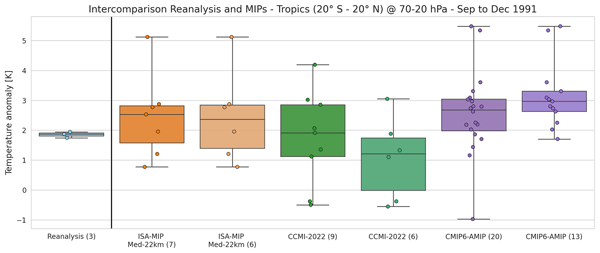
Major volcanic eruptions, such as the one of Mt. Pinatubo in 1991, can inject large amounts of sulfur dioxide into the stratosphere. The resulting aerosol cloud affects stratospheric temperature and thereby middle atmospheric dynamics and chemistry. Here we investigate similarities and differences across an ensemble of climate models in reproducing the stratospheric temperature signal following the Mt. Pinatubo eruption.
Patrick C. Taylor, Armin Sorooshian, Rei Ueyama, Sebastian Schmidt, Ihab Abboud, Quincy Allison, Kevin Barry, Sebastian Becker, Holly A. Bender, Joseph R. Bennett, James B. Blair, Niklas Bohn, Linette Boisvert, Matthew D. Brown, Roelof Bruintjes, Anthony Bucholtz, Megan Buzanowicz, Brian Cairns, Filippo Calì Quaglia, Eduard Chemyakin, Bo Chen, Gao Chen, Hong Chen, Yu-Wen Chen, Zezhen Cheng, Swarup China, Dan Chirica, Yonghoon Choi, Peter Colarco, Brian Collister, Ewan Crosbie, Maurice J. Cross, Janet Daniels, Paul DeMott, Joshua P. DiGangi, Alcide Giorgio di Sarra, Glenn S. Diskin, Erica K. Dolinar, Eva-Lou Edwards, Samuel Ephraim, Nikolaos Evangeliou, Romanos Foskinis, Francesca Gallo, Lan Gao, José Luis Gómez-Amo, Daisy Gonzalez, Christine Groot Zwaaftink, Pawan Gupta, Ivan Heckman, Michael Hendrickson, Miguel Ricardo A. Hilario, Ken Hirata, Michelle Hofton, Andrew L. Holen, Ulas Im, Alia L. Khan, Ralph Kahn, Alexei V. Korolev, Sonia Kreidenweis, Thomas Krumpen, Nathan Kurtz, Leslie Lait, Bradley Lamkin, Jack Landy, Nurun Nahar Lata, Paul Lawson, Samuel LeBlanc, Sean Leavor, Jing Li, Thorsten Markus, Hal Maring, Andreas H. Massling, Camille Mavis, Flynn McGinnity, Kerry Meyer, Gabriel Mojica, Richard H. Moore, Parker Morris, Giovanni Muscari, Vikas Nataraja, Amin R. Nehrir, Athanasios Nenes, Edward P. Nowottnick, Matteo Ottaviani, Chelsea Parker, Ryan Patnaude, Michael Perez, Russell J. Perkins, Colten Peterson, Alek Petty, Stevie Phothisane, Chris Polashenski, Kerri A. Pratt, Kayla M. Preisler, John Prytherch, David Rabine, Jens Redemann, Ju-Mee Ryoo, Joseph S. Schlosser, Vanessa Selimovic, Michael A. Shook, Morgan Silverman, Henrik Skov, Alexander Smirnov, Cassidy Soloff, Amy Solomon, Snorre Stamnes, Azusa Takeishi, David R. Thompson, K. Lee Thornhill, Rachel Tilling, Michael Tjernström, Monica Tosco, Pedro C. Valdelomar, David Van Gilst, Jian Wang, Zhien Wang, Andrzej Wasilewski, Manfred Wendisch, Brent Wilder, Edward L. Winstead, Albert Wu, Peng Xian, Lauren M. Zamora, Jiaoshi Zhang, Lei Zhang, Lu Zhang, Luke Ziemba, and Paquita Zuidema
Earth Syst. Sci. Data Discuss., https://doi.org/10.5194/essd-2026-241, https://doi.org/10.5194/essd-2026-241, 2026
Preprint under review for ESSD
Short summary
Short summary
This article summarizes the data sets collected during the Arctic Radiation Cloud aerosol Sea ice Interaction eXperiment (ARCSIX), NASA's most comprehensive Arctic field campaign to date. The overarching goal was to quantify the contributions of surface, clouds, aerosol particles, and precipitation to summer sea ice melt. This paper describes the ARCSIX implementation including the flight strategy, instruments, complementary data sets, access, and usage details.
Aino Ovaska, Daniel Holmberg, Elio Rauth, Mansour Alghamdi, Paulo Artaxo, Eija Asmi, John Backman, Benjamin Bergmans, Matthew Boyer, Liezl Bredenkamp, Maurizio Busetto, Delano Campos De Oliveira, Juan Andrés Casquero-Vera, Darius Ceburnis, Tak Chan, Tommy Chan, Sebastien Conil, Daniele Contini, Suzanne Crumeyrolle, Valentin Duflot, Kostas Eleftheriadis, Johan Esveld, Ekaterina Ezhova, Markus Fiebig, Shahzad Gani, Olga Garmash, Francisco Gómez-Moreno, Roy M. Harrison, Andras Hoffer, Rakesh Hooda, Antti Hyvärinen, Tareq Hussein, Jorma Joutsensaari, Nikos Kalivitis, Heinz Kaminski, Jutta Kesti, Radovan Krejci, Adam Kristensson, Chongai Kuang, Markku Kulmala, Lauri Laakso, Ari Leskinen, Heikki Lihavainen, Andreas Massling, Maik Merkel, Steffen Noe, Jakub Ondracek, Noemí Perez, Jean-Eudes Petit, Tuukka Petäjä, Michael Pikridas, Christopher Pöhlker, Mira Pöhlker, Jean-Philippe Putaud, Ximeng Qi, Cristina Reche, Sergio Rodríguez, Petr Roztocil, Jean Sciare, Karine Sellegri, Dongjie Shang, Ashish Singh, Mikko Sipilä, Henrik Skov, Mar Sorribas, Tamanna Subba, Junying Sun, Peter Tunved, Ville Vakkari, Pieter G. Van Zyl, Aki Virkkula, Jens Voigtländer, Kay Weinhold, Alfred Wiedensohler, Hee-Jung Yoo, Putian Zhou, Kai Puolamäki, Tuomo Nieminen, Veli-Matti Kerminen, Victoria A. Sinclair, and Pauli Paasonen
Earth Syst. Sci. Data Discuss., https://doi.org/10.5194/essd-2026-415, https://doi.org/10.5194/essd-2026-415, 2026
Preprint under review for ESSD
Short summary
Short summary
All clouds form around aerosol particles, and their abundance influences cloud properties. In turn, clouds affect climate by changing how energy moves through the atmosphere, making them important for climate change. To better understand these interactions, we need accurate information on how many aerosol particles are in the atmosphere. Therefore, we have developed a new 21-year global dataset of particle concentrations relevant for cloud formation.
Dominique Gantois, Alexandre Baron, Michaël Sicard, Valentin Duflot, Niels Groenen, Nelson Bègue, Sabine Eckhardt, Nikolaos Evangeliou, Martine De Mazière, Corinne Vigouroux, Guillaume Payen, Nicolas Marquestaut, Jean-Marc Metzger, Patrick Chazette, and Cyrille Flamant
EGUsphere, https://doi.org/10.5194/egusphere-2026-3070, https://doi.org/10.5194/egusphere-2026-3070, 2026
Short summary
Short summary
Smoke from Southern African and South American wildfires can travel for thousands of kilometers before reaching the Indian Ocean and Reunion Island. In this study, we use instruments measuring from the ground, from satellites, as well as atmospheric models, to track these smoke plumes and identify their origins and properties. Our findings should help future research focusing on the impact of these plumes on the atmospheric temperature.
Hendrik Fuchs, Niklas Illmann, Amalia Muñoz, Mila Ródenas, Bénédicte Picquet-Varrault, M. Rami Alfarra, Cecilia Arsene, Iustinian G. Bejan, David M. Bell, Merete Bilde, Alexander Böhmländer, Mixtli Campos-Pineda, Mathieu Cazaunau, Patrice Coll, Véronique Daële, Claudia Di Biagio, Michael Flynn, Paola Formenti, Hartmut Herrmann, Kristina Höhler, Thorsten Hohaus, Matthew S. Johnson, Eija Juurola, Niku Kivekäs, Jan Kaiser, Christos Kaltsonoudis, Paolo Laj, Dario Massabò, Federico Mazzei, Gordon McFiggans, Max R. McGillen, Abdelwahid Mellouki, Peter Mettke, Ottmar Möhler, Falk Mothes, Dennis Niedermeier, Anna Novelli, Romeo I. Olariu, Spyros N. Pandis, Iulia Patroescu-Klotz, Rosa Maria Petracca Altieri, Paolo Prati, Claudiu Roman, Albert A. Ruth, Harald Saathoff, Silvio Schmalfuß, Frank Stratmann, Virginia Vernocchi, Aristeidis Voliotis, Jens Voigtländer, Annele Virtanen, Andreas Wahner, Robert Wagner, John Wenger, Sören Zorn, Peter Wiesen, and Jean-Francois Doussin
Atmos. Meas. Tech., 19, 4165–4199, https://doi.org/10.5194/amt-19-4165-2026, https://doi.org/10.5194/amt-19-4165-2026, 2026
Short summary
Short summary
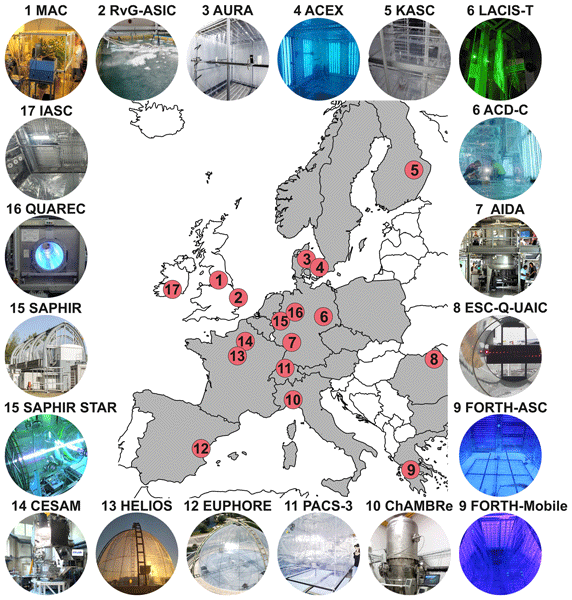
Atmospheric simulation chambers enable experiments to be conducted under controlled conditions, improving our understanding of, and ability to predict, changes in the composition of the atmosphere. This is important for assessing air quality and its effects on human health, climate, the environment, and the economy. This paper describes the chambers of the European ACTRIS research infrastructure and discusses topics and directions that can be addressed in future chamber experiments.
Samuel Ephraim, Paquita Zuidema, Aaron Bansemer, Lintong Cai, Markus Petters, Elise Rosky, Jefferson R. Snider, Zhien Wang, Sarah Woods, Kevin Barry, Theresa Campos, Owen Cruikshank, Sabine Eckhardt, Nikolaos Evangeliou, Romanos Foskinis, Jeffrey R. French, Bart Geerts, Coltin Grasmick, Silvia Henning, Varun Kumar, Andreas Massling, Camille Mavis, Greg M. McFarquhar, Athanasios Nenes, Gunnar Noer, Ryan Patnaude, Russell Perkins, Lise Lotte Sorensen, Henrik Skov, Tyler Tatro, Florian Tornow, and Lu Zhang
EGUsphere, https://doi.org/10.5194/egusphere-2026-2940, https://doi.org/10.5194/egusphere-2026-2940, 2026
Short summary
Short summary
The processes that establish how mixed-phase closed-cell clouds transition to more open cellular structures are poorly known. First-of-its kind aircraft observations document such a transition in the presence of anomalously high aerosol concentrations over the Nordic Seas at cloud temperatures < -15 °C. The reduces the drop size, discouraging riming. Eventually, ice precipitation produces surface cold pools that drive the convective transition, despite strong counteracting surface fluxes.
Paul D. Hamer, Miha Markelj, Oscar Rojas-Munoz, Bertrand Bonan, Jean-Christophe Calvet, Virginie Marécal, Alex Guenther, Heidi Trimmel, Islen Vallejo, Sabine Eckhardt, Gabriela Sousa Santos, Katerina Sindelarova, David Simpson, Norbert Schmidbauer, Heidi Hellén, Pascal Rubli, Stefan Reimann, Anja Claude, Dagmar Kubistin, Julie Cozic, James Dernie, and Leonor Tarrasón
Earth Syst. Sci. Data, 18, 3635–3669, https://doi.org/10.5194/essd-18-3635-2026, https://doi.org/10.5194/essd-18-3635-2026, 2026
Short summary
Short summary
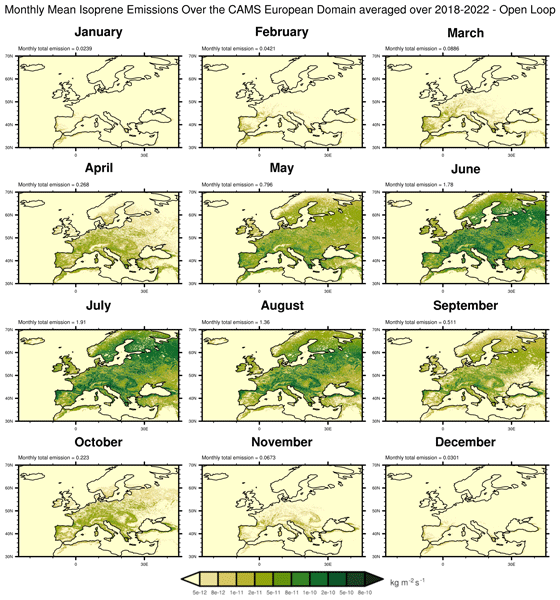
Plants release gases like isoprene that can form ozone and affect air quality. Using models and satellite data, we mapped the emissions of isoprene from plants across Europe and found that droughts can reduce leaf growth, leading to lower emissions. This shows that to understand and predict air quality, we must also understand how drought impacts vegetation. Our findings highlight the value of linking extreme weather, plant health, and pollution in models of the Earth system as a whole.
Marco Zanatta, Paolo Bonasoni, Francescopiero Calzolari, Paolo Cristofanelli, Sabine Eckhardt, Nikolaos Evangeliou, Cecilia Magnani, Camilla Perfetti, Davide Putero, Laura Renzi, Franziska Vogel, and Angela Marinoni
Earth Syst. Sci. Data Discuss., https://doi.org/10.5194/essd-2026-211, https://doi.org/10.5194/essd-2026-211, 2026
Preprint under review for ESSD
Short summary
Short summary
This work presents 18 years of high-quality observations of equivalent black carbon concentration measured at the Monte Cimone mountain site in Italy. We provide a detailed description of the measurement setup, data processing, and associated uncertainties to ensure consistency over time. The openly available dataset offers information for long-term studies, including the integration of renaltysis data parameters and comparison with atmospheric models.
Marilena Gidarakou, Alexandros Papayannis, Maria Mylonaki, Eleni Kralli, Kostas Eleftheratos, Ilias Fountoulakis, Olga Zografou, Evangelia Diapouli, Maria I. Gini, Stergios Vratolis, Konstantinos Granakis, Konstantinos Eleftheriadis, Nikolaos Evangeliou, Christine Groot Zwaaftink, Eugenia Giagka, Marios-Andreas Zagklis, and Igor Veselovskii
Atmos. Chem. Phys., 26, 4313–4339, https://doi.org/10.5194/acp-26-4313-2026, https://doi.org/10.5194/acp-26-4313-2026, 2026
Short summary
Short summary
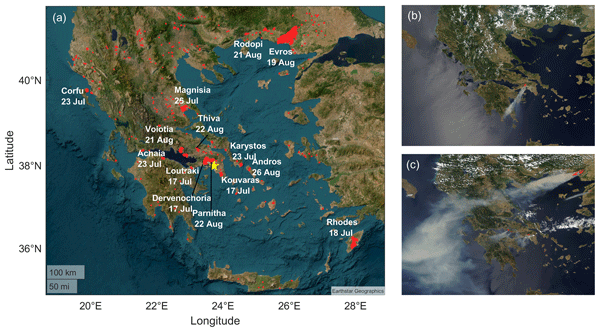
In summer 2023, Greece experienced one of its most intense wildfire seasons, with major fires across several regions. This study examines how smoke from two major fire events affected air quality and ultraviolet radiation in Athens using satellite images, modelling, and ground-based measurements to understand the optical and microphysical behavior of airborne particles.
Sara Herrero-Anta, Sabine Eckhardt, Nikolaos Evangeliou, Stefania Gilardoni, Sandra Graßl, Dominic Heslin-Rees, Stelios Kazadzis, Natalia Kouremeti, Radovan Krejci, David Mateos, Mauro Mazzola, Christoph Ritter, Roberto Román, Kerstin Stebel, and Tymon Zielinski
Atmos. Chem. Phys., 26, 1435–1457, https://doi.org/10.5194/acp-26-1435-2026, https://doi.org/10.5194/acp-26-1435-2026, 2026
Short summary
Short summary
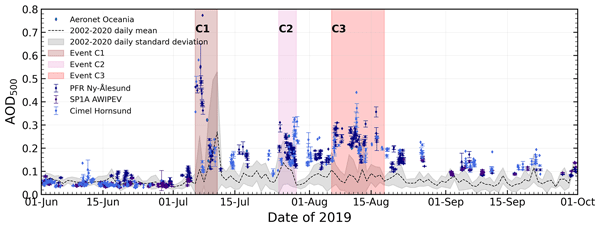
In summer 2019, unusually high aerosol concentrations were measured in the Arctic, extending through the troposphere and stratosphere up to 16 km. Using multiple instruments and models, aerosol particles were linked to wildfires, volcanic eruptions, and anthropogenic pollution. The aerosol consisted of spherical, fine-mode, weakly absorbing particles, which significantly reduced direct solar radiation. This combined approach improves understanding of Arctic aerosol events and climate processes.
Jonathan Fipper, Jakob Abermann, Ingo Sasgen, Henrik Skov, Lise Lotte Sørensen, and Wolfgang Schöner
The Cryosphere, 20, 683–698, https://doi.org/10.5194/tc-20-683-2026, https://doi.org/10.5194/tc-20-683-2026, 2026
Short summary
Short summary
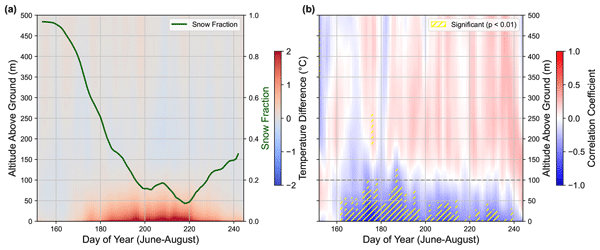
We use measurements conducted with uncrewed aerial vehicles (UAVs) and reanalysis data to study the drivers of vertical air temperature structures and their link to the surface mass balance of Flade Isblink, a large ice cap in Northeast Greenland. Surface properties control temperature structures up to 100 m above ground, while large-scale circulation dominates above. Mass loss has increased since 2015, with record loss in 2023 associated with frequent synoptic conditions favouring melt.
Cameron McErlich, Felix Goddard, Alex Aves, Catherine Hardacre, Nikolaos Evangeliou, Alan J. Hewitt, and Laura E. Revell
Geosci. Model Dev., 18, 8827–8854, https://doi.org/10.5194/gmd-18-8827-2025, https://doi.org/10.5194/gmd-18-8827-2025, 2025
Short summary
Short summary
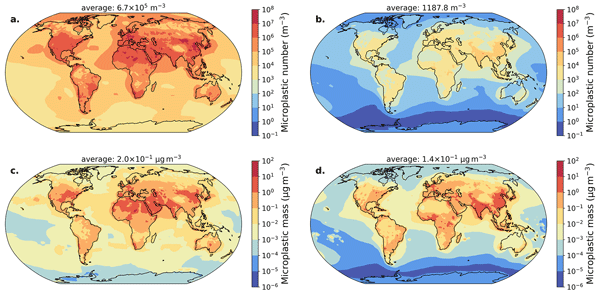
Airborne microplastics are a new air pollutant but are not yet included in most global models. We add them to the UK Earth System Model to show how they move, change, and are removed from air. Smaller microplastics persist for longer and can travel further, even to Antarctica. While their current role in air pollution is small, their presence is expected to grow in future. This work offers a framework to assess future impacts of microplastics on air quality and climate.
Wanmin Gong, Stephen R. Beagley, Kenjiro Toyota, Henrik Skov, Jesper Heile Christensen, Alex Lupu, Diane Pendlebury, Junhua Zhang, Ulas Im, Yugo Kanaya, Alfonso Saiz-Lopez, Roberto Sommariva, Peter Effertz, John W. Halfacre, Nis Jepsen, Rigel Kivi, Theodore K. Koenig, Katrin Müller, Claus Nordstrøm, Irina Petropavlovskikh, Paul B. Shepson, William R. Simpson, Sverre Solberg, Ralf M. Staebler, David W. Tarasick, Roeland Van Malderen, and Mika Vestenius
Atmos. Chem. Phys., 25, 8355–8405, https://doi.org/10.5194/acp-25-8355-2025, https://doi.org/10.5194/acp-25-8355-2025, 2025
Short summary
Short summary
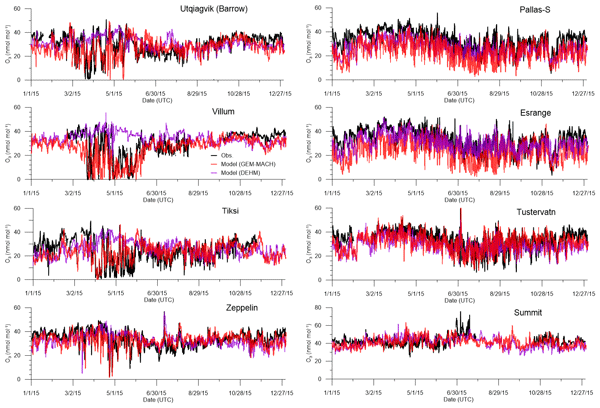
This study showed that the springtime O3 depletion plays a critical role in driving the surface O3 seasonal cycle in the central Arctic. The O3 depletion events, while occurring most notably within the lowest few hundred metres above the Arctic Ocean, can induce a 5–7 % loss in the pan-Arctic tropospheric O3 burden during springtime. The study also found enhancements in O3 and NOy (mostly peroxyacetyl nitrate) concentrations in the Arctic due to northern boreal wildfires, particularly at higher altitudes.
Olga B. Popovicheva, Marina A. Chichaeva, Nikolaos Evangeliou, Sabine Eckhardt, Evangelia Diapouli, and Nikolay S. Kasimov
Atmos. Chem. Phys., 25, 7719–7739, https://doi.org/10.5194/acp-25-7719-2025, https://doi.org/10.5194/acp-25-7719-2025, 2025
Short summary
Short summary
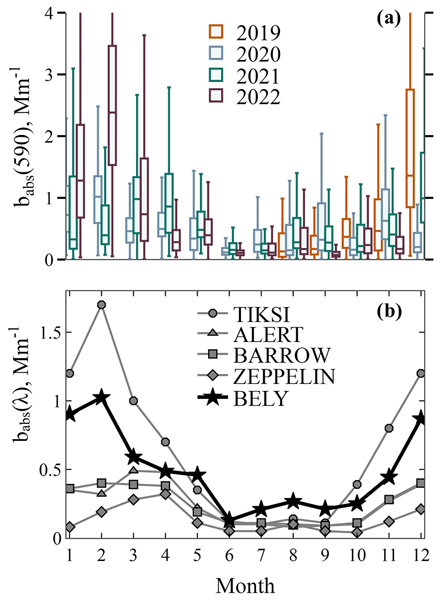
High-quality measurements of light-absorbing carbon were performed at the polar aerosol station "Island Bely” (Western Siberian Arctic) from 2019 to 2022. The maximum light absorption coefficients were seen in summer due to gas flaring, which is the most significant source in the region. However, the increasing Siberian wildfires had a special share in carbon contribution at this high Arctic station, with a persistent smoke layer extending over the whole troposphere in summer.
Lubna Dada, Benjamin T. Brem, Lidia-Marta Amarandi-Netedu, Martine Collaud Coen, Nikolaos Evangeliou, Christoph Hueglin, Nora Nowak, Robin Modini, Martin Steinbacher, and Martin Gysel-Beer
Aerosol Research, 3, 315–336, https://doi.org/10.5194/ar-3-315-2025, https://doi.org/10.5194/ar-3-315-2025, 2025
Short summary
Short summary
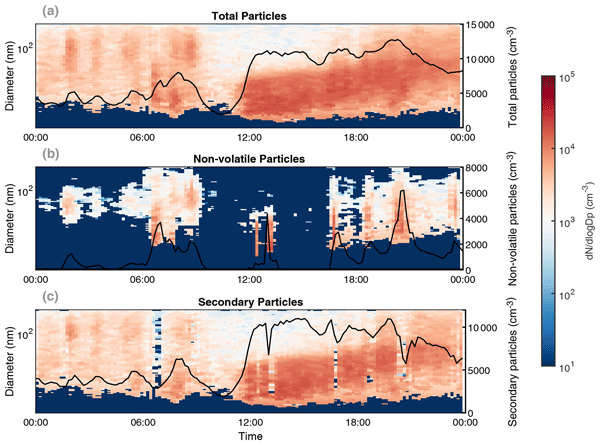
We investigated the sources of ultrafine particles (UFPs) in Payerne, Switzerland, highlighting the significant role of secondary processes in elevating UFP concentrations to levels comparable to urban areas. As the first study in rural midland Switzerland to analyze new particle formation events and secondary contributions, it offers key insights for air quality regulation and the role of agriculture in Switzerland and central Europe.
Nikolaos Evangeliou, Ondřej Tichý, Marit Svendby Otervik, Sabine Eckhardt, Yves Balkanski, and Didier A. Hauglustaine
Aerosol Research, 3, 155–174, https://doi.org/10.5194/ar-3-155-2025, https://doi.org/10.5194/ar-3-155-2025, 2025
Short summary
Short summary
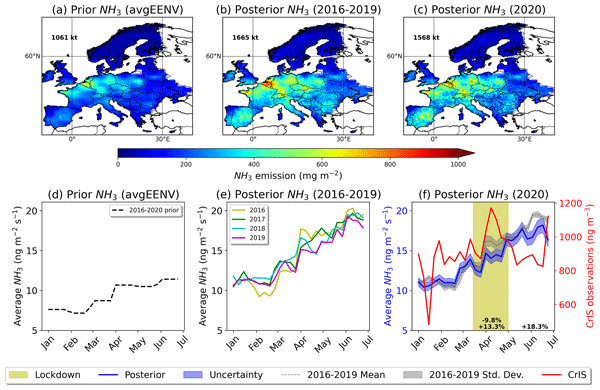
The COVID-19 lockdown measures in 2020 reduced emissions of various substances, improving air quality. However, PM2.5 stayed unchanged due to NH3 and related chemical transformations. Higher humidity favoured more SO42- production, as did the accumulated NH3. Excess NH3 reacted with HNO3 to make NO3-. In high-NH3 conditions such as those in 2020, a small reduction in NOx levels drove faster oxidation of NO3- and slower deposition of total inorganic NO3-, causing high secondary PM2.5.
Michel Legrand, Mstislav Vorobyev, Daria Bokuchava, Stanislav Kutuzov, Andreas Plach, Andreas Stohl, Alexandra Khairedinova, Vladimir Mikhalenko, Maria Vinogradova, Sabine Eckhardt, and Susanne Preunkert
Atmos. Chem. Phys., 25, 1385–1399, https://doi.org/10.5194/acp-25-1385-2025, https://doi.org/10.5194/acp-25-1385-2025, 2025
Short summary
Short summary
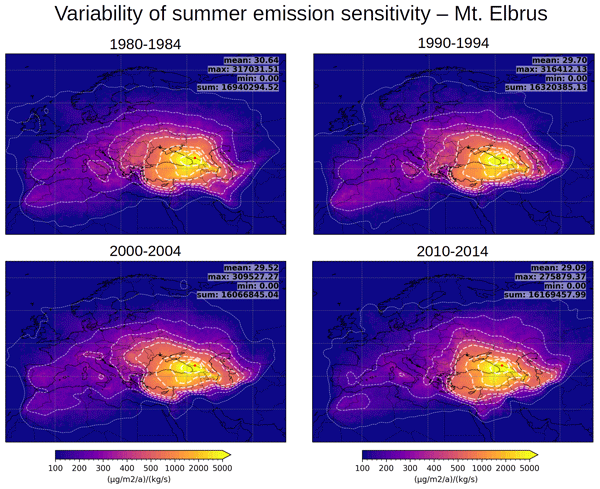
Past atmospheric NH3 pollution in south-eastern Europe was reconstructed by analysing ammonium in an ice core drilled at the Mount Elbrus (Caucasus, Russia). The observed 3.5-fold increase in ice concentrations between 1750 and 1990 CE is in good agreement with estimated past dominant ammonia emissions from agriculture, mainly from south European Russia and Türkiye. In contrast to present-day conditions, the ammonium level observed in 1750 CE indicates significant natural emissions at that time.
Jakob Boyd Pernov, Jens Liengaard Hjorth, Lise Lotte Sørensen, and Henrik Skov
Atmos. Chem. Phys., 24, 13603–13631, https://doi.org/10.5194/acp-24-13603-2024, https://doi.org/10.5194/acp-24-13603-2024, 2024
Short summary
Short summary
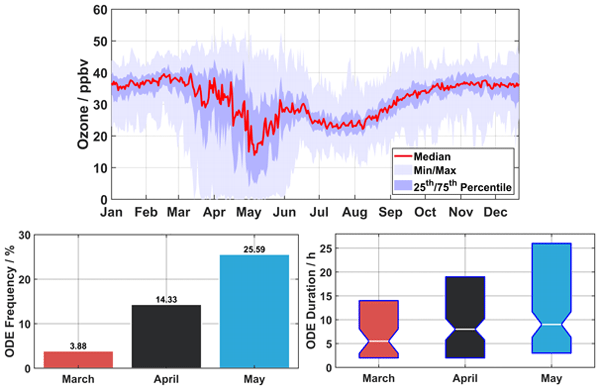
Arctic ozone depletion events (ODEs) occur every spring and have vast implications for the oxidizing capacity, radiative balance, and mercury oxidation. In this study, we analyze ozone, ODEs, and their connection to meteorological and air mass history variables through statistical analyses, back trajectories, and machine learning (ML) at Villum Research Station. ODEs are favorable under sunny, calm conditions with air masses arriving from northerly wind directions with sea ice contact.
Lucie Bakels, Daria Tatsii, Anne Tipka, Rona Thompson, Marina Dütsch, Michael Blaschek, Petra Seibert, Katharina Baier, Silvia Bucci, Massimo Cassiani, Sabine Eckhardt, Christine Groot Zwaaftink, Stephan Henne, Pirmin Kaufmann, Vincent Lechner, Christian Maurer, Marie D. Mulder, Ignacio Pisso, Andreas Plach, Rakesh Subramanian, Martin Vojta, and Andreas Stohl
Geosci. Model Dev., 17, 7595–7627, https://doi.org/10.5194/gmd-17-7595-2024, https://doi.org/10.5194/gmd-17-7595-2024, 2024
Short summary
Short summary
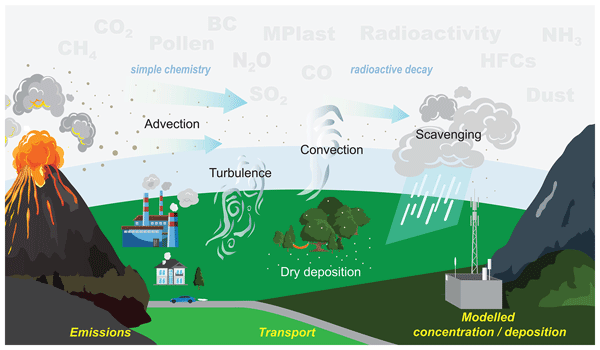
Computer models are essential for improving our understanding of how gases and particles move in the atmosphere. We present an update of the atmospheric transport model FLEXPART. FLEXPART 11 is more accurate due to a reduced number of interpolations and a new scheme for wet deposition. It can simulate non-spherical aerosols and includes linear chemical reactions. It is parallelised using OpenMP and includes new user options. A new user manual details how to use FLEXPART 11.
Yuanyuan Luo, Ditte Thomsen, Emil Mark Iversen, Pontus Roldin, Jane Tygesen Skønager, Linjie Li, Michael Priestley, Henrik B. Pedersen, Mattias Hallquist, Merete Bilde, Marianne Glasius, and Mikael Ehn
Atmos. Chem. Phys., 24, 9459–9473, https://doi.org/10.5194/acp-24-9459-2024, https://doi.org/10.5194/acp-24-9459-2024, 2024
Short summary
Short summary
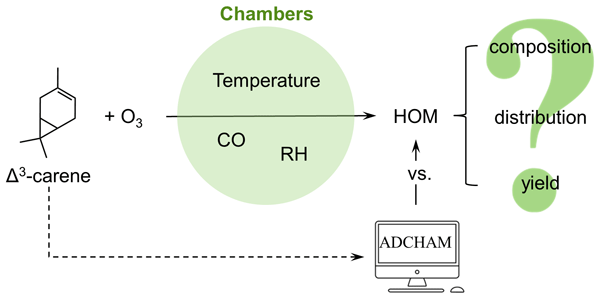
∆3-carene is abundantly emitted from vegetation, but its atmospheric oxidation chemistry has received limited attention. We explored highly oxygenated organic molecule (HOM) formation from ∆3-carene ozonolysis in chambers and investigated the impact of temperature and relative humidity on HOM formation. Our findings provide new insights into ∆3-carene oxidation pathways and their potential to impact atmospheric aerosols.
Karl Espen Yttri, Are Bäcklund, Franz Conen, Sabine Eckhardt, Nikolaos Evangeliou, Markus Fiebig, Anne Kasper-Giebl, Avram Gold, Hans Gundersen, Cathrine Lund Myhre, Stephen Matthew Platt, David Simpson, Jason D. Surratt, Sönke Szidat, Martin Rauber, Kjetil Tørseth, Martin Album Ytre-Eide, Zhenfa Zhang, and Wenche Aas
Atmos. Chem. Phys., 24, 2731–2758, https://doi.org/10.5194/acp-24-2731-2024, https://doi.org/10.5194/acp-24-2731-2024, 2024
Short summary
Short summary
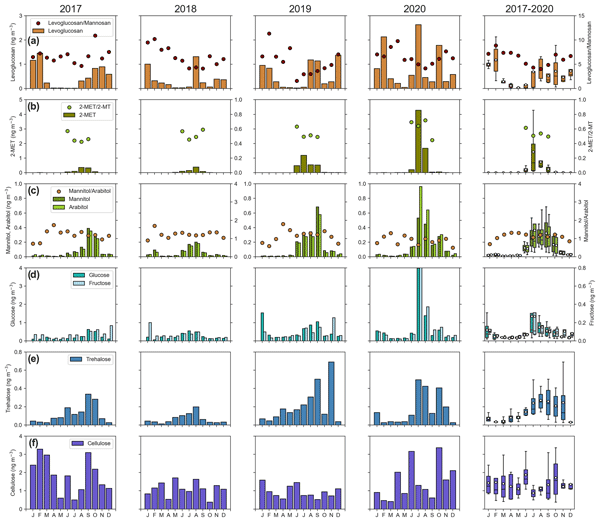
We discuss carbonaceous aerosol (CA) observed at the high Arctic Zeppelin Observatory (2017 to 2020). We find that organic aerosol is a significant fraction of the Arctic aerosol, though less than sea salt aerosol and mineral dust, as well as non-sea-salt sulfate, originating mainly from anthropogenic sources in winter and from natural sources in summer, emphasizing the importance of wildfires for biogenic secondary organic aerosol and primary biological aerosol particles observed in the Arctic.
Ondřej Tichý, Sabine Eckhardt, Yves Balkanski, Didier Hauglustaine, and Nikolaos Evangeliou
Atmos. Chem. Phys., 23, 15235–15252, https://doi.org/10.5194/acp-23-15235-2023, https://doi.org/10.5194/acp-23-15235-2023, 2023
Short summary
Short summary
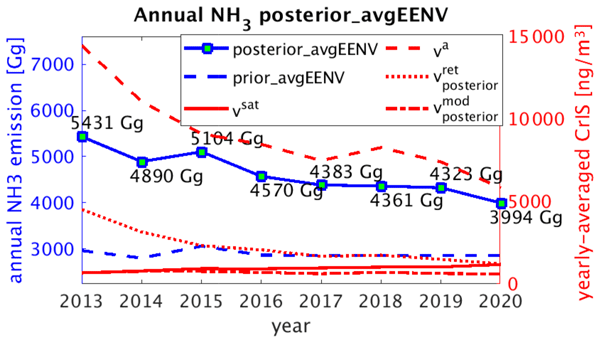
We show declining trends in NH3 emissions over Europe for 2013–2020 using advanced dispersion and inverse modelling and satellite measurements from CrIS. Emissions decreased by −26% since 2013, showing that the abatement strategies adopted by the European Union have been very efficient. Ammonia emissions are low in winter and peak in summer due to temperature-dependent soil volatilization. The largest decreases were observed in central and western Europe in countries with high emissions.
Rimal Abeed, Camille Viatte, William C. Porter, Nikolaos Evangeliou, Cathy Clerbaux, Lieven Clarisse, Martin Van Damme, Pierre-François Coheur, and Sarah Safieddine
Atmos. Chem. Phys., 23, 12505–12523, https://doi.org/10.5194/acp-23-12505-2023, https://doi.org/10.5194/acp-23-12505-2023, 2023
Short summary
Short summary
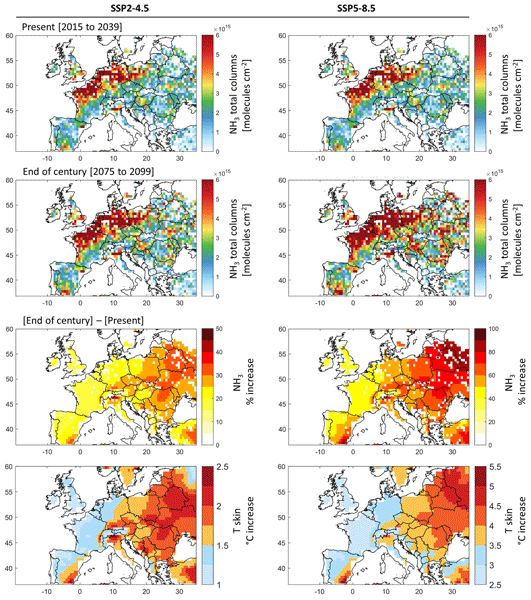
Ammonia emissions from agricultural activities will inevitably increase with the rise in population. We use a variety of datasets (satellite, reanalysis, and model simulation) to calculate the first regional map of ammonia emission potential during the start of the growing season in Europe. We then apply our developed method using a climate model to show the effect of the temperature increase on future ammonia columns under two possible climate scenarios.
Jenny Oh, Chubashini Shunthirasingham, Ying Duan Lei, Faqiang Zhan, Yuening Li, Abigaëlle Dalpé Castilloux, Amina Ben Chaaben, Zhe Lu, Kelsey Lee, Frank A. P. C. Gobas, Sabine Eckhardt, Nick Alexandrou, Hayley Hung, and Frank Wania
Atmos. Chem. Phys., 23, 10191–10205, https://doi.org/10.5194/acp-23-10191-2023, https://doi.org/10.5194/acp-23-10191-2023, 2023
Short summary
Short summary
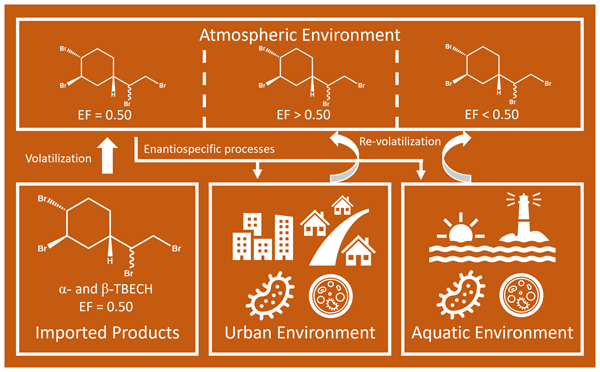
An emerging brominated flame retardant (BFR) called TBECH (1,2-dibromo-4-(1,2-dibromoethyl)cyclohexane) has never been produced or imported for use in Canada yet is found to be one of the most abundant gaseous BFRs in the Canadian atmosphere. The recorded spatial and temporal variability of TBECH suggest that the release from imported consumer products containing TBECH is the most likely explanation for its environmental occurrence in Canada.
Jean-Philippe Putaud, Enrico Pisoni, Alexander Mangold, Christoph Hueglin, Jean Sciare, Michael Pikridas, Chrysanthos Savvides, Jakub Ondracek, Saliou Mbengue, Alfred Wiedensohler, Kay Weinhold, Maik Merkel, Laurent Poulain, Dominik van Pinxteren, Hartmut Herrmann, Andreas Massling, Claus Nordstroem, Andrés Alastuey, Cristina Reche, Noemí Pérez, Sonia Castillo, Mar Sorribas, Jose Antonio Adame, Tuukka Petaja, Katrianne Lehtipalo, Jarkko Niemi, Véronique Riffault, Joel F. de Brito, Augustin Colette, Olivier Favez, Jean-Eudes Petit, Valérie Gros, Maria I. Gini, Stergios Vratolis, Konstantinos Eleftheriadis, Evangelia Diapouli, Hugo Denier van der Gon, Karl Espen Yttri, and Wenche Aas
Atmos. Chem. Phys., 23, 10145–10161, https://doi.org/10.5194/acp-23-10145-2023, https://doi.org/10.5194/acp-23-10145-2023, 2023
Short summary
Short summary
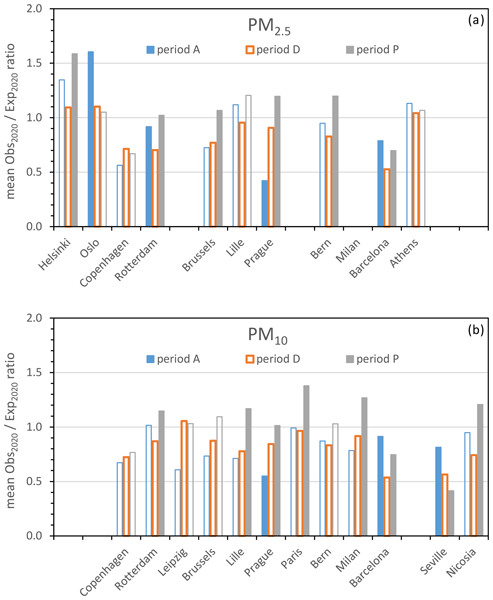
Many European people are still exposed to levels of air pollution that can affect their health. COVID-19 lockdowns in 2020 were used to assess the impact of the reduction in human mobility on air pollution across Europe by comparing measurement data with values that would be expected if no lockdown had occurred. We show that lockdown measures did not lead to consistent decreases in the concentrations of fine particulate matter suspended in the air, and we investigate why.
Dimitri Castarède, Zoé Brasseur, Yusheng Wu, Zamin A. Kanji, Markus Hartmann, Lauri Ahonen, Merete Bilde, Markku Kulmala, Tuukka Petäjä, Jan B. C. Pettersson, Berko Sierau, Olaf Stetzer, Frank Stratmann, Birgitta Svenningsson, Erik Swietlicki, Quynh Thu Nguyen, Jonathan Duplissy, and Erik S. Thomson
Atmos. Meas. Tech., 16, 3881–3899, https://doi.org/10.5194/amt-16-3881-2023, https://doi.org/10.5194/amt-16-3881-2023, 2023
Short summary
Short summary
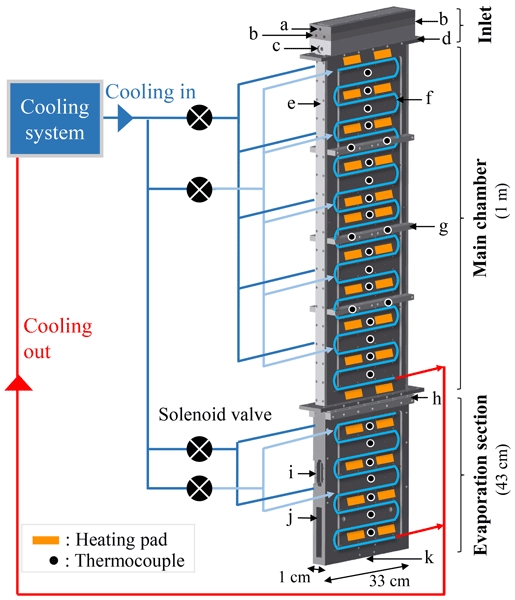
Clouds play a key role in Earth’s climate by influencing the surface energy budget. Certain types of atmospheric aerosols, called ice-nucleating particles (INPs), induce the formation of ice in clouds and, thus, often initiate precipitation formation. The Portable Ice Nucleation Chamber 2 (PINCii) is a new instrument developed to study ice formation and to conduct ambient measurements of INPs, allowing us to investigate the sources and properties of the atmospheric aerosols that can act as INPs.
Anja Eichler, Michel Legrand, Theo M. Jenk, Susanne Preunkert, Camilla Andersson, Sabine Eckhardt, Magnuz Engardt, Andreas Plach, and Margit Schwikowski
The Cryosphere, 17, 2119–2137, https://doi.org/10.5194/tc-17-2119-2023, https://doi.org/10.5194/tc-17-2119-2023, 2023
Short summary
Short summary
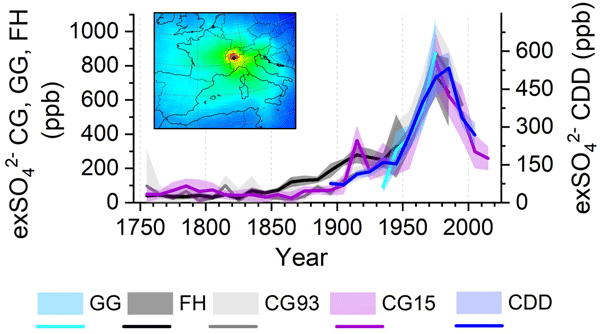
We investigate how a 250-year history of the emission of air pollutants (major inorganic aerosol constituents, black carbon, and trace species) is preserved in ice cores from four sites in the European Alps. The observed uniform timing in species-dependent longer-term concentration changes reveals that the different ice-core records provide a consistent, spatially representative signal of the pollution history from western European countries.
Eleftherios Ioannidis, Kathy S. Law, Jean-Christophe Raut, Louis Marelle, Tatsuo Onishi, Rachel M. Kirpes, Lucia M. Upchurch, Thomas Tuch, Alfred Wiedensohler, Andreas Massling, Henrik Skov, Patricia K. Quinn, and Kerri A. Pratt
Atmos. Chem. Phys., 23, 5641–5678, https://doi.org/10.5194/acp-23-5641-2023, https://doi.org/10.5194/acp-23-5641-2023, 2023
Short summary
Short summary
Remote and local anthropogenic emissions contribute to wintertime Arctic haze, with enhanced aerosol concentrations, but natural sources, which also contribute, are less well studied. Here, modelled wintertime sea-spray aerosols are improved in WRF-Chem over the wider Arctic by including updated wind speed and temperature-dependent treatments. As a result, anthropogenic nitrate aerosols are also improved. Open leads are confirmed to be the main source of sea-spray aerosols over northern Alaska.
Andreas Massling, Robert Lange, Jakob Boyd Pernov, Ulrich Gosewinkel, Lise-Lotte Sørensen, and Henrik Skov
Atmos. Chem. Phys., 23, 4931–4953, https://doi.org/10.5194/acp-23-4931-2023, https://doi.org/10.5194/acp-23-4931-2023, 2023
Short summary
Short summary
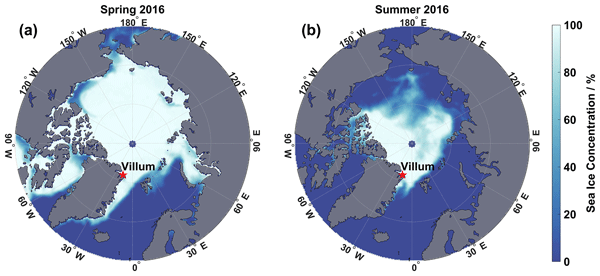
The effect of anthropogenic activities on cloud formation introduces the highest uncertainties with respect to climate change. Data on Arctic aerosols and their corresponding cloud-forming properties are very scarce and most important as the Arctic is warming about 2 times as fast as the rest of the globe. Our studies investigate aerosols in the remote Arctic and suggest relatively high cloud-forming potential, although differences are observed between the Arctic spring and summer.

Kevin C. H. Sze, Heike Wex, Markus Hartmann, Henrik Skov, Andreas Massling, Diego Villanueva, and Frank Stratmann
Atmos. Chem. Phys., 23, 4741–4761, https://doi.org/10.5194/acp-23-4741-2023, https://doi.org/10.5194/acp-23-4741-2023, 2023
Short summary
Short summary
Ice-nucleating particles (INPs) play an important role in cloud formation and thus in our climate. But little is known about the abundance and properties of INPs, especially in the Arctic, where the temperature increases almost 4 times as fast as that of the rest of the globe. We observe higher INP concentrations and more biological INPs in summer than in winter, likely from local sources. We also provide three equations for estimating INP concentrations in models at different times of the year.
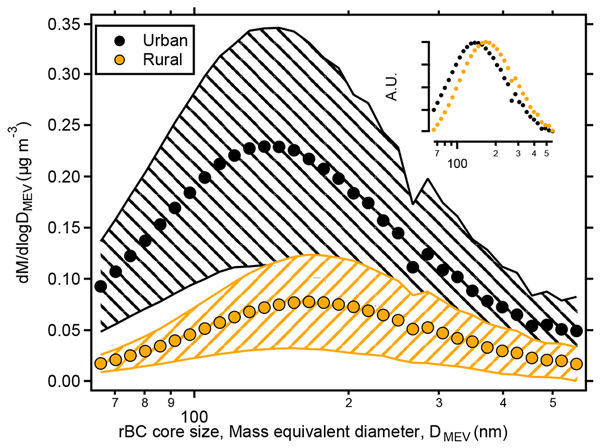
Erik Ahlberg, Stina Ausmeel, Lovisa Nilsson, Mårten Spanne, Julija Pauraite, Jacob Klenø Nøjgaard, Michele Bertò, Henrik Skov, Pontus Roldin, Adam Kristensson, Erik Swietlicki, and Axel Eriksson
Atmos. Chem. Phys., 23, 3051–3064, https://doi.org/10.5194/acp-23-3051-2023, https://doi.org/10.5194/acp-23-3051-2023, 2023
Short summary
Short summary
To investigate the properties and origin of black carbon particles in southern Sweden during late summer, we performed measurements both at a rural site and the nearby city of Malmö. We found that local traffic emissions of black carbon led to concentrations around twice as high as those at the rural site. Modeling show that these emissions are not clearly distinguishable at the rural site, unless meteorology was favourable, which shows the importance of long-range transport and processing.
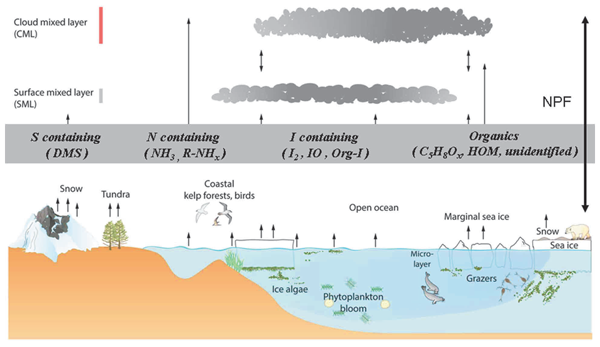
James Brean, David C. S. Beddows, Roy M. Harrison, Congbo Song, Peter Tunved, Johan Ström, Radovan Krejci, Eyal Freud, Andreas Massling, Henrik Skov, Eija Asmi, Angelo Lupi, and Manuel Dall'Osto
Atmos. Chem. Phys., 23, 2183–2198, https://doi.org/10.5194/acp-23-2183-2023, https://doi.org/10.5194/acp-23-2183-2023, 2023
Short summary
Short summary
Our results emphasize how understanding the geographical variation in surface types across the Arctic is key to understanding secondary aerosol sources. We provide a harmonised analysis of new particle formation across the Arctic.
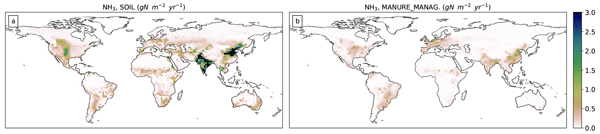
Maureen Beaudor, Nicolas Vuichard, Juliette Lathière, Nikolaos Evangeliou, Martin Van Damme, Lieven Clarisse, and Didier Hauglustaine
Geosci. Model Dev., 16, 1053–1081, https://doi.org/10.5194/gmd-16-1053-2023, https://doi.org/10.5194/gmd-16-1053-2023, 2023
Short summary
Short summary
Ammonia mainly comes from the agricultural sector, and its volatilization relies on environmental variables. Our approach aims at benefiting from an Earth system model framework to estimate it. By doing so, we represent a consistent spatial distribution of the emissions' response to environmental changes.
We greatly improved the seasonal cycle of emissions compared with previous work. In addition, our model includes natural soil emissions (that are rarely represented in modeling approaches).
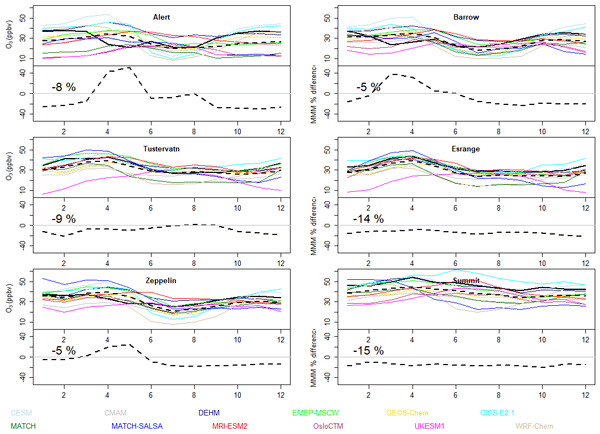
Cynthia H. Whaley, Kathy S. Law, Jens Liengaard Hjorth, Henrik Skov, Stephen R. Arnold, Joakim Langner, Jakob Boyd Pernov, Garance Bergeron, Ilann Bourgeois, Jesper H. Christensen, Rong-You Chien, Makoto Deushi, Xinyi Dong, Peter Effertz, Gregory Faluvegi, Mark Flanner, Joshua S. Fu, Michael Gauss, Greg Huey, Ulas Im, Rigel Kivi, Louis Marelle, Tatsuo Onishi, Naga Oshima, Irina Petropavlovskikh, Jeff Peischl, David A. Plummer, Luca Pozzoli, Jean-Christophe Raut, Tom Ryerson, Ragnhild Skeie, Sverre Solberg, Manu A. Thomas, Chelsea Thompson, Kostas Tsigaridis, Svetlana Tsyro, Steven T. Turnock, Knut von Salzen, and David W. Tarasick
Atmos. Chem. Phys., 23, 637–661, https://doi.org/10.5194/acp-23-637-2023, https://doi.org/10.5194/acp-23-637-2023, 2023
Short summary
Short summary
This study summarizes recent research on ozone in the Arctic, a sensitive and rapidly warming region. We find that the seasonal cycles of near-surface atmospheric ozone are variable depending on whether they are near the coast, inland, or at high altitude. Several global model simulations were evaluated, and we found that because models lack some of the ozone chemistry that is important for the coastal Arctic locations, they do not accurately simulate ozone there.
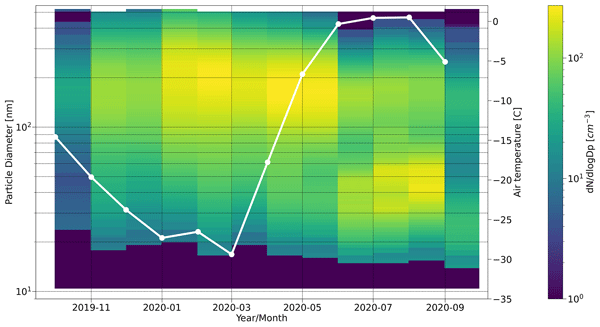
Matthew Boyer, Diego Aliaga, Jakob Boyd Pernov, Hélène Angot, Lauriane L. J. Quéléver, Lubna Dada, Benjamin Heutte, Manuel Dall'Osto, David C. S. Beddows, Zoé Brasseur, Ivo Beck, Silvia Bucci, Marina Duetsch, Andreas Stohl, Tiia Laurila, Eija Asmi, Andreas Massling, Daniel Charles Thomas, Jakob Klenø Nøjgaard, Tak Chan, Sangeeta Sharma, Peter Tunved, Radovan Krejci, Hans Christen Hansson, Federico Bianchi, Katrianne Lehtipalo, Alfred Wiedensohler, Kay Weinhold, Markku Kulmala, Tuukka Petäjä, Mikko Sipilä, Julia Schmale, and Tuija Jokinen
Atmos. Chem. Phys., 23, 389–415, https://doi.org/10.5194/acp-23-389-2023, https://doi.org/10.5194/acp-23-389-2023, 2023
Short summary
Short summary
The Arctic is a unique environment that is warming faster than other locations on Earth. We evaluate measurements of aerosol particles, which can influence climate, over the central Arctic Ocean for a full year and compare the data to land-based measurement stations across the Arctic. Our measurements show that the central Arctic has similarities to but also distinct differences from the stations further south. We note that this may change as the Arctic warms and sea ice continues to decline.
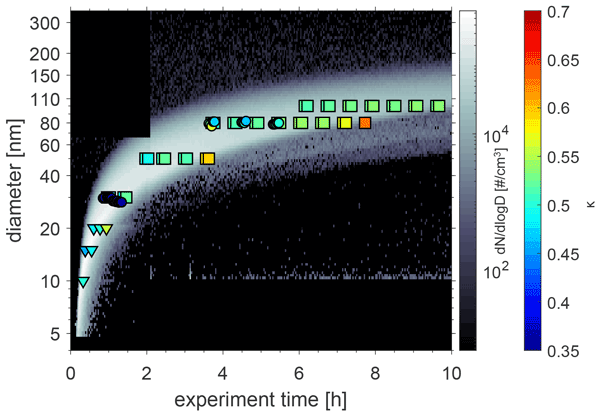
Bernadette Rosati, Sini Isokääntä, Sigurd Christiansen, Mads Mørk Jensen, Shamjad P. Moosakutty, Robin Wollesen de Jonge, Andreas Massling, Marianne Glasius, Jonas Elm, Annele Virtanen, and Merete Bilde
Atmos. Chem. Phys., 22, 13449–13466, https://doi.org/10.5194/acp-22-13449-2022, https://doi.org/10.5194/acp-22-13449-2022, 2022
Short summary
Short summary
Sulfate aerosols have a strong influence on climate. Due to the reduction in sulfur-based fossil fuels, natural sulfur emissions play an increasingly important role. Studies investigating the climate relevance of natural sulfur aerosols are scarce. We study the water uptake of such particles in the laboratory, demonstrating a high potential to take up water and form cloud droplets. During atmospheric transit, chemical processing affects the particles’ composition and thus their water uptake.
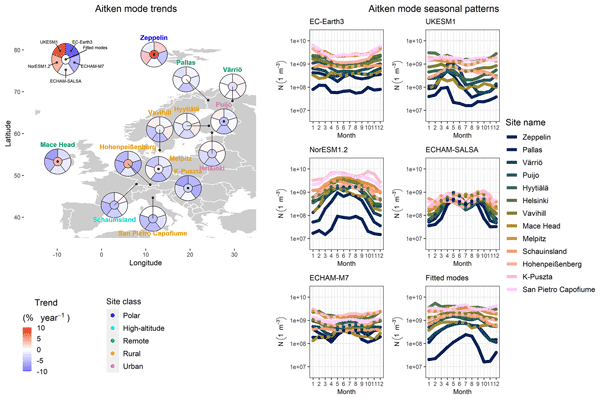
Ville Leinonen, Harri Kokkola, Taina Yli-Juuti, Tero Mielonen, Thomas Kühn, Tuomo Nieminen, Simo Heikkinen, Tuuli Miinalainen, Tommi Bergman, Ken Carslaw, Stefano Decesari, Markus Fiebig, Tareq Hussein, Niku Kivekäs, Radovan Krejci, Markku Kulmala, Ari Leskinen, Andreas Massling, Nikos Mihalopoulos, Jane P. Mulcahy, Steffen M. Noe, Twan van Noije, Fiona M. O'Connor, Colin O'Dowd, Dirk Olivie, Jakob B. Pernov, Tuukka Petäjä, Øyvind Seland, Michael Schulz, Catherine E. Scott, Henrik Skov, Erik Swietlicki, Thomas Tuch, Alfred Wiedensohler, Annele Virtanen, and Santtu Mikkonen
Atmos. Chem. Phys., 22, 12873–12905, https://doi.org/10.5194/acp-22-12873-2022, https://doi.org/10.5194/acp-22-12873-2022, 2022
Short summary
Short summary
We provide the first extensive comparison of detailed aerosol size distribution trends between in situ observations from Europe and five different earth system models. We investigated aerosol modes (nucleation, Aitken, and accumulation) separately and were able to show the differences between measured and modeled trends and especially their seasonal patterns. The differences in model results are likely due to complex effects of several processes instead of certain specific model features.

Lauren M. Zamora, Ralph A. Kahn, Nikolaos Evangeliou, Christine D. Groot Zwaaftink, and Klaus B. Huebert
Atmos. Chem. Phys., 22, 12269–12285, https://doi.org/10.5194/acp-22-12269-2022, https://doi.org/10.5194/acp-22-12269-2022, 2022
Short summary
Short summary
Arctic dust, smoke, and pollution particles can affect clouds and Arctic warming. The distributions of these particles were estimated in three different satellite, reanalysis, and model products. These products showed good agreement overall but indicate that it is important to include local dust in models. We hypothesize that mineral dust effects on ice processes in the Arctic atmosphere might be highest over Siberia, where it is cold, moist, and subject to relatively high dust levels.

Olga B. Popovicheva, Nikolaos Evangeliou, Vasilii O. Kobelev, Marina A. Chichaeva, Konstantinos Eleftheriadis, Asta Gregorič, and Nikolay S. Kasimov
Atmos. Chem. Phys., 22, 5983–6000, https://doi.org/10.5194/acp-22-5983-2022, https://doi.org/10.5194/acp-22-5983-2022, 2022
Short summary
Short summary
Measurements of black carbon (BC) combined with atmospheric transport modeling reveal that gas flaring from oil and gas extraction in Kazakhstan, Volga-Ural, Komi, Nenets and western Siberia contributes the largest share of surface BC in the Russian Arctic dominating over domestic, industrial and traffic sectors. Pollution episodes show an increasing trend in concentration levels and frequency as the station is in the Siberian gateway of the highest anthropogenic pollution to the Russian Arctic.
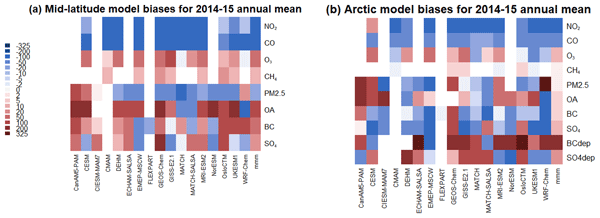
Cynthia H. Whaley, Rashed Mahmood, Knut von Salzen, Barbara Winter, Sabine Eckhardt, Stephen Arnold, Stephen Beagley, Silvia Becagli, Rong-You Chien, Jesper Christensen, Sujay Manish Damani, Xinyi Dong, Konstantinos Eleftheriadis, Nikolaos Evangeliou, Gregory Faluvegi, Mark Flanner, Joshua S. Fu, Michael Gauss, Fabio Giardi, Wanmin Gong, Jens Liengaard Hjorth, Lin Huang, Ulas Im, Yugo Kanaya, Srinath Krishnan, Zbigniew Klimont, Thomas Kühn, Joakim Langner, Kathy S. Law, Louis Marelle, Andreas Massling, Dirk Olivié, Tatsuo Onishi, Naga Oshima, Yiran Peng, David A. Plummer, Olga Popovicheva, Luca Pozzoli, Jean-Christophe Raut, Maria Sand, Laura N. Saunders, Julia Schmale, Sangeeta Sharma, Ragnhild Bieltvedt Skeie, Henrik Skov, Fumikazu Taketani, Manu A. Thomas, Rita Traversi, Kostas Tsigaridis, Svetlana Tsyro, Steven Turnock, Vito Vitale, Kaley A. Walker, Minqi Wang, Duncan Watson-Parris, and Tahya Weiss-Gibbons
Atmos. Chem. Phys., 22, 5775–5828, https://doi.org/10.5194/acp-22-5775-2022, https://doi.org/10.5194/acp-22-5775-2022, 2022
Short summary
Short summary
Air pollutants, like ozone and soot, play a role in both global warming and air quality. Atmospheric models are often used to provide information to policy makers about current and future conditions under different emissions scenarios. In order to have confidence in those simulations, in this study we compare simulated air pollution from 18 state-of-the-art atmospheric models to measured air pollution in order to assess how well the models perform.
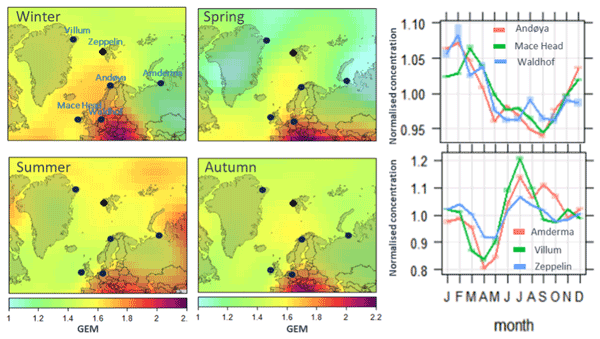
Danilo Custódio, Katrine Aspmo Pfaffhuber, T. Gerard Spain, Fidel F. Pankratov, Iana Strigunova, Koketso Molepo, Henrik Skov, Johannes Bieser, and Ralf Ebinghaus
Atmos. Chem. Phys., 22, 3827–3840, https://doi.org/10.5194/acp-22-3827-2022, https://doi.org/10.5194/acp-22-3827-2022, 2022
Short summary
Short summary
As a poison in the air that we breathe and the food that we eat, mercury is a human health concern for society as a whole. In that regard, this work deals with monitoring and modelling mercury in the environment, improving wherewithal, identifying the strength of the different components at play, and interpreting information to support the efforts that seek to safeguard public health.

Christine D. Groot Zwaaftink, Wenche Aas, Sabine Eckhardt, Nikolaos Evangeliou, Paul Hamer, Mona Johnsrud, Arve Kylling, Stephen M. Platt, Kerstin Stebel, Hilde Uggerud, and Karl Espen Yttri
Atmos. Chem. Phys., 22, 3789–3810, https://doi.org/10.5194/acp-22-3789-2022, https://doi.org/10.5194/acp-22-3789-2022, 2022
Short summary
Short summary
We investigate causes of a poor-air-quality episode in northern Europe in October 2020 during which EU health limits for air quality were vastly exceeded. Such episodes may trigger measures to improve air quality. Analysis based on satellite observations, transport simulations, and surface observations revealed two sources of pollution. Emissions of mineral dust in Central Asia and biomass burning in Ukraine arrived almost simultaneously in Norway, and transport continued into the Arctic.
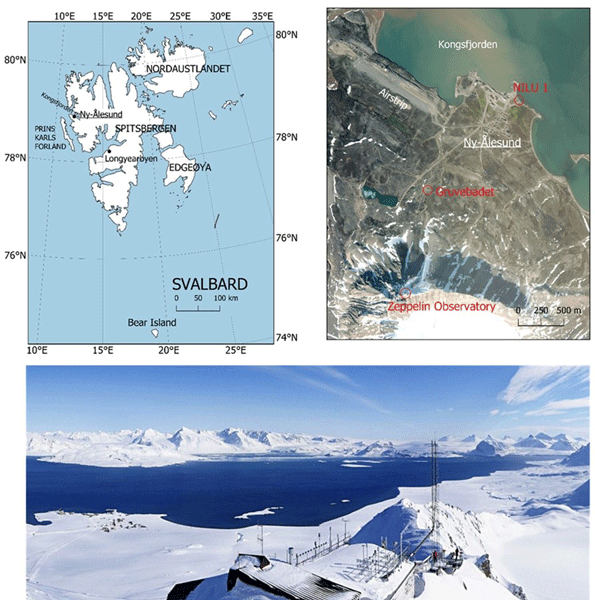
Stephen M. Platt, Øystein Hov, Torunn Berg, Knut Breivik, Sabine Eckhardt, Konstantinos Eleftheriadis, Nikolaos Evangeliou, Markus Fiebig, Rebecca Fisher, Georg Hansen, Hans-Christen Hansson, Jost Heintzenberg, Ove Hermansen, Dominic Heslin-Rees, Kim Holmén, Stephen Hudson, Roland Kallenborn, Radovan Krejci, Terje Krognes, Steinar Larssen, David Lowry, Cathrine Lund Myhre, Chris Lunder, Euan Nisbet, Pernilla B. Nizzetto, Ki-Tae Park, Christina A. Pedersen, Katrine Aspmo Pfaffhuber, Thomas Röckmann, Norbert Schmidbauer, Sverre Solberg, Andreas Stohl, Johan Ström, Tove Svendby, Peter Tunved, Kjersti Tørnkvist, Carina van der Veen, Stergios Vratolis, Young Jun Yoon, Karl Espen Yttri, Paul Zieger, Wenche Aas, and Kjetil Tørseth
Atmos. Chem. Phys., 22, 3321–3369, https://doi.org/10.5194/acp-22-3321-2022, https://doi.org/10.5194/acp-22-3321-2022, 2022
Short summary
Short summary
Here we detail the history of the Zeppelin Observatory, a unique global background site and one of only a few in the high Arctic. We present long-term time series of up to 30 years of atmospheric components and atmospheric transport phenomena. Many of these time series are important to our understanding of Arctic and global atmospheric composition change. Finally, we discuss the future of the Zeppelin Observatory and emerging areas of future research on the Arctic atmosphere.
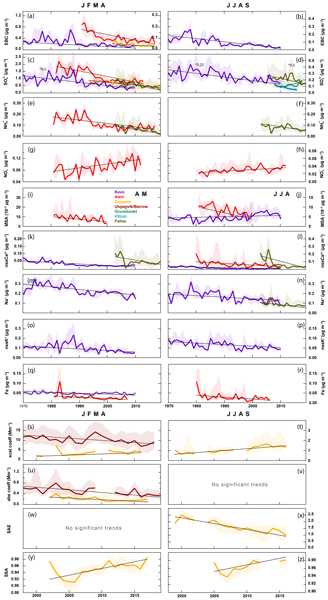
Julia Schmale, Sangeeta Sharma, Stefano Decesari, Jakob Pernov, Andreas Massling, Hans-Christen Hansson, Knut von Salzen, Henrik Skov, Elisabeth Andrews, Patricia K. Quinn, Lucia M. Upchurch, Konstantinos Eleftheriadis, Rita Traversi, Stefania Gilardoni, Mauro Mazzola, James Laing, and Philip Hopke
Atmos. Chem. Phys., 22, 3067–3096, https://doi.org/10.5194/acp-22-3067-2022, https://doi.org/10.5194/acp-22-3067-2022, 2022
Short summary
Short summary
Long-term data sets of Arctic aerosol properties from 10 stations across the Arctic provide evidence that anthropogenic influence on the Arctic atmospheric chemical composition has declined in winter, a season which is typically dominated by mid-latitude emissions. The number of significant trends in summer is smaller than in winter, and overall the pattern is ambiguous with some significant positive and negative trends. This reflects the mixed influence of natural and anthropogenic emissions.
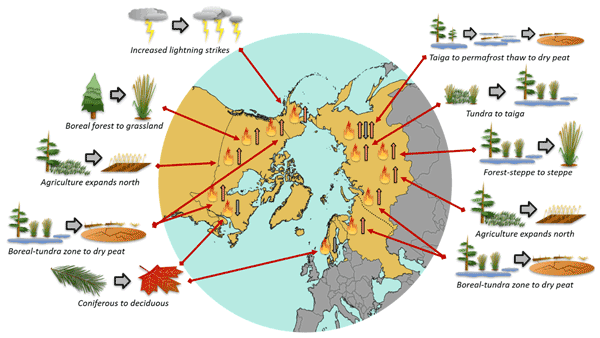
Jessica L. McCarty, Juha Aalto, Ville-Veikko Paunu, Steve R. Arnold, Sabine Eckhardt, Zbigniew Klimont, Justin J. Fain, Nikolaos Evangeliou, Ari Venäläinen, Nadezhda M. Tchebakova, Elena I. Parfenova, Kaarle Kupiainen, Amber J. Soja, Lin Huang, and Simon Wilson
Biogeosciences, 18, 5053–5083, https://doi.org/10.5194/bg-18-5053-2021, https://doi.org/10.5194/bg-18-5053-2021, 2021
Short summary
Short summary
Fires, including extreme fire seasons, and fire emissions are more common in the Arctic. A review and synthesis of current scientific literature find climate change and human activity in the north are fuelling an emerging Arctic fire regime, causing more black carbon and methane emissions within the Arctic. Uncertainties persist in characterizing future fire landscapes, and thus emissions, as well as policy-relevant challenges in understanding, monitoring, and managing Arctic fire regimes.
Jakob Boyd Pernov, Bjarne Jensen, Andreas Massling, Daniel Charles Thomas, and Henrik Skov
Atmos. Chem. Phys., 21, 13287–13309, https://doi.org/10.5194/acp-21-13287-2021, https://doi.org/10.5194/acp-21-13287-2021, 2021
Short summary
Short summary
Atmospheric mercury species (GEM, GOM, PHg) are important constituents in the High Arctic due to their detrimental effects on human and ecosystem health. However, understanding their behavior in the High Arctic summer remains lacking. This research investigates the dynamics of mercury oxidation in the High Arctic summer. The cold, dry, sunlit free troposphere was associated with events of high GOM in the High Arctic summer, while individual events yielded unique origins.
Cited articles
Ahlberg, E., Ausmeel, S., Nilsson, L., Spanne, M., Pauraite, J., Klenø Nøjgaard, J., Bertò, M., Skov, H., Roldin, P., Kristensson, A., Swietlicki, E., and Eriksson, A.: Measurement report: Black carbon properties and concentrations in southern Sweden urban and rural air – the importance of long-range transport, Atmos. Chem. Phys., 23, 3051–3064, https://doi.org/10.5194/acp-23-3051-2023, 2023. a, b, c
Ångström, A.: On the Atmospheric Transmission of Sun Radiation and on Dust in the Air, Geogr. Ann., 11, 156–166, https://doi.org/10.1080/20014422.1929.11880498, 1929. a
Andrews, E., Sheridan, P. J., Fiebig, M., McComiskey, A., Ogren, J. A., Arnott, P., Covert, D., Elleman, R., Gasparini, R., Collins, D., Jonsson, H., Schmid, B., and Wang, J.: Comparison of methods for deriving aerosol asymmetry parameter, J. Geophys. Res.-Atmos., 111, https://doi.org/10.1029/2004JD005734, 2006. a
Bahadur, R., Praveen, P. S., Xu, Y., and Ramanathan, V.: Solar absorption by elemental and brown carbon determined from spectral observations, P. Natl. Acad. Sci. USA, 109, 17366–17371, https://doi.org/10.1073/pnas.1205910109, 2012. a, b
Barman, N., Kundu, S. S., and Borgohain, A.: Observation and model simulation of aerosol optical properties and size distribution over the hilly terrain of Northeast India, Aerosol Science and Engineering, 8, 319–335, https://doi.org/10.1007/s41810-024-00225-9, 2024. a
Bellouin, N., Boucher, O., Haywood, J., and Reddy, M. S.: Global estimate of aerosol direct radiative forcing from satellite measurements, Nature, 438, 1138–1141, https://doi.org/10.1038/nature04348, 2005. a
Bergstrom, R. W., Russell, P. B., and Hignett, P.: Wavelength Dependence of the Absorption of Black Carbon Particles: Predictions and Results from the TARFOX Experiment and Implications for the Aerosol Single Scattering Albedo, AMS, J. Atmos. Sci., https://doi.org/10.1175/1520-0469(2002)059<0567:WDOTAO>2.0.CO;2, 2002. a
Bohren, C. F. and Huffman, D. R.: Absorption and scattering of light by small particles, John Wiley & Sons, ISBN 9783527618156, https://doi.org/10.1002/9783527618156, 2008. a, b
Bond, T. C. and Bergstrom, R. W.: Light Absorption by Carbonaceous Particles: An Investigative Review, Aerosol Sci. Tech., 40, 27–67, https://doi.org/10.1080/02786820500421521, 2006. a
Bond, T. C., Doherty, S. J., Fahey, D. W., Forster, P. M., Berntsen, T., DeAngelo, B. J., Flanner, M. G., Ghan, S., Kärcher, B., Koch, D., Kinne, S., Kondo, Y., Quinn, P. K., Sarofim, M. C., Schultz, M. G., Schulz, M., Venkataraman, C., Zhang, H., Zhang, S., Bellouin, N., Guttikunda, S. K., Hopke, P. K., Jacobson, M. Z., Kaiser, J. W., Klimont, Z., Lohmann, U., Schwarz, J. P., Shindell, D., Storelvmo, T., Warren, S. G., and Zender, C. S.: Bounding the role of black carbon in the climate system: A scientific assessment, J. Geophys. Res.-Atmos., 118, 5380–5552, https://doi.org/10.1002/jgrd.50171, 2013. a
Böttcher, K., Paunu, V.-V., Kupiainen, K., Zhizhin, M., Matveev, A., Savolahti, M., Klimont, Z., Väätäinen, S., Lamberg, H., and Karvosenoja, N.: Black carbon emissions from flaring in Russia in the period 2012–2017, Atmos. Environ., 254, 118390, https://doi.org/10.1016/j.atmosenv.2021.118390, 2021. a
Cappa, C. D., Kolesar, K. R., Zhang, X., Atkinson, D. B., Pekour, M. S., Zaveri, R. A., Zelenyuk, A., and Zhang, Q.: Understanding the optical properties of ambient sub- and supermicron particulate matter: results from the CARES 2010 field study in northern California, Atmos. Chem. Phys., 16, 6511–6535, https://doi.org/10.5194/acp-16-6511-2016, 2016. a, b, c, d
Cassiani, M., Stohl, A., and Brioude, J.: Lagrangian stochastic modelling of dispersion in the convective boundary layer with skewed turbulence conditions and a vertical density gradient: Formulation and implementation in the FLEXPART model, Bound.-Lay. Meteorol., 154, 367–390, https://doi.org/10.1007/s10546-014-9976-5, 2015. a
Cazorla, A., Bahadur, R., Suski, K. J., Cahill, J. F., Chand, D., Schmid, B., Ramanathan, V., and Prather, K. A.: Relating aerosol absorption due to soot, organic carbon, and dust to emission sources determined from in-situ chemical measurements, Atmos. Chem. Phys., 13, 9337–9350, https://doi.org/10.5194/acp-13-9337-2013, 2013. a, b, c
Clarke, A., Kapustin, V., Howell, S., Moore, K., Lienert, B., Masonis, S., Anderson, T., and Covert, D.: Sea-salt size distributions from breaking waves: Implications for marine aerosol production and optical extinction measurements during SEAS, J. Atmos. Ocean. Tech., 20, 1362–1374, https://doi.org/10.1175/1520-0426(2003)020<1362:SSDFBW>2.0.CO;2, 2003. a, b
Cosby, A., Lebakula, V., Smith, C., Wanik, D., Bergene, K., Rose, A., Swanson, D., and Bloom, D.: Accelerating growth of human coastal populations at the global and continent levels: 2000–2018, Sci. Rep., 14, https://doi.org/10.1038/s41598-024-73287-x, 2024. a
Costabile, F., Barnaba, F., Angelini, F., and Gobbi, G. P.: Identification of key aerosol populations through their size and composition resolved spectral scattering and absorption, Atmos. Chem. Phys., 13, 2455–2470, https://doi.org/10.5194/acp-13-2455-2013, 2013. a, b
Dall'Osto, M., Ceburnis, D., Martucci, G., Bialek, J., Dupuy, R., Jennings, S. G., Berresheim, H., Wenger, J., Healy, R., Facchini, M. C., Rinaldi, M., Giulianelli, L., Finessi, E., Worsnop, D., Ehn, M., Mikkilä, J., Kulmala, M., and O'Dowd, C. D.: Aerosol properties associated with air masses arriving into the North East Atlantic during the 2008 Mace Head EUCAARI intensive observing period: an overview, Atmos. Chem. Phys., 10, 8413–8435, https://doi.org/10.5194/acp-10-8413-2010, 2010. a
Donateo, A., Feudo, T. L., Marinoni, A., Calidonna, C. R., Contini, D., and Bonasoni, P.: Long-term observations of aerosol optical properties at three GAW regional sites in the Central Mediterranean, Atmos. Res., 241, 104976, https://doi.org/10.1016/j.atmosres.2020.104976, 2020. a, b, c, d, e, f, g, h, i
Drinovec, L., Močnik, G., Zotter, P., Prévôt, A. S. H., Ruckstuhl, C., Coz, E., Rupakheti, M., Sciare, J., Müller, T., Wiedensohler, A., and Hansen, A. D. A.: The “dual-spot” Aethalometer: an improved measurement of aerosol black carbon with real-time loading compensation, Atmos. Meas. Tech., 8, 1965–1979, https://doi.org/10.5194/amt-8-1965-2015, 2015. a, b, c
Dubovik, O., Holben, B., Eck, T. F., Smirnov, A., Kaufman, Y. J., King, M. D., Tanré, D., and Slutsker, I.: Variability of absorption and optical properties of key aerosol types observed in worldwide locations, J. Atmos. Sci., 59, 590–608, https://doi.org/10.1175/1520-0469(2002)059<0590:VOAAOP>2.0.CO;2, 2002. a, b
Fang, W., Evangeliou, N., Eckhardt, S., Xing, J., Zhang, H., Xiao, H., Zhao, M., and Kim, S.-W.: Increased contribution of biomass burning to haze events in Shanghai since China's clean air actions, Commun. Earth Environ., 4, 310, https://doi.org/10.1038/s43247-023-00979-z, 2023. a
Fang, W., Evangeliou, N., Eckhardt, S., Xiao, H., and Li, H.: Unprecedented shifts in aerosol pollution sources in China under a decade of clean air actions, Commun. Earth Environ., 6, 512, https://doi.org/10.1038/s43247-025-02487-8, 2025. a
Fomba, K. W., Müller, K., van Pinxteren, D., Poulain, L., van Pinxteren, M., and Herrmann, H.: Long-term chemical characterization of tropical and marine aerosols at the Cape Verde Atmospheric Observatory (CVAO) from 2007 to 2011, Atmos. Chem. Phys., 14, 8883–8904, https://doi.org/10.5194/acp-14-8883-2014, 2014. a
Forster, C., Stohl, A., and Seibert, P.: Parameterization of Convective Transport in a Lagrangian Particle Dispersion Model and Its Evaluation, J. Appl. Meteorol. Clim., 46, 403–422, https://doi.org/10.1175/JAM2470.1, 2007. a
Genberg, J.: ACTRIS, EMEP, GAW-WDCA, 2012, Aerosol absorption coefficient at Vavihill, data hosted by EBAS at NILU, https://doi.org/10.48597/7M2A-YGDC, 2012. a, b, c
Grythe, H., Kristiansen, N. I., Groot Zwaaftink, C. D., Eckhardt, S., Ström, J., Tunved, P., Krejci, R., and Stohl, A.: A new aerosol wet removal scheme for the Lagrangian particle model FLEXPART v10, Geosci. Model Dev., 10, 1447–1466, https://doi.org/10.5194/gmd-10-1447-2017, 2017. a
Hansen, A. D., Rosen, H., and Novakov, T.: The aethalometer – an instrument for the real-time measurement of optical absorption by aerosol particles, Sci. Total Environ., 36, 191–196, https://doi.org/10.1016/0048-9697(84)90265-1, 1984. a
Hersbach, H., Bell, B., Berrisford, P., Hirahara, S., Horányi, A., Muñoz-Sabater, J., Nicolas, J., Peubey, C., Radu, R., Schepers, D., Simmons, A., Soci, C., Abdalla, S., Abellan, X., Balsamo, G., Bechtold, P., Biavati, G., Bidlot, J., Bonavita, M., De Chiara, G., Dahlgren, P., Dee, D., Diamantakis, M., Dragani, R., Flemming, J., Forbes, R., Fuentes, M., Geer, A., Haimberger, L., Healy, S., Hogan, R. J., Hólm, E., Janisková, M., Keeley, S., Laloyaux, P., Lopez, P., Lupu, C., Radnoti, G., de Rosnay, P., Rozum, I., Vamborg, F., Villaume, S., and Thépaut, J.-N.: The ERA5 global reanalysis, Q. J. Roy. Meteor. Soc., 146, 1999–2049, https://doi.org/10.1002/qj.3803, 2020. a
Hey, F. M., Minderytė, A., Ugboma, E. A., Evangeliou, N., Eckhardt, S., Pisso, I., Byčenkienė, S., and Stachlewska, I. S.: City-produced and transported black carbon: Synergy of in-situ optical measurements and modeling, Atmos. Res., 334, 108731, https://doi.org/10.1016/j.atmosres.2025.108731, 2026. a
Kaiser, J. W., Heil, A., Andreae, M. O., Benedetti, A., Chubarova, N., Jones, L., Morcrette, J.-J., Razinger, M., Schultz, M. G., Suttie, M., and van der Werf, G. R.: Biomass burning emissions estimated with a global fire assimilation system based on observed fire radiative power, Biogeosciences, 9, 527–554, https://doi.org/10.5194/bg-9-527-2012, 2012. a
Kalivitis, N., Kerminen, V.-M., Kouvarakis, G., Stavroulas, I., Tzitzikalaki, E., Kalkavouras, P., Daskalakis, N., Myriokefalitakis, S., Bougiatioti, A., Manninen, H. E., Roldin, P., Petäjä, T., Boy, M., Kulmala, M., Kanakidou, M., and Mihalopoulos, N.: Formation and growth of atmospheric nanoparticles in the eastern Mediterranean: results from long-term measurements and process simulations, Atmos. Chem. Phys., 19, 2671–2686, https://doi.org/10.5194/acp-19-2671-2019, 2019. a
Kirchstetter, T. W., Novakov, T., and Hobbs, P. V.: Evidence That the Spectral Dependence of Light Absorption by Aerosols Is Affected by Organic Carbon, J. Geophys. Res.-Atmos., 109, https://doi.org/10.1029/2004JD004999, 2004. a
Kivekäs, N., Massling, A., Grythe, H., Lange, R., Rusnak, V., Carreno, S., Skov, H., Swietlicki, E., Nguyen, Q. T., Glasius, M., and Kristensson, A.: Contribution of ship traffic to aerosol particle concentrations downwind of a major shipping lane, Atmos. Chem. Phys., 14, 8255–8267, https://doi.org/10.5194/acp-14-8255-2014, 2014. a
Klimont, Z., Kupiainen, K., Heyes, C., Purohit, P., Cofala, J., Rafaj, P., Borken-Kleefeld, J., and Schöpp, W.: Global anthropogenic emissions of particulate matter including black carbon, Atmos. Chem. Phys., 17, 8681–8723, https://doi.org/10.5194/acp-17-8681-2017, 2017. a
Lee, S., Yoon, S.-C., Kim, S.-W., Kim, Y. P., Ghim, Y. S., Kim, J.-H., Kang, C.-H., Kim, Y. J., Chang, L.-S., and Lee, S.-J.: Spectral dependency of light scattering/absorption and hygroscopicity of pollution and dust aerosols in Northeast Asia, Atmos. Environ., 50, 246–254, https://doi.org/10.1016/j.atmosenv.2011.12.026, 2012. a
Lewis, E. R. and Schwartz, S. E.: Sea salt aerosol production: mechanisms, methods, measurements, and models, vol. 152, American geophysical union, ISBN 9781118666050, https://doi.org/10.1029/GM152, 2004. a
Martinsson, J., Swietlicki, E., and Stenström, K.: Seasonal Variations of Light-Absorbing properties in Atmospheric Aerosols in Southern Sweden, in: LUCCI Annual Report 2013/2014, Lund University, https://portal.research.lu.se/en/publications/seasonal-variations-of-light-absorbing-properties-in-atmospheric-/ (last access: 24 February 2026), 2014. a, b, c, d
Masson-Delmotte, V., Zhai, P., Pirani, A., Connors, S., Péan, C., Berger, S., Caud, N., Chen, Y., Goldfarb, L., Gomis, M., Huang, M., Leitzell, K., Lonnoy, E., Matthews, J., Maycock, T., Waterfield, T., Yelekçi, O., Yu, R., and Zhou, B.: IPCC: Summary for Policymakers, chap. 7, Cambridge University Press, https://doi.org/10.1017/9781009157896.001, 2021. a, b
Matlab, V.: 9.7. 0.1190202 (R2021a), The MathWorks Inc.: Natick, MA, USA, https://www.mathworks.com (last access: 24 February 2026), 2021. a
Mogo, S., Cachorro, V. E., Lopez, J. F., Montilla, E., Torres, B., Rodríguez, E., Bennouna, Y., and de Frutos, A. M.: In situ measurements of aerosol optical properties and number size distributions in a coastal region of Norway during the summer of 2008, Atmos. Chem. Phys., 12, 5841–5857, https://doi.org/10.5194/acp-12-5841-2012, 2012. a, b
Müller, T., Laborde, M., Kassell, G., and Wiedensohler, A.: Design and performance of a three-wavelength LED-based total scatter and backscatter integrating nephelometer, Atmos. Meas. Tech., 4, 1291–1303, https://doi.org/10.5194/amt-4-1291-2011, 2011. a
Nordstrøm, C., Ellermann, T., Brandt, J., Christensen, J., Ketzel, M., Massling, A., Bossi, R., Frohn, L. M., Geels, C., Solvang Jensen, S., Nielsen, O.-K., Winther, M., Bech Poulsen, M., Bjært Sørense, M., Skou Andersen, M., and Sigsgaard, T.: Luftkvalitet 2023, Tech. rep., Aarhus Universitet, DCE – Nationalt Center for Miljø og Energ, ISBN 978-87-7156-906-3, 2024. a
Perrone, M., Romano, S., Genga, A., and Paladini, F.: Integration of optical and chemical parameters to improve the particulate matter characterization, Atmos. Res., 205, 93–106, https://doi.org/10.1016/j.atmosres.2018.02.015, 2018. a, b, c
Pisso, I., Sollum, E., Grythe, H., Kristiansen, N. I., Cassiani, M., Eckhardt, S., Arnold, D., Morton, D., Thompson, R. L., Groot Zwaaftink, C. D., Evangeliou, N., Sodemann, H., Haimberger, L., Henne, S., Brunner, D., Burkhart, J. F., Fouilloux, A., Brioude, J., Philipp, A., Seibert, P., and Stohl, A.: The Lagrangian particle dispersion model FLEXPART version 10.4, Geosci. Model Dev., 12, 4955–4997, https://doi.org/10.5194/gmd-12-4955-2019, 2019. a
Platt, S. M., Hov, Ø., Berg, T., Breivik, K., Eckhardt, S., Eleftheriadis, K., Evangeliou, N., Fiebig, M., Fisher, R., Hansen, G., Hansson, H.-C., Heintzenberg, J., Hermansen, O., Heslin-Rees, D., Holmén, K., Hudson, S., Kallenborn, R., Krejci, R., Krognes, T., Larssen, S., Lowry, D., Lund Myhre, C., Lunder, C., Nisbet, E., Nizzetto, P. B., Park, K.-T., Pedersen, C. A., Aspmo Pfaffhuber, K., Röckmann, T., Schmidbauer, N., Solberg, S., Stohl, A., Ström, J., Svendby, T., Tunved, P., Tørnkvist, K., van der Veen, C., Vratolis, S., Yoon, Y. J., Yttri, K. E., Zieger, P., Aas, W., and Tørseth, K.: Atmospheric composition in the European Arctic and 30 years of the Zeppelin Observatory, Ny-Ålesund, Atmos. Chem. Phys., 22, 3321–3369, https://doi.org/10.5194/acp-22-3321-2022, 2022. a
Plejdrup, M., Nielsen, O.-K., and Christensen, J.: Emission scenarios and air quality modelling for residential wood combustion. Impact analysis of measures for small wood burning appliances in Denmark and effect on transport of black carbon to the Arctic, Tech. Rep. Scientific report no. 426, Aarhus University, DCE – Danish Centre for Environment and Energy, ISBN 978-87-7156-562-1, http://dce2.au.dk/pub/SR426.pdf (last access: 24 February 2026), 2021. a
Pope III, C. A. and Dockery, D. W.: Health effects of fine particulate air pollution: lines that connect, J. Air Waste Manage. Assoc., 56, 709–742, https://doi.org/10.1080/10473289.2006.10464485, 2006. a
Popovicheva, O. B., Evangeliou, N., Kobelev, V. O., Chichaeva, M. A., Eleftheriadis, K., Gregorič, A., and Kasimov, N. S.: Siberian Arctic black carbon: gas flaring and wildfire impact, Atmos. Chem. Phys., 22, 5983–6000, https://doi.org/10.5194/acp-22-5983-2022, 2022. a
Popovicheva, O. B., Chichaeva, M. A., Evangeliou, N., Eckhardt, S., Diapouli, E., and Kasimov, N. S.: Multi-year black carbon observations and modeling close to the largest gas flaring and wildfire regions in the Western Siberian Arctic, Atmos. Chem. Phys., 25, 7719–7739, https://doi.org/10.5194/acp-25-7719-2025, 2025. a
Roldin, P.: EMEP, EUSAAR, GAW-WDCA, 2012, Aerosol light scattering coefficient at Vavihill, data hosted by EBAS at NILU, https://doi.org/10.48597/QGZS-5XKM, 2012. a, b, c
Rosati, B.: Data for paper: Teng and Skønager et al. 2026, “Characterizing aerosol sources based on aerosol optical properties and dispersion modelling in a Scandinavian Coastal Area (Aarhus, Denmark)”, in: Aerosol Research, Zenodo [data set], https://doi.org/10.5281/zenodo.19061033, 2026. a
Sandradewi, J., Prevot, A., Szidat, S., Perron, N., Alfarra, M., Lanz, V., Weingartner, E., and Baltensperger, U.: Using Aerosol Light Absorption Measurements for the Quantitative Determination of Wood Burning and Traffic Emission Contributions to Particulate Matter, Environ. Sci. Technol., 42, 3316–23, https://doi.org/10.1021/es702253m, 2008. a
Stohl, A., Forster, C., Frank, A., Seibert, P., and Wotawa, G.: Technical note: The Lagrangian particle dispersion model FLEXPART version 6.2, Atmos. Chem. Phys., 5, 2461–2474, https://doi.org/10.5194/acp-5-2461-2005, 2005. a
Suchánková, L., Mbengue, S., Zíková, N., Šmejkalová, A. H., Prokeš, R., Holoubek, I., and Ždímal, V.: A seven-year-based characterization of aerosol light scattering properties at a rural central European site, Atmos. Environ., 319, 120292, https://doi.org/10.1016/j.atmosenv.2023.120292, 2024. a
Takemura, T., Nakajima, T., Dubovik, O., Holben, B. N., and Kinne, S.: Single-Scattering Albedo and Radiative Forcing of Various Aerosol Species with a Global Three-Dimensional Model, J. Climate, 15, 333–352, https://doi.org/10.1175/1520-0442(2002)015<0333:SSAARF>2.0.CO;2, 2002. a
Tørseth, K., Aas, W., Breivik, K., Fjæraa, A. M., Fiebig, M., Hjellbrekke, A. G., Lund Myhre, C., Solberg, S., and Yttri, K. E.: Introduction to the European Monitoring and Evaluation Programme (EMEP) and observed atmospheric composition change during 1972–2009, Atmos. Chem. Phys., 12, 5447–5481, https://doi.org/10.5194/acp-12-5447-2012, 2012. a, b
Vignati, E., de Leeuw, G., Schulz, M., and Plate, E.: Characterization of aerosols at a coastal site near Vindeby (Denmark), J. Geophys. Res.-Oceans, 104, 3277–3287, https://doi.org/10.1029/1998JC900019, 1999. a
von der Weiden, S.-L., Drewnick, F., and Borrmann, S.: Particle Loss Calculator – a new software tool for the assessment of the performance of aerosol inlet systems, Atmos. Meas. Tech., 2, 479–494, https://doi.org/10.5194/amt-2-479-2009, 2009. a
Worm, K.: Coastal zone planning in Denmark, Ocean Coast. Manage., 37, 253–268, https://doi.org/10.1016/S0964-5691(00)89026-2, 1997. a
Yttri, K. E., Bäcklund, A., Conen, F., Eckhardt, S., Evangeliou, N., Fiebig, M., Kasper-Giebl, A., Gold, A., Gundersen, H., Myhre, C. L., Platt, S. M., Simpson, D., Surratt, J. D., Szidat, S., Rauber, M., Tørseth, K., Ytre-Eide, M. A., Zhang, Z., and Aas, W.: Composition and sources of carbonaceous aerosol in the European Arctic at Zeppelin Observatory, Svalbard (2017 to 2020), Atmos. Chem. Phys., 24, 2731–2758, https://doi.org/10.5194/acp-24-2731-2024, 2024. a
Zhang, Z., Li, J., Che, H., Dong, Y., Dubovik, O., Eck, T., Gupta, P., Holben, B., Kim, J., Lind, E., Saud, T., Tripathi, S. N., and Ying, T.: Long-term trends in aerosol properties derived from AERONET measurements, Atmos. Chem. Phys., 25, 4617–4637, https://doi.org/10.5194/acp-25-4617-2025, 2025. a
Short summary
Coastal aerosols in Scandinavian urban areas remain understudied. We examined aerosol optical properties and size distributions along Denmark's coastline. Combining in situ data with dispersion modelling, we identified two main aerosol types: carbonaceous aerosols from fossil fuel and biomass burning and large, highly scattering aerosols (potentially sea salt). Black carbon from in situ data and dispersion modelling correlated well, while FLEXPART underestimated the concentration.
Coastal aerosols in Scandinavian urban areas remain understudied. We examined aerosol optical...


Altmetrics
Final-revised paper
Preprint