Articles | Volume 4, issue 1
https://doi.org/10.5194/ar-4-189-2026
© Author(s) 2026. This work is distributed under
the Creative Commons Attribution 4.0 License.
the Creative Commons Attribution 4.0 License.
https://doi.org/10.5194/ar-4-189-2026
© Author(s) 2026. This work is distributed under
the Creative Commons Attribution 4.0 License.
the Creative Commons Attribution 4.0 License.
Research article
| 
21 May 2026
Research article |
| 21 May 2026
| 21 May 2026
Impact of agricultural interventions on ammonia emissions and on PM2.5 concentrations in the UK: a local and regional modelling study
Matthieu Pommier
CORRESPONDING AUTHOR
Ricardo Energy & Environment, 18 Blythswood Square, Glasgow G2 4BG, UK
Robert Benney
Ricardo Energy & Environment, Bright Building, Manchester Science Park, Pencroft Way, Manchester M15 6GZ, UK
Jamie Bost
Ricardo Energy & Environment, 18 Blythswood Square, Glasgow G2 4BG, UK
Becky Jenkins
Ricardo Energy & Environment, The Gemini Building, Fermi Avenue, Harwell, Didcot OX11 0QR, UK
Joe Richardson
Ricardo Energy & Environment, 30 Eastbourne Terrace, London W2 6LA, UK
Liam Rock
Ricardo Energy & Environment, 30 Eastbourne Terrace, London W2 6LA, UK
Olivia Blythe
Ricardo Energy & Environment, 30 Eastbourne Terrace, London W2 6LA, UK
Oliver Marshall
Ricardo Energy & Environment, Bright Building, Manchester Science Park, Pencroft Way, Manchester M15 6GZ, UK
Alexandra Spence
Ricardo Energy & Environment, Bright Building, Manchester Science Park, Pencroft Way, Manchester M15 6GZ, UK
Related authors
Matthieu Pommier
Geosci. Model Dev., 14, 4143–4158, https://doi.org/10.5194/gmd-14-4143-2021, https://doi.org/10.5194/gmd-14-4143-2021, 2021
Short summary
Short summary
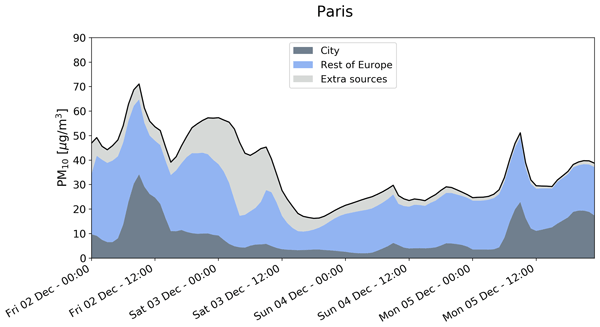
Within the Copernicus Atmosphere Monitoring Service (CAMS), a forecasting system calculating the city source contribution for the surface urban background PM10 in European cities has been developed. The system uses the EMEP model and this paper presents the product by focusing on an event which occurred from 1 to 9 December 2016.
Matthieu Pommier
Geosci. Model Dev., 14, 4143–4158, https://doi.org/10.5194/gmd-14-4143-2021, https://doi.org/10.5194/gmd-14-4143-2021, 2021
Short summary
Short summary
Within the Copernicus Atmosphere Monitoring Service (CAMS), a forecasting system calculating the city source contribution for the surface urban background PM10 in European cities has been developed. The system uses the EMEP model and this paper presents the product by focusing on an event which occurred from 1 to 9 December 2016.
Cited articles
AFBI (Agri Food and Biosciences Institute): Typical ammonia concentrations in agricultural landscapes, https://www.afbini.gov.uk/page/typical-ammonia-concentrations-agricultural-landscapes (last access: 2 January 2026), 2025.
Appel, K. W., Chemel, C., Roselle, S. J., Francis, X. V., Hu, R.-M., Sokhi, R. S., Rao, S. T., and Galmarini, S.: Examination of the Community Multiscale Air Quality (CMAQ) model performance over the North American and European domains, Atmos. Environ., 53, 142–155, https://doi.org/10.1016/j.atmosenv.2011.11.016., 2012.
Appel, K. W., Napelenok, S. L., Foley, K. M., Pye, H. O. T., Hogrefe, C., Luecken, D. J., Bash, J. O., Roselle, S. J., Pleim, J. E., Foroutan, H., Hutzell, W. T., Pouliot, G. A., Sarwar, G., Fahey, K. M., Gantt, B., Gilliam, R. C., Heath, N. K., Kang, D., Mathur, R., Schwede, D. B., Spero, T. L., Wong, D. C., and Young, J. O.: Description and evaluation of the Community Multiscale Air Quality (CMAQ) modeling system version 5.1, Geosci. Model Dev., 10, 1703–1732, https://doi.org/10.5194/gmd-10-1703-2017, 2017.
Appel, K. W., Bash, J. O., Fahey, K. M., Foley, K. M., Gilliam, R. C., Hogrefe, C., Hutzell, W. T., Kang, D., Mathur, R., Murphy, B. N., Napelenok, S. L., Nolte, C. G., Pleim, J. E., Pouliot, G. A., Pye, H. O. T., Ran, L., Roselle, S. J., Sarwar, G., Schwede, D. B., Sidi, F. I., Spero, T. L., and Wong, D. C.: The Community Multiscale Air Quality (CMAQ) model versions 5.3 and 5.3.1: system updates and evaluation, Geosci. Model Dev., 14, 2867–2897, https://doi.org/10.5194/gmd-14-2867-2021, 2021.
AQEG: Fine Particulate Matter in the United Kingdom. Department for Environment, Food and Rural Affairs; Scottish Government, Welsh Government, Deparment of the Environment in Northern Ireland, https://uk-air.defra.gov.uk/reports/cat11/1212141150_AQEG_Fine_Particulate_Matter_in_the_UK.pdf (last access: 6 May 2026), 2012.
Bessagnet, B., Beauchamp, M., Guerreiro, C., De Leeuw, F., Tsyro, S., Colette, A., Meleux, F., Rouïl, L., Ruyssenaars, P., Sauter, F., Velders, G. J. M., Foltescu, V. L., and Van Aardenne, J.: Can further mitigation of ammonia emissions reduce exceedances of particulate matter air quality standards?, Environ. Sci. Policy, 44, 149–163, https://doi.org/10.1016/j.envsci.2014.07.011, 2014.
Bittman, S., Dedina, M., Howard, C. M. (Clare), Oenema, O., and Sutton, M. A.: Options for ammonia mitigation: guidance from the UNECE Task Force on Reactive Nitrogen, Centre for Ecology & Hydrology, on behalf of Task Force on Reactive Nitrogen, of the UNECE Convention on Long Range transboundary Air Pollution, Edinburgh, ISBN: 978-1-906698-46-1, 2014.
Burnett, R., Chen, H., Szyszkowicz, M., Fann, N., Hubbell, B., Pope, C. A., Apte, J. S., Brauer, M., Cohen, A., Weichenthal, S., Coggins, J., Di, Q., Brunekreef, B., Frostad, J., Lim, S. S., Kan, H., Walker, K. D., Thurston, G. D., Hayes, R. B., Lim, C. C., Turner, M. C., Jerrett, M., Krewski, D., Gapstur, S. M., Diver, W. R., Ostro, B., Goldberg, D., Crouse, D. L., Martin, R. V., Peters, P., Pinault, L., Tjepkema, M., Van Donkelaar, A., Villeneuve, P. J., Miller, A. B., Yin, P., Zhou, M., Wang, L., Janssen, N. A. H., Marra, M., Atkinson, R. W., Tsang, H., Quoc Thach, T., Cannon, J. B., Allen, R. T., Hart, J. E., Laden, F., Cesaroni, G., Forastiere, F., Weinmayr, G., Jaensch, A., Nagel, G., Concin, H., and Spadaro, J. V.: Global estimates of mortality associated with long-term exposure to outdoor fine particulate matter, P. Natl. Acad. Sci. USA, 115, 9592–9597, https://doi.org/10.1073/pnas.1803222115, 2018.
Carruthers, D. J., Holroyd, R. J., Hunt, J. C. R., Weng, W. S., Robins, A. G., Apsley, D. D., Thompson, D. J., and Smith, F. B.: UK-ADMS: A new approach to modelling dispersion in the earth's atmospheric boundary layer, J. Wind Eng. Ind. Aerod., 52, 139–153, https://doi.org/10.1016/0167-6105(94)90044-2, 1994.
CEIP: EMEP gridded-emissions, https://www.ceip.at/the-emep-grid/gridded-emissions (last access: 8 August 2025), 2022.
CERC: ADMS 6, Atmospheric Dispersion Modelling System, User Guide, https://www.cerc.co.uk/environmental-software/assets/data/doc_userguides/CERC_ADMS_6_User_Guide.pdf (last access: 2 January 2026), 2023.
CERC: ADMS, https://www.cerc.co.uk/environmental-software/ADMS-model.html (last access: 8 August 2025), 2024.
Churchill, S., Misra, A., Brown, P., Del Vento, S., Karagianni, E., Murrells, T., Passant, N., Richardson, J., Richmond, B., Smith, H., Stewart, R., Tsagatakis, I., Thistlethwaite, G., Wakeling, D., Walker, C., Wiltshire, J., Hobson, M., Gibbs, M., Misselbrook, T., Dragosits, U., and Tomlinson, S.: UK Informative Inventory Report (1990 to 2019), https://naei.energysecurity.gov.uk/sites/default/files/cat09/2103151107_GB_IIR_2021_FINAL.pdf (last access: 6 May 2026), 2021.
DEFRA: Review of Air Quality Impacts Resulting from Particle Emissions from Poultry Farms, https://uk-air.defra.gov.uk/assets/documents/reports/cat07/ (last access: 25 March 2026), 2012.
DEFRA: Local Air Quality Management Technical Guidance (TG22), https://laqm.defra.gov.uk/wp-content/uploads/2022/08/LAQM-TG22-August-22-v1.0.pdf (last access: 6 May 2026), 2022.
DEFRA: LIDAR Composite Digital Terrain Model (DTM) - 1m, Defra Data Services Platform [data set], https://environment.data.gov.uk/dataset/13787b9a-26a4-4775-8523-806d13af58fc (last access: 6 May 2026), 2023.
DEFRA: Automatic Urban and Rural Network (AURN), https://uk-air.defra.gov.uk/networks/network-info?view=aurn (last access: 6 May 2026), 2024a.
DEFRA: Code of Good Agricultural Practice (COGAP) for Reducing Ammonia Emissions, Department for Environment Food & Rural Affairs, https://www.gov.uk/government/publications/code-of-good-agricultural-practice (last access: 6 May 2026), 2024b.
Demmers, T., Saponja, A., Thomas, R., Phillips, G. J., McDonald, A. G., Stagg, S., Bowry, A., and Nemitz, E.: Dust and ammonia emissions from UK poultry houses, in: XVIIth World Congress of the International Commission of Agricultural and Biosystems Engineering, Canadian Society for Bioengineering (CSBE/SCGAB) Québec City, Canada, 13–17 June 2010, https://library.csbe-scgab.ca/docs/meetings/2010/CSBE100942.pdf (last access: 6 May 2026), 2010.
De Visscher, A.: Air dispersion modeling: foundations and applications, 1st edn., Wiley, Hoboken, NJ, 634 pp., ISBN 978-1-118-07859-4, 2014.
Dudhia, J.: Numerical Study of Convection Observed during the Winter Monsoon Experiment Using a Mesoscale Two-Dimensional Model, J. Atmos. Sci., 46, 3077–3107, https://doi.org/10.1175/1520-0469(1989)046<3077:NSOCOD>2.0.CO;2, 1989.
Environmental Protection Agency: Air Dispersion Modelling from Industrial Installations Guidance Note (AG4), EPA Ireland, https://www.epa.ie/publications/compliance--enforcement/air/air-guidance-notes/EPA-Air-Dispersion-Modelling-Guidance-Note-(AG4)-2020.pdf (last access: 6 May 2026), 2020.
European Environment Agency: CORINE Land Cover 2018 (raster 100 m), Europe, 6-yearly – version 2020_20u1, May 2020 (20.01), https://doi.org/10.2909/960998C1-1870-4E82-8051-6485205EBBAC, 2019.
Foroutan, H., Young, J., Napelenok, S., Ran, L., Appel, K. W., Gilliam, R. C., and Pleim, J. E.: Development and evaluation of a physics-based windblown dust emission scheme implemented in the CMAQ modeling system, J. Adv. Model Earth Syst., 9, 585–608, https://doi.org/10.1002/2016MS000823, 2017.
Friedl, M. A., McIver, D. K., Hodges, J. C. F., Zhang, X. Y., Muchoney, D., Strahler, A. H., Woodcock, C. E., Gopal, S., Schneider, A., Cooper, A., Baccini, A., Gao, F., and Schaaf, C.: Global land cover mapping from MODIS: algorithms and early results, Remote Sens. Environ., 83, 287–302, https://doi.org/10.1016/S0034-4257(02)00078-0, 2002.
Gantt, B., Kelly, J. T., and Bash, J. O.: Updating sea spray aerosol emissions in the Community Multiscale Air Quality (CMAQ) model version 5.0.2, Geosci. Model Dev., 8, 3733–3746, https://doi.org/10.5194/gmd-8-3733-2015, 2015.
Ge, Y., Vieno, M., Stevenson, D. S., Wind, P., and Heal, M. R.: A new assessment of global and regional budgets, fluxes, and lifetimes of atmospheric reactive N and S gases and aerosols, Atmos. Chem. Phys., 22, 8343–8368, https://doi.org/10.5194/acp-22-8343-2022, 2022.
Ge, Y., Vieno, M., Stevenson, D. S., Wind, P., and Heal, M. R.: Global sensitivities of reactive N and S gas and particle concentrations and deposition to precursor emissions reductions, Atmos. Chem. Phys., 23, 6083–6112, https://doi.org/10.5194/acp-23-6083-2023, 2023.
Gladding, T.L., Rolph, C. A., Gwyther, C. L., Kinnersley, R., Walsh, K., and Tyrrel, S.: Concentration and composition of bioaerosol emissions from intensive farms: Pig and poultry livestock, J. Environ. Manage., 272, https://doi.org/10.1016/j.jenvman.2020.111052, 2020.
Gu, B., Zhang, L., Van Dingenen, R., Vieno, M., Van Grinsven, H. J., Zhang, X., Zhang, S., Chen, Y., Wang, S., Ren, C., Rao, S., Holland, M., Winiwarter, W., Chen, D., Xu, J., and Sutton, M. A.: Abating ammonia is more cost-effective than nitrogen oxides for mitigating PM2.5 air pollution, Science, 374, 758–762, https://doi.org/10.1126/science.abf8623, 2021.
Guenther, A., Jiang, X., Shah, T., Huang, L., Kemball-Cook, S., and Yarwood, G.: Model of Emissions of Gases and Aerosol from Nature Version 3 (MEGAN3) for Estimating Biogenic Emissions, in: Air Pollution Modeling and its Application XXVI, edited by: Mensink, C., Gong, W., and Hakami, A., Springer International Publishing, Cham, 187–192, https://doi.org/10.1007/978-3-030-22055-6_29, 2020.
Hellsten, S., Dragosits, U., Place, C. J., Misselbrook, T. H., Tang, Y. S., and Sutton, M. A.: Modelling Seasonal Dynamics from Temporal Variation in Agricultural Practices in the UK Ammonia Emission Inventory, Water Air Soil Pollut., 7, 3–13, https://doi.org/10.1007/s11267-006-9087-5, 2007.
Hill, R., Bealey, B., Johnson, C., Ball, A., Simpson, K., Smith, A., Theobald, M., Braban, C., Magaz, I., and Curran, T.: SCAIL-Agriculture update, Sniffer ER26: Final Report March/2014, https://www.scail.ceh.ac.uk/agriculture/Sniffer ER26_SCAIL-Agriculture Final report_Issue_11032014.pdf (last access: 6 May 2026), 2014.
Hogrefe, C., Bash, J. O., Pleim, J. E., Schwede, D. B., Gilliam, R. C., Foley, K. M., Appel, K. W., and Mathur, R.: An analysis of CMAQ gas-phase dry deposition over North America through grid-scale and land-use-specific diagnostics in the context of AQMEII4, Atmos. Chem. Phys., 23, 8119–8147, https://doi.org/10.5194/acp-23-8119-2023, 2023.
Hood, C., MacKenzie, I., Stocker, J., Johnson, K., Carruthers, D., Vieno, M., and Doherty, R.: Air quality simulations for London using a coupled regional-to-local modelling system, Atmos. Chem. Phys., 18, 11221–11245, https://doi.org/10.5194/acp-18-11221-2018, 2018.
Iacono, M. J., Delamere, J. S., Mlawer, E. J., Shephard, M. W., Clough, S. A., and Collins, W. D.: Radiative forcing by long-lived greenhouse gases: Calculations with the AER radiative transfer models, J. Geophys. Res., 113, 2008JD009944, https://doi.org/10.1029/2008JD009944, 2008.
IIASA: ECLIPSE V6b; Global emission fields of air pollutants and GHGs, https://iiasa.ac.at/models-tools-data/global-emission-fields-of-air-pollutants-and-ghgs (last access: 6 May 2026), 2019.
Im, U., Bianconi, R., Solazzo, E., Kioutsioukis, I., Badia, A., Balzarini, A., Baró, R., Bellasio, R., Brunner, D., Chemel, C., Curci, G., Denier Van Der Gon, H., Flemming, J., Forkel, R., Giordano, L., Jiménez-Guerrero, P., Hirtl, M., Hodzic, A., Honzak, L., Jorba, O., Knote, C., Makar, P. A., Manders-Groot, A., Neal, L., Pérez, J. L., Pirovano, G., Pouliot, G., San Jose, R., Savage, N., Schroder, W., Sokhi, R. S., Syrakov, D., Torian, A., Tuccella, P., Wang, K., Werhahn, J., Wolke, R., Zabkar, R., Zhang, Y., Zhang, J., Hogrefe, C., and Galmarini, S.: Evaluation of operational online-coupled regional air quality models over Europe and North America in the context of AQMEII phase 2. Part II: Particulate matter, Atmos. Environ., 115, 421–441, https://doi.org/10.1016/j.atmosenv.2014.08.072, 2015.
Jenkins, B. and Wiltshire, J.: Farmer perceptions of the benefits and barriers to ammonia mitigation measures, Preprints [preprint], 2025082071, https://doi.org/10.20944/preprints202508.2071.v1, 2025.
Kain, J. S.: The Kain–Fritsch Convective Parameterization: An Update, J. Appl. Meteor., 43, 170–181, https://doi.org/10.1175/1520-0450(2004)043<0170:TKCPAU>2.0.CO;2, 2004.
Kelly, J. M., Marais, E. A., Lu, G., Obszynska, J., Mace, M., White, J., and Leigh, R. J.: Diagnosing domestic and transboundary sources of fine particulate matter (PM2.5) in UK cities using GEOS-Chem, City and Environment Interactions, 18, 100100, https://doi.org/10.1016/j.cacint.2023.100100, 2023.
Kelly, J. T., Bhave, P. V., Nolte, C. G., Shankar, U., and Foley, K. M.: Simulating emission and chemical evolution of coarse sea-salt particles in the Community Multiscale Air Quality (CMAQ) model, Geosci. Model Dev., 3, 257–273, https://doi.org/10.5194/gmd-3-257-2010, 2010.
Kiesewetter, G., Schoepp, W., Heyes, C., and Amann, M.: Modelling PM2.5 impact indicators in Europe: Health effects and legal compliance, Environ. Modell. Softw., 74, 201–211, https://doi.org/10.1016/j.envsoft.2015.02.022, 2015.
Lelieveld, J., Evans, J. S., Fnais, M., Giannadaki, D., and Pozzer, A.: The contribution of outdoor air pollution sources to premature mortality on a global scale, Nature, 525, 367–371, https://doi.org/10.1038/nature15371, 2015.
Leonard, A. and Wiltshire, J.: Agricultural Emissions Measurements from Five English Farms, Preprints [preprint], https://doi.org/10.20944/preprints202508.2187.v1, 2025.
Luecken, D. J., Yarwood, G., and Hutzell, W. T.: Multipollutant modeling of ozone, reactive nitrogen and HAPs across the continental US with CMAQ-CB6, Atmos. Environ., 201, 62–72, https://doi.org/10.1016/j.atmosenv.2018.11.060, 2019.
Marais, E. A., Pandey, A. K., Van Damme, M., Clarisse, L., Coheur, P.-F., and Shephard, M. W.: UK ammonia emissions estimated with satellite observations and GEOS-Chem, J. Geophys. Res.-Atmos., 126, e2021JD035237, https://doi.org/10.1029/2021JD035237, 2021.
Marais, E. A., Kelly, J. M., Vohra, K., Li, Y., Lu, G., Hina, N., and Rowe, E. C.: Impact of Legislated and Best Available Emission Control Measures on UK Particulate Matter Pollution, Premature Mortality, and Nitrogen-Sensitive Habitats, GeoHealth, 7, e2023GH000910, https://doi.org/10.1029/2023GH000910, 2023.
Misselbrook, T. H., Gilhespy, S. L., Carswell, A. M., and Cardenas, L. M.: Inventory of Ammonia Emissions from UK Agriculture 2021, https://uk-air.defra.gov.uk/library/reports?report_id=1113 (last access: 6 May 2026), 7 June 2023.
Momeni, M., Choi, Y., Kashfi Yeganeh, A., Pouyaei, A., Jung, J., Park, J., Shephard, M. W., Dammers, E., and Cady-Pereira, K. E.: Constraining East Asia ammonia emissions through satellite observations and iterative Finite Difference Mass Balance (iFDMB) and investigating its impact on inorganic fine particulate matter, Environ. Int., 184, 108473, https://doi.org/10.1016/j.envint.2024.108473, 2024.
NAEI: https://naei.energysecurity.gov.uk/air-pollutants/ammonia (last access: 22 October 2025), 2025.
Natural Resources Wales, Detailed modelling of ammonia emissions stage 1 (GN 036), https://naturalresources.wales/guidance-and-advice/business-sectors/farming/ammonia-assessments/detailed-modelling-of-ammonia-emissions-stage-1-gn-036/?lang=en (last access: 6 May 2026), 2021.
NCAR: Official repository for the Weather Research and Forecasting (WRF) model, https://github.com/wrf-model/WRF/tree/release-v4.5 (last access: 6 May 2026), 2022.
Norman, O. G., Heald, C. L., Bililign, S., Campuzano-Jost, P., Coe, H., Fiddler, M. N., Green, J. R., Jimenez, J. L., Kaiser, K., Liao, J., Middlebrook, A. M., Nault, B. A., Nowak, J. B., Schneider, J., and Welti, A.: Exploring the processes controlling secondary inorganic aerosol: evaluating the global GEOS-Chem simulation using a suite of aircraft campaigns, Atmos. Chem. Phys., 25, 771–795, https://doi.org/10.5194/acp-25-771-2025, 2025.
Pan, D., Mauzerall, D. L., Wang, R., Guo, X., Puchalski, M., Guo, Y., Song, S., Tong, D., Sullivan, A. P., Schichtel, B. A., Collett, J. L., and Zondlo, M. A.: Regime shift in secondary inorganic aerosol formation and nitrogen deposition in the rural United States, Nat. Geosci., 17, 617–623, https://doi.org/10.1038/s41561-024-01455-9, 2024.
Pastorino, S., Milojevic, A., Green, R., Beck, R., Carnell, E., Colombo, P. E., Misselbrook, T., Miller, M., Reis, S., Tomlinson, S., Vieno, M., and Milner, J.: Health impact of policies to reduce agriculture-related air pollutants in the UK: The relative contribution of change in PM2.5 exposure and diets to morbidity and mortality, Environ. Res., 262, 119923, https://doi.org/10.1016/j.envres.2024.119923, 2024.
Pay, M. T., Jiménez-Guerrero, P., and Baldasano, J. M.: Assessing sensitivity regimes of secondary inorganic aerosol formation in Europe with the CALIOPE-EU modeling system, Atmos. Environ., 51, 146–164, https://doi.org/10.1016/j.atmosenv.2012.01.027, 2012.
Phillips, V. R., Holden, M. R., Sneath, R. W., Short, J. L., White, R. P., Hartung, J., Seedorf, J., Schröder, M., Linkert, K. H., Pedersen, S., Takai, H., Johnsen, J. O., Groot Koerkamp, P. W. G., Uenk, G. H., Scholtens, R., Wathes, C. M.: The development of robust methods for measuring concentrations and emission rates of gaseous and particulate air pollutants in livestock buildings, J. Agr. Eng. Res., 70, 11–24, https://doi.org/10.1006/jaer.1997.0283, 1998.
Pleim, J. E.: A Simple, Efficient Solution of Flux–Profile Relationships in the Atmospheric Surface Layer, J. Appl. Meteorol. Clim., 45, 341–347, https://doi.org/10.1175/JAM2339.1, 2006.
Pleim, J. E.: A Combined Local and Nonlocal Closure Model for the Atmospheric Boundary Layer. Part II: Application and Evaluation in a Mesoscale Meteorological Model, J. Appl. Meteorol. Clim., 46, 1396–1409, https://doi.org/10.1175/JAM2534.1, 2007.
Pleim, J. E., Ran, L., Appel, W., Shephard, M. W., and Cady-Pereira, K.: New Bidirectional Ammonia Flux Model in an Air Quality Model Coupled With an Agricultural Model, J. Adv. Model. Earth Sy., 11, 2934–2957, https://doi.org/10.1029/2019MS001728, 2019.
Pommier, M., Bost, J., Lewin, A., and Richardson, J.: The Impact of Farming Mitigation Measures on Ammonia Concentrations and Nitrogen Deposition in the UK, Atmosphere, 16, 353, https://doi.org/10.3390/atmos16040353, 2025.
Pope, C. A. and Dockery, D. W.: Health Effects of Fine Particulate Air Pollution: Lines that Connect, J. Air Waste Manage., 56, 709–742, https://doi.org/10.1080/10473289.2006.10464485, 2006.
Porwisiak, P., Werner, M., Kryza, M., ApSimon, H., Woodward, H., Mehlig, D., Gawuc, L., Szymankiewicz, K., and Sawiński, T.: Application of ADMS-Urban for an area with a high contribution of residential heating emissions – model verification and sensitivity study for PM2.5, Sci. Total Environ., 907, 168011, https://doi.org/10.1016/j.scitotenv.2023.168011, 2024.
Pye, H. O. T., Murphy, B. N., Xu, L., Ng, N. L., Carlton, A. G., Guo, H., Weber, R., Vasilakos, P., Appel, K. W., Budisulistiorini, S. H., Surratt, J. D., Nenes, A., Hu, W., Jimenez, J. L., Isaacman-VanWertz, G., Misztal, P. K., and Goldstein, A. H.: On the implications of aerosol liquid water and phase separation for organic aerosol mass, Atmos. Chem. Phys., 17, 343–369, https://doi.org/10.5194/acp-17-343-2017, 2017.
Ricardo EE: SMT: Designing a scenario-modelling tool to inform policy on air pollutant emissions, https://www.ricardo.com/en/case-studies/designing-a-scenario (last access: 8 August 2025), 2021.
Santonja, G. G., Georgitzikis, K., Scalet, B. M., Montobbio, P., Roudier, S., and Sancho, L. D.: Best Available Techniques (BAT) reference document for the intensive rearing of poultry or pigs: Industrial Emissions Directive 2010/75/EU (Integrated Pollution Prevention and Control), Publications Office of the European Union, Luxembourge, LU, https://doi.org/10.2760/020485, 2017.
Seinfeld, J. H. and Pandis, S. N.: Atmospheric chemistry and physics: from air pollution to climate change, 3rd edn., Wiley, Hoboken, New Jersey, 1152 pp., ISBN: 978-1-118-94740-1, 2016.
Skamarock, W. C., Klemp, J. B., Dudhia, J., Gill, D. O., Liu, Z., Berner, J., Wang, W., Powers, J. G., Duda, M. G., Barker, D. M., and Huang, X.-Y.: A Description of the Advanced Research WRF Version 4, NCAR Tech. Note NCAR/TN-556+STR, 145 pp., https://doi.org/10.5065/1dfh-6p97, 2019.
Smirnova, T. G., Brown, J. M., Benjamin, S. G., and Kenyon, J. S.: Modifications to the Rapid Update Cycle Land Surface Model (RUC LSM) Available in the Weather Research and Forecasting (WRF) Model, Mon. Weather Rev., 144, 1851–1865, https://doi.org/10.1175/MWR-D-15-0198.1, 2016.
Stocker, J., Ellis, A., Smith, S., Carruthers, D., Venkatram, A., Dale, W., and Attree, M.: A review of the limitations and uncertainties of modelling pollutant dispersion from non-point sources, UK Atmospheric Modelling Liaison Committee, https://admlc.com/wp-content/uploads/2014/05/fm1019_cerc_admlc_final_mar16.pdf (last access: 15 April 2026), 2015.
Stocker, J., Jonhson, K., Hood, C., Bien, B., Hamilton, V., Aves, C., and Jackson, R.: Regional-to-local scale air quality modelling of the Republic of Ireland, CERC report for EPA, FM1297/T5.3, https://www.epa.ie/publications/monitoring--assessment/air/20230710-CERC-EPA-Eire-AQ-modelling---Final.pdf (last access: 23 January 2026), 2023.
Support Center for Regulatory Atmospheric Modeling: 2017 Appendix W Final Rule, https://www.epa.gov/scram/2017-appendix-w-final-rule (last access: 8 August 2025), 2017.
Tao, H., Xing, J., Zhou, H., Pleim, J., Ran, L., Chang, X., Wang, S., Chen, F., Zheng, H., and Li, J.: Impacts of improved modeling resolution on the simulation of meteorology, air quality, and human exposure to PM2.5, O3 in Beijing, China, J. Clean. Prod., 243, 118574, https://doi.org/10.1016/j.jclepro.2019.118574, 2020.
Tsyro, S. G.: To what extent can aerosol water explain the discrepancy between model calculated and gravimetric PM10 and PM2.5?, Atmos. Chem. Phys., 5, 515–532, https://doi.org/10.5194/acp-5-515-2005, 2005.
US EPA Office of Research and Development: CMAQ, Version 5.4, Zenodo [code] https://doi.org/10.5281/zenodo.7218076, 2022a.
US EPA Office of Research and Development: CMAQ – BCON, https://github.com/USEPA/CMAQ/tree/main/PREP/bcon (last access: 6 May 2026), 2022b.
U.S. Environmental Protection Agency: Guideline for Determination of Good Engineering Practice Stack Height (Technical Support Document For the Stack Height Regulations), https://nepis.epa.gov/Exe/ZyPURL.cgi?Dockey=2000MXYW.txt (last access: 9 December 2025), 1985.
Vieno, M., Heal, M. R., Hallsworth, S., Famulari, D., Doherty, R. M., Dore, A. J., Tang, Y. S., Braban, C. F., Leaver, D., Sutton, M. A., and Reis, S.: The role of long-range transport and domestic emissions in determining atmospheric secondary inorganic particle concentrations across the UK, Atmos. Chem. Phys., 14, 8435–8447, https://doi.org/10.5194/acp-14-8435-2014, 2014.
Webb, J. and Misselbrook, T. H.: A mass-flow model of ammonia emissions from UK livestock production, Atmos. Environ., 38, 2163–2176, https://doi.org/10.1016/j.atmosenv.2004.01.023, 2004.
Webb, J., Ryan, M., Anthony, S., Brewer, A., Laws, J., Aller, M., and Misselbrook, T.: Cost-effective means of reducing ammonia emissions from UK agriculture using the NARSES model, Atmos. Environ., 40, 7222–7233, https://doi.org/10.1016/j.atmosenv.2006.06.029, 2006.
Wyer, K. E., Kelleghan, D. B., Blanes-Vidal, V., Schauberger, G., and Curran, T. P.: Ammonia emissions from agriculture and their contribution to fine particulate matter: A review of implications for human health, J. Environ. Manage., 323, 116285, https://doi.org/10.1016/j.jenvman.2022.116285, 2022.
Zhang, Y., Gautam, R., Pandey, S., Omara, M., Maasakkers, J. D., Sadavarte, P., Lyon, D., Nesser, H., Sulprizio, M. P., Varon, D. J., Zhang, R., Houweling, S., Zavala-Araiza, D., Alvarez, R. A., Lorente, A., Hamburg, S. P., Aben, I., and Jacob, D. J.: Quantifying methane emissions from the largest oil-producing basin in the United States from space, Science Advances, 6, eaaz5120, https://doi.org/10.1126/sciadv.aaz5120, 2020.
Zhong, J., Harrison, R. M., James Bloss, W., Visschedijk, A., and Denier Van Der Gon, H.: Modelling the dispersion of particle number concentrations in the West Midlands, UK using the ADMS-Urban model, Environ. Int., 181, 108273, https://doi.org/10.1016/j.envint.2023.108273, 2023.
Short summary
This study examines NH3 emissions from UK agriculture and the role it plays in PM2.5 formation, focusing on the dairy, pig, and poultry sectors. Using regional and local air quality models, we find that a 13 % NH3 reduction cuts PM2.5 by only ~1 % due to NH3-rich air. The regional model may underestimate PM2.5, while the local modelling shows that emissions disperse within 700 m. The study highlights the value of combining models to better understand the spread of pollutants and to improve PM2.5 control strategies.
This study examines NH3 emissions from UK agriculture and the role it plays in PM2.5 formation,...


Altmetrics
Final-revised paper
Preprint