Articles | Volume 4, issue 1
https://doi.org/10.5194/ar-4-231-2026
© Author(s) 2026. This work is distributed under
the Creative Commons Attribution 4.0 License.
the Creative Commons Attribution 4.0 License.
https://doi.org/10.5194/ar-4-231-2026
© Author(s) 2026. This work is distributed under
the Creative Commons Attribution 4.0 License.
the Creative Commons Attribution 4.0 License.
Research article
| 
11 Jun 2026
Research article |
| 11 Jun 2026
| 11 Jun 2026
Assessing the sources of submicron airborne elements at two sites in the Fos-Marseille basin through rolling positive matrix factorization
Mathilde Brezins
Aix Marseille Univ, CNRS, LCE, Marseille, 13331, France
Benjamin Chazeau
CORRESPONDING AUTHOR

Aix Marseille Univ, CNRS, LCE, Marseille, 13331, France
Nicolas Marchand
Aix Marseille Univ, CNRS, LCE, Marseille, 13331, France
Amandine Durand
Aix Marseille Univ, CNRS, LCE, Marseille, 13331, France
Grégory Gille
AtmoSud, Regional Network for Air Quality Monitoring of Provence-Alpes-Côte-d'Azur, Marseille, France
Romain Bourjot
AtmoSud, Regional Network for Air Quality Monitoring of Provence-Alpes-Côte-d'Azur, Marseille, France
Andre S. H. Prévôt
Laboratory of Atmospheric Chemistry, Paul Scherrer Institute, 5232 Villigen, Switzerland
Jean-Luc Jaffrezo
Univ. Grenoble Alpes, CNRS, IRD, INP, IGE (UMR 5001), 38000 Grenoble, France
Gaëlle Uzu
Univ. Grenoble Alpes, CNRS, IRD, INP, IGE (UMR 5001), 38000 Grenoble, France
Aix Marseille Univ, CNRS, LCE, Marseille, 13331, France
Related authors
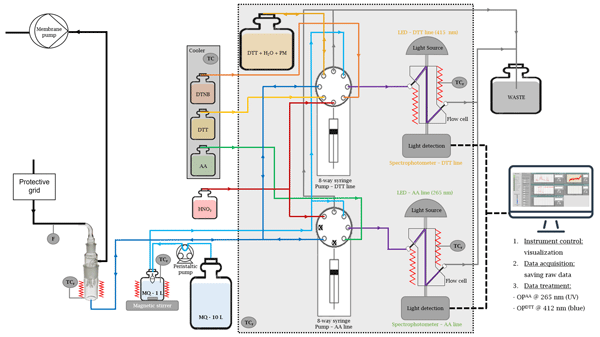
Albane Barbero, Guilhem Freche, Luc Piard, Lucile Richard, Takoua Mhadhbi, Anouk Marsal, Stephan Houdier, Julie Camman, Mathilde Brezins, Benjamin Golly, Jean-Luc Jaffrezo, and Gaëlle Uzu
Atmos. Meas. Tech., 18, 7085–7104, https://doi.org/10.5194/amt-18-7085-2025, https://doi.org/10.5194/amt-18-7085-2025, 2025
Short summary
Short summary
Air pollution can harm our health by triggering harmful chemical reactions in our lungs. To better understand this, we developed a new instrument that measures how air particles may cause such effects in near real time. Unlike current methods that may miss key signals, our system captures and analyzes air more efficiently and continuously. Our results show it works reliably, offering a promising new tool to monitor pollution’s health impacts more accurately.
Zahra Benmouhoub, Liselotte Tinel, Grégory Gille, Céline Cancedda, Stéphane Sauvage, and Nadine Locoge
EGUsphere, https://doi.org/10.5194/egusphere-2026-5538, https://doi.org/10.5194/egusphere-2026-5538, 2026
This preprint is open for discussion and under review for Atmospheric Measurement Techniques (AMT).
Short summary
Short summary
Hourly concentrations of 23 volatile organic compounds (VOC) from three sites in the Berre industrial basin (France) for 2022-2023 are reported. A new approach to uncertainty calculation estimates the uncertainties between 9% - 25%, confirming the need for a robust QA/QC approach. The sites exhibit large differences and show high variations in concentrations. The very high concentrations of certain species observed, highlight the need for time-resolved and speciated VOC measurement approaches.
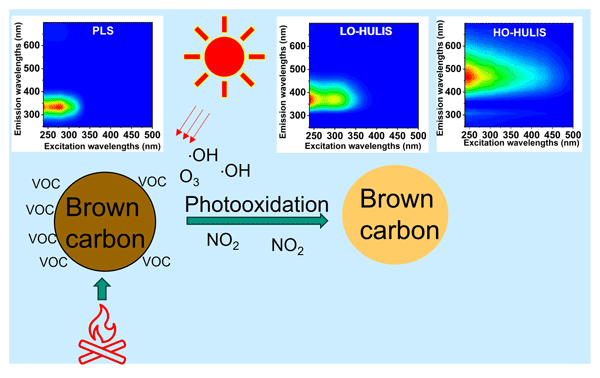
Feng Jiang, Jun Zhang, David M. Bell, Kun Li, Nadine Borduas-Dedekind, Andre S. H. Prevot, Hongbiao Cui, Harald Saathoff, and Thomas Leisner
Atmos. Chem. Phys., 26, 11733–11746, https://doi.org/10.5194/acp-26-11733-2026, https://doi.org/10.5194/acp-26-11733-2026, 2026
Short summary
Short summary
We studied chemical compositions and chromophores of brown carbon aerosol from combustion emission before and after photooxidation using an oxidative flow reactor. The chromophore and chemical composition of brown carbon were determined by excitation-emission spectroscopy and mass spectrometry. This work helps to get a better understanding of evolution process of the chromophores from primary combustion emissions during the real atmospheric transportation.
Anouk Marsal, Fabrizia Cavalli, Elise Di Antonio, Stephan Houdier, Pamela Dominutti, Sophie Darfeuil, Jean-Luc Jaffrezo, Stéphane Sauvage, Jean-Philippe Putaud, Ian S. Mudway, Athanasios Nenes, Aikaterini Bougiatioti, Nikolaos Mihalopoulos, André S. H. Prévôt, Despina Paraskevopoulou, Ana Cvitešić Kušan, Sanja Frka, Ana Kroflič, Ajda Delić, Blanka Tariba Lovaković, Andreja Jurič, Carolina Molina, Daniele Contini, Maria Rachele Guascito, Mathilde Lintz, Davy Rousset, Hartmut Herrmann, Eduardo J. d. S. Souza, Frédéric Ledoux, Marc Fadel, Haoran Yu, Jianzhen Yu, Maria Teresa Baeza Romero, Maria Cerrato-Alvarez, Marloes F. van Os, Mathilde N. Delaval, Yamaris Mercedes Mena Cabrera, Nicole Trieu, Greg Evans, Nuria Galindo, Noelia Gómez-Sanchez, Hana Hlaváčková, Pavel Mikuška, Shrutika Kadam, Pourya Shahpoury, Purificación López-Mahía, Jorge Moreda-Piñeiro, Rico K. Y. Cheung, Markus Kalberer, Micol Introna, Sarah S. Steimer, Zhuoying Lin, Suzanne E. Paulson, Saima Iram, Svetlana Stevanovic, Thomas Audoux, Laurent Y. Alleman, Jianing Liu, Ting Fang, P. S. Ganesh Subramanian, Vishal Verma, Tuukka Petäjä, Xavier Querol, Gerard Hoek, Roy M. Harrison, and Gaëlle Uzu
EGUsphere, https://doi.org/10.5194/egusphere-2026-3918, https://doi.org/10.5194/egusphere-2026-3918, 2026
Short summary
Short summary
This collaborative work from 26 worldwide laboratories assessed the measurement of atmospheric particles' oxidative potential (OP) using a common protocol. OP is a metric designed to inform on particles’ harmful effects. Over half of the laboratories obtained satisfactory results, and some critical steps such as liquid handling and OP mathematical determination were identified. Recommendations for future measurements and interlaboratory comparisons are also provided.
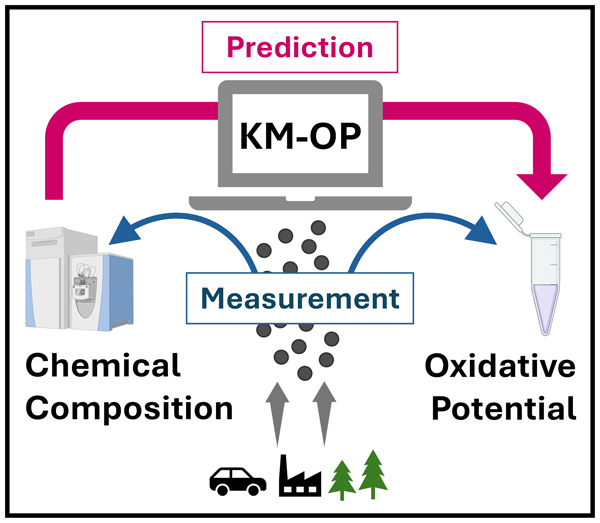
Ashmi Mishra, Steven Lelieveld, Matteo Krüger, Steven J. Campbell, Deepchandra Srivastava, Grazia Maria Lanzafame, Sophie Tomaz, Olivier Favez, Nicolas Bonnaire, Franco Lucarelli, Laurent Y. Alleman, Gaëlle Uzu, Jean-Luc Jaffrezo, Gang I. Chen, David C. Green, Max Priestman, Anja H. Tremper, Alexandre Barth, Markus Kalberer, Benjamin A. Musa Bandowe, Gerhard Lammel, Ulrich Pöschl, Pourya Shahpoury, Alexandre Albinet, and Thomas Berkemeier
Atmos. Chem. Phys., 26, 10605–10627, https://doi.org/10.5194/acp-26-10605-2026, https://doi.org/10.5194/acp-26-10605-2026, 2026
Short summary
Short summary
In this study, we develop and apply a kinetic model that estimates oxidative potential (OP) based on particulate matter (PM) composition. The model consolidates a large set of laboratory data from different OP assays in the presence of organic molecules, metals, and quinones. We applied the model to field data of PM composition and OP and found good agreement across three sites. The model analysis indicates that OP is mainly driven by organic molecules and copper.
Julian Weng, Yufang Hao, Benjamin T. Brem, Tianqu Cui, Peeyush Khare, Lubna Dada, Kaspar R. Daellenbach, Sophie Darfeuil, Gaëlle Uzu, Jean-Luc Jaffrezo, Martin Steinbacher, Stefan Reimann, Thaleia Gkraikou, Konstantina Oikonomou, Jean Sciare, Martine Collaud Coen, Claudia Mohr, Andre S. H. Prévôt, Martin Gysel-Beer, Imad El Haddad, and Patrik Winiger
EGUsphere, https://doi.org/10.5194/egusphere-2026-3660, https://doi.org/10.5194/egusphere-2026-3660, 2026
Short summary
Short summary
Long-term observations at the Jungfraujoch High Altitude Research Station show that, alongside air mass transport, sustained oxidative processing shaped by atmospheric water vapor plays a central role in driving aerosol loading and composition. Combining detailed aerosol chemical characterization with process-level insights, we provide important observational benchmarks for improving atmospheric model performance in the remote free troposphere, where uncertainties remain particularly high.
Chenjie Yu, Ludovico Di Antonio, Peter F. DeCarlo, Benjamin A. Nault, Alejandra Velazquez-Garcia, Eleonora Aruffo, Piero Di Carlo, Cyrielle Denjean, Sarah Tinorua, Thierry Bourrianne, Diana L. Pereira, Kevin Tu, Edouard Pangui, Mathieu Cazaunau, Astrid Bauville, Noël Grand, Antonin Bergé, Claudia Di Biagio, Aline Gratien, Matthias Beekmann, Guillaume Siour, Gilles Foret, Barbara D'Anna, Julien Kammer, Huihui Wu, Christopher Cantrell, Paola Formenti, and Vincent Michoud
EGUsphere, https://doi.org/10.5194/egusphere-2026-3147, https://doi.org/10.5194/egusphere-2026-3147, 2026
Short summary
Short summary
This study used coordinated airborne and ground-based measurements in Paris and its downwind regions to quantify the effects of 2–6 h of urban plume aging on aerosol properties. Aging enhanced secondary organic aerosol production and PM1 mass and shifted optical properties toward higher SSA, higher real and lower imaginary refractive indices, and stronger brown carbon absorption. These results highlight the need to account for aerosol aging in atmospheric models and remote-sensing retrievals.
Ruqian Miao, Ruochong Xu, Shan Huang, Sihan Xiao, Hao Wang, Yan Zheng, Siyi Liu, Jingxian Li, Guannan Geng, Manish Shrivastava, Xu Dao, Claire Granier, Guy Brasseur, Vlassis A. Karydis, Alexandra P. Tsimpidi, Jianhui Jiang, Kaspar R. Daellenbach, Imad El Haddad, André S. H. Prévôt, and Qi Chen
EGUsphere, https://doi.org/10.5194/egusphere-2026-3160, https://doi.org/10.5194/egusphere-2026-3160, 2026
Short summary
Short summary
Primary and secondary organic aerosols (POA and SOA) have distinct climate and human health impacts. We develop an OA simulation framework resolving the full volatility spectrum of organic precursor emissions, which improves global POA and SOA characterization. Reassessing their global distributions and budgets, this study shows greater POA and SOA burdens than previous estimates and presents region-dependent OA sources and variability to guide health-oriented pollution mitigation strategies.
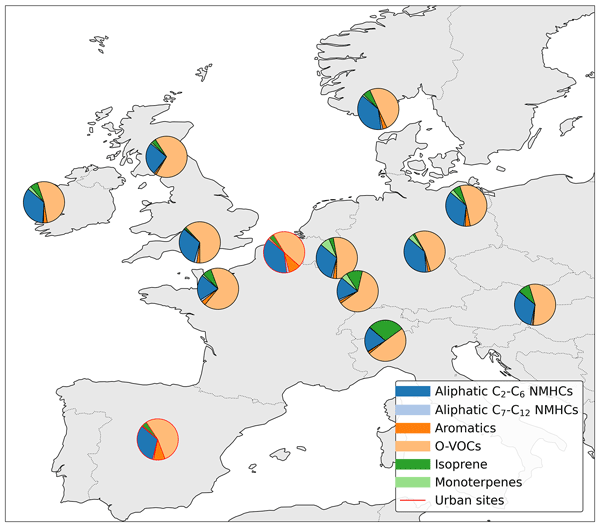
Wenche Aas, Thérèse Salameh, Robert Wegener, Heidi Hellén, Jean-Luc Jaffrezo, Pontus Roldin, Elisabeth Alonso-Blanco, Andres Alastuey, Crist Amelynck, Jgor Arduini, Benjamin Bergmans, Marie Bertrand, Agnes Borbon, Efstratios Bourtsoukidis, Laetitia Bouvier, David Butterfield, Iris Buxbaum, Darius Ceburnis, Anja Claude, Augustin Colette, Aurélie Colomb, Sophie Darfeuil, James Dernie, Maximilien Desservettaz, Elías Díaz-Ramiro, Marvin Dufresne, René Dubus, Mario Duval, Marie Dury, Anna Font, Kirsten N. Fossum, Evelyn Freney, Gotzon Gangoiti, Yao Ge, Maria Carmen Gomez, Francisco J. Gómez-Moreno, Marie Gohy, Valérie Gros, Paul Hamer, Bryan Hellack, Hartmut Herrmann, Robert Holla, Adéla Holubová, Niels R. Jensen, Tuija Jokinen, Matthew Jones, Uwe Käfer, Lukas Kesper, Dieter Klemp, Dagmar Kubistin, Angela Marinoni, Martina Mazzini, Vy Ngoc Thuy Dinh, Jurgita Ovadnevaite, Tuukka Petäjä, Miguel Portillo-Estrada, Jitka Přívozníková, Jean-Philippe Putaud, Stefan Reimann, Laura Renzi, Veronique Riffault, Stuart Ritchie, Chris Robins, Begoña Artíñano Rodríguez de Torres, Laurent Poulain, Julian Rüdiger, Agnieszka Sanocka, Estibaliz Saez de Camara Oleaga, Niels Schoon, Roger Seco, Ivan Simmons, Leïla Simon, David Simpson, Sverre Solberg, Emmanuel Tison, August Thomasson, Svetlana Tsyro, Marsailidh Twigg, Toni Tykkä, Bert Verreyken, Ågot Watne, Katie Williams, Ana Maria Yáñez-Serrano, Karen Yeung, Ilona Ylivinkka, and Karl Espen Yttri
Atmos. Chem. Phys., 26, 8717–8751, https://doi.org/10.5194/acp-26-8717-2026, https://doi.org/10.5194/acp-26-8717-2026, 2026
Short summary
Short summary
A one-week intensive measurement campaign during the 2022 European heatwave included monitoring of ozone, volatile organic compounds, aerosol chemical composition, and organic tracers to investigate air pollution sources. Results showed that emissions from vegetation and human activities contributed to peaks in ozone and secondary organic aerosol particles. Differences between measurements and model simulations underline the need for better characterization of sources and formation pathways.
Willem E. van Caspel, Olivier Favez, Jean-Luc Jaffrezo, Gaëlle Uzu, Kaspar R. Daellenbach, Imad El Haddad, and David Simpson
Atmos. Chem. Phys., 26, 8575–8600, https://doi.org/10.5194/acp-26-8575-2026, https://doi.org/10.5194/acp-26-8575-2026, 2026
Short summary
Short summary
Exposure to particulate matter (aerosols) is the most important environmental risk factor relating to negative health impacts. Understanding the sources of aerosols is thereby of great importance. This paper compares modelled aerosol source contributions to those from three European observationally derived datasets. Urban-scale modelling is shown to be impactful, although modelling of aerosols from some anthropogenic sources remains challenging.
James R. Campbell, Brice Temime-Roussel, Barbara D'Anna, Kathy S. Law, Weihang Zhang, Rodney J. Weber, Michael Battaglia Jr., Kayane K. Dingilian, Meeta Cesler-Maloney, Jason M. St. Clair, and Jingqiu Mao
EGUsphere, https://doi.org/10.5194/egusphere-2026-2073, https://doi.org/10.5194/egusphere-2026-2073, 2026
Short summary
Short summary
Fairbanks, Alaska experiences episodes of high concentrations of PM2.5 pollution in the wintertime. The sources and mixing ratios of gas-phase pollution, and the extent to which it affects the formation of PM2.5, are not well understood. Here, we examine the sources of gas-phase species measured in wintertime Fairbanks. We compare these results with other PM2.5 measurements to determine how various sources can affect the formation of PM2.5 pollution.
Marta Via, Jure Demšar, Yufang Hao, Manousos Manousakas, Anton Rusanen, Jianhui Jiang, Stuart K. Grange, Jean-Luc Jaffrezo, Vy Ngoc Thuy Dinh, Gaëlle Uzu, Griša Močnik, and Kaspar R. Daellenbach
Atmos. Meas. Tech., 19, 2175–2195, https://doi.org/10.5194/amt-19-2175-2026, https://doi.org/10.5194/amt-19-2175-2026, 2026
Short summary
Short summary
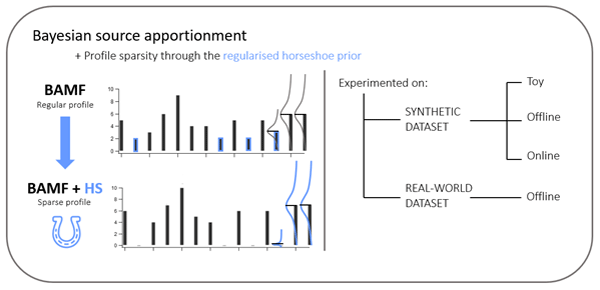
We introduce BAMF+HS (Bayesian Autocorrelated Matrix Factorisation+Horseshoe), an enhanced Bayesian receptor model for particulate matter (PM) source apportionment. By applying a regularised horseshoe prior to the chemical composition matrix, BAMF+HS enforces sparsity, filtering out irrelevant species and improving source separation. Tests on synthetic and real datasets show BAMF+HS consistently outperforms previous models in accuracy and clarity.
Karin Stegelius, Pauline Thompson, Pia Karbiener, Piotr Markuszewski, Andre S. H. Prevot, Sachchida N. Tripathi, Claudia Mohr, Liine Heikkinen, Krishnakant Budhavant, and Sophie L. Haslett
EGUsphere, https://doi.org/10.5194/egusphere-2026-914, https://doi.org/10.5194/egusphere-2026-914, 2026
Short summary
Short summary
High-time-resolution observations in the Maldives indicate that submicron aerosol over the northern Indian Ocean is primarily composed of inorganic sulfate and highly oxidised organic matter, indicative of aged continental outflow. The consistent composition across various air mass origins, alongside identification of sulfur-containing organics, underscores the influence of long-range transport and sulfate-driven secondary chemistry on regional aerosol characteristics and their climate impacts.
Quentin Gunti, Benjamin Chazeau, Brice Temime-Roussel, Irène Xueref-Remy, Alexandre Armengaud, Henri Wortham, and Barbara D'Anna
Atmos. Chem. Phys., 26, 2893–2919, https://doi.org/10.5194/acp-26-2893-2026, https://doi.org/10.5194/acp-26-2893-2026, 2026
Short summary
Short summary
A measurement campaign in Toulon's port in 2021 showed a strong decrease in sulfur-related emissions after IMO2020, while black carbon, organics and polycyclic aromatic hydrocarbons (PAHs) remained at previous levels, as confirmed by their emission factors. Source analysis indicated that ships contributed notably to organic aerosol and alkylated PAHs, and dominated ultrafine particles. These results support continued monitoring as the Mediterranean becomes a sulfur emission control area in 2025.
Vy Ngoc Thuy Dinh, Jean-Luc Jaffrezo, Pamela A. Dominutti, Rhabira Elazzouzi, Sophie Darfeuil, Céline Voiron, Anouk Marsal, Stéphane Socquet, Gladys Mary, Julie Cozic, Catherine Coulaud, Marc Durif, Olivier Favez, and Gaëlle Uzu
Atmos. Chem. Phys., 26, 247–268, https://doi.org/10.5194/acp-26-247-2026, https://doi.org/10.5194/acp-26-247-2026, 2026
Short summary
Short summary
Long-term particulate matter (PM) filter sampling at a French urban background and temperature measurements at different altitudes were used to investigate decadal trends of the main PM sources and related oxidative potential metrics. Positive Matrix Factorization analyses were conducted on the corresponding 11-year dataset, which determined ten PM sources. Temporal evolution of these sources is investigated, highlighting a strong downward trend of anthropogenic sources over 11 years.
Albane Barbero, Guilhem Freche, Luc Piard, Lucile Richard, Takoua Mhadhbi, Anouk Marsal, Stephan Houdier, Julie Camman, Mathilde Brezins, Benjamin Golly, Jean-Luc Jaffrezo, and Gaëlle Uzu
Atmos. Meas. Tech., 18, 7085–7104, https://doi.org/10.5194/amt-18-7085-2025, https://doi.org/10.5194/amt-18-7085-2025, 2025
Short summary
Short summary
Air pollution can harm our health by triggering harmful chemical reactions in our lungs. To better understand this, we developed a new instrument that measures how air particles may cause such effects in near real time. Unlike current methods that may miss key signals, our system captures and analyzes air more efficiently and continuously. Our results show it works reliably, offering a promising new tool to monitor pollution’s health impacts more accurately.
Laurence C. Windell, Saliou Mbengue, Petra Pokorná, Jaroslav Schwarz, André S. H. Prévôt, Manousos I. Manousakas, Stefanos Papagiannis, Jakub Ondráček, Roman Prokeš, and Vladimir Ždímal
Atmos. Meas. Tech., 18, 7021–7038, https://doi.org/10.5194/amt-18-7021-2025, https://doi.org/10.5194/amt-18-7021-2025, 2025
Short summary
Short summary
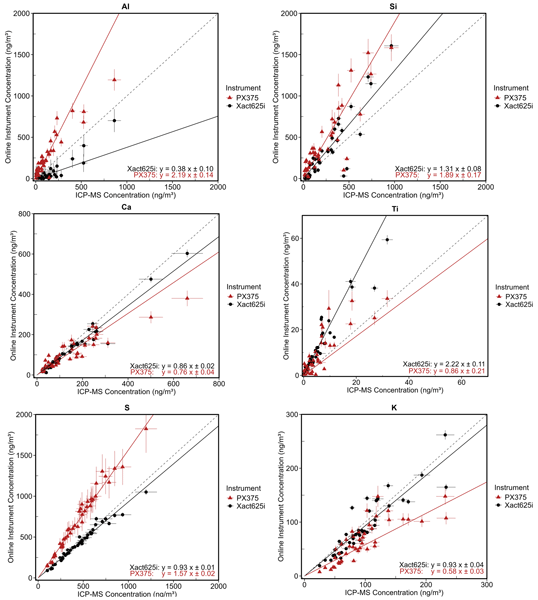
In this work, we compare the two most widely used online XRF monitors for ambient elemental analysis, the Xact625i and PX-375. We found strong correlations between the online instruments and the reference method (better so for the Xact625i), while in terms of absolute concentrations, some elements were over- and underestimated. Overall, we determined both instruments can be used as powerful tools to produce high-time resolution elemental data for use in air quality monitoring.
Vy Ngoc Thuy Dinh, Gaëlle Uzu, Pamela Dominutti, Stéphane Sauvage, Rhabira Elazzouzi, Sophie Darfeuil, Céline Voiron, Abdoulaye Samaké, Shouwen Zhang, Stéphane Socquet, Olivier Favez, and Jean-Luc Jaffrezo
Atmos. Meas. Tech., 18, 6817–6833, https://doi.org/10.5194/amt-18-6817-2025, https://doi.org/10.5194/amt-18-6817-2025, 2025
Short summary
Short summary
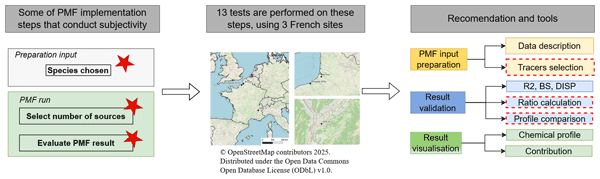
Positive matrix factorization (PMF) is widely used for apportion the source of particulate matter. However, the inherent model has some subjective aspects which should be reduce to ensure the robustness of the result. To do so, this study developed a systematic method, by performing tests on the input and the result validation. Finally, we proposed recommendations for input selection and result validation. A Python package is developed, providing advanced tools for input preparation, validation and visualization results.
Laura Cadeo, Beatrice Biffi, Benjamin Chazeau, Cristina Colombi, Rosario Cosenza, Eleonora Cuccia, Manousos-Ioannis Manousakas, Kaspar R. Daellenbach, André S. H. Prévôt, and Roberta Vecchi
Atmos. Meas. Tech., 18, 6435–6448, https://doi.org/10.5194/amt-18-6435-2025, https://doi.org/10.5194/amt-18-6435-2025, 2025
Short summary
Short summary
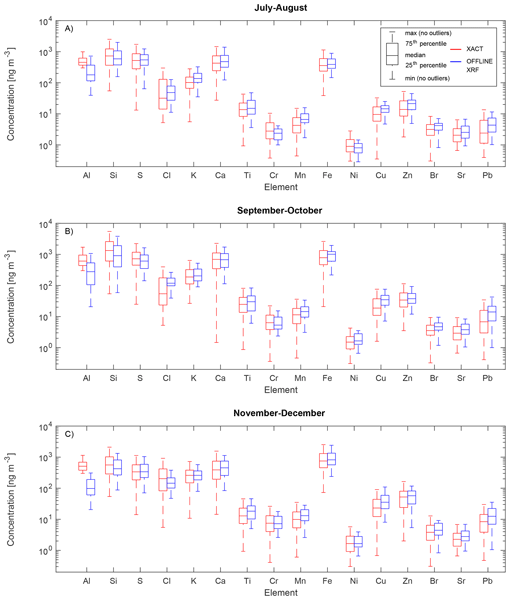
This study presents the deployment of the Xact® 625i Ambient Metals Monitor in Milan (Po Valley, Italy) and its performance in measuring particulate matter elemental composition at a high temporal resolution. Our findings demonstrate strong agreement between online and offline X-ray fluorescence analyses, underscoring the potential of advanced monitoring technologies for air quality research.
Pauline Bros, Sophie Darfeuil, Véronique Jacob, Rhabira Elazzouzi, Dielleza Tusha, Tristan Rousseau, Julian Weng, Patrik Winiger, Imad El Haddad, Christoph Hueglin, Gaëlle Uzu, and Jean-Luc Jaffrezo
Atmos. Meas. Tech., 18, 6315–6327, https://doi.org/10.5194/amt-18-6315-2025, https://doi.org/10.5194/amt-18-6315-2025, 2025
Short summary
Short summary
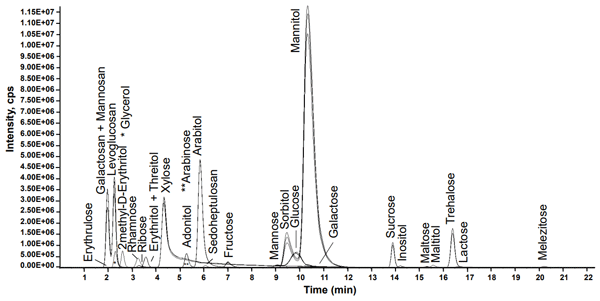
We present and validate an ultra-high-performance liquid chromatography tandem mass spectrometry method for the quantification of 21 sugars in atmospheric particulate matter. The method is fast, sensitive, and suitable for low-mass samples. Its application to a 6-year dataset from the Jungfraujoch site highlights its potential for source identification and understanding of biogenic and biomass burning tracers.
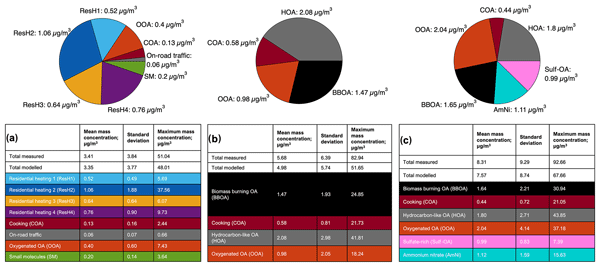
Amna Ijaz, Brice Temime-Roussel, Benjamin Chazeau, Sarah Albertin, Stephen R. Arnold, Brice Barret, Slimane Bekki, Natalie Brett, Meeta Cesler-Maloney, Elsa Dieudonne, Kayane K. Dingilian, Javier G. Fochesatto, Jingqiu Mao, Allison Moon, Joel Savarino, William Simpson, Rodney J. Weber, Kathy S. Law, and Barbara D'Anna
Atmos. Chem. Phys., 25, 11789–11811, https://doi.org/10.5194/acp-25-11789-2025, https://doi.org/10.5194/acp-25-11789-2025, 2025
Short summary
Short summary
Fairbanks is among the most polluted cities, with the highest particulate matter (PM) levels in the US during winters. Highly time-resolved measurements of the submicron PM found residential heating with wood and oil and hydrocarbon-like organics from traffic, as well as sulfur-containing aerosol, to be the key pollution sources. Remarkable differences existed between complementary instruments, warranting the deployment of multiple tools at sites, with wide-ranging influences.
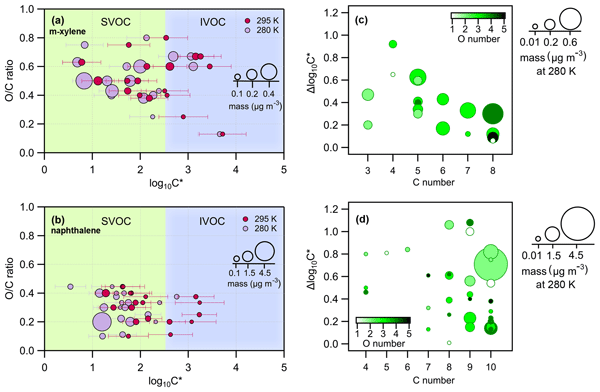
Marwa Shahin, Julien Kammer, Brice Temime-Roussel, and Barbara D'Anna
Atmos. Chem. Phys., 25, 10267–10292, https://doi.org/10.5194/acp-25-10267-2025, https://doi.org/10.5194/acp-25-10267-2025, 2025
Short summary
Short summary
Air pollution and climate change are influenced by tiny airborne particles called aerosols. This study explores how pollutants from urban sources, as m-xylene and naphthalene, form new particles in the atmosphere under different conditions. Using advanced techniques, we show how temperature and nitrogen oxides affect the formation and behavior of these particles. Our findings will improve our understanding of secondary organic particle and air quality models.
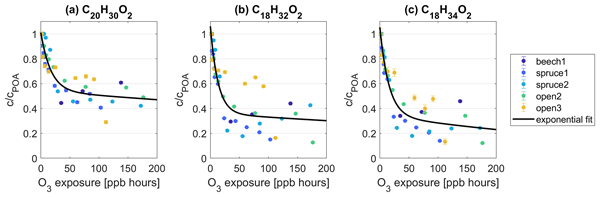
Sophie Bogler, Jun Zhang, Rico K. Y. Cheung, Kun Li, André S. H. Prévôt, Imad El Haddad, and David M. Bell
Atmos. Chem. Phys., 25, 10229–10243, https://doi.org/10.5194/acp-25-10229-2025, https://doi.org/10.5194/acp-25-10229-2025, 2025
Short summary
Short summary
Authentic aerosols emitted from residential wood stoves and open burning processes are only slightly oxidized by ozone in the atmosphere. Under dry conditions, the reaction does not proceed to completion, while under high humidity conditions, the reactivity proceeds further. These results indicate that the reactivity with ozone is likely impacted by aerosol phase state (e.g., aerosol viscosity).
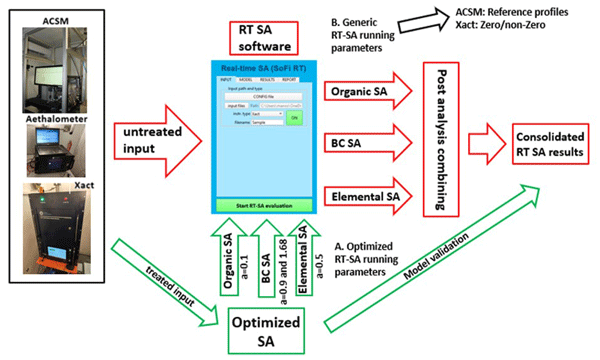
Manousos I. Manousakas, Olga Zografou, Francesco Canonaco, Evangelia Diapouli, Stefanos Papagiannis, Maria Gini, Vasiliki Vasilatou, Anna Tobler, Stergios Vratolis, Jay G. Slowik, Kaspar R. Daellenbach, André S. H. Prevot, and Konstantinos Eleftheriadis
Atmos. Meas. Tech., 18, 3983–4002, https://doi.org/10.5194/amt-18-3983-2025, https://doi.org/10.5194/amt-18-3983-2025, 2025
Short summary
Short summary
Air pollution from airborne particles is a major health and environmental concern, especially in cities. Understanding the particles' sources is key to addressing this issue, but traditional methods require time-consuming sampling, delaying action. Our study introduces a real-time monitoring system that uses advanced instruments and software to track pollution instantly. This technology allows faster, more precise pollution analysis, helping cities create targeted strategies to improve air quality.
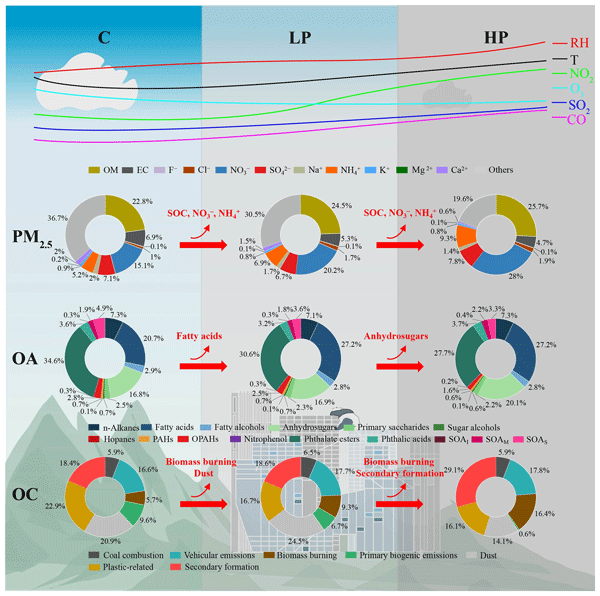
Junke Zhang, Xinyi Fu, Chunying Chen, Yunfei Su, Siyu Liu, Luyao Chen, Yubao Chen, Gehui Wang, and Andre S. H. Prevot
Atmos. Chem. Phys., 25, 8983–9004, https://doi.org/10.5194/acp-25-8983-2025, https://doi.org/10.5194/acp-25-8983-2025, 2025
Short summary
Short summary
We measured (at the molecular level) the 125 organic aerosol (OA) compounds present in Chengdu in winter. OA was dominated by fatty acids, phthalate esters, and anhydrosugars, and it was deeply influenced by anthropogenic sources. As pollution worsened, secondary inorganic species and secondary organic carbon (OC) dominated the increase in PM2.5, fatty acids and anhydrosugars dominated the increase in OA, and the contributions of secondary formation and biomass burning to OC increased markedly.
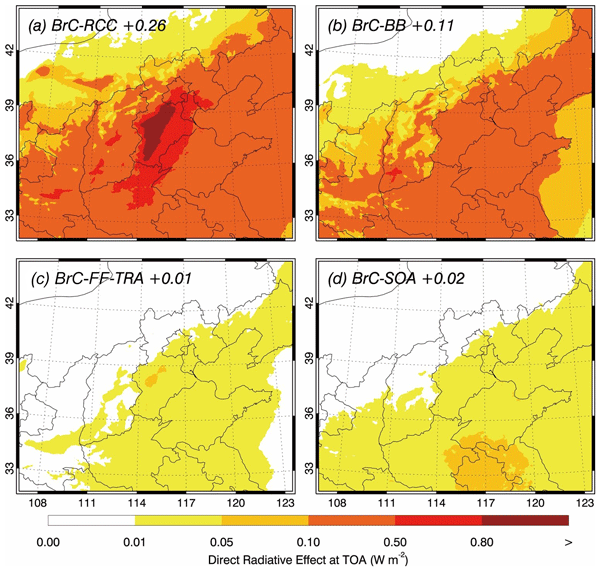
Jiamao Zhou, Jiarui Wu, Xiaoli Su, Ruonan Wang, Imad EI Haddad, Xia Li, Qian Jiang, Ting Zhang, Wenting Dai, Junji Cao, Andre S. H. Prevot, Xuexi Tie, and Guohui Li
Atmos. Chem. Phys., 25, 7563–7580, https://doi.org/10.5194/acp-25-7563-2025, https://doi.org/10.5194/acp-25-7563-2025, 2025
Short summary
Short summary
Brown carbon (BrC) is a type of airborne particle produced from various combustion sources which is light absorption. Historically, climate models have categorizing organic particles as either non-absorbing or purely reflective. Our study shows that BrC can reduce the usual cooling effect of organic particles. While BrC is often linked to biomass burning, however, BrC from fossil fuels contributes significantly to atmospheric heating.
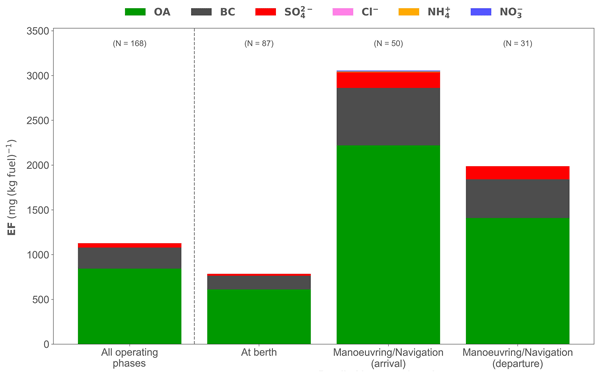
Lise Le Berre, Brice Temime-Roussel, Grazia Maria Lanzafame, Barbara D'Anna, Nicolas Marchand, Stéphane Sauvage, Marvin Dufresne, Liselotte Tinel, Thierry Leonardis, Joel Ferreira de Brito, Alexandre Armengaud, Grégory Gille, Ludovic Lanzi, Romain Bourjot, and Henri Wortham
Atmos. Chem. Phys., 25, 6575–6605, https://doi.org/10.5194/acp-25-6575-2025, https://doi.org/10.5194/acp-25-6575-2025, 2025
Short summary
Short summary
A summer campaign in a Mediterranean port examined pollution caused by ships. Two stations in the port measured pollution levels and captured over 350 ship plumes to study their chemical composition. Results showed that pollution levels, such as ultra-fine particles, were higher in the port than in the city and offer strong support to improve emission inventories. These findings may also serve as reference to assess the benefits of a sulfur Emission Control Area in the Mediterranean in 2025.
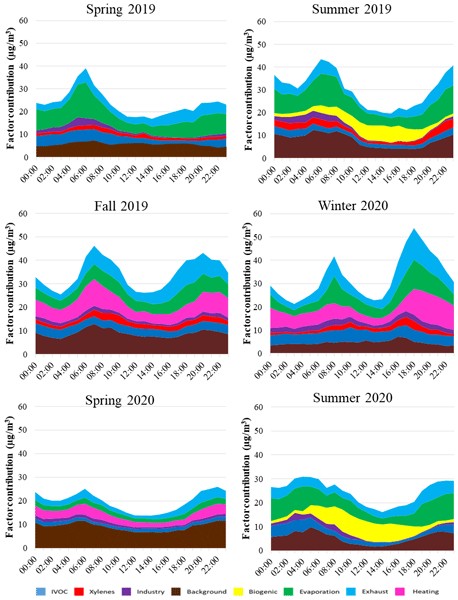
Marvin Dufresne, Thérèse Salameh, Thierry Leonardis, Grégory Gille, Alexandre Armengaud, and Stéphane Sauvage
Atmos. Chem. Phys., 25, 5977–5999, https://doi.org/10.5194/acp-25-5977-2025, https://doi.org/10.5194/acp-25-5977-2025, 2025
Short summary
Short summary
This paper discusses the 18-month-long measurement of non-methane hydrocarbons (NMHCs) in Marseille, where there was no measurement since early 2000, despite the impact of NMHCs on air quality and climate. Traffic-related sources are the largest contributor to NMHC concentrations in Marseille, and shipping strongly contributes to the formation of aerosols. Finally, the Covid-19 lockdown had an impact on NMHC concentrations, reaching a 50 % decrease for traffic-related sources.
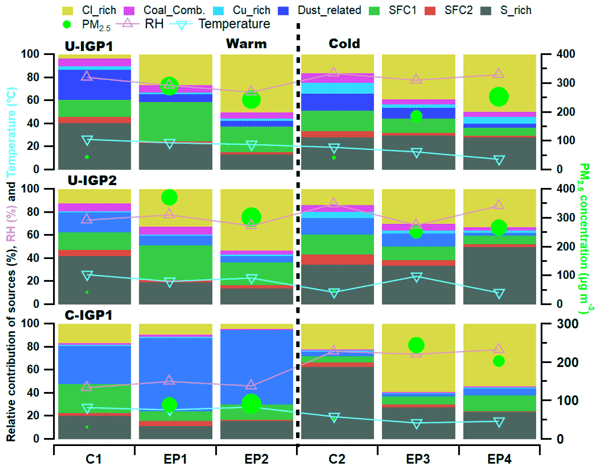
Ashutosh K. Shukla, Sachchida N. Tripathi, Shamitaksha Talukdar, Vishnu Murari, Sreenivas Gaddamidi, Manousos-Ioannis Manousakas, Vipul Lalchandani, Kuldeep Dixit, Vinayak M. Ruge, Peeyush Khare, Mayank Kumar, Vikram Singh, Neeraj Rastogi, Suresh Tiwari, Atul K. Srivastava, Dilip Ganguly, Kaspar Rudolf Daellenbach, and André S. H. Prévôt
Atmos. Chem. Phys., 25, 3765–3784, https://doi.org/10.5194/acp-25-3765-2025, https://doi.org/10.5194/acp-25-3765-2025, 2025
Short summary
Short summary
Our study delves into the elemental composition of aerosols at three sites across the Indo-Gangetic Plain (IGP), revealing distinct patterns during pollution episodes. We found significant increases in chlorine (Cl)-rich and solid fuel combustion (SFC) sources, indicating dynamic emission sources, agricultural burning impacts, and meteorological influences. Surges in Cl-rich particles during cold periods highlight their role in particle growth under high-relative-humidity conditions.
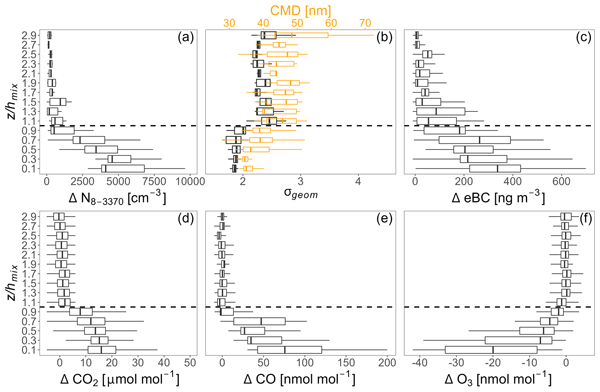
Roman Pohorsky, Andrea Baccarini, Natalie Brett, Brice Barret, Slimane Bekki, Gianluca Pappaccogli, Elsa Dieudonné, Brice Temime-Roussel, Barbara D'Anna, Meeta Cesler-Maloney, Antonio Donateo, Stefano Decesari, Kathy S. Law, William R. Simpson, Javier Fochesatto, Steve R. Arnold, and Julia Schmale
Atmos. Chem. Phys., 25, 3687–3715, https://doi.org/10.5194/acp-25-3687-2025, https://doi.org/10.5194/acp-25-3687-2025, 2025
Short summary
Short summary
This study presents an analysis of vertical measurements of pollution in an Alaskan city during winter. It investigates the relationship between the atmospheric structure and the layering of aerosols and trace gases. Results indicate an overall very shallow surface mixing layer. The height of this layer is strongly influenced by a local shallow wind. The study also provides information on the pollution chemical composition at different altitudes, including pollution signatures from power plants.
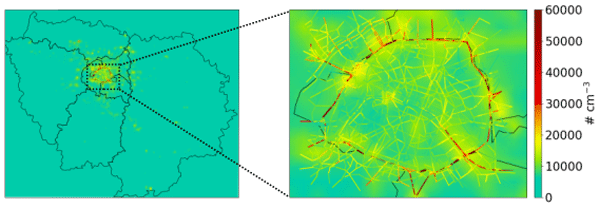
Soo-Jin Park, Lya Lugon, Oscar Jacquot, Youngseob Kim, Alexia Baudic, Barbara D'Anna, Ludovico Di Antonio, Claudia Di Biagio, Fabrice Dugay, Olivier Favez, Véronique Ghersi, Aline Gratien, Julien Kammer, Jean-Eudes Petit, Olivier Sanchez, Myrto Valari, Jérémy Vigneron, and Karine Sartelet
Atmos. Chem. Phys., 25, 3363–3387, https://doi.org/10.5194/acp-25-3363-2025, https://doi.org/10.5194/acp-25-3363-2025, 2025
Short summary
Short summary
To accurately represent the population exposure to outdoor concentrations of pollutants of interest to health (NO2, PM2.5, black carbon, and ultrafine particles), multi-scale modelling down to the street scale is set up and evaluated using measurements from field campaigns. An exposure scaling factor is defined, allowing regional-scale simulations to be corrected to evaluate population exposure. Urban heterogeneities strongly influence NO2, black carbon, and ultrafine particles but less strongly PM2.5.
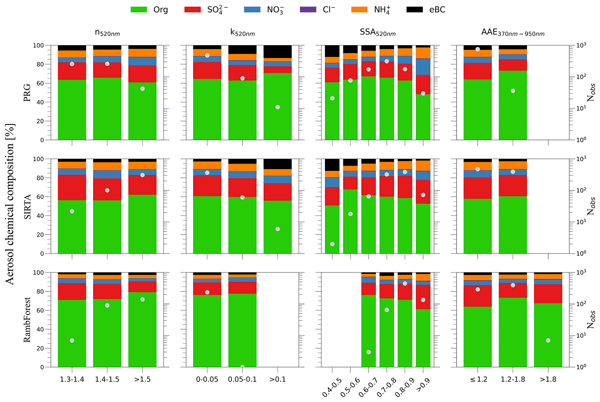
Ludovico Di Antonio, Claudia Di Biagio, Paola Formenti, Aline Gratien, Vincent Michoud, Christopher Cantrell, Astrid Bauville, Antonin Bergé, Mathieu Cazaunau, Servanne Chevaillier, Manuela Cirtog, Patrice Coll, Barbara D'Anna, Joel F. de Brito, David O. De Haan, Juliette R. Dignum, Shravan Deshmukh, Olivier Favez, Pierre-Marie Flaud, Cecile Gaimoz, Lelia N. Hawkins, Julien Kammer, Brigitte Language, Franck Maisonneuve, Griša Močnik, Emilie Perraudin, Jean-Eudes Petit, Prodip Acharja, Laurent Poulain, Pauline Pouyes, Eva Drew Pronovost, Véronique Riffault, Kanuri I. Roundtree, Marwa Shahin, Guillaume Siour, Eric Villenave, Pascal Zapf, Gilles Foret, Jean-François Doussin, and Matthias Beekmann
Atmos. Chem. Phys., 25, 3161–3189, https://doi.org/10.5194/acp-25-3161-2025, https://doi.org/10.5194/acp-25-3161-2025, 2025
Short summary
Short summary
The spectral complex refractive index (CRI) and single scattering albedo were retrieved from submicron aerosol measurements at three sites within the greater Paris area during the ACROSS field campaign (June–July 2022). Measurements revealed urban emission impact on surrounding areas. CRI full period averages at 520 nm were 1.41 – 0.037i (urban), 1.52 – 0.038i (peri-urban), and 1.50 – 0.025i (rural). Organic aerosols dominated the aerosol mass and contributed up to 22 % of absorption at 370 nm.
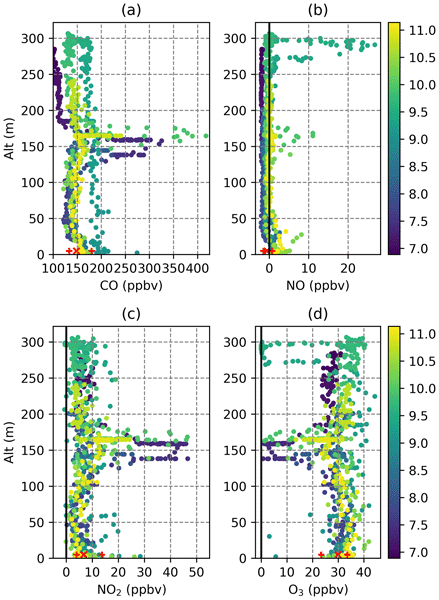
Brice Barret, Patrice Medina, Natalie Brett, Roman Pohorsky, Kathy S. Law, Slimane Bekki, Gilberto J. Fochesatto, Julia Schmale, Steve R. Arnold, Andrea Baccarini, Maurizio Busetto, Meeta Cesler-Maloney, Barbara D'Anna, Stefano Decesari, Jingqiu Mao, Gianluca Pappaccogli, Joel Savarino, Federico Scoto, and William R. Simpson
Atmos. Meas. Tech., 18, 1163–1184, https://doi.org/10.5194/amt-18-1163-2025, https://doi.org/10.5194/amt-18-1163-2025, 2025
Short summary
Short summary
The Fairbanks area experiences severe pollution episodes in winter because of enhanced emissions of pollutants trapped near the surface by strong temperature inversions. Low-cost sensors were deployed on board a car and a tethered balloon to measure the concentrations of gaseous pollutants (CO, O3, and NOx) in Fairbanks during winter 2022. Data calibration with reference measurements and machine learning methods enabled us to document pollution at the surface and power plant plumes aloft.
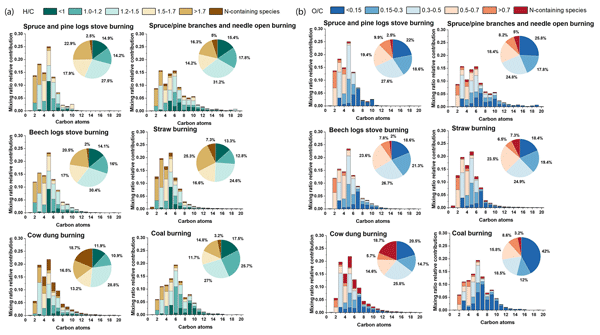
Tiantian Wang, Jun Zhang, Houssni Lamkaddam, Kun Li, Ka Yuen Cheung, Lisa Kattner, Erlend Gammelsæter, Michael Bauer, Zachary C. J. Decker, Deepika Bhattu, Rujin Huang, Rob L. Modini, Jay G. Slowik, Imad El Haddad, Andre S. H. Prevot, and David M. Bell
Atmos. Chem. Phys., 25, 2707–2724, https://doi.org/10.5194/acp-25-2707-2025, https://doi.org/10.5194/acp-25-2707-2025, 2025
Short summary
Short summary
Our study analyzes real-time emissions of organic vapors from solid fuel combustion. Using the mass spectrometer, we tested various fuels, finding higher emission factors for organic vapors from wood burning. Intermediate-volatility organic compounds constituted a significant fraction of emissions in solid fuel combustion. Statistical tests identified unique potential markers. Our insights benefit air quality, climate, and health, aiding accurate emission assessments.
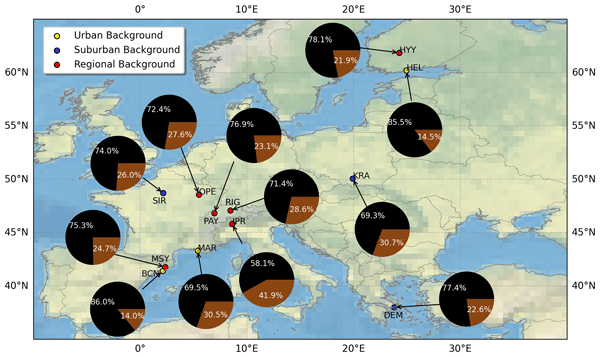
Hector Navarro-Barboza, Jordi Rovira, Vincenzo Obiso, Andrea Pozzer, Marta Via, Andres Alastuey, Xavier Querol, Noemi Perez, Marjan Savadkoohi, Gang Chen, Jesus Yus-Díez, Matic Ivancic, Martin Rigler, Konstantinos Eleftheriadis, Stergios Vratolis, Olga Zografou, Maria Gini, Benjamin Chazeau, Nicolas Marchand, Andre S. H. Prevot, Kaspar Dallenbach, Mikael Ehn, Krista Luoma, Tuukka Petäjä, Anna Tobler, Jaroslaw Necki, Minna Aurela, Hilkka Timonen, Jarkko Niemi, Olivier Favez, Jean-Eudes Petit, Jean-Philippe Putaud, Christoph Hueglin, Nicolas Pascal, Aurélien Chauvigné, Sébastien Conil, Marco Pandolfi, and Oriol Jorba
Atmos. Chem. Phys., 25, 2667–2694, https://doi.org/10.5194/acp-25-2667-2025, https://doi.org/10.5194/acp-25-2667-2025, 2025
Short summary
Short summary
Brown carbon (BrC) absorbs ultraviolet (UV) and visible light, influencing climate. This study explores BrC's imaginary refractive index (k) using data from 12 European sites. Residential emissions are a major organic aerosol (OA) source in winter, while secondary organic aerosol (SOA) dominates in summer. Source-specific k values were derived, improving model accuracy. The findings highlight BrC's climate impact and emphasize source-specific constraints in atmospheric models.
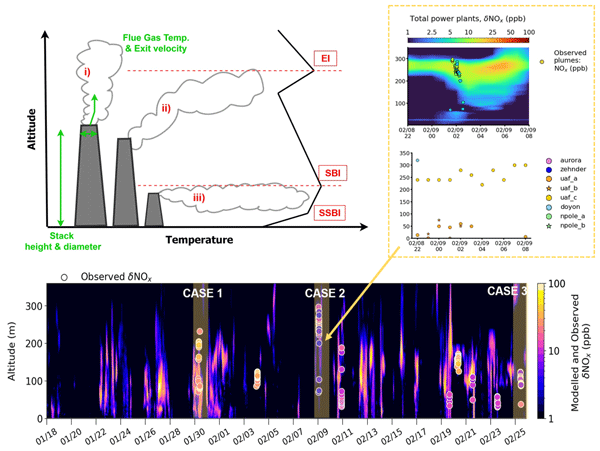
Natalie Brett, Kathy S. Law, Steve R. Arnold, Javier G. Fochesatto, Jean-Christophe Raut, Tatsuo Onishi, Robert Gilliam, Kathleen Fahey, Deanna Huff, George Pouliot, Brice Barret, Elsa Dieudonné, Roman Pohorsky, Julia Schmale, Andrea Baccarini, Slimane Bekki, Gianluca Pappaccogli, Federico Scoto, Stefano Decesari, Antonio Donateo, Meeta Cesler-Maloney, William Simpson, Patrice Medina, Barbara D'Anna, Brice Temime-Roussel, Joel Savarino, Sarah Albertin, Jingqiu Mao, Becky Alexander, Allison Moon, Peter F. DeCarlo, Vanessa Selimovic, Robert Yokelson, and Ellis S. Robinson
Atmos. Chem. Phys., 25, 1063–1104, https://doi.org/10.5194/acp-25-1063-2025, https://doi.org/10.5194/acp-25-1063-2025, 2025
Short summary
Short summary
Processes influencing dispersion of local anthropogenic pollution in Arctic wintertime are investigated with Lagrangian dispersion modelling. Simulated power plant plume rise that considers temperature inversion layers improves results compared to observations (interior Alaska). Modelled surface concentrations are improved by representation of vertical mixing and emission estimates. Large increases in diesel vehicle emissions at temperatures reaching −35°C are required to reproduce observed NOx.
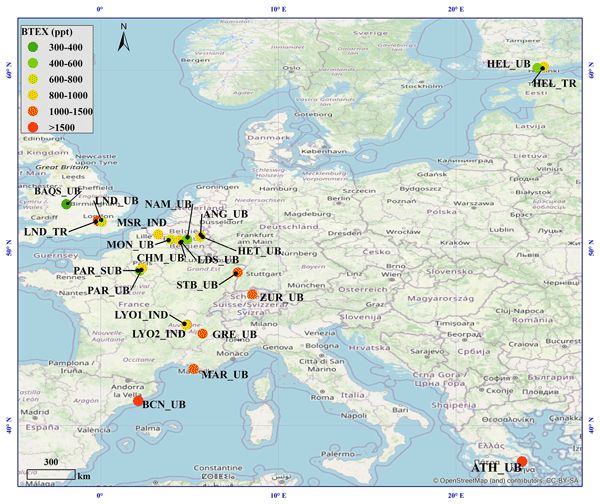
Xiansheng Liu, Xun Zhang, Marvin Dufresne, Tao Wang, Lijie Wu, Rosa Lara, Roger Seco, Marta Monge, Ana Maria Yáñez-Serrano, Marie Gohy, Paul Petit, Audrey Chevalier, Marie-Pierre Vagnot, Yann Fortier, Alexia Baudic, Véronique Ghersi, Grégory Gille, Ludovic Lanzi, Valérie Gros, Leïla Simon, Heidi Héllen, Stefan Reimann, Zoé Le Bras, Michelle Jessy Müller, David Beddows, Siqi Hou, Zongbo Shi, Roy M. Harrison, William Bloss, James Dernie, Stéphane Sauvage, Philip K. Hopke, Xiaoli Duan, Taicheng An, Alastair C. Lewis, James R. Hopkins, Eleni Liakakou, Nikolaos Mihalopoulos, Xiaohu Zhang, Andrés Alastuey, Xavier Querol, and Thérèse Salameh
Atmos. Chem. Phys., 25, 625–638, https://doi.org/10.5194/acp-25-625-2025, https://doi.org/10.5194/acp-25-625-2025, 2025
Short summary
Short summary
This study examines BTEX (benzene, toluene, ethylbenzene, xylenes) pollution in urban areas across seven European countries. Analyzing data from 22 monitoring sites, we found traffic and industrial activities significantly impact BTEX levels, with peaks during rush hours. The risk from BTEX exposure remains moderate, especially in high-traffic and industrial zones, highlighting the need for targeted air quality management to protect public health and improve urban air quality.
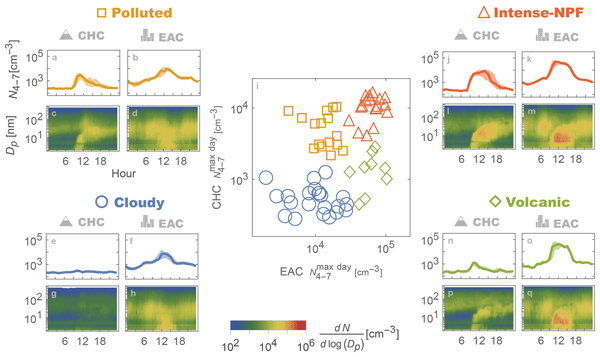
Diego Aliaga, Victoria A. Sinclair, Radovan Krejci, Marcos Andrade, Paulo Artaxo, Luis Blacutt, Runlong Cai, Samara Carbone, Yvette Gramlich, Liine Heikkinen, Dominic Heslin-Rees, Wei Huang, Veli-Matti Kerminen, Alkuin Maximilian Koenig, Markku Kulmala, Paolo Laj, Valeria Mardoñez-Balderrama, Claudia Mohr, Isabel Moreno, Pauli Paasonen, Wiebke Scholz, Karine Sellegri, Laura Ticona, Gaëlle Uzu, Fernando Velarde, Alfred Wiedensohler, Doug Worsnop, Cheng Wu, Chen Xuemeng, Qiaozhi Zha, and Federico Bianchi
Aerosol Research, 3, 15–44, https://doi.org/10.5194/ar-3-15-2025, https://doi.org/10.5194/ar-3-15-2025, 2025
Short summary
Short summary
This study examines new particle formation (NPF) in the Bolivian Andes at Chacaltaya mountain (CHC) and the urban El Alto–La Paz area (EAC). Days are clustered into four categories based on NPF intensity. Differences in particle size, precursor gases, and pollution levels are found. High NPF intensities increased Aitken mode particle concentrations at both sites, while volcanic influence selectively diminished NPF intensity at CHC but not EAC. This study highlights NPF dynamics in the Andes.
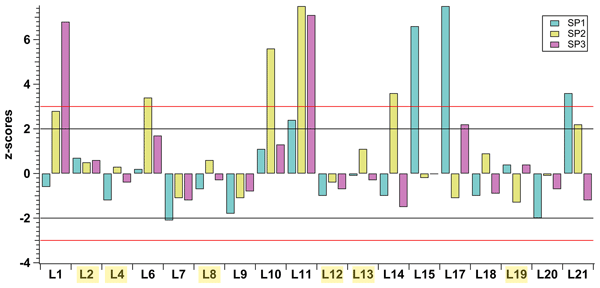
Pamela A. Dominutti, Jean-Luc Jaffrezo, Anouk Marsal, Takoua Mhadhbi, Rhabira Elazzouzi, Camille Rak, Fabrizia Cavalli, Jean-Philippe Putaud, Aikaterini Bougiatioti, Nikolaos Mihalopoulos, Despina Paraskevopoulou, Ian Mudway, Athanasios Nenes, Kaspar R. Daellenbach, Catherine Banach, Steven J. Campbell, Hana Cigánková, Daniele Contini, Greg Evans, Maria Georgopoulou, Manuella Ghanem, Drew A. Glencross, Maria Rachele Guascito, Hartmut Herrmann, Saima Iram, Maja Jovanović, Milena Jovašević-Stojanović, Markus Kalberer, Ingeborg M. Kooter, Suzanne E. Paulson, Anil Patel, Esperanza Perdrix, Maria Chiara Pietrogrande, Pavel Mikuška, Jean-Jacques Sauvain, Katerina Seitanidi, Pourya Shahpoury, Eduardo J. d. S. Souza, Sarah Steimer, Svetlana Stevanovic, Guillaume Suarez, P. S. Ganesh Subramanian, Battist Utinger, Marloes F. van Os, Vishal Verma, Xing Wang, Rodney J. Weber, Yuhan Yang, Xavier Querol, Gerard Hoek, Roy M. Harrison, and Gaëlle Uzu
Atmos. Meas. Tech., 18, 177–195, https://doi.org/10.5194/amt-18-177-2025, https://doi.org/10.5194/amt-18-177-2025, 2025
Short summary
Short summary
In this work, 20 labs worldwide collaborated to evaluate the measurement of air pollution's oxidative potential (OP), a key indicator of its harmful effects. The study aimed to identify disparities in the widely used OP dithiothreitol assay and assess the consistency of OP among labs using the same protocol. The results showed that half of the labs achieved acceptable results. However, variability was also found, highlighting the need for standardisation in OP procedures.
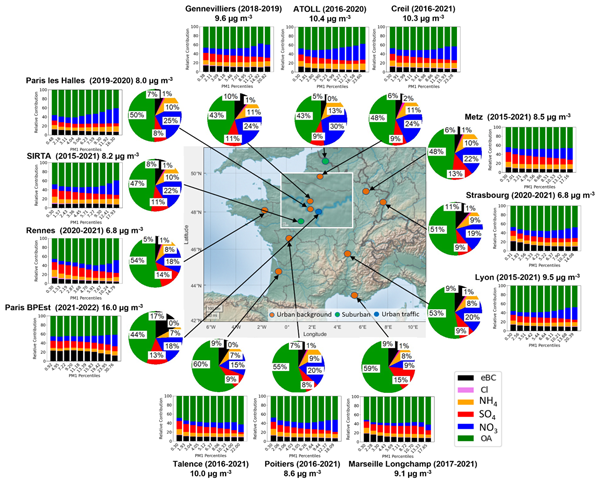
Hasna Chebaicheb, Joel F. de Brito, Tanguy Amodeo, Florian Couvidat, Jean-Eudes Petit, Emmanuel Tison, Gregory Abbou, Alexia Baudic, Mélodie Chatain, Benjamin Chazeau, Nicolas Marchand, Raphaële Falhun, Florie Francony, Cyril Ratier, Didier Grenier, Romain Vidaud, Shouwen Zhang, Gregory Gille, Laurent Meunier, Caroline Marchand, Véronique Riffault, and Olivier Favez
Earth Syst. Sci. Data, 16, 5089–5109, https://doi.org/10.5194/essd-16-5089-2024, https://doi.org/10.5194/essd-16-5089-2024, 2024
Short summary
Short summary
Long-term (2015–2021) quasi-continuous measurements have been obtained at 13 French urban sites using online mass spectrometry, to acquire the comprehensive chemical composition of submicron particulate matter. The results show their spatial and temporal differences and confirm the predominance of organics in France (40–60 %). These measurements can be used for many future studies, such as trend and epidemiological analyses, or comparisons with chemical transport models.
Valeria Mardoñez-Balderrama, Griša Močnik, Marco Pandolfi, Robin L. Modini, Fernando Velarde, Laura Renzi, Angela Marinoni, Jean-Luc Jaffrezo, Isabel Moreno R., Diego Aliaga, Federico Bianchi, Claudia Mohr, Martin Gysel-Beer, Patrick Ginot, Radovan Krejci, Alfred Wiedensohler, Gaëlle Uzu, Marcos Andrade, and Paolo Laj
Atmos. Chem. Phys., 24, 12055–12077, https://doi.org/10.5194/acp-24-12055-2024, https://doi.org/10.5194/acp-24-12055-2024, 2024
Short summary
Short summary
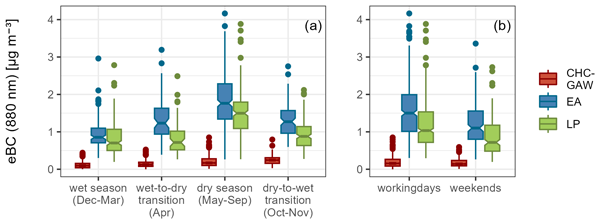
Levels of black carbon (BC) are scarcely reported in the Southern Hemisphere, especially in high-altitude conditions. This study provides insight into the concentration level, variability, and optical properties of BC in La Paz and El Alto and at the Chacaltaya Global Atmosphere Watch Station. Two methods of source apportionment of absorption were tested and compared showing traffic as the main contributor to absorption in the urban area, in addition to biomass and open waste burning.
Imad El Haddad, Danielle Vienneau, Kaspar R. Daellenbach, Robin Modini, Jay G. Slowik, Abhishek Upadhyay, Petros N. Vasilakos, David Bell, Kees de Hoogh, and Andre S. H. Prevot
Atmos. Chem. Phys., 24, 11981–12011, https://doi.org/10.5194/acp-24-11981-2024, https://doi.org/10.5194/acp-24-11981-2024, 2024
Short summary
Short summary
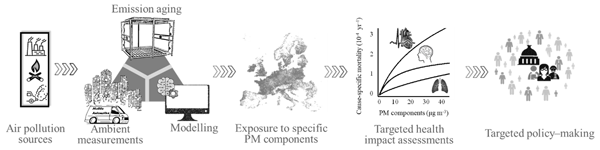
This opinion paper explores how advances in aerosol science inform our understanding of the health impacts of outdoor particulate pollution. We advocate for a shift in the way we target PM pollution, focusing on the most harmful anthropogenic emissions. We highlight key observations, modelling developments, and emission measurements needed to achieve this shift.
Matthieu Vida, Gilles Foret, Guillaume Siour, Florian Couvidat, Olivier Favez, Gaelle Uzu, Arineh Cholakian, Sébastien Conil, Matthias Beekmann, and Jean-Luc Jaffrezo
Atmos. Chem. Phys., 24, 10601–10615, https://doi.org/10.5194/acp-24-10601-2024, https://doi.org/10.5194/acp-24-10601-2024, 2024
Short summary
Short summary
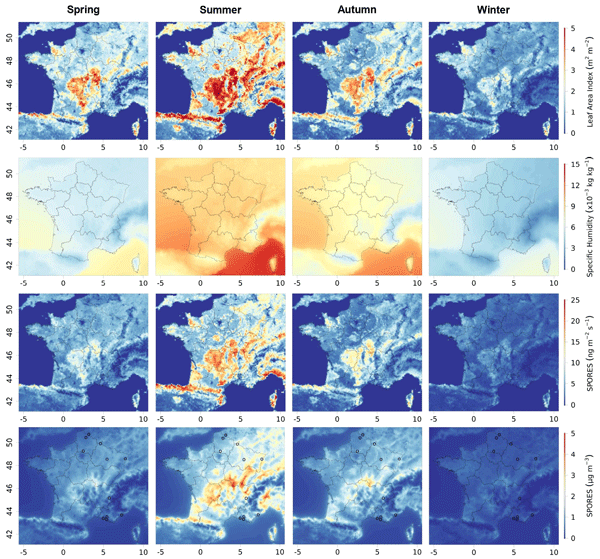
We simulate 2 years of atmospheric fungal spores over France and use observations of polyols and primary biogenic factors from positive matrix factorisation. The representation of emissions taking into account a proxy for vegetation surface and specific humidity enables us to reproduce very accurately the seasonal cycle of fungal spores. Furthermore, we estimate that fungal spores can account for 20 % of PM10 and 40 % of the organic fraction of PM10 over vegetated areas in summer.
Vy Dinh Ngoc Thuy, Jean-Luc Jaffrezo, Ian Hough, Pamela A. Dominutti, Guillaume Salque Moreton, Grégory Gille, Florie Francony, Arabelle Patron-Anquez, Olivier Favez, and Gaëlle Uzu
Atmos. Chem. Phys., 24, 7261–7282, https://doi.org/10.5194/acp-24-7261-2024, https://doi.org/10.5194/acp-24-7261-2024, 2024
Short summary
Short summary
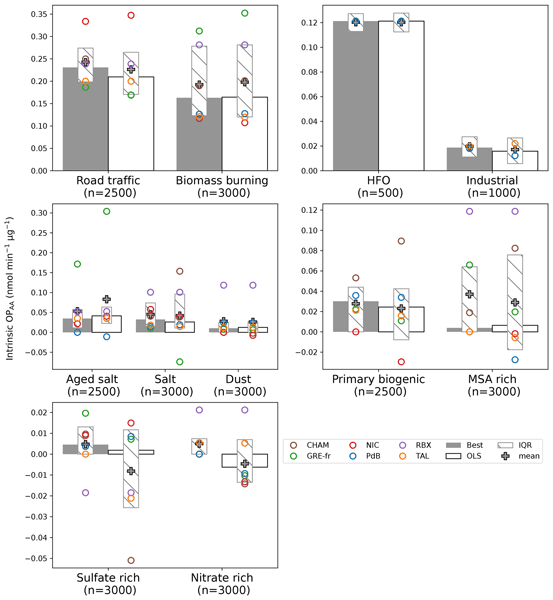
The capacity of particulate matter (PM) to generate reactive oxygen species in vivo is represented by oxidative potential (OP). This study focuses on finding the appropriate model to evaluate the oxidative character of PM sources in six sites using the PM sources and OP. Eight regression techniques are introduced to assess the OP of PM. The study highlights the importance of selecting a model according to the input data characteristics and establishes some recommendations for the procedure.
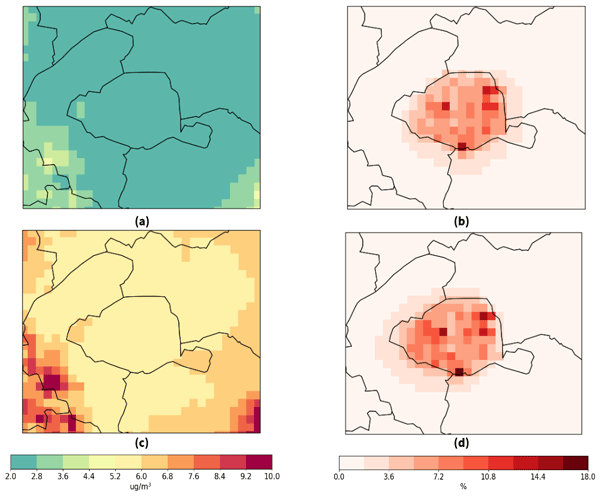
Alice Maison, Lya Lugon, Soo-Jin Park, Alexia Baudic, Christopher Cantrell, Florian Couvidat, Barbara D'Anna, Claudia Di Biagio, Aline Gratien, Valérie Gros, Carmen Kalalian, Julien Kammer, Vincent Michoud, Jean-Eudes Petit, Marwa Shahin, Leila Simon, Myrto Valari, Jérémy Vigneron, Andrée Tuzet, and Karine Sartelet
Atmos. Chem. Phys., 24, 6011–6046, https://doi.org/10.5194/acp-24-6011-2024, https://doi.org/10.5194/acp-24-6011-2024, 2024
Short summary
Short summary
This study presents the development of a bottom-up inventory of urban tree biogenic emissions. Emissions are computed for each tree based on their location and characteristics and are integrated in the regional air quality model WRF-CHIMERE. The impact of these biogenic emissions on air quality is quantified for June–July 2022. Over Paris city, urban trees increase the concentrations of particulate organic matter by 4.6 %, of PM2.5 by 0.6 %, and of ozone by 1.0 % on average over 2 months.
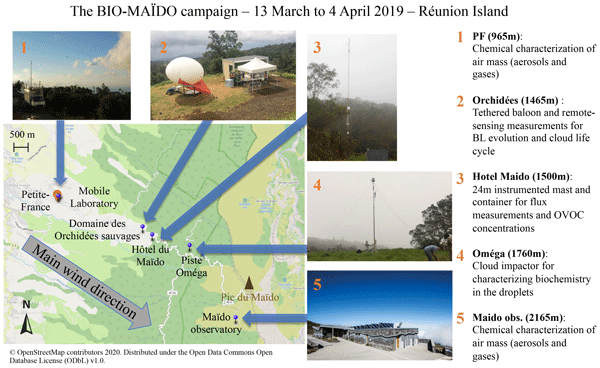
Maud Leriche, Pierre Tulet, Laurent Deguillaume, Frédéric Burnet, Aurélie Colomb, Agnès Borbon, Corinne Jambert, Valentin Duflot, Stéphan Houdier, Jean-Luc Jaffrezo, Mickaël Vaïtilingom, Pamela Dominutti, Manon Rocco, Camille Mouchel-Vallon, Samira El Gdachi, Maxence Brissy, Maroua Fathalli, Nicolas Maury, Bert Verreyken, Crist Amelynck, Niels Schoon, Valérie Gros, Jean-Marc Pichon, Mickael Ribeiro, Eric Pique, Emmanuel Leclerc, Thierry Bourrianne, Axel Roy, Eric Moulin, Joël Barrie, Jean-Marc Metzger, Guillaume Péris, Christian Guadagno, Chatrapatty Bhugwant, Jean-Mathieu Tibere, Arnaud Tournigand, Evelyn Freney, Karine Sellegri, Anne-Marie Delort, Pierre Amato, Muriel Joly, Jean-Luc Baray, Pascal Renard, Angelica Bianco, Anne Réchou, and Guillaume Payen
Atmos. Chem. Phys., 24, 4129–4155, https://doi.org/10.5194/acp-24-4129-2024, https://doi.org/10.5194/acp-24-4129-2024, 2024
Short summary
Short summary
Aerosol particles in the atmosphere play a key role in climate change and air pollution. A large number of aerosol particles are formed from the oxidation of volatile organic compounds (VOCs and secondary organic aerosols – SOA). An important field campaign was organized on Réunion in March–April 2019 to understand the formation of SOA in a tropical atmosphere mostly influenced by VOCs emitted by forest and in the presence of clouds. This work synthesizes the results of this campaign.
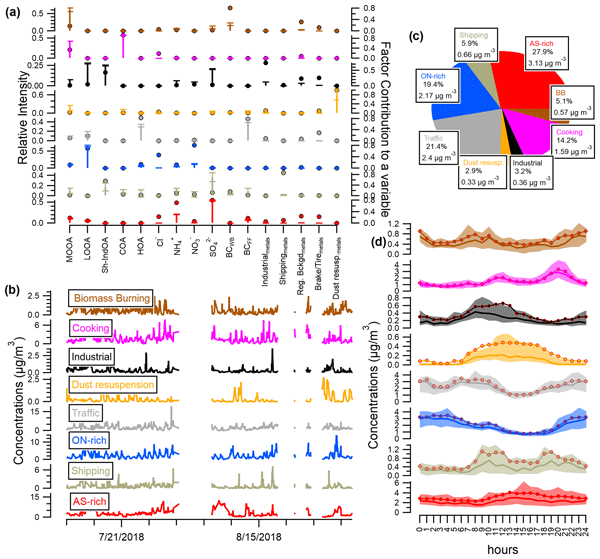
Julie Camman, Benjamin Chazeau, Nicolas Marchand, Amandine Durand, Grégory Gille, Ludovic Lanzi, Jean-Luc Jaffrezo, Henri Wortham, and Gaëlle Uzu
Atmos. Chem. Phys., 24, 3257–3278, https://doi.org/10.5194/acp-24-3257-2024, https://doi.org/10.5194/acp-24-3257-2024, 2024
Short summary
Short summary
Fine particle (PM1) pollution is a major health issue in the city of Marseille, which is subject to numerous pollution sources. Sampling carried out during the summer enabled a fine characterization of the PM1 sources and their oxidative potential, a promising new metric as a proxy for health impact. PM1 came mainly from combustion sources, secondary ammonium sulfate, and organic nitrate, while the oxidative potential of PM1 came from these sources and from resuspended dust in the atmosphere.
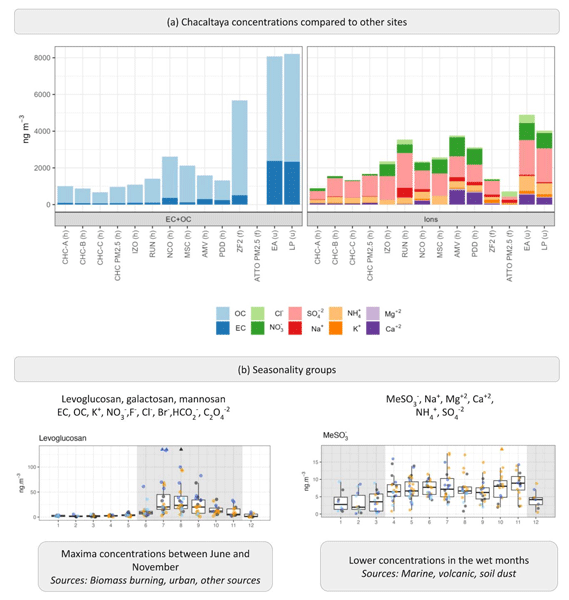
C. Isabel Moreno, Radovan Krejci, Jean-Luc Jaffrezo, Gaëlle Uzu, Andrés Alastuey, Marcos F. Andrade, Valeria Mardóñez, Alkuin Maximilian Koenig, Diego Aliaga, Claudia Mohr, Laura Ticona, Fernando Velarde, Luis Blacutt, Ricardo Forno, David N. Whiteman, Alfred Wiedensohler, Patrick Ginot, and Paolo Laj
Atmos. Chem. Phys., 24, 2837–2860, https://doi.org/10.5194/acp-24-2837-2024, https://doi.org/10.5194/acp-24-2837-2024, 2024
Short summary
Short summary
Aerosol chemical composition (ions, sugars, carbonaceous matter) from 2011 to 2020 was studied at Mt. Chacaltaya (5380 m a.s.l., Bolivian Andes). Minimum concentrations occur in the rainy season with maxima in the dry and transition seasons. The origins of the aerosol are located in a radius of hundreds of kilometers: nearby urban and rural areas, natural biogenic emissions, vegetation burning from Amazonia and Chaco, Pacific Ocean emissions, soil dust, and Peruvian volcanism.
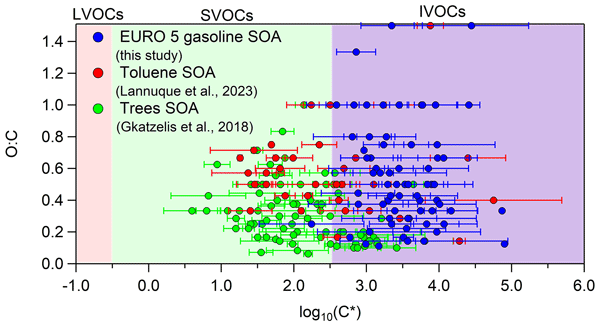
Evangelia Kostenidou, Baptiste Marques, Brice Temime-Roussel, Yao Liu, Boris Vansevenant, Karine Sartelet, and Barbara D'Anna
Atmos. Chem. Phys., 24, 2705–2729, https://doi.org/10.5194/acp-24-2705-2024, https://doi.org/10.5194/acp-24-2705-2024, 2024
Short summary
Short summary
Secondary organic aerosol (SOA) from gasoline vehicles can be a significant source of particulate matter in urban areas. Here the chemical composition of secondary volatile organic compounds and SOA produced by photo-oxidation of Euro 5 gasoline vehicle emissions was studied. The volatility of the SOA formed was calculated. Except for the temperature and the concentration of the aerosol, additional parameters may play a role in the gas-to-particle partitioning.
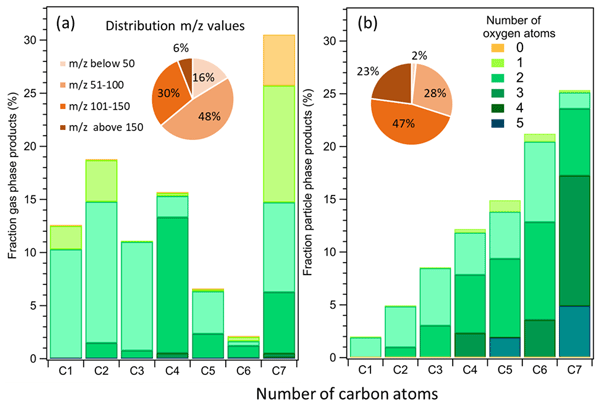
Victor Lannuque, Barbara D'Anna, Evangelia Kostenidou, Florian Couvidat, Alvaro Martinez-Valiente, Philipp Eichler, Armin Wisthaler, Markus Müller, Brice Temime-Roussel, Richard Valorso, and Karine Sartelet
Atmos. Chem. Phys., 23, 15537–15560, https://doi.org/10.5194/acp-23-15537-2023, https://doi.org/10.5194/acp-23-15537-2023, 2023
Short summary
Short summary
Large uncertainties remain in understanding secondary organic aerosol (SOA) formation from toluene oxidation. In this study, speciation measurements in gaseous and particulate phases were carried out, providing partitioning and volatility data on individual toluene SOA components at different temperatures. A new detailed oxidation mechanism was developed to improve modeled speciation, and effects of different processes involved in gas–particle partitioning at the molecular scale are explored.
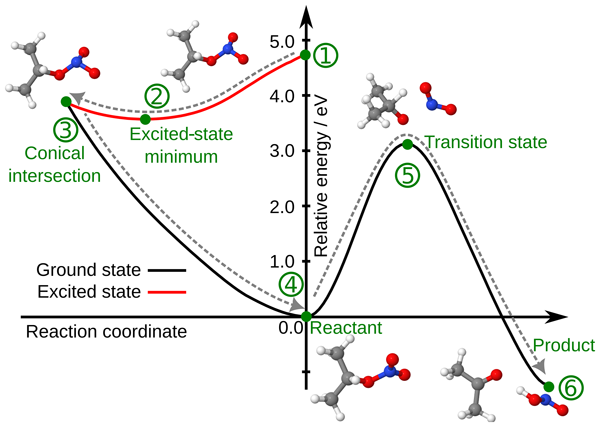
Juan Miguel González-Sánchez, Miquel Huix-Rotllant, Nicolas Brun, Julien Morin, Carine Demelas, Amandine Durand, Sylvain Ravier, Jean-Louis Clément, and Anne Monod
Atmos. Chem. Phys., 23, 15135–15147, https://doi.org/10.5194/acp-23-15135-2023, https://doi.org/10.5194/acp-23-15135-2023, 2023
Short summary
Short summary
Organic nitrates play a crucial role in air pollution, as they are nitrogen oxide (NOx) reservoirs. This work investigated the reaction products and mechanisms of their reactivity with light in the aqueous phase (cloud and fog conditions and wet aerosol). Our findings reveal that this chemistry leads to the formation of atmospheric nitrous acid (HONO).
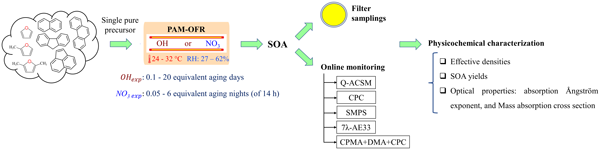
Abd El Rahman El Mais, Barbara D'Anna, Luka Drinovec, Andrew T. Lambe, Zhe Peng, Jean-Eudes Petit, Olivier Favez, Selim Aït-Aïssa, and Alexandre Albinet
Atmos. Chem. Phys., 23, 15077–15096, https://doi.org/10.5194/acp-23-15077-2023, https://doi.org/10.5194/acp-23-15077-2023, 2023
Short summary
Short summary
Polycyclic aromatic hydrocarbons (PAHS) and furans are key precursors of secondary organic aerosols (SOAs) related to biomass burning emissions. We evaluated and compared the formation yields, and the physical and light absorption properties, of laboratory-generated SOAs from the oxidation of such compounds for both, day- and nighttime reactivities. The results illustrate that PAHs are large SOA precursors and may contribute significantly to the biomass burning brown carbon in the atmosphere.
Jun Zhang, Kun Li, Tiantian Wang, Erlend Gammelsæter, Rico K. Y. Cheung, Mihnea Surdu, Sophie Bogler, Deepika Bhattu, Dongyu S. Wang, Tianqu Cui, Lu Qi, Houssni Lamkaddam, Imad El Haddad, Jay G. Slowik, Andre S. H. Prevot, and David M. Bell
Atmos. Chem. Phys., 23, 14561–14576, https://doi.org/10.5194/acp-23-14561-2023, https://doi.org/10.5194/acp-23-14561-2023, 2023
Short summary
Short summary
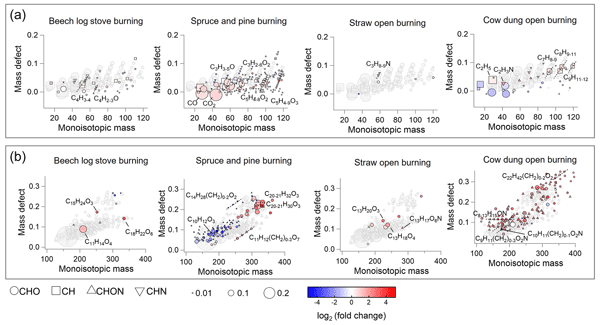
We conducted burning experiments to simulate various types of solid fuel combustion, including residential burning, wildfires, agricultural burning, cow dung, and plastic bag burning. The chemical composition of the particles was characterized using mass spectrometers, and new potential markers for different fuels were identified using statistical analysis. This work improves our understanding of emissions from solid fuel burning and offers support for refined source apportionment.
Máté Vörösmarty, Gaëlle Uzu, Jean-Luc Jaffrezo, Pamela Dominutti, Zsófia Kertész, Enikő Papp, and Imre Salma
Atmos. Chem. Phys., 23, 14255–14269, https://doi.org/10.5194/acp-23-14255-2023, https://doi.org/10.5194/acp-23-14255-2023, 2023
Short summary
Short summary
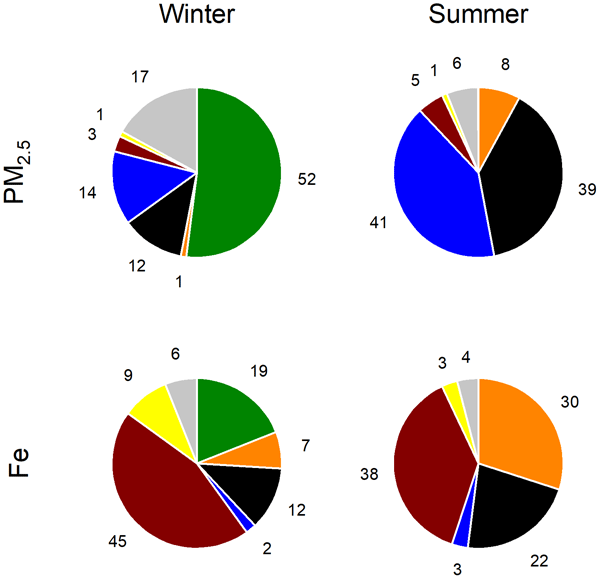
Poor air quality caused by high concentrations of particulate matter is one of the most severe public health concerns for humans worldwide. One of the most important biological mechanisms inducing adverse health effects is the oxidant–antioxidant imbalance. We showed that the oxidative stress changed substantially and in a complex manner with location and season. Biomass burning exhibited the dominant influence, while motor vehicles played an important role in the non-heating period.
Valeria Mardoñez, Marco Pandolfi, Lucille Joanna S. Borlaza, Jean-Luc Jaffrezo, Andrés Alastuey, Jean-Luc Besombes, Isabel Moreno R., Noemi Perez, Griša Močnik, Patrick Ginot, Radovan Krejci, Vladislav Chrastny, Alfred Wiedensohler, Paolo Laj, Marcos Andrade, and Gaëlle Uzu
Atmos. Chem. Phys., 23, 10325–10347, https://doi.org/10.5194/acp-23-10325-2023, https://doi.org/10.5194/acp-23-10325-2023, 2023
Short summary
Short summary
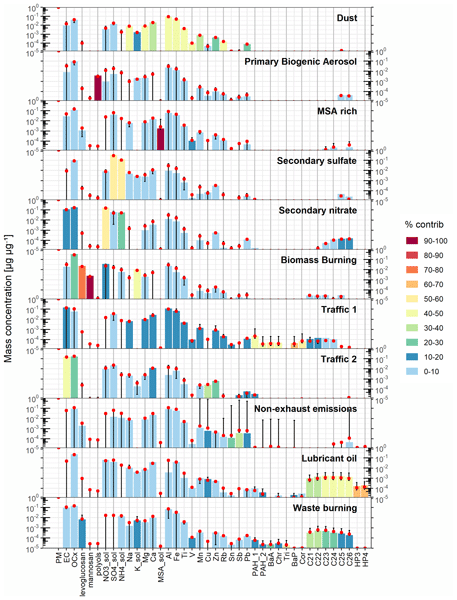
La Paz and El Alto are two fast-growing, high-altitude Bolivian cities forming the second-largest metropolitan area in the country. The sources of particulate matter (PM) in this conurbation were not previously investigated. This study identified 11 main sources of PM, of which dust and vehicular emissions stand out as the main ones. The influence of regional biomass combustion and local waste combustion was also observed, with the latter being a major source of hazardous compounds.
Yong Zhang, Jie Tian, Qiyuan Wang, Lu Qi, Manousos Ioannis Manousakas, Yuemei Han, Weikang Ran, Yele Sun, Huikun Liu, Renjian Zhang, Yunfei Wu, Tianqu Cui, Kaspar Rudolf Daellenbach, Jay Gates Slowik, André S. H. Prévôt, and Junji Cao
Atmos. Chem. Phys., 23, 9455–9471, https://doi.org/10.5194/acp-23-9455-2023, https://doi.org/10.5194/acp-23-9455-2023, 2023
Short summary
Short summary
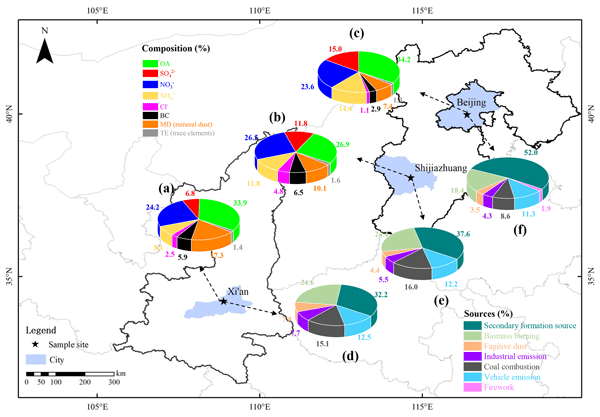
PM2.5 pollution still frequently occurs in northern China during winter, and it is necessary to figure out the causes of air pollution based on intensive real-time measurement. The findings elaborate the chemical characteristics and source contributions of PM2.5 in three pilot cities, reveal potential formation mechanisms of secondary aerosols, and highlight the importance of controlling biomass burning and inhibiting generation of secondary aerosol for air quality improvement.
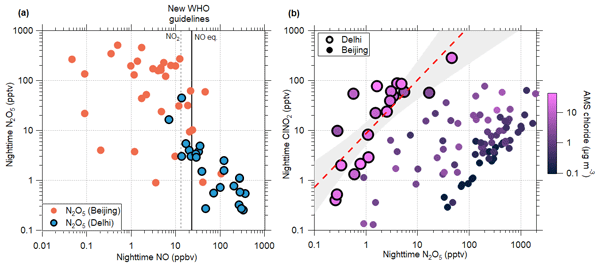
Sophie L. Haslett, David M. Bell, Varun Kumar, Jay G. Slowik, Dongyu S. Wang, Suneeti Mishra, Neeraj Rastogi, Atinderpal Singh, Dilip Ganguly, Joel Thornton, Feixue Zheng, Yuanyuan Li, Wei Nie, Yongchun Liu, Wei Ma, Chao Yan, Markku Kulmala, Kaspar R. Daellenbach, David Hadden, Urs Baltensperger, Andre S. H. Prevot, Sachchida N. Tripathi, and Claudia Mohr
Atmos. Chem. Phys., 23, 9023–9036, https://doi.org/10.5194/acp-23-9023-2023, https://doi.org/10.5194/acp-23-9023-2023, 2023
Short summary
Short summary
In Delhi, some aspects of daytime and nighttime atmospheric chemistry are inverted, and parodoxically, vehicle emissions may be limiting other forms of particle production. This is because the nighttime emissions of nitrogen oxide (NO) by traffic and biomass burning prevent some chemical processes that would otherwise create even more particles and worsen the urban haze.
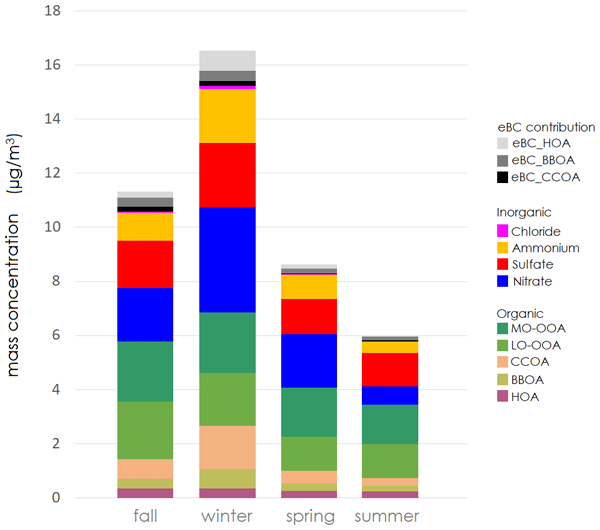
Samira Atabakhsh, Laurent Poulain, Gang Chen, Francesco Canonaco, André S. H. Prévôt, Mira Pöhlker, Alfred Wiedensohler, and Hartmut Herrmann
Atmos. Chem. Phys., 23, 6963–6988, https://doi.org/10.5194/acp-23-6963-2023, https://doi.org/10.5194/acp-23-6963-2023, 2023
Short summary
Short summary
The study focuses on the aerosol chemical variations found in the rural-background station of Melpitz based on ACSM and MAAP measurements. Source apportionment on both organic aerosol (OA) and black carbon (eBC) was performed, and source seasonality was also linked to air mass trajectories. Overall, three anthropogenic sources were identified in OA and eBC plus two additional aged OA. Our results demonstrate the influence of transported coal-combustion-related OA even during summer time.
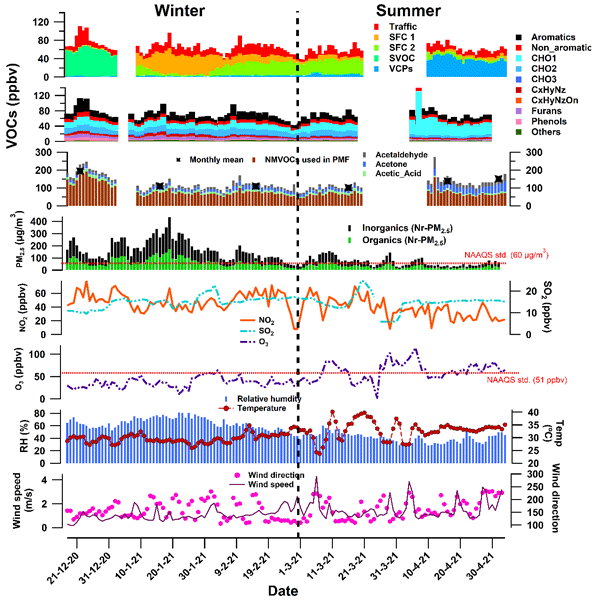
Vaishali Jain, Nidhi Tripathi, Sachchida N. Tripathi, Mansi Gupta, Lokesh K. Sahu, Vishnu Murari, Sreenivas Gaddamidi, Ashutosh K. Shukla, and Andre S. H. Prevot
Atmos. Chem. Phys., 23, 3383–3408, https://doi.org/10.5194/acp-23-3383-2023, https://doi.org/10.5194/acp-23-3383-2023, 2023
Short summary
Short summary
This research chemically characterises 173 different NMVOCs (non-methane volatile organic compounds) measured in real time for three seasons in the city of the central Indo-Gangetic basin of India, Lucknow. Receptor modelling is used to analyse probable sources of NMVOCs and their crucial role in forming ozone and secondary organic aerosols. It is observed that vehicular emissions and solid fuel combustion are the highest contributors to the emission of primary and secondary NMVOCs.
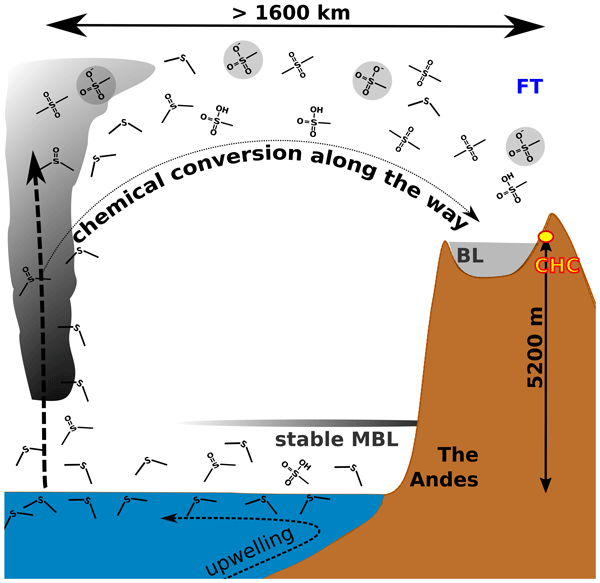
Wiebke Scholz, Jiali Shen, Diego Aliaga, Cheng Wu, Samara Carbone, Isabel Moreno, Qiaozhi Zha, Wei Huang, Liine Heikkinen, Jean Luc Jaffrezo, Gaelle Uzu, Eva Partoll, Markus Leiminger, Fernando Velarde, Paolo Laj, Patrick Ginot, Paolo Artaxo, Alfred Wiedensohler, Markku Kulmala, Claudia Mohr, Marcos Andrade, Victoria Sinclair, Federico Bianchi, and Armin Hansel
Atmos. Chem. Phys., 23, 895–920, https://doi.org/10.5194/acp-23-895-2023, https://doi.org/10.5194/acp-23-895-2023, 2023
Short summary
Short summary
Dimethyl sulfide (DMS), emitted from the ocean, is the most abundant biogenic sulfur emission into the atmosphere. OH radicals, among others, can oxidize DMS to sulfuric and methanesulfonic acid, which are relevant for aerosol formation. We quantified DMS and nearly all DMS oxidation products with novel mass spectrometric instruments for gas and particle phase at the high mountain station Chacaltaya (5240 m a.s.l.) in the Bolivian Andes in free tropospheric air after long-range transport.
Tingting Feng, Yingkun Wang, Weiwei Hu, Ming Zhu, Wei Song, Wei Chen, Yanyan Sang, Zheng Fang, Wei Deng, Hua Fang, Xu Yu, Cheng Wu, Bin Yuan, Shan Huang, Min Shao, Xiaofeng Huang, Lingyan He, Young Ro Lee, Lewis Gregory Huey, Francesco Canonaco, Andre S. H. Prevot, and Xinming Wang
Atmos. Chem. Phys., 23, 611–636, https://doi.org/10.5194/acp-23-611-2023, https://doi.org/10.5194/acp-23-611-2023, 2023
Short summary
Short summary
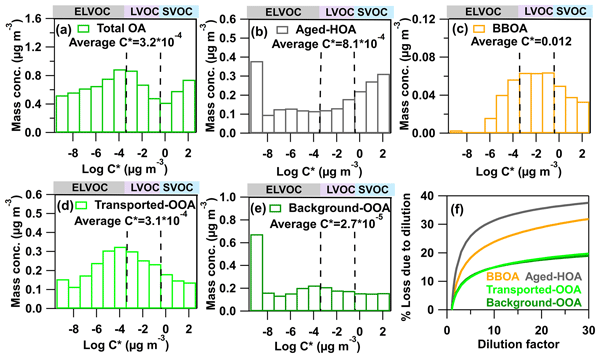
To investigate the impact of aging processes on organic aerosols (OA), we conducted a comprehensive field study at a continental remote site using an on-line mass spectrometer. The results show that OA in the Chinese outflows were strongly influenced by upwind anthropogenic emissions. The aging processes can significantly decrease the OA volatility and result in a varied viscosity of OA under different circumstances, signifying the complex physiochemical properties of OA in aged plumes.
Yandong Tong, Lu Qi, Giulia Stefenelli, Dongyu Simon Wang, Francesco Canonaco, Urs Baltensperger, André Stephan Henry Prévôt, and Jay Gates Slowik
Atmos. Meas. Tech., 15, 7265–7291, https://doi.org/10.5194/amt-15-7265-2022, https://doi.org/10.5194/amt-15-7265-2022, 2022
Short summary
Short summary
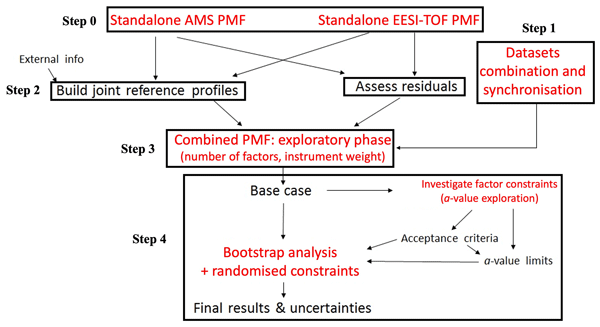
We present a method for positive matrix factorisation (PMF) analysis on a single dataset that includes measurements from both EESI-TOF and AMS in Zurich, Switzerland. For the first time, we resolved and quantified secondary organic aerosol (SOA) sources. Meanwhile, we also determined the retrieved EESI-TOF factor-dependent sensitivities. This method provides a framework for exploiting semi-quantitative, high-resolution instrumentation for quantitative source apportionment.
David M. Bell, Cheng Wu, Amelie Bertrand, Emelie Graham, Janne Schoonbaert, Stamatios Giannoukos, Urs Baltensperger, Andre S. H. Prevot, Ilona Riipinen, Imad El Haddad, and Claudia Mohr
Atmos. Chem. Phys., 22, 13167–13182, https://doi.org/10.5194/acp-22-13167-2022, https://doi.org/10.5194/acp-22-13167-2022, 2022
Short summary
Short summary
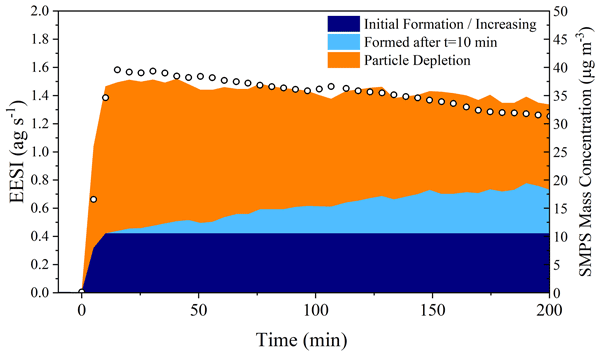
A series of studies designed to investigate the evolution of organic aerosol were performed in an atmospheric simulation chamber, using a common oxidant found at night (NO3). The chemical composition steadily changed from its initial composition via different chemical reactions that were taking place inside of the aerosol particle. These results show that the composition of organic aerosol steadily changes during its lifetime in the atmosphere.
Marta Via, Gang Chen, Francesco Canonaco, Kaspar R. Daellenbach, Benjamin Chazeau, Hasna Chebaicheb, Jianhui Jiang, Hannes Keernik, Chunshui Lin, Nicolas Marchand, Cristina Marin, Colin O'Dowd, Jurgita Ovadnevaite, Jean-Eudes Petit, Michael Pikridas, Véronique Riffault, Jean Sciare, Jay G. Slowik, Leïla Simon, Jeni Vasilescu, Yunjiang Zhang, Olivier Favez, André S. H. Prévôt, Andrés Alastuey, and María Cruz Minguillón
Atmos. Meas. Tech., 15, 5479–5495, https://doi.org/10.5194/amt-15-5479-2022, https://doi.org/10.5194/amt-15-5479-2022, 2022
Short summary
Short summary
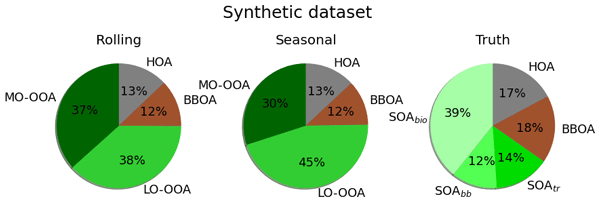
This work presents the differences resulting from two techniques (rolling and seasonal) of the positive matrix factorisation model that can be run for organic aerosol source apportionment. The current state of the art suggests that the rolling technique is more accurate, but no proof of its effectiveness has been provided yet. This paper tackles this issue in the context of a synthetic dataset and a multi-site real-world comparison.
Zhuang Jiang, Joel Savarino, Becky Alexander, Joseph Erbland, Jean-Luc Jaffrezo, and Lei Geng
The Cryosphere, 16, 2709–2724, https://doi.org/10.5194/tc-16-2709-2022, https://doi.org/10.5194/tc-16-2709-2022, 2022
Short summary
Short summary
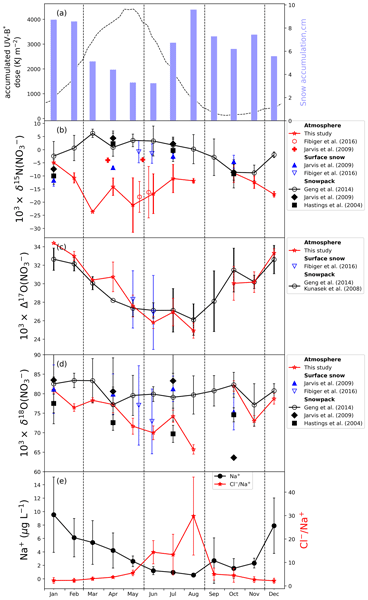
A record of year-round atmospheric nitrate isotopic composition along with snow nitrate isotopic data from Summit, Greenland, revealed apparent enrichments in nitrogen isotopes in snow nitrate compared to atmospheric nitrate, in addition to a relatively smaller degree of changes in oxygen isotopes. The results suggest that at this site post-depositional processing takes effect, which should be taken into account when interpreting ice-core nitrate isotope records.
Lucille Joanna Borlaza, Samuël Weber, Anouk Marsal, Gaëlle Uzu, Véronique Jacob, Jean-Luc Besombes, Mélodie Chatain, Sébastien Conil, and Jean-Luc Jaffrezo
Atmos. Chem. Phys., 22, 8701–8723, https://doi.org/10.5194/acp-22-8701-2022, https://doi.org/10.5194/acp-22-8701-2022, 2022
Short summary
Short summary
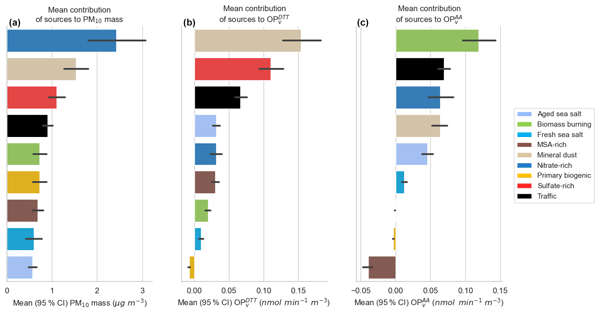
A 9-year dataset of the chemical and oxidative potential (OP) of PM10 was investigated at a rural background site. Extensive source apportionment led to identification of differences in source impacts between mass and OP, underlining the importance of PM redox activity when considering health effects. The influence of mixing and ageing processes was also tackled. Traffic contributions have decreased here over the years, attributed to regulations limiting vehicular emissions in bigger cities.
Chuan Ping Lee, Mihnea Surdu, David M. Bell, Josef Dommen, Mao Xiao, Xueqin Zhou, Andrea Baccarini, Stamatios Giannoukos, Günther Wehrle, Pascal André Schneider, Andre S. H. Prevot, Jay G. Slowik, Houssni Lamkaddam, Dongyu Wang, Urs Baltensperger, and Imad El Haddad
Atmos. Meas. Tech., 15, 3747–3760, https://doi.org/10.5194/amt-15-3747-2022, https://doi.org/10.5194/amt-15-3747-2022, 2022
Short summary
Short summary
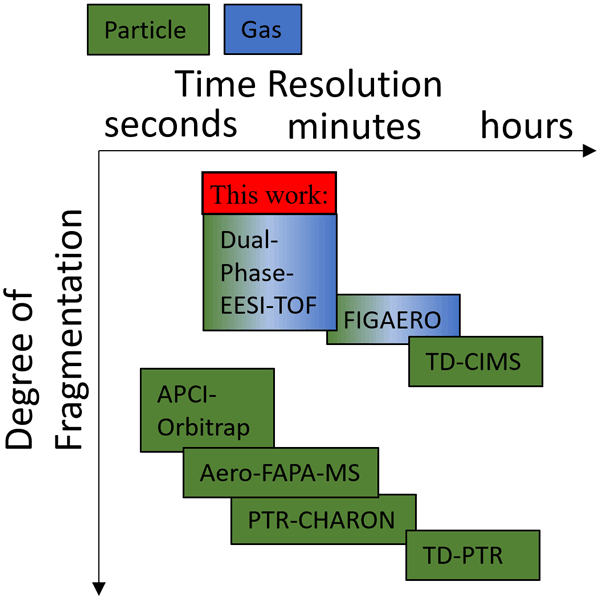
Real-time detection of both the gas and particle phase is needed to elucidate the sources and chemical reaction pathways of organic vapors and particulate matter. The Dual-EESI was developed to measure gas- and particle-phase species to provide new insights into aerosol sources or formation mechanisms. After characterizing the relative gas and particle response factors of EESI via organic aerosol uptake experiments, the Dual-EESI is more sensitive toward gas-phase analyes.

Varun Kumar, Stamatios Giannoukos, Sophie L. Haslett, Yandong Tong, Atinderpal Singh, Amelie Bertrand, Chuan Ping Lee, Dongyu S. Wang, Deepika Bhattu, Giulia Stefenelli, Jay S. Dave, Joseph V. Puthussery, Lu Qi, Pawan Vats, Pragati Rai, Roberto Casotto, Rangu Satish, Suneeti Mishra, Veronika Pospisilova, Claudia Mohr, David M. Bell, Dilip Ganguly, Vishal Verma, Neeraj Rastogi, Urs Baltensperger, Sachchida N. Tripathi, André S. H. Prévôt, and Jay G. Slowik
Atmos. Chem. Phys., 22, 7739–7761, https://doi.org/10.5194/acp-22-7739-2022, https://doi.org/10.5194/acp-22-7739-2022, 2022
Short summary
Short summary
Here we present source apportionment results from the first field deployment in Delhi of an extractive electrospray ionization time-of-flight mass spectrometer (EESI-TOF). The EESI-TOF is a recently developed instrument capable of providing uniquely detailed online chemical characterization of organic aerosol (OA), in particular the secondary OA (SOA) fraction. Here, we are able to apportion not only primary OA but also SOA to specific sources, which is performed for the first time in Delhi.
Stuart K. Grange, Gaëlle Uzu, Samuël Weber, Jean-Luc Jaffrezo, and Christoph Hueglin
Atmos. Chem. Phys., 22, 7029–7050, https://doi.org/10.5194/acp-22-7029-2022, https://doi.org/10.5194/acp-22-7029-2022, 2022
Short summary
Short summary
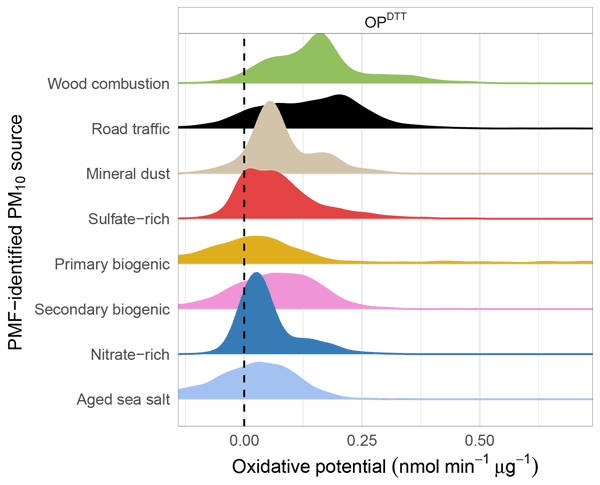
Oxidative potential (OP), a biologically relevant metric for particulate matter (PM), was linked to PM10 and PM2.5 sources and constituents across Switzerland between 2018 and 2019. Wood burning and non-exhaust traffic emissions were identified as key processes that led to enhanced OP. Therefore, the make-up of the PM mix was very important for OP. The results highlight the importance of the management of wood burning and non-exhaust emissions to reduce OP, and presumably biological harm.
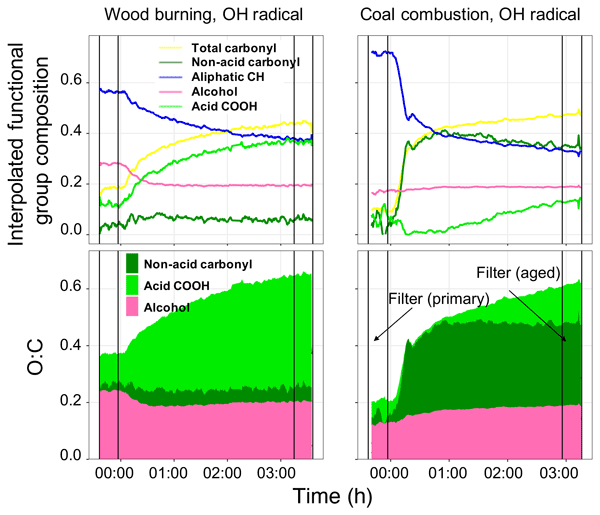
Amir Yazdani, Nikunj Dudani, Satoshi Takahama, Amelie Bertrand, André S. H. Prévôt, Imad El Haddad, and Ann M. Dillner
Atmos. Meas. Tech., 15, 2857–2874, https://doi.org/10.5194/amt-15-2857-2022, https://doi.org/10.5194/amt-15-2857-2022, 2022
Short summary
Short summary
While the aerosol mass spectrometer provides high-time-resolution characterization of the overall extent of oxidation, the extensive fragmentation of molecules and specificity of the technique have posed challenges toward deeper understanding of molecular structures in aerosols. This work demonstrates how functional group information can be extracted from a suite of commonly measured mass fragments using collocated infrared spectroscopy measurements.
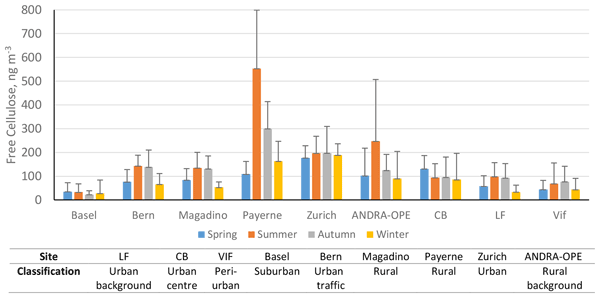
Adam Brighty, Véronique Jacob, Gaëlle Uzu, Lucille Borlaza, Sébastien Conil, Christoph Hueglin, Stuart K. Grange, Olivier Favez, Cécile Trébuchon, and Jean-Luc Jaffrezo
Atmos. Chem. Phys., 22, 6021–6043, https://doi.org/10.5194/acp-22-6021-2022, https://doi.org/10.5194/acp-22-6021-2022, 2022
Short summary
Short summary
With an revised analytical method and long-term sampling strategy, we have been able to elucidate much more information about atmospheric plant debris, a poorly understood class of particulate matter. We found weaker seasonal patterns at urban locations compared to rural locations and significant interannual variability in concentrations between previous years and 2020, during the COVID-19 pandemic. This suggests a possible man-made influence on plant debris concentration and source strength.
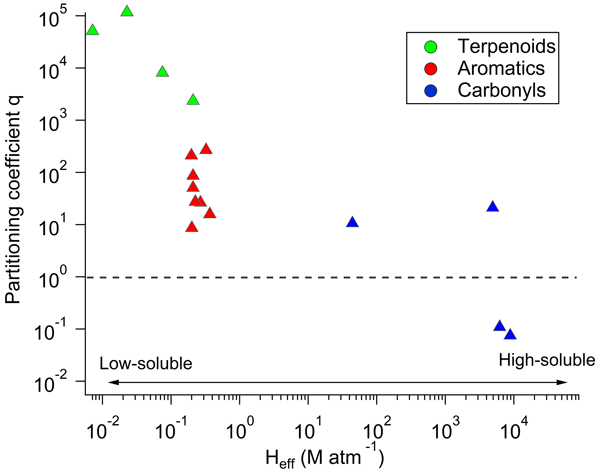
Pamela A. Dominutti, Pascal Renard, Mickaël Vaïtilingom, Angelica Bianco, Jean-Luc Baray, Agnès Borbon, Thierry Bourianne, Frédéric Burnet, Aurélie Colomb, Anne-Marie Delort, Valentin Duflot, Stephan Houdier, Jean-Luc Jaffrezo, Muriel Joly, Martin Leremboure, Jean-Marc Metzger, Jean-Marc Pichon, Mickaël Ribeiro, Manon Rocco, Pierre Tulet, Anthony Vella, Maud Leriche, and Laurent Deguillaume
Atmos. Chem. Phys., 22, 505–533, https://doi.org/10.5194/acp-22-505-2022, https://doi.org/10.5194/acp-22-505-2022, 2022
Short summary
Short summary
We present here the results obtained during an intensive field campaign conducted in March to April 2019 in Reunion. Our study integrates a comprehensive chemical and microphysical characterization of cloud water. Our investigations reveal that air mass history and cloud microphysical properties do not fully explain the variability observed in their chemical composition. This highlights the complexity of emission sources, multiphasic exchanges, and transformations in clouds.
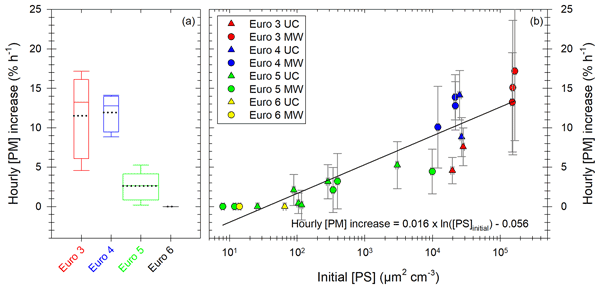
Boris Vansevenant, Cédric Louis, Corinne Ferronato, Ludovic Fine, Patrick Tassel, Pascal Perret, Evangelia Kostenidou, Brice Temime-Roussel, Barbara D'Anna, Karine Sartelet, Véronique Cerezo, and Yao Liu
Atmos. Meas. Tech., 14, 7627–7655, https://doi.org/10.5194/amt-14-7627-2021, https://doi.org/10.5194/amt-14-7627-2021, 2021
Short summary
Short summary
A new method was developed to correct wall losses of particles on Teflon walls using a new environmental chamber. It was applied to experiments with six diesel vehicles (Euro 3 to 6), tested on a chassis dynamometer. Emissions of particles and precursors were obtained under urban and motorway conditions. The chamber experiments help understand the role of physical processes in diesel particle evolutions in the dark. These results can be applied to situations such as tunnels or winter rush hours.
Dongyu S. Wang, Chuan Ping Lee, Jordan E. Krechmer, Francesca Majluf, Yandong Tong, Manjula R. Canagaratna, Julia Schmale, André S. H. Prévôt, Urs Baltensperger, Josef Dommen, Imad El Haddad, Jay G. Slowik, and David M. Bell
Atmos. Meas. Tech., 14, 6955–6972, https://doi.org/10.5194/amt-14-6955-2021, https://doi.org/10.5194/amt-14-6955-2021, 2021
Short summary
Short summary
To understand the sources and fate of particulate matter in the atmosphere, the ability to quantitatively describe its chemical composition is essential. In this work, we developed a calibration method for a state-of-the-art measurement technique without the need for chemical standards. Statistical analyses identified the driving factors behind instrument sensitivity variability towards individual components of particulate matter.
Cited articles
Ahern, A. T., Goldberger, L., Jahl, L., Thornton, J., and Sullivan, R. C.: Production of N2 O5 and ClNO2 through Nocturnal Processing of Biomass-Burning Aerosol, Environ. Sci. Technol., 52, 550–559, https://doi.org/10.1021/acs.est.7b04386, 2018.
Alastuey, A., Querol, X., Aas, W., Lucarelli, F., Pérez, N., Moreno, T., Cavalli, F., Areskoug, H., Balan, V., Catrambone, M., Ceburnis, D., Cerro, J. C., Conil, S., Gevorgyan, L., Hueglin, C., Imre, K., Jaffrezo, J.-L., Leeson, S. R., Mihalopoulos, N., Mitosinkova, M., O'Dowd, C. D., Pey, J., Putaud, J.-P., Riffault, V., Ripoll, A., Sciare, J., Sellegri, K., Spindler, G., and Yttri, K. E.: Geochemistry of PM10 over Europe during the EMEP intensive measurement periods in summer 2012 and winter 2013, Atmos. Chem. Phys., 16, 6107–6129, https://doi.org/10.5194/acp-16-6107-2016, 2016.
Almeida, S. M., Lage, J., Fernández, B., Garcia, S., Reis, M. A., and Chaves, P. C.: Chemical characterization of atmospheric particles and source apportionment in the vicinity of a steelmaking industry, Sci. Total Environ., 521–522, 411–420, https://doi.org/10.1016/j.scitotenv.2015.03.112, 2015.
Almeida, S. M., Manousakas, M., Diapouli, E., Kertesz, Z., Samek, L., Hristova, E., Šega, K., Alvarez, R. P., Belis, C. A., and Eleftheriadis, K.: Ambient particulate matter source apportionment using receptor modelling in European and Central Asia urban areas, Environ. Pollut., 266, 115199, https://doi.org/10.1016/j.envpol.2020.115199, 2020.
Belis, C. A., Cancelinha, J., Duane, M., Forcina, V., Pedroni, V., Passarella, R., Tanet, G., Douglas, K., Piazzalunga, A., Bolzacchini, E., Sangiorgi, G., Perrone, M.-G., Ferrero, L., Fermo, P., and Larsen, B. R.: Sources for PM air pollution in the Po Plain, Italy: I. Critical comparison of methods for estimating biomass burning contributions to benzo(a)pyrene, Atmos. Environ., 45, 7266–7275, https://doi.org/10.1016/j.atmosenv.2011.08.061, 2011.
Belis, C. A., Pernigotti, D., Karagulian, F., Pirovano, G., Larsen, B. R., Gerboles, M., and Hopke, P. K.: A new methodology to assess the performance and uncertainty of source apportionment models in intercomparison exercises, Atmos. Environ., 119, 35–44, https://doi.org/10.1016/j.atmosenv.2015.08.002, 2015.
Borlaza, L. J. S., Weber, S., Uzu, G., Jacob, V., Cañete, T., Micallef, S., Trébuchon, C., Slama, R., Favez, O., and Jaffrezo, J.-L.: Disparities in particulate matter (PM10) origins and oxidative potential at a city scale (Grenoble, France) – Part 1: Source apportionment at three neighbouring sites, Atmos. Chem. Phys., 21, 5415–5437, https://doi.org/10.5194/acp-21-5415-2021, 2021.
Bougiatioti, A., Stavroulas, I., Kostenidou, E., Zarmpas, P., Theodosi, C., Kouvarakis, G., Canonaco, F., Prévôt, A. S. H., Nenes, A., Pandis, S. N., and Mihalopoulos, N.: Processing of biomass-burning aerosol in the eastern Mediterranean during summertime, Atmos. Chem. Phys., 14, 4793–4807, https://doi.org/10.5194/acp-14-4793-2014, 2014.
Bourtsoukidis, E., Pozzer, A., Williams, J., Makowski, D., Peñuelas, J., Matthaios, V. N., Lazoglou, G., Yañez-Serrano, A. M., Lelieveld, J., Ciais, P., Vrekoussis, M., Daskalakis, N., and Sciare, J.: High temperature sensitivity of monoterpene emissions from global vegetation, Communications Earth & Environment, 5, 23, https://doi.org/10.1038/s43247-023-01175-9, 2024.
Bozzetti, C., El Haddad, I., Salameh, D., Daellenbach, K. R., Fermo, P., Gonzalez, R., Minguillón, M. C., Iinuma, Y., Poulain, L., Elser, M., Müller, E., Slowik, J. G., Jaffrezo, J.-L., Baltensperger, U., Marchand, N., and Prévôt, A. S. H.: Organic aerosol source apportionment by offline-AMS over a full year in Marseille, Atmos. Chem. Phys., 17, 8247–8268, https://doi.org/10.5194/acp-17-8247-2017, 2017.
Brezins, M.: MRS-LCP and FOS 2023 Rolling PMF Xact Results _ Brezins et al., 2026, Version v1, Zenodo [data set], https://doi.org/10.5281/zenodo.18374331, 2026a.
Brezins, M.: PD-SID and CD calculation for PMF factor profiles from Brezins et al. (2026, in prep.), Version v1, Zenodo [code], https://doi.org/10.5281/zenodo.18374603, 2026b.
Brezins, M., Chazeau, B., Marchand, N., Gille, G., Soubise, J., Favez, O., Jaffrezo, J. L., Uzu, G., and D'Anna, B.: Evolution of the V/Ni Ratio in Response to IMO Regulation-Induced Fuel Shifts and Scrubber Use, Environ. Sci. Tech. Let., 13, https://doi.org/10.1021/acs.estlett.5c01199, 2026.
Bukowiecki, N., Lienemann, P., Hill, M., Furger, M., Richard, A., Amato, F., Prévôt, A. S. H., Baltensperger, U., Buchmann, B., and Gehrig, R.: PM10 emission factors for non-exhaust particles generated by road traffic in an urban street canyon and along a freeway in Switzerland, Atmos. Environ., 44, 2330–2340, https://doi.org/10.1016/j.atmosenv.2010.03.039, 2010.
Cadeo, L., Biffi, B., Chazeau, B., Colombi, C., Cosenza, R., Cuccia, E., Manousakas, M.-I., Daellenbach, K. R., Prévôt, A. S. H., and Vecchi, R.: Intercomparison of online and offline XRF spectrometers for determining the PM10 elemental composition of ambient aerosol, Atmos. Meas. Tech., 18, 6435–6448, https://doi.org/10.5194/amt-18-6435-2025, 2025.
Camman, J., Chazeau, B., Marchand, N., Durand, A., Gille, G., Lanzi, L., Jaffrezo, J.-L., Wortham, H., and Uzu, G.: Oxidative potential apportionment of atmospheric PM1: a new approach combining high-sensitive online analysers for chemical composition and offline OP measurement technique, Atmos. Chem. Phys., 24, 3257–3278, https://doi.org/10.5194/acp-24-3257-2024, 2024.
Canonaco, F., Crippa, M., Slowik, J. G., Baltensperger, U., and Prévôt, A. S. H.: SoFi, an IGOR-based interface for the efficient use of the generalized multilinear engine (ME-2) for the source apportionment: ME-2 application to aerosol mass spectrometer data, Atmos. Meas. Tech., 6, 3649–3661, https://doi.org/10.5194/amt-6-3649-2013, 2013.
Canonaco, F., Tobler, A., Chen, G., Sosedova, Y., Slowik, J. G., Bozzetti, C., Daellenbach, K. R., El Haddad, I., Crippa, M., Huang, R.-J., Furger, M., Baltensperger, U., and Prévôt, A. S. H.: A new method for long-term source apportionment with time-dependent factor profiles and uncertainty assessment using SoFi Pro: application to 1 year of organic aerosol data, Atmos. Meas. Tech., 14, 923–943, https://doi.org/10.5194/amt-14-923-2021, 2021.
Charron, A., Polo-Rehn, L., Besombes, J.-L., Golly, B., Buisson, C., Chanut, H., Marchand, N., Guillaud, G., and Jaffrezo, J.-L.: Identification and quantification of particulate tracers of exhaust and non-exhaust vehicle emissions, Atmos. Chem. Phys., 19, 5187–5207, https://doi.org/10.5194/acp-19-5187-2019, 2019.
Chazeau, B., Temime-Roussel, B., Gille, G., Mesbah, B., D'Anna, B., Wortham, H., and Marchand, N.: Measurement report: Fourteen months of real-time characterisation of the submicronic aerosol and its atmospheric dynamics at the Marseille–Longchamp supersite, Atmos. Chem. Phys., 21, 7293–7319, https://doi.org/10.5194/acp-21-7293-2021, 2021.
Chazeau, B., El Haddad, I., Canonaco, F., Temime-Roussel, B., D'Anna, B., Gille, G., Mesbah, B., Prévôt, A. S. H., Wortham, H., and Marchand, N.: Organic aerosol source apportionment by using rolling positive matrix factorization: Application to a Mediterranean coastal city, Atmospheric Environment: X, 14, 100176, https://doi.org/10.1016/j.aeaoa.2022.100176, 2022.
Chebaicheb, H., F. De Brito, J., Chen, G., Tison, E., Marchand, C., Prévôt, A. S. H., Favez, O., and Riffault, V.: Investigation of four-year chemical composition and organic aerosol sources of submicron particles at the ATOLL site in northern France, Environ. Pollut., 330, 121805, https://doi.org/10.1016/j.envpol.2023.121805, 2023.
Chen, G., Sosedova, Y., Canonaco, F., Fröhlich, R., Tobler, A., Vlachou, A., Daellenbach, K. R., Bozzetti, C., Hueglin, C., Graf, P., Baltensperger, U., Slowik, J. G., El Haddad, I., and Prévôt, A. S. H.: Time-dependent source apportionment of submicron organic aerosol for a rural site in an alpine valley using a rolling positive matrix factorisation (PMF) window, Atmos. Chem. Phys., 21, 15081–15101, https://doi.org/10.5194/acp-21-15081-2021, 2021.
Chen, G., Canonaco, F., Tobler, A., Aas, W., Alastuey, A., Allan, J., Atabakhsh, S., Aurela, M., Baltensperger, U., Bougiatioti, A., De Brito, J. F., Ceburnis, D., Chazeau, B., Chebaicheb, H., Daellenbach, K. R., Ehn, M., El Haddad, I., Eleftheriadis, K., Favez, O., Flentje, H., Font, A., Fossum, K., Freney, E., Gini, M., Green, D. C., Heikkinen, L., Herrmann, H., Kalogridis, A.-C., Keernik, H., Lhotka, R., Lin, C., Lunder, C., Maasikmets, M., Manousakas, M. I., Marchand, N., Marin, C., Marmureanu, L., Mihalopoulos, N., Močnik, G., Nęcki, J., O'Dowd, C., Ovadnevaite, J., Peter, T., Petit, J.-E., Pikridas, M., Matthew Platt, S., Pokorná, P., Poulain, L., Priestman, M., Riffault, V., Rinaldi, M., Różański, K., Schwarz, J., Sciare, J., Simon, L., Skiba, A., Slowik, J. G., Sosedova, Y., Stavroulas, I., Styszko, K., Teinemaa, E., Timonen, H., Tremper, A., Vasilescu, J., Via, M., Vodička, P., Wiedensohler, A., Zografou, O., Cruz Minguillón, M., and Prévôt, A. S. H.: European aerosol phenomenology – 8: Harmonised source apportionment of organic aerosol using 22 Year-long ACSM/AMS datasets, Environ. Int., 166, 107325, https://doi.org/10.1016/j.envint.2022.107325, 2022a.
Chen, G., Canonaco, F., Slowik, J. G., Daellenbach, K. R., Tobler, A., Petit, J.-E., Favez, O., Stavroulas, I., Mihalopoulos, N., Gerasopoulos, E., El Haddad, I., Baltensperger, U., and Prévôt, A. S. H.: Real-Time Source Apportionment of Organic Aerosols in Three European Cities, Environ. Sci. Technol., 56, 15290–15297, https://doi.org/10.1021/acs.est.2c02509, 2022b.
Chevet, E., Boiron, O., and Anselmet, F.: Modeling of air pollution due to marine traffic in Marseille, Atmos. Environ., 329, 120542, https://doi.org/10.1016/j.atmosenv.2024.120542, 2024.
Clements, N., Eav, J., Xie, M., Hannigan, M. P., Miller, S. L., Navidi, W., Peel, J. L., Schauer, J. J., Shafer, M. M., and Milford, J. B.: Concentrations and source insights for trace elements in fine and coarse particulate matter, Atmos. Environ., 89, 373–381, https://doi.org/10.1016/j.atmosenv.2014.01.011, 2014.
Currie, L. A.: Detection and quantification in X-ray fluorescence spectrometry, in: X-ray fluorescence analysis of environmental samples, edited by: Dzubay, T. G., Ann Arbor Science Publishers, Ann Arbor, MI, USA, ISBN 0250401347, 1977.
Dall'Osto, M., Querol, X., Amato, F., Karanasiou, A., Lucarelli, F., Nava, S., Calzolai, G., and Chiari, M.: Hourly elemental concentrations in PM2.5 aerosols sampled simultaneously at urban background and road site during SAPUSS – diurnal variations and PMF receptor modelling, Atmos. Chem. Phys., 13, 4375–4392, https://doi.org/10.5194/acp-13-4375-2013, 2013.
Dockery, D. W., Pope 3rd, C. A., Xu, X., Spengler, J. D., Ware, J. H., Fay, M. E., Ferris Jr., B. G., and Speizer, F. E.: An association between air pollution and mortality in six U.S. cities, New Engl. J. Med., 329, 1753–1759, https://doi.org/10.1056/NEJM199312093292401, 1993.
Ding, X., Li, Q., Wu, D., Huo, Y., Liang, Y., Wang, H., Zhang, J., Wang, S., Wang, T., Ye, X., and Chen, J.: Gaseous and Particulate Chlorine Emissions From Typical Iron and Steel Industry in China, J. Geophys. Res.-Atmos., 125, e2020JD032729, https://doi.org/10.1029/2020JD032729, 2020.
Drinovec, L., Močnik, G., Zotter, P., Prévôt, A. S. H., Ruckstuhl, C., Coz, E., Rupakheti, M., Sciare, J., Müller, T., Wiedensohler, A., and Hansen, A. D. A.: The ”dual-spot” Aethalometer: an improved measurement of aerosol black carbon with real-time loading compensation, Atmos. Meas. Tech., 8, 1965–1979, https://doi.org/10.5194/amt-8-1965-2015, 2015.
Drobinski, P., Saïd, F., Ancellet, G., Arteta, J., Augustin, P., Bastin, S., Brut, A., Caccia, J. L., Campistron, B., Cautenet, S., Colette, A., Coll, I., Corsmeier, U., Cros, B., Dabas, A., Delbarre, H., Dufour, A., Durand, P., Guénard, V., Hasel, M., Kalthoff, N., Kottmeier, C., Lasry, F., Lemonsu, A., Lohou, F., Masson, V., Menut, L., Moppert, C., Peuch, V. H., Puygrenier, V., Reitebuch, O., and Vautard, R.: Regional transport and dilution during high-pollution episodes in southern France: Summary of findings from the Field Experiment to Constraint Models of Atmospheric Pollution and Emissions Transport (ESCOMPTE), J. Geophys. Res., 112, 2006JD007494, https://doi.org/10.1029/2006JD007494, 2007.
Dubois, N., Foret, G., Siour, G., Uzu, G., Couvidat, F., Vida, M., André, J.-M., Moukhtar, S., Sirina-Leboine, N., Aujay-Plouzeau, R., Alleman, L., Conil, S., Pallares, C., Salque-Moreton, G., Stratigou, E., Alastuey, A., Querol, X., Ito, A., Jaffrezo, J.-L., Favez, O., and Beekmann, M.: Construction of copper, iron and manganese anthropogenic emission inventories for Europe, Atmos. Environ., 363, 121582, https://doi.org/10.1016/j.atmosenv.2025.121582, 2025.
Dufresne, M., Salameh, T., Leonardis, T., Gille, G., Armengaud, A., and Sauvage, S.: Volatile organic compound sources and impacts in an urban Mediterranean area (Marseille, France), Atmos. Chem. Phys., 25, 5977–5999, https://doi.org/10.5194/acp-25-5977-2025, 2025.
Efron, B.: Bootstrap Methods: Another Look at the Jackknife, Ann. Stat., 7, 1–26, http://www.jstor.org/stable/2958830(last access: 6 June 2025), 1979.
El Haddad, I., Marchand, N., Temime-Roussel, B., Wortham, H., Piot, C., Besombes, J.-L., Baduel, C., Voisin, D., Armengaud, A., and Jaffrezo, J.-L.: Insights into the secondary fraction of the organic aerosol in a Mediterranean urban area: Marseille, Atmos. Chem. Phys., 11, 2059–2079, https://doi.org/10.5194/acp-11-2059-2011, 2011.
El Haddad, I., D'Anna, B., Temime-Roussel, B., Nicolas, M., Boreave, A., Favez, O., Voisin, D., Sciare, J., George, C., Jaffrezo, J.-L., Wortham, H., and Marchand, N.: Towards a better understanding of the origins, chemical composition and aging of oxygenated organic aerosols: case study of a Mediterranean industrialized environment, Marseille, Atmos. Chem. Phys., 13, 7875–7894, https://doi.org/10.5194/acp-13-7875-2013, 2013.
Eldred, R. A.: Comparison of Selenium and Sulfur at Remote Sites, J. Air Waste Manage., 47, 204–211, https://doi.org/10.1080/10473289.1997.10464423, 1997.
Enestam, S., Boman, C., Niemi, J., Boström, D., Backman, R., Mäkelä, K., and Hupa, M.: Occurrence of Zinc and Lead in Aerosols and Deposits in the Fluidized-Bed Combustion of Recovered Waste Wood. Part 1: Samples from Boilers, Energy Fuels, 25, 1396–1404, https://doi.org/10.1021/ef101478n, 2011.
European Commission: The Krakow receptor modelling inter-comparison exercise, Joint Research Centre, Institute for Environment and Sustainability Publications Office, https://doi.org/10.2788/33914, 2008.
Faxon, C., Bean, J., and Ruiz, L.: Inland Concentrations of Cl2 and ClNO2 in Southeast Texas Suggest Chlorine Chemistry Significantly Contributes to Atmospheric Reactivity, Atmosphere, 6, 1487–1506, https://doi.org/10.3390/atmos6101487, 2015.
Flaounas, E., Coll, I., Armengaud, A., and Schmechtig, C.: The representation of dust transport and missing urban sources as major issues for the simulation of PM episodes in a Mediterranean area, Atmos. Chem. Phys., 9, 8091–8101, https://doi.org/10.5194/acp-9-8091-2009, 2009.
Formenti, P., Nava, S., Prati, P., Chevaillier, S., Klaver, A., Lafon, S., Mazzei, F., Calzolai, G., and Chiari, M.: Self-attenuation artifacts and correction factors of light element measurements by X-ray analysis: Implication for mineral dust composition studies, J. Geophys. Res., 115, 2009JD012701, https://doi.org/10.1029/2009JD012701, 2010.
Fossum, K. N., Lin, C., O'Sullivan, N., Lei, L., Hellebust, S., Ceburnis, D., Afzal, A., Tremper, A., Green, D., Jain, S., Byčenkienė, S., O'Dowd, C., Wenger, J., and Ovadnevaite, J.: Two distinct ship emission profiles for organic-sulfate source apportionment of PM in sulfur emission control areas, Atmos. Chem. Phys., 24, 10815–10831, https://doi.org/10.5194/acp-24-10815-2024, 2024.
Fröhlich, R., Cubison, M. J., Slowik, J. G., Bukowiecki, N., Prévôt, A. S. H., Baltensperger, U., Schneider, J., Kimmel, J. R., Gonin, M., Rohner, U., Worsnop, D. R., and Jayne, J. T.: The ToF-ACSM: a portable aerosol chemical speciation monitor with TOFMS detection, Atmos. Meas. Tech., 6, 3225–3241, https://doi.org/10.5194/amt-6-3225-2013, 2013.
Fuller, R., Landrigan, P. J., Balakrishnan, K., Bathan, G., Bose-O'Reilly, S., Brauer, M., Caravanos, J., Chiles, T., Cohen, A., Corra, L., Cropper, M., Ferraro, G., Hanna, J., Hanrahan, D., Hu, H., Hunter, D., Janata, G., Kupka, R., Lanphear, B., Lichtveld, M., Martin, K., Mustapha, A., Sanchez-Triana, E., Sandilya, K., Schaefli, L., Shaw, J., Seddon, J., Suk, W., Téllez-Rojo, M. M., and Yan, C.: Pollution and health: a progress update, The Lancet Planetary Health, 6, e535–e547, https://doi.org/10.1016/S2542-5196(22)00090-0, 2022.
Furger, M., Minguillón, M. C., Yadav, V., Slowik, J. G., Hüglin, C., Fröhlich, R., Petterson, K., Baltensperger, U., and Prévôt, A. S. H.: Elemental composition of ambient aerosols measured with high temporal resolution using an online XRF spectrometer, Atmos. Meas. Tech., 10, 2061–2076, https://doi.org/10.5194/amt-10-2061-2017, 2017.
Gomes, L., Bergametti, G., Coudé-Gaussen, G., and Rognon, P.: Submicron desert dusts: A sandblasting process, J. Geophys. Res., 95, 13927–13935, https://doi.org/10.1029/JD095iD09p13927, 1990.
Gomez, J., Allen, R. J., Turnock, S. T., Horowitz, L. W., Tsigaridis, K., Bauer, S. E., Olivié, D., Thomson, E. S., and Ginoux, P.: The projected future degradation in air quality is caused by more abundant natural aerosols in a warmer world, Communications Earth & Environment, 4, 22, https://doi.org/10.1038/s43247-023-00688-7, 2023.
Guo, Z., Wang, Q., Chen, N., Zhu, B., Zheng, H., Kong, S., Xie, M., and Yu, H.: Source Apportionment of Fine Particulate Matter in Wuhan: Application of Rolling Positive Matrix Factorization Under Different Seasons and Episodic Events, Aerosol Air Qual. Res., 25, 7, https://doi.org/10.1007/s44408-025-00005-1, 2025.
Heikkinen, L., Äijälä, M., Daellenbach, K. R., Chen, G., Garmash, O., Aliaga, D., Graeffe, F., Räty, M., Luoma, K., Aalto, P., Kulmala, M., Petäjä, T., Worsnop, D., and Ehn, M.: Eight years of sub-micrometre organic aerosol composition data from the boreal forest characterized using a machine-learning approach, Atmos. Chem. Phys., 21, 10081–10109, https://doi.org/10.5194/acp-21-10081-2021, 2021.
Janhäll, S., Andreae, M. O., and Pöschl, U.: Biomass burning aerosol emissions from vegetation fires: particle number and mass emission factors and size distributions, Atmos. Chem. Phys., 10, 1427–1439, https://doi.org/10.5194/acp-10-1427-2010, 2010.
Jeanjean, M., Dron, J., Allen, B. L., Gramaglia, C., Austruy, A., Lees, J., Ferrier, Y., Periot, M., Dotson, M. P., Chamaret, P., and Cohen, A. K.: Participatory environmental health research: A tool to explore the socio-exposome in a major european industrial zone, Environ. Res., 218, 114865, https://doi.org/10.1016/j.envres.2022.114865, 2023.
Jézéquel, A., Faranda, D., Drobinski, P., and Lionello, P.: Extreme Event Attribution in the Mediterranean, Int. J. Climatol., 45, e8799, https://doi.org/10.1002/joc.8799, 2025.
Jonsson, Å. M., Westerlund, J., and Hallquist, M.: Size-resolved particle emission factors for individual ships: PARTICLE EFs FROM INDIVIDUAL SHIPS, Geophys. Res. Lett., 38, L13809, https://doi.org/10.1029/2011GL047672, 2011.
Jordan, C. E., Pszenny, A. A. P., Keene, W. C., Cooper, O. R., Deegan, B., Maben, J., Routhier, M., Sander, R., and Young, A. H.: Origins of aerosol chlorine during winter over north central Colorado, USA, J. Geophys. Res.-Atmos., 120, 678–694, https://doi.org/10.1002/2014JD022294, 2015.
Keene, W. C., Khalil, M. A. K., Erickson, D. J., McCulloch, A., Graedel, T. E., Lobert, J. M., Aucott, M. L., Gong, S. L., Harper, D. B., Kleiman, G., Midgley, P., Moore, R. M., Seuzaret, C., Sturges, W. T., Benkovitz, C. M., Koropalov, V., Barrie, L. A., and Li, Y. F.: Composite global emissions of reactive chlorine from anthropogenic and natural sources: Reactive Chlorine Emissions Inventory, J. Geophys. Res., 104, 8429–8440, https://doi.org/10.1029/1998JD100084, 1999.
Kfoury, A., Ledoux, F., Roche, C., Delmaire, G., Roussel, G., and Courcot, D.: PM2.5 source apportionment in a French urban coastal site under steelworks emission influences using constrained non-negative matrix factorization receptor model, J. Environ. Sci., 40, 114–128, https://doi.org/10.1016/j.jes.2015.10.025, 2016.
Kothai, P., Saradhi, I. V., Pandit, G. G., Markwitz, A., and Puranik, V. D.: Chemical Characterization and Source Identification of Particulate Matter at an Urban Site of Navi Mumbai, India, Aerosol Air Qual. Res., 11, 560–569, https://doi.org/10.4209/aaqr.2011.02.0017, 2011.
Kreyling, W. G., Semmler-Behnke, M., and Möller, W.: Ultrafine Particle–Lung Interactions: Does Size Matter?, J. Aerosol Med. Pulm. D., 19, 74–83, https://doi.org/10.1089/jam.2006.19.74, 2006.
Kuittinen, N., Timonen, H., Karjalainen, P., Murtonen, T., Vesala, H., Bloss, M., Honkanen, M., Lehtoranta, K., Aakko-Saksa, P., and Rönkkö, T.: In-depth characterization of exhaust particles performed on-board a modern cruise ship applying a scrubber, Sci. Total Environ., 946, 174052, https://doi.org/10.1016/j.scitotenv.2024.174052, 2024.
Kumar, S., Aggarwal, S. G., Gupta, P. K., and Kawamura, K.: Investigation of the tracers for plastic-enriched waste burning aerosols, Atmos. Environ., 108, 49–58, https://doi.org/10.1016/j.atmosenv.2015.02.066, 2015.
Kumar, V., Sahu, M., Biswal, B., Prakash, J., Choudhary, S., Raliya, R., Chadha, T. S., Fang, J., and Biswas, P.: Temporal dynamics and source characteristics of fine particulate matter using Positive Matrix Factorization (PMF), Atmos. Pollut. Res., 16, 102539, https://doi.org/10.1016/j.apr.2025.102539, 2025.
Lack, D. A., Moosmüller, H., McMeeking, G. R., Chakrabarty, R. K., and Baumgardner, D.: Characterizing elemental, equivalent black, and refractory black carbon aerosol particles: a review of techniques, their limitations and uncertainties, Anal. Bioanal. Chem., 406, 99–122, https://doi.org/10.1007/s00216-013-7402-3, 2014.
Larssen, S., Sluyter, R., and Helmis, C.: Criteria for EUROAIRNET – The EEA Air Quality Monitoring and Information Network, EEA Technical Report No. 12, European Environment Agency, Copenhagen, https://www.eea.europa.eu/publications/TEC12 (last access: 6 June 2025), 1999.
Le Berre, L., Temime-Roussel, B., Lanzafame, G. M., D'Anna, B., Marchand, N., Sauvage, S., Dufresne, M., Tinel, L., Leonardis, T., Ferreira de Brito, J., Armengaud, A., Gille, G., Lanzi, L., Bourjot, R., and Wortham, H.: Measurement report: In-depth characterization of ship emissions during operations in a Mediterranean port, Atmos. Chem. Phys., 25, 6575–6605, https://doi.org/10.5194/acp-25-6575-2025, 2025.
Le Breton, M., Hallquist, Å. M., Pathak, R. K., Simpson, D., Wang, Y., Johansson, J., Zheng, J., Yang, Y., Shang, D., Wang, H., Liu, Q., Chan, C., Wang, T., Bannan, T. J., Priestley, M., Percival, C. J., Shallcross, D. E., Lu, K., Guo, S., Hu, M., and Hallquist, M.: Chlorine oxidation of VOCs at a semi-rural site in Beijing: significant chlorine liberation from ClNO2 and subsequent gas- and particle-phase Cl–VOC production, Atmos. Chem. Phys., 18, 13013–13030, https://doi.org/10.5194/acp-18-13013-2018, 2018.
Ledoux, F., Laversin, H., Courcot, D., Courcot, L., Zhilinskaya, E. A., Puskaric, E., and Aboukaïs, A.: Characterization of iron and manganese species in atmospheric aerosols from anthropogenic sources, Atmos. Res., 82, 622–632, https://doi.org/10.1016/j.atmosres.2006.02.018, 2006.
Lee, B. H., Lopez-Hilfiker, F. D., Schroder, J. C., Campuzano-Jost, P., Jimenez, J. L., McDuffie, E. E., Fibiger, D. L., Veres, P. R., Brown, S. S., Campos, T. L., Weinheimer, A. J., Flocke, F. F., Norris, G., O'Mara, K., Green, J. R., Fiddler, M. N., Bililign, S., Shah, V., Jaeglé, L., and Thornton, J. A.: Airborne Observations of Reactive Inorganic Chlorine and Bromine Species in the Exhaust of Coal-Fired Power Plants, J. Geophys. Res.-Atmos., 123, https://doi.org/10.1029/2018JD029284, 2018.
Lei, L., Xu, W., Lin, C., Chen, B., Fossum, K. N., Ceburnis, D., O'Dowd, C., and Ovadnevaite, J.: Enhancing Differentiation of Oxygenated Organic Aerosol: A Machine Learning Approach to Distinguish Local and Transboundary Pollution, ACS ES&T Air, 2, 891–902, https://doi.org/10.1021/acsestair.4c00331, 2025.
Lin, C., Ceburnis, D., O'Dowd, C., and Ovadnevaite, J.: Seasonality of Aerosol Sources Calls for Distinct Air Quality Mitigation Strategies, Toxics, 10, 121, https://doi.org/10.3390/toxics10030121, 2022.
Liu, T., Chan, A. W. H., and Abbatt, J. P. D.: Multiphase Oxidation of Sulfur Dioxide in Aerosol Particles: Implications for Sulfate Formation in Polluted Environments, Environ. Sci. Technol., 55, 4227–4242, https://doi.org/10.1021/acs.est.0c06496, 2021.
Liu, X., Zhang, X., Jin, B., Wang, T., Qian, S., Zou, J., Dinh, V. N. T., Jaffrezo, J.-L., Uzu, G., Dominutti, P., Darfeuil, S., Favez, O., Conil, S., Marchand, N., Castillo, S., De La Rosa, J. D., Grange, S., Hueglin, C., Eleftheriadis, K., Diapouli, E., Manousakas, M.-I., Gini, M., Nava, S., Calzolai, G., Alves, C., Monge, M., Reche, C., Harrison, R. M., Hopke, P. K., Alastuey, A., and Querol, X.: Source apportionment of PM10 based on offline chemical speciation data at 24 European sites, npj Clim. Atmos. Sci., 8, https://doi.org/10.1038/s41612-025-01097-7, 2025.
Lu, G., Brook, J. R., Rami Alfarra, M., Anlauf, K., Richard Leaitch, W., Sharma, S., Wang, D., Worsnop, D. R., and Phinney, L.: Identification and characterization of inland ship plumes over Vancouver, BC, Atmos. Environ., 40, 2767–2782, https://doi.org/10.1016/j.atmosenv.2005.12.054, 2006.
Manousakas, M., Furger, M., Daellenbach, K. R., Canonaco, F., Chen, G., Tobler, A., Rai, P., Qi, L., Tremper, A. H., Green, D., Hueglin, C., Slowik, J. G., El Haddad, I., and Prevot, A. S. H.: Source identification of the elemental fraction of particulate matter using size segregated, highly time-resolved data and an optimized source apportionment approach, Atmospheric Environment: X, 14, 100165, https://doi.org/10.1016/j.aeaoa.2022.100165, 2022.
Manousakas, M. I., Zografou, O., Canonaco, F., Diapouli, E., Papagiannis, S., Gini, M., Vasilatou, V., Tobler, A., Vratolis, S., Slowik, J. G., Daellenbach, K. R., Prevot, A. S. H., and Eleftheriadis, K.: Implementation of real-time source apportionment approaches using the ACSM–Xact–Aethalometer (AXA) setup with SoFi RT: the Athens case study, Atmos. Meas. Tech., 18, 3983–4002, https://doi.org/10.5194/amt-18-3983-2025, 2025.
Marris, H., Deboudt, K., Augustin, P., Flament, P., Blond, F., Fiani, E., Fourmentin, M., and Delbarre, H.: Fast changes in chemical composition and size distribution of fine particles during the near-field transport of industrial plumes, Sci. Total Environ., 427–428, 126–138, https://doi.org/10.1016/j.scitotenv.2012.03.068, 2012.
Masoud, C. G., Modi, M., Bhattacharyya, N., Jahn, L. G., McPherson, K. N., Abue, P., Patel, K., Allen, D. T., and Hildebrandt Ruiz, L.: High Chlorine Concentrations in an Unconventional Oil and Gas Development Region and Impacts on Atmospheric Chemistry, Environ. Sci. Technol., 57, 15454–15464, https://doi.org/10.1021/acs.est.3c04005, 2023.
Massimi, L., Simonetti, G., Buiarelli, F., Di Filippo, P., Pomata, D., Riccardi, C., Ristorini, M., Astolfi, M. L., and Canepari, S.: Spatial distribution of levoglucosan and alternative biomass burning tracers in atmospheric aerosols, in an urban and industrial hot-spot of Central Italy, Atmos. Res., 239, 104904, https://doi.org/10.1016/j.atmosres.2020.104904, 2020.
Moffet, R. C., Desyaterik, Y., Hopkins, R. J., Tivanski, A. V., Gilles, M. K., Wang, Y., Shutthanandan, V., Molina, L. T., Abraham, R. G., Johnson, K. S., Mugica, V., Molina, M. J., Laskin, A., and Prather, K. A.: Characterization of Aerosols Containing Zn, Pb, and Cl from an Industrial Region of Mexico City, Environ. Sci. Technol., 42, 7091–7097, https://doi.org/10.1021/es7030483, 2008.
Momenimovahed, A., Gagné, S., Gajdosechova, Z., Corbin, J. C., Smallwood, G. J., Mester, Z., Behrends, B., Wichmann, V., and Thomson, K. A.: Effective density and metals content of particle emissions generated by a diesel engine operating under different marine fuels, J. Aerosol Sci., 151, 105651, https://doi.org/10.1016/j.jaerosci.2020.105651, 2021.
Morais, S., Fonseca, H. M. A. C., Oliveira, S. M. R., Oliveira, H., Gupta, V. K., Sharma, B., and De Lourdes Pereira, M.: Environmental and Health Hazards of Chromated Copper Arsenate-Treated Wood: A Review, Int. J. Env. Res. Pub. He., 18, 5518, https://doi.org/10.3390/ijerph18115518, 2021.
Moreno, T., Pandolfi, M., Querol, X., Lavín, J., Alastuey, A., Viana, M., and Gibbons, W.: Manganese in the urban atmosphere: identifying anomalous concentrations and sources, Environ. Sci. Pollut. Res., 18, 173–183, https://doi.org/10.1007/s11356-010-0353-8, 2011.
Ngoc Thuy Dinh, V., Jaffrezo, J.-L., Dominutti, P. A., Elazzouzi, R., Darfeuil, S., Voiron, C., Marsal, A., Socquet, S., Mary, G., Cozic, J., Coulaud, C., Durif, M., Favez, O., and Uzu, G.: Decadal trends (2013–2023) in PM10 sources and oxidative potential at a European urban supersite (Grenoble, France), Atmos. Chem. Phys., 26, 247–268, https://doi.org/10.5194/acp-26-247-2026, 2026.
Paatero, P.: The Multilinear Engine: A Table-Driven, Least Squares Program for Solving Multilinear Problems, including the n-Way Parallel Factor Analysis Model, https://doi.org/10.1080/10618600.1999.10474853, 1999.
Paatero, P. and Hopke, P. K.: Rotational tools for factor analytic models, J. Chemometr., 23, 91–100, https://doi.org/10.1002/cem.1197, 2009.
Paatero, P. and Tapper, U.: Positive matrix factorization: A non-negative factor model with optimal utilization of error estimates of data values, Environmetrics, 5, 111–126, https://doi.org/10.1002/env.3170050203, 1994.
Pant, P., Shi, Z., Pope, F. D., and Harrison, R. M.: Characterization of Traffic-Related Particulate Matter Emissions in a Road Tunnel in Birmingham, UK: Trace Metals and Organic Molecular Markers, Aerosol Air Qual. Res., 17, 117–130, https://doi.org/10.4209/aaqr.2016.01.0040, 2017.
Parworth, C., Fast, J., Mei, F., Shippert, T., Sivaraman, C., Tilp, A., Watson, T., and Zhang, Q.: Long-term measurements of submicrometer aerosol chemistry at the Southern Great Plains (SGP) using an Aerosol Chemical Speciation Monitor (ACSM), Atmospheric Environment, 106, 43–55, https://doi.org/10.1016/j.atmosenv.2015.01.060, 2015.
Pawar, P. V., Ghude, S. D., Govardhan, G., Acharja, P., Kulkarni, R., Kumar, R., Sinha, B., Sinha, V., Jena, C., Gunwani, P., Adhya, T. K., Nemitz, E., and Sutton, M. A.: Chloride (HCl
Peng, X., Wang, W., Xia, M., Chen, H., Ravishankara, A. R., Li, Q., Saiz-Lopez, A., Liu, P., Zhang, F., Zhang, C., Xue, L., Wang, X., George, C., Wang, J., Mu, Y., Chen, J., and Wang, T.: An unexpected large continental source of reactive bromine and chlorine with significant impact on wintertime air quality, Natl. Sci. Rev., 8, nwaa304, https://doi.org/10.1093/nsr/nwaa304, 2021.
Pernigotti, D. and Belis, C. A.: DeltaSA tool for source apportionment benchmarking, description and sensitivity analysis, Atmos. Environ., 180, 138–148, https://doi.org/10.1016/j.atmosenv.2018.02.046, 2018.
Pey, J., Alastuey, A., and Querol, X.: PM10 and PM2.5 sources at an insular location in the western Mediterranean by using source apportionment techniques, Sci. Total Environ., 456–457, 267–277, https://doi.org/10.1016/j.scitotenv.2013.03.084, 2013.
Polissar, A. V., Hopke, P. K., Paatero, P., Malm, W. C., and Sisler, J. F.: Atmospheric aerosol over Alaska: 2. Elemental composition and sources, J. Geophys. Res., 103, 19045–19057, https://doi.org/10.1029/98JD01212, 1998.
Pons, F., Alberti, T., Messori, G., Dulac, F., and Faranda, D.: Assessing Climate Change Impacts on the March 2024 Compound Floods and Saharan Dust Outbreak in Europe, J. Geophys. Res.-Atmos., 130, e2024JD042218, https://doi.org/10.1029/2024JD042218, 2025.
Puygrenier, V., Lohou, F., Campistron, B., Saïd, F., Pigeon, G., Bénech, B., and Serça, D.: Investigation on the fine structure of sea-breeze during ESCOMPTE experiment, Atmos. Res., 74, 329–353, https://doi.org/10.1016/j.atmosres.2004.06.011, 2005.
Quivet, E., Höhener, P., Temime-Roussel, B., Dron, J., Revenko, G., Verlande, M., Lebaron, K., Demelas, C., Vassalo, L., and Boudenne, J.-L.: Underestimation of Anthropogenic Bromoform Released into the Environment?, Environ. Sci. Technol., 56, 1522–1533, https://doi.org/10.1021/acs.est.1c05073, 2022.
Rai, P., Furger, M., El Haddad, I., Kumar, V., Wang, L., Singh, A., Dixit, K., Bhattu, D., Petit, J.-E., Ganguly, D., Rastogi, N., Baltensperger, U., Tripathi, S. N., Slowik, J. G., and Prévôt, A. S. H.: Real-time measurement and source apportionment of elements in Delhi's atmosphere, Sci. Total Environ., 742, 140332, https://doi.org/10.1016/j.scitotenv.2020.140332, 2020a.
Rai, P., Furger, M., Slowik, J. G., Canonaco, F., Fröhlich, R., Hüglin, C., Minguillón, M. C., Petterson, K., Baltensperger, U., and Prévôt, A. S. H.: Source apportionment of highly time-resolved elements during a firework episode from a rural freeway site in Switzerland, Atmos. Chem. Phys., 20, 1657–1674, https://doi.org/10.5194/acp-20-1657-2020, 2020b.
Rai, P., Furger, M., Slowik, J. G., Zhong, H., Tong, Y., Wang, L., Duan, J., Gu, Y., Qi, L., Huang, R.-J., Cao, J., Baltensperger, U., and Prévôt, A. S. H.: Characteristics and sources of hourly elements in PM10 and PM2.5 during wintertime in Beijing, Environ. Pollut., 278, 116865, https://doi.org/10.1016/j.envpol.2021.116865, 2021.
Reff, A., Eberly, S. I., and Bhave, P. V.: Receptor Modeling of Ambient Particulate Matter Data Using Positive Matrix Factorization: Review of Existing Methods, J. Air Waste Manage., 57, 146–154, https://doi.org/10.1080/10473289.2007.10465319, 2007.
Riandet, A., Xueref-Remy, I., Popovici, I., Lelandais, L., Armengaud, A., and Goloub, P.: Diurnal and Seasonal Variability of the Atmospheric Boundary-Layer Height in Marseille (France) for Mistral and Sea/Land Breeze Conditions, Remote Sensing, 15, 1185, https://doi.org/10.3390/rs15051185, 2023.
Riffault, V., Arndt, J., Marris, H., Mbengue, S., Setyan, A., Alleman, L. Y., Deboudt, K., Flament, P., Augustin, P., Delbarre, H., and Wenger, J.: Fine and Ultrafine Particles in the Vicinity of Industrial Activities: A Review, Crit. Rev. Env. Sci. Tec., 45, 2305–2356, https://doi.org/10.1080/10643389.2015.1025636, 2015.
Rose, J.: Trace elements in health: A review of current issues, Butterworths, London, UK, ISBN 0407002553, 1983.
Roy, P.-O., Bulle, C., and Deschênes, L.: Global-scale atmospheric modeling of aerosols to assess metal source-receptor relationships for life cycle assessment, Int. J. Life Cycle Ass., 24, 93–103, https://doi.org/10.1007/s11367-018-1508-y, 2019.
Salameh, D., Detournay, A., Pey, J., Pérez, N., Liguori, F., Saraga, D., Bove, M. C., Brotto, P., Cassola, F., Massabò, D., Latella, A., Pillon, S., Formenton, G., Patti, S., Armengaud, A., Piga, D., Jaffrezo, J. L., Bartzis, J., Tolis, E., Prati, P., Querol, X., Wortham, H., and Marchand, N.: PM2.5 chemical composition in five European Mediterranean cities: A 1-year study, Atmos. Res., 155, 102–117, https://doi.org/10.1016/j.atmosres.2014.12.001, 2015.
Salameh, D., Pey, J., Bozzetti, C., El Haddad, I., Detournay, A., Sylvestre, A., Canonaco, F., Armengaud, A., Piga, D., Robin, D., Prevot, A. S. H., Jaffrezo, J.-L., Wortham, H., and Marchand, N.: Sources of PM2.5 at an urban-industrial Mediterranean city, Marseille (France): Application of the ME-2 solver to inorganic and organic markers, Atmos. Res., 214, 263–274, https://doi.org/10.1016/j.atmosres.2018.08.005, 2018.
Sandradewi, J., Prévôt, A. S. H., Szidat, S., Perron, N., Alfarra, M. R., Lanz, V. A., Weingartner, E., and Baltensperger, U.: Using Aerosol Light Absorption Measurements for the Quantitative Determination of Wood Burning and Traffic Emission Contributions to Particulate Matter, Environ. Sci. Technol., 42, 3316–3323, https://doi.org/10.1021/es702253m, 2008.
Schmale, J., Shindell, D., von Schneidemesser, E., Chabay, I., and Lawrence, M.: Air pollution: Clean up our skies, Nature, 515, 335–337, https://doi.org/10.1038/515335a, 2014.
Scerri, M. M., Kandler, K., Weinbruch, S., Yubero, E., Galindo, N., Prati, P., Caponi, L., and Massabò, D.: Estimation of the contributions of the sources driving PM2.5 levels in a Central Mediterranean coastal town, Chemosphere, 211, 465–481, https://doi.org/10.1016/j.chemosphere.2018.07.104, 2018.
Simpson, W. R., Brown, S. S., Saiz-Lopez, A., Thornton, J. A., and Von Glasow, R.: Tropospheric Halogen Chemistry: Sources, Cycling, and Impacts, Chem. Rev., 115, 4035–4062, https://doi.org/10.1021/cr5006638, 2015.
Solo-Gabriele, H.: Characteristics of chromated copper arsenate-treated wood ash, J. Hazard. Mater., 89, 213–232, https://doi.org/10.1016/S0304-3894(01)00311-9, 2002.
Stein, S. E. and Scott, D. R.: Optimization and testing of mass spectral library search algorithms for compound identification, J. Am. Soc. Mass Spectrom., 5, 859–866, https://doi.org/10.1016/1044-0305(94)87009-8, 1994.
Su, Y., Wu, D., Li, Q., Ding, X., Chen, Y., Zheng, H., Li, Y., Liu, Y., Liu, A., Wang, S., Cai, R., Wang, L., Jiang, J., Wang, T., Herrmann, H., George, C., Mellouki, A., and Chen, J.: Multiphase particle formation in industrial plumes corrects missing sulfate in the urban atmosphere, One Earth, 8, 101320, https://doi.org/10.1016/j.oneear.2025.101320, 2025.
Sylvestre, A., Mizzi, A., Mathiot, S., Masson, F., Jaffrezo, J. L., Dron, J., Mesbah, B., Wortham, H., and Marchand, N.: Comprehensive chemical characterization of industrial PM2.5 from steel industry activities, Atmos. Environ., 152, 180–190, https://doi.org/10.1016/j.atmosenv.2016.12.032, 2017.
Taiwo, A. M., Beddows, D. C. S., Calzolai, G., Harrison, R. M., Lucarelli, F., Nava, S., Shi, Z., Valli, G., and Vecchi, R.: Receptor modelling of airborne particulate matter in the vicinity of a major steelworks site, Sci. Total Environ., 490, 488–500, https://doi.org/10.1016/j.scitotenv.2014.04.118, 2014.
Thornton, J. A., Kercher, J. P., Riedel, T. P., Wagner, N. L., Cozic, J., Holloway, J. S., Dubé, W. P., Wolfe, G. M., Quinn, P. K., Middlebrook, A. M., Alexander, B., and Brown, S. S.: A large atomic chlorine source inferred from mid-continental reactive nitrogen chemistry, Nature, 464, 271–274, https://doi.org/10.1038/nature08905, 2010.
Tissari, J., Sippula, O., Torvela, T., Lamberg, H., Leskinen, J., Karhunen, T., Paukkunen, S., Hirvonen, M.-R., and Jokiniemi, J.: Zinc nanoparticle formation and physicochemical properties in wood combustion – Experiments with zinc-doped pellets in a small-scale boiler, Fuel, 143, 404–413, https://doi.org/10.1016/j.fuel.2014.11.076, 2015.
Tobler, A. K., Skiba, A., Wang, D. S., Croteau, P., Styszko, K., Nęcki, J., Baltensperger, U., Slowik, J. G., and Prévôt, A. S. H.: Improved chloride quantification in quadrupole aerosol chemical speciation monitors (Q-ACSMs), Atmos. Meas. Tech., 13, 5293–5301, https://doi.org/10.5194/amt-13-5293-2020, 2020.
Tobler, A. K., Skiba, A., Canonaco, F., Močnik, G., Rai, P., Chen, G., Bartyzel, J., Zimnoch, M., Styszko, K., Nęcki, J., Furger, M., Różański, K., Baltensperger, U., Slowik, J. G., and Prevot, A. S. H.: Characterization of non-refractory (NR) PM1 and source apportionment of organic aerosol in Kraków, Poland, Atmos. Chem. Phys., 21, 14893–14906, https://doi.org/10.5194/acp-21-14893-2021, 2021.
Tremper, A. H., Font, A., Priestman, M., Hamad, S. H., Chung, T.-C., Pribadi, A., Brown, R. J. C., Goddard, S. L., Grassineau, N., Petterson, K., Kelly, F. J., and Green, D. C.: Field and laboratory evaluation of a high time resolution x-ray fluorescence instrument for determining the elemental composition of ambient aerosols, Atmos. Meas. Tech., 11, 3541–3557, https://doi.org/10.5194/amt-11-3541-2018, 2018.
Ulbrich, I. M., Canagaratna, M. R., Zhang, Q., Worsnop, D. R., and Jimenez, J. L.: Interpretation of organic components from Positive Matrix Factorization of aerosol mass spectrometric data, Atmos. Chem. Phys., 9, 2891–2918, https://doi.org/10.5194/acp-9-2891-2009, 2009.
Valavanidis, A., Iliopoulos, N., Gotsis, G., and Fiotakis, K.: Persistent free radicals, heavy metals and PAHs generated in particulate soot emissions and residue ash from controlled combustion of common types of plastic, J. Hazard. Mater., 156, 277–284, https://doi.org/10.1016/j.jhazmat.2007.12.019, 2008.
Via, M., Chen, G., Canonaco, F., Daellenbach, K. R., Chazeau, B., Chebaicheb, H., Jiang, J., Keernik, H., Lin, C., Marchand, N., Marin, C., O'Dowd, C., Ovadnevaite, J., Petit, J.-E., Pikridas, M., Riffault, V., Sciare, J., Slowik, J. G., Simon, L., Vasilescu, J., Zhang, Y., Favez, O., Prévôt, A. S. H., Alastuey, A., and Cruz Minguillón, M.: Rolling vs. seasonal PMF: real-world multi-site and synthetic dataset comparison, Atmos. Meas. Tech., 15, 5479–5495, https://doi.org/10.5194/amt-15-5479-2022, 2022.
Viana, M., Reche, C., Amato, F., Alastuey, A., Querol, X., Moreno, T., Lucarelli, F., Nava, S., Calzolai, G., Chiari, M., and Rico, M.: Evidence of biomass burning aerosols in the Barcelona urban environment during winter time, Atmos. Environ., 72, 81–88, https://doi.org/10.1016/j.atmosenv.2013.02.031, 2013.
Visser, S., Slowik, J. G., Furger, M., Zotter, P., Bukowiecki, N., Canonaco, F., Flechsig, U., Appel, K., Green, D. C., Tremper, A. H., Young, D. E., Williams, P. I., Allan, J. D., Coe, H., Williams, L. R., Mohr, C., Xu, L., Ng, N. L., Nemitz, E., Barlow, J. F., Halios, C. H., Fleming, Z. L., Baltensperger, U., and Prévôt, A. S. H.: Advanced source apportionment of size-resolved trace elements at multiple sites in London during winter, Atmos. Chem. Phys., 15, 11291–11309, https://doi.org/10.5194/acp-15-11291-2015, 2015a.
Visser, S., Slowik, J. G., Furger, M., Zotter, P., Bukowiecki, N., Dressler, R., Flechsig, U., Appel, K., Green, D. C., Tremper, A. H., Young, D. E., Williams, P. I., Allan, J. D., Herndon, S. C., Williams, L. R., Mohr, C., Xu, L., Ng, N. L., Detournay, A., Barlow, J. F., Halios, C. H., Fleming, Z. L., Baltensperger, U., and Prévôt, A. S. H.: Kerb and urban increment of highly time-resolved trace elements in PM10, PM2.5 and PM1.0 winter aerosol in London during ClearfLo 2012, Atmos. Chem. Phys., 15, 2367–2386, https://doi.org/10.5194/acp-15-2367-2015, 2015b.
Wang, H., Wang, X., Yang, X., Li, W., Xue, L., Wang, T., Chen, J., and Wang, W.: Mixed Chloride Aerosols and their Atmospheric Implications: A Review, Aerosol Air Qual. Res., 17, 878–887, https://doi.org/10.4209/aaqr.2016.09.0383, 2017.
Wang, H., Yuan, B., Zheng, E., Zhang, X., Wang, J., Lu, K., Ye, C., Yang, L., Huang, S., Hu, W., Yang, S., Peng, Y., Qi, J., Wang, S., He, X., Chen, Y., Li, T., Wang, W., Huangfu, Y., Li, X., Cai, M., Wang, X., and Shao, M.: Formation and impacts of nitryl chloride in Pearl River Delta, Atmos. Chem. Phys., 22, 14837–14858, https://doi.org/10.5194/acp-22-14837-2022, 2022.
Wang, X., Bi, X., Li, H., Zhang, W., Dai, Q., Song, L., Li, L., Wu, J., Zhang, Y., and Feng, Y.: The role of sources and meteorology in driving PM2.5-bound chlorine, J. Hazard. Mater., 441, 129910, https://doi.org/10.1016/j.jhazmat.2022.129910, 2023.
Wasson, S. J., Linak, W. P., Gullett, B. K., King, C. J., Touati, A., Huggins, F. E., Chen, Y., Shah, N., and Huffman, G. P.: Emissions of Chromium, Copper, Arsenic, and PCDDs/Fs from Open Burning of CCA-Treated Wood, Environ. Sci. Technol., 39, 8865–8876, https://doi.org/10.1021/es050891g, 2005.
Weber, S., Salameh, D., Albinet, A., Alleman, L. Y., Waked, A., Besombes, J.-L., Jacob, V., Guillaud, G., Meshbah, B., Rocq, B., Hulin, A., Dominik-Sègue, M., Chrétien, E., Jaffrezo, J.-L., and Favez, O.: Comparison of PM10 Sources Profiles at 15 French Sites Using a Harmonized Constrained Positive Matrix Factorization Approach, Atmosphere, 10, 310, https://doi.org/10.3390/atmos10060310, 2019.
Wen, H. and Carignan, J.: Reviews on atmospheric selenium: Emissions, speciation and fate, Atmos. Environ., 41, 7151–7165, https://doi.org/10.1016/j.atmosenv.2007.07.035, 2007.
WHO: WHO global air quality guidelines, https://iris.who.int/handle/10665/345329 (last access: 6 June 2025), 2021.
Yu, G., Zhang, Y., Yang, F., He, B., Zhang, C., Zou, Z., Yang, X., Li, N., and Chen, J.: Dynamic Ni/V Ratio in the Ship-Emitted Particles Driven by Multiphase Fuel Oil Regulations in Coastal China, Environ. Sci. Technol., 55, 15031–15039, https://doi.org/10.1021/acs.est.1c02612, 2021.
Zhuang, H., Chan, C. K., Fang, M., and Wexler, A. S.: Formation of nitrate and non-sea-salt sulfate on coarse particles, Atmos. Environ., 33, 4223–4233, https://doi.org/10.1016/S1352-2310(99)00186-7, 1999.
Zittis, G., Almazroui, M., Alpert, P., Ciais, P., Cramer, W., Dahdal, Y., Fnais, M., Francis, D., Hadjinicolaou, P., Howari, F., Jrrar, A., Kaskaoutis, D. G., Kulmala, M., Lazoglou, G., Mihalopoulos, N., Lin, X., Rudich, Y., Sciare, J., Stenchikov, G., Xoplaki, E., and Lelieveld, J.: Climate Change and Weather Extremes in the Eastern Mediterranean and Middle East, Rev. Geophys., 60, e2021RG000762, https://doi.org/10.1029/2021RG000762, 2022.
Short summary
The Marseille–Fos basin faces high anthropogenic pressure from industry and maritime and road transport combined with specific weather conditions that further degrade air quality. Our study focuses on fine metallic pollution, which can penetrate deep into the lungs and cause harmful effects. Using 1 year of measurements at two sites, we identified 10 main pollution sources, half directly linked to human activities, highlighting clear risks for the environment and public health.
The Marseille–Fos basin faces high anthropogenic pressure from industry and maritime and road...


Altmetrics
Final-revised paper
Preprint