Articles | Volume 4, issue 1
https://doi.org/10.5194/ar-4-255-2026
© Author(s) 2026. This work is distributed under
the Creative Commons Attribution 4.0 License.
https://doi.org/10.5194/ar-4-255-2026
© Author(s) 2026. This work is distributed under
the Creative Commons Attribution 4.0 License.
An intercomparison study of optical particle size spectrometers for aerosol number size distribution measurements

Institut national de recherche et de sécurité, INRS, Laboratoire de métrologie des aérosols, 54500 Vandoeuvre les Nancy, France
Vincent Crenn
ADDAIR, 78530 Buc, France
Joris Leglise
ADDAIR, 78530 Buc, France
Sébastien Jacquinot
Commissariat à l'énergie atomique et aux énergies alternatives, CEA, Laboratoire de mesures, sécurisation et environnement, 38054 Grenoble CEDEX 9, France
Christophe Debert
Airparif, Laboratoire de métrologie et innovation, 75004 Paris, France
Denis Petitprez
Université de Lille, CNRS, UMR8522 – Physico-chimie des processus de combustion et de l'atmosphère, PC2A, 59000 Lille, France
Valentine Bizet
Université de Lille, CNRS, UMR8522 – Physico-chimie des processus de combustion et de l'atmosphère, PC2A, 59000 Lille, France
Lara Leclerc
Mines Saint-Etienne, Université Jean Monnet, INSERM, U1059 Sainbiose; Centre CIS, 42023 Saint-Etienne, France
Alain Miffre
Institut Lumière Matière, ILM, UMR 5306 CNRS/Université de Lyon, 69622 Villeurbanne CEDEX, France
Danael Cholleton
Institut Lumière Matière, ILM, UMR 5306 CNRS/Université de Lyon, 69622 Villeurbanne CEDEX, France
Alec Rose
Service des laboratoires de santé environnementale, Laboratoire polluants chimiques, 75013 Paris, France
Alexandre Tomas
Institut Mines-Télécom, Université de Lille, Center for energy and environment, 59000 Lille, France
Amel Kort
Autorité de sûreté nucléaire et de radioprotection, ASNR, PSN-RES/SCA/LPMA, 91400 Saclay, France
Didier Hebert
Autorité de sûreté nucléaire et de radioprotection, ASNR, Laboratoire expérimental de recherche et d'expertise sur les transferts des radionucléides dans le milieu atmosphérique, 50130 Cherbourg En Cotentin, France
Aurélie Joubert
Institut Mines-Telecom Atlantique, Génie des procédés pour les écotechnologies et les bioressources, GEPEA, CNRS UMR 6144, BP 20722, 44307 Nantes CEDEX 3, France
Florence Deschamps
Direction générale de l'armement, DGA, Maîtrise NRBC, 91710 Vert-le-Petit, France
Sébastien Ritoux
Centre scientifique et technique du bâtiment, CSTB, Direction santé confort, 77447 Marne-la-Vallée CEDEX 2, France
Lyes Ait Ali Yahia
Centre d'études et de recherche en thermique, environnement et systèmes, CERTES, Université Paris-Est Créteil, 94010 Créteil, France
François Gaie-Levrel
Laboratoire national de métrologie et d'essais, LNE, Direction de la métrologie scientifique et industrielle, 75724 Paris CEDEX 15, France
now at: Airparif, The air quality observatory for the Paris region, 7 rue Crillon, 75004, Paris, France
Related authors
No articles found.
Carolina Ramírez-Romero, Olatunde Murana, Hichem Bouzidi, Marina Jamar, Sébastien Dusanter, Alexandre Tomas, Ahmad Lahib, Layal Fayad, Véronique Riffault, Christopher Pöhlker, Stéphane Sauvage, and Joel F. de Brito
Atmos. Meas. Tech., 19, 3049–3062, https://doi.org/10.5194/amt-19-3049-2026, https://doi.org/10.5194/amt-19-3049-2026, 2026
Short summary
Short summary
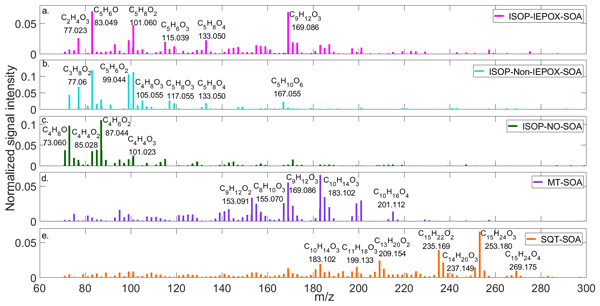
Understanding how volatile organic compounds from plants and soils contribute to aerosol particles is essential for predicting air quality and climate effects. This study used advanced mass spectrometry to analyze particles formed from these compounds under controlled conditions. By identifying distinct chemical fingerprints, we can trace particle sources and reactions more accurately, improving our understanding of particle formation processes in the atmosphere.
Benoît Sagot, Guillaume Pailloux, and Amel Kort
Aerosol Research, 4, 121–131, https://doi.org/10.5194/ar-4-121-2026, https://doi.org/10.5194/ar-4-121-2026, 2026
Short summary
Short summary
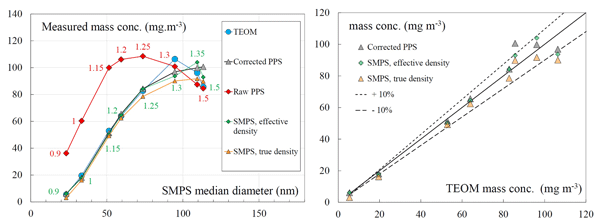
The measurement of particle mass concentrations in gases is essential for monitoring emissions from engine exhaust or atmospheric pollutants. Various instruments allow for real-time concentration monitoring, but few studies have evaluated the accuracy and reliability of these measurements. We present the results of an intercomparison between several mass concentration measurement instruments to assess their ranges of validity, providing valuable guidance for future users of these devices.
Hasna Chebaicheb, Mélodie Chatain, Olivier Favez, Joel F. de Brito, Vincent Crenn, Tanguy Amodeo, Mohamed Gherras, Emmanuel Jantzem, Caroline Marchand, and Véronique Riffault
Atmos. Chem. Phys., 26, 155–169, https://doi.org/10.5194/acp-26-155-2026, https://doi.org/10.5194/acp-26-155-2026, 2026
Short summary
Short summary
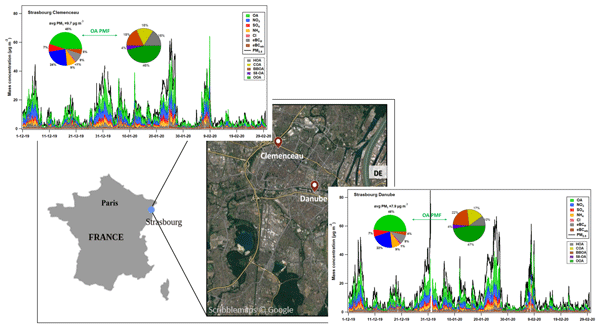
This study compares carbonaceous aerosols source apportionment at paired traffic and background locations in urban environment (Strasbourg, France). Positive matrix factorization was applied (individually and in a combined input dataset) to aerosol mass spectrometry measurements at both sites, providing notably insights into the challenges of attributing real sources to organic aerosol (OA) factors and the impact of instrumental result specificities leading to differences in OA mass spectra.
Frédéric Laly, Patrick Chazette, Julien Totems, Vincent Crenn, David Ledur, and Alexandre Marpillat
Atmos. Meas. Tech., 18, 7629–7649, https://doi.org/10.5194/amt-18-7629-2025, https://doi.org/10.5194/amt-18-7629-2025, 2025
Short summary
Short summary
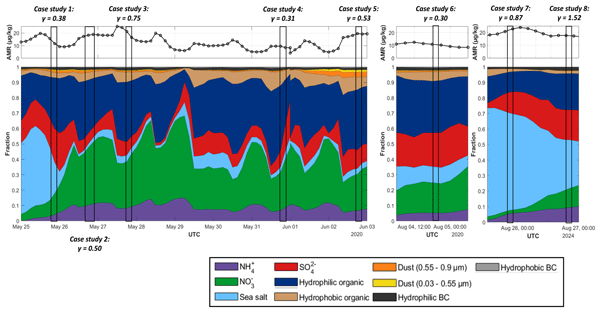
This article presents the evolution of aerosol optical properties as derived from a Raman lidar in relation to relative humidity over the Paris area. It examines the influence of aerosol chemical compounds linked to air mass origins, as well as their relationship with the efficiency of aerosol growth. Such a study provides a better understanding of the interactions between aerosols and water vapour, which is important for reducing the uncertainties surrounding the Earth's radiative balance.
Marie Dumont, Simon Gascoin, Marion Réveillet, Didier Voisin, François Tuzet, Laurent Arnaud, Mylène Bonnefoy, Montse Bacardit Peñarroya, Carlo Carmagnola, Alexandre Deguine, Aurélie Diacre, Lukas Dürr, Olivier Evrard, Firmin Fontaine, Amaury Frankl, Mathieu Fructus, Laure Gandois, Isabelle Gouttevin, Abdelfateh Gherab, Pascal Hagenmuller, Sophia Hansson, Hervé Herbin, Béatrice Josse, Bruno Jourdain, Irene Lefevre, Gaël Le Roux, Quentin Libois, Lucie Liger, Samuel Morin, Denis Petitprez, Alvaro Robledano, Martin Schneebeli, Pascal Salze, Delphine Six, Emmanuel Thibert, Jürg Trachsel, Matthieu Vernay, Léo Viallon-Galinier, and Céline Voiron
Earth Syst. Sci. Data, 15, 3075–3094, https://doi.org/10.5194/essd-15-3075-2023, https://doi.org/10.5194/essd-15-3075-2023, 2023
Short summary
Short summary
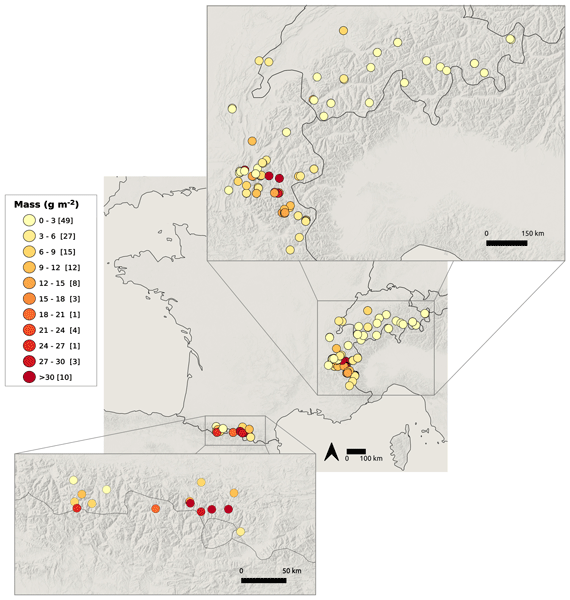
Saharan dust outbreaks have profound effects on ecosystems, climate, health, and the cryosphere, but the spatial deposition pattern of Saharan dust is poorly known. Following the extreme dust deposition event of February 2021 across Europe, a citizen science campaign was launched to sample dust on snow over the Pyrenees and the European Alps. This campaign triggered wide interest and over 100 samples. The samples revealed the high variability of the dust properties within a single event.
Alain Miffre, Danaël Cholleton, Clément Noël, and Patrick Rairoux
Atmos. Meas. Tech., 16, 403–417, https://doi.org/10.5194/amt-16-403-2023, https://doi.org/10.5194/amt-16-403-2023, 2023
Short summary
Short summary
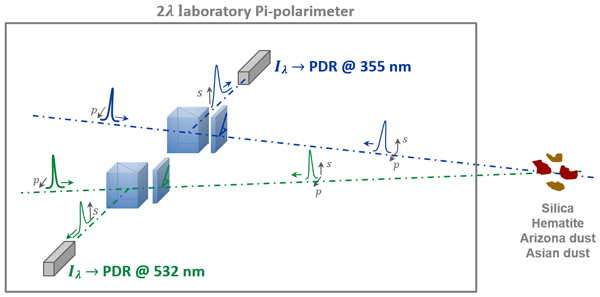
The depolarization ratio of hematite, silica, Arizona and Asian dust is evaluated in a lab with a π-polarimeter operating at lidar 180 ° and at (355, 532) nm wavelengths. The hematite depolarization equals (10±1) % at 355 nm for coarser particles, while that of silica is (33±1) %. This huge difference is explained by accounting for the high imaginary part of the hematite complex refractive index, thus revealing the key role played by light absorption in mineral dust lidar depolarization.
Danaël Cholleton, Émilie Bialic, Antoine Dumas, Pascal Kaluzny, Patrick Rairoux, and Alain Miffre
Atmos. Meas. Tech., 15, 1021–1032, https://doi.org/10.5194/amt-15-1021-2022, https://doi.org/10.5194/amt-15-1021-2022, 2022
Short summary
Short summary
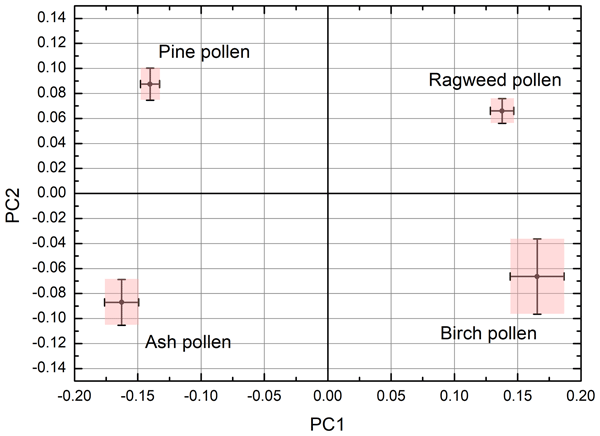
While pollen impacts public health and the Earth’s climate, the identification of each pollen taxon remains challenging. In this context, a laboratory evaluation of the polarimetric light-scattering characteristics of ragweed, ash, birch and pine pollen, when embedded in ambient air, is here performed at two wavelengths. Interestingly, the achieved precision of the retrieved scattering matrix elements allows unequivocal light scattering characteristics of each studied taxon to be identified.
Lya Lugon, Jérémy Vigneron, Christophe Debert, Olivier Chrétien, and Karine Sartelet
Geosci. Model Dev., 14, 7001–7019, https://doi.org/10.5194/gmd-14-7001-2021, https://doi.org/10.5194/gmd-14-7001-2021, 2021
Short summary
Short summary
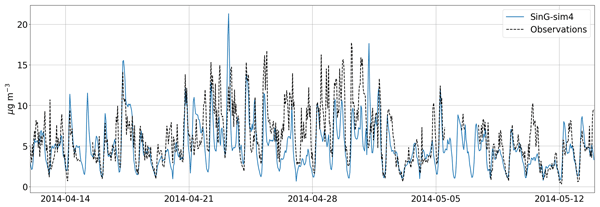
The multiscale Street-in-Grid model is used to simulate black carbon (BC) concentrations in streets. To respect street-surface mass balance, particle resuspension is estimated with a new approach based on deposited mass. The contribution of resuspension is low, but non-exhaust emissions from tyre wear may largely contribute to BC concentrations. The impact of the two-way dynamic coupling between scales on BC concentrations varies depending on the street geometry and traffic emission intensity.
Cited articles
Binnig, J., Meyer, J., and Kasper, G.: Calibration of an optical particle counter to provide PM2.5 mass for well-defined particle materials, J. Aerosol Sci., 38, 325–332, https://doi.org/10.1016/j.jaerosci.2006.12.001, 2007.
Gaie-Levrel, F., Bourrous, S., and Macé, T.: Development of a portable reference aerosol generator (PRAG) for calibration of particle mass concentration measurements, Particuology, 37, 134–142, https://doi.org/10.1016/j.partic.2017.06.005, 2018.
Gaie-Levrel, F., Bau, S., Bregonzio-Rozier, L., Payet, R., Artous, S., Jacquinot, S., Guiot, A., Ouf, F. X., Bourrous, S., Marpillat, A., Foulquier, C., Smith, G., Crenn, V., and Feltin, N.: An intercomparison exercise of good laboratory practices for nano-aerosol size measurements by mobility spectrometers, J. Nanopart. Res., 22, 103-, https://doi.org/10.1007/s11051-020-04820-y, 2020.
Hindman Ii, E. E., Trusty, G. L., Hudson, J. G., Fitzgerald, J. W., and Rogersi, C. F.: Field comparison of optical particle counters, Atmo. Environ., 12, 1195–1200, https://doi.org/10.1016/0004-6981(78)90367-0, 1978.
Horender, S., Auderset, K., and Vasilatou, K.: Facility for calibration of optical and condensation particle counters based on a turbulent aerosol mixing tube and a reference optical particle counter, Rev. Sci. Inst., 90, https://doi.org/10.1063/1.5095853, 2019.
Hubert, P., Herbin, H., Visez, N., Pujol, O., and Petitprez, D.: New approach for the determination of aerosol refractive indices – Part II: Experimental set-up and application to amorphous silica particles, J. Quant. Spectrosc. Ra., 200, 320–327, https://doi.org/10.1016/j.jqsrt.2017.03.037, 2017.
Iida, K. and Sakurai, H.: Counting efficiency evaluation of optical particle counters in micrometer range by using an inkjet aerosol generator, Aerosol Sci. Technol., 52, 1156–1166, https://doi.org/10.1080/02786826.2018.1505032, 2018.
ISO 13528: Statistical methods for use in proficiency testing by interlaboratory comparison, https://www.iso.org/standard/78879.html (last access: 10 June 2026), 2022.
ISO 21501-1: Determination of particle size distribution – Single particle light interaction methods – Part 1: Light scattering aerosol spectrometer, https://cobaz.afnor.org/notice/norme/iso-21501-12025/XS146596?rechercheID=44163013&searchIndex=2&activeTab=all (last access: 10 June 2026), 2025.
ISO 21501-4: Determination of Particle Size Distribution – Single Particle Light Interaction Methods – Part 4: Light Scattering Airborne Particle Counter for Clean Spaces, https://cobaz.afnor.org/notice/norme/iso-21501-42018/XS127973?rechercheID=27531797&searchIndex=1&activeTab=all (last access: 10 June 2026), 2018.
Leglise, J., Crenn, V., Le Dur, D., and Gensdarmes, F.: Vers un passage au TRL 8 d'un disperseur de poudre de type vortex shaker, ASFERA, https://doi.org/10.25576/ASFERA-CFA2022-28366, 2022.
Maragkidou, A., Jaghbeir, O., Hämeri, K., and Hussein, T.: Aerosol particles (0.3–10 µm) inside an educational workshop – Emission rate and inhaled deposited dose, Build. Environ., 140, 80–89, https://doi.org/10.1016/j.buildenv.2018.05.031, 2018.
Marple, V. A. and Rubow, K. L.: Aerodynamic particle size calibration of optical particle counters, J. Aerosol Sci., 7, 425–433, https://doi.org/10.1016/0021-8502(76)90028-8, 1976.
Mishchenko, M. I., Travis, L. D., and Lacis, A. A.: Scattering, Absorption, and Emission of Light by Small Particles, Cambridge University Press, https://books.google.com/books/about/Scattering_Absorption_and_Emission_of_Li.html?hl=fr&id=i6r1YFyK_g8C (last access: 10 June 2026), 2002.
Ortega, J., Snider, J. R., Smith, J. N., and Reeves, J. M.: Comparison of aerosol measurement systems during the 2016 airborne ARISTO campaign, Aerosol Sci. Technol., 53, 871–885, https://doi.org/10.1080/02786826.2019.1610554, 2019.
R'Mili, B., Le Bihan, O. L. C., Dutouquet, C., Aguerre-Charriol, O., and Frejafon, E.: Particle sampling by TEM grid filtration, Aerosol Sci. Technol., 47, 767–775, https://doi.org/10.1080/02786826.2013.789478, 2013.
Sang-Nourpour, N. and Olfert, J. S.: Calibration of optical particle counters with an aerodynamic aerosol classifier, J. Aerosol Sci., 138, https://doi.org/10.1016/j.jaerosci.2019.105452, 2019.
Sousan, S., Koehler, K., Hallett, L., and Peters, T. M.: Evaluation of the Alphasense optical particle counter (OPC-N2) and the Grimm portable aerosol spectrometer (PAS-1.108), Aerosol Sci. Technol., 50, 1352–1365, https://doi.org/10.1080/02786826.2016.1232859, 2016.
Szymanski, W. W. and Liu, B. Y. H.: On the Sizing Accuracy of Laser Optical Particle Counters, Particle & Particle Systems Characterization, 3, 1–7, https://doi.org/10.1002/ppsc.19860030102, 1986.
Szymanski, W. W., Nagy, A., and Czitrovszky, A.: Optical particle spectrometry-Problems and prospects, J. Quant. Spectrosc. Ra., 110, 918–929, https://doi.org/10.1016/j.jqsrt.2009.02.024, July 2009.
Thompson, M., Ellison, S. L. R., and Wood, R.: The International Harmonized Protocol for the proficiency testing of analytical chemistry laboratories: (IUPAC technical report), Pure Appl. Chem., 78, 145–196, https://doi.org/10.1351/pac200678010145, 2006.
Vasilatou, K., Dirscherl, K., Iida, K., Sakurai, H., Horender, S., and Auderset, K.: Calibration of optical particle counters: First comprehensive inter-comparison for particle sizes up to 5 µm and number concentrations up to 2 cm−3, Metrologia, 57, https://doi.org/10.1088/1681-7575/ab5c84, 2020.
Xiang, M., Morgeneyer, M., Aguerre-Chariol, O., Philippe, F., and Bressot, C.: Airborne nanoparticle collection efficiency of a TEM grid-equipped sampling system, Aerosol Sci. Technol., 55, 526–538, https://doi.org/10.1080/02786826.2020.1870923, 2021.
Short summary
This study reports on an inter-laboratory comparison to assess particle number size distributions of three test aerosols using 35 optical particle size spectrometers from 16 partners over 40 weeks. Most measurements clustered near the control, confirming that such devices generally provide reliable size distributions. Calibration history, size resolution, particle morphology, and differences in refractive index between calibration and test aerosols are part of the biases observed.
This study reports on an inter-laboratory comparison to assess particle number size...
Altmetrics
Final-revised paper
Preprint