Articles | Volume 4, issue 2
https://doi.org/10.5194/ar-4-413-2026
© Author(s) 2026. This work is distributed under
the Creative Commons Attribution 4.0 License.
the Creative Commons Attribution 4.0 License.
https://doi.org/10.5194/ar-4-413-2026
© Author(s) 2026. This work is distributed under
the Creative Commons Attribution 4.0 License.
the Creative Commons Attribution 4.0 License.
Research article
| 
09 Sep 2026
Research article |
| 09 Sep 2026
| 09 Sep 2026
Coral reef exposure increases aerosol and cloud condensation nuclei over the Great Barrier Reef
Juha Sulo
CORRESPONDING AUTHOR

School of Earth and Atmospheric Sciences, Queensland University of Technology, Brisbane, Australia
Magdalena Okuljar
School of Earth and Atmospheric Sciences, Queensland University of Technology, Brisbane, Australia
Joel Alroe
School of Earth and Atmospheric Sciences, Queensland University of Technology, Brisbane, Australia
School of Earth and Atmospheric Sciences, Queensland University of Technology, Brisbane, Australia
Eva Johanna Horchler
School of Earth and Atmospheric Sciences, Queensland University of Technology, Brisbane, Australia
now at: Department of Chemistry, Aarhus University, Aarhus, Denmark
Luke Cravigan
School of Earth and Atmospheric Sciences, Queensland University of Technology, Brisbane, Australia
Branka Miljevic
School of Earth and Atmospheric Sciences, Queensland University of Technology, Brisbane, Australia
Luke Harrison
Reefs and Oceans Research Cluster, National Marine Science Centre, Southern Cross University, Coffs Harbour, NSW, Australia
Daniel Harrison
Reefs and Oceans Research Cluster, National Marine Science Centre, Southern Cross University, Coffs Harbour, NSW, Australia
Zoran Ristovski
School of Earth and Atmospheric Sciences, Queensland University of Technology, Brisbane, Australia
Related authors
Myriam Agrò, Manuel Bettineschi, Silvia Melina, Diego Aliaga, Andrea Bergomi, Beatrice Biffi, Alessandro Bigi, Giancarlo Ciarelli, Cristina Colombi, Paola Fermo, Ivan Grigioni, Veli-Matti Kerminen, Markku Kulmala, Janne Lampilahti, Angela Marinoni, Celestine Oliewo, Juha Sulo, Gianluigi Valli, Roberta Vecchi, Tuukka Petäjä, Katrianne Lehtipalo, and Federico Bianchi
Atmos. Chem. Phys., 26, 6521–6539, https://doi.org/10.5194/acp-26-6521-2026, https://doi.org/10.5194/acp-26-6521-2026, 2026
Short summary
Short summary
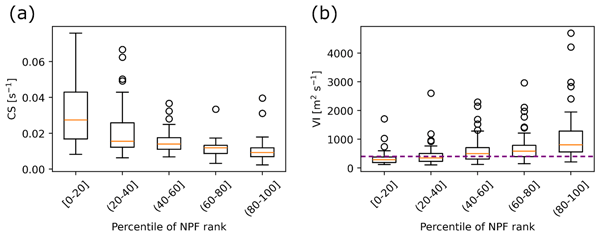
This study investigates new particle formation (NPF) in Milan, the most populated city in the Po Valley (Italy), using one year of particle number size distribution data (1.2–480 nm). NPF is enhanced under cleaner air conditions with lower pollution, reduced condensation sink, stronger ventilation, and stronger northwesterly winds (e.g., Foehn events). In contrast, longer air mass residence time in the Po Valley and higher air mass exposure to anthropogenic emissions suppress it.
Ramon C. Braga, Manfred Wendisch, Rachel Albrecht, and Daniel Harrison
Atmos. Chem. Phys., 26, 14769–14791, https://doi.org/10.5194/acp-26-14769-2026, https://doi.org/10.5194/acp-26-14769-2026, 2026
Short summary
Short summary
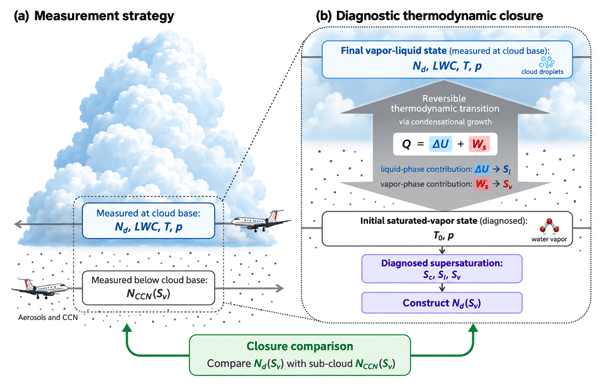
We introduce a new thermodynamic framework to derive water vapor supersaturation at warm cumulus cloud base from in situ measurements. The framework describes the local transition between saturated thermodynamic states as an adiabatic and reversible process under quasi-isobaric conditions, in which the latent energy released during condensation is partitioned between changes in internal energy and water-vapor expansion work.
Lara S. Richards, Yi Huang, Michael A. Barnes, Chenhui Jin, Fadhlil R. Muhammad, Daniel P. Harrison, and Steven T. Siems
Weather Clim. Dynam., 7, 1977–1993, https://doi.org/10.5194/wcd-7-1977-2026, https://doi.org/10.5194/wcd-7-1977-2026, 2026
Short summary
Short summary
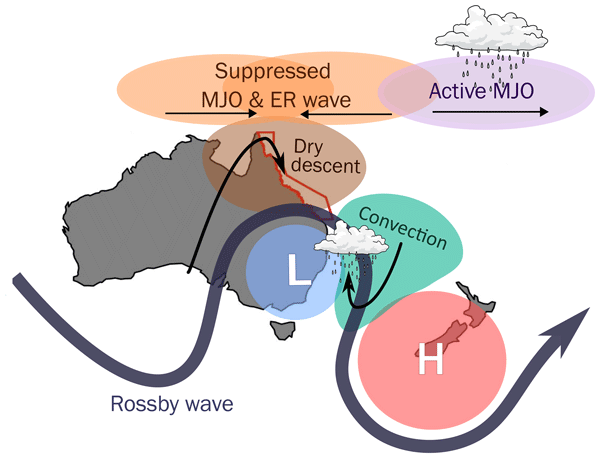
The doldrums are regions of light winds and relatively clear skies found in the tropics. They often occur during severe coral bleaching events on the Great Barrier Reef yet remain poorly understood. This study examines why the doldrums form and persist, identifying how both tropical and extratropical weather systems align to first form the doldrums and how the stalling of these weather systems prolongs the doldrums over the Great Barrier Reef.
Magdalena Okuljar, Juha Sulo, Joel Alroe, Zijun Li, Branka Miljevic, Daniel Harrison, and Zoran Ristovski
EGUsphere, https://doi.org/10.5194/egusphere-2026-4869, https://doi.org/10.5194/egusphere-2026-4869, 2026
Short summary
Short summary
The Great Barrier Reef is the largest coral reef system globally, yet the extent to which it contributes to local atmospheric particle loading remains poorly understood. This work focuses on particle formation processes observed during a six-week measurement campaign. Our results show that the reef ecosystem can influence local aerosol formation processes, with implications for regional cloud formation and climate feedbacks in marine ecosystems.
Caleb Mynard, Emily B. Franklin, Joel Alroe, Karen Westwood, Brandon J. McNabb, Robert Strzepek, Philippe D. Tortell, Steven T. Siems, Antonio Patti, Suzie Molloy, Alan Griffiths, Branka Miljevic, Marc D. Mallet, Ruhi Humphries, and Erin Dunne
Atmos. Chem. Phys., 26, 11583–11604, https://doi.org/10.5194/acp-26-11583-2026, https://doi.org/10.5194/acp-26-11583-2026, 2026
Short summary
Short summary
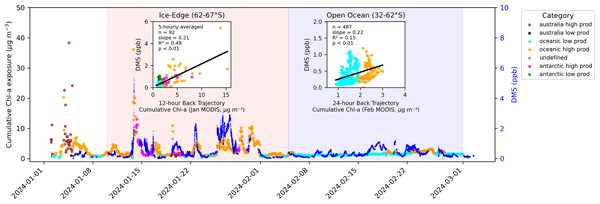
Marine sulfur gases help form climate-cooling particles, but their controls over the Southern Ocean are unclear. During a summer research voyage we measured these gases and linked them to ocean and atmospheric conditions. Near Antarctica, coastal blooms drove sharp rises in dimethyl sulfide while methanethiol remained low. Over the open ocean, both gases varied together, mainly influenced by ocean mixing and temperature, suggesting models should treat coastal and open ocean regions separately.
Xiaoshen Sun, Chris Medcraft, Ramon Braga, Peter Butcherine, Zoran Ristovski, Steven Siems, Christian J. Sanders, and Daniel P. Harrison
EGUsphere, https://doi.org/10.5194/egusphere-2026-1729, https://doi.org/10.5194/egusphere-2026-1729, 2026
This preprint is open for discussion and under review for Atmospheric Measurement Techniques (AMT).
Short summary
Short summary
We propose a novel method to detect and track sea spray particles released during marine cloud brightening (MCB) over the Great Barrier Reef. Using aircraft measurements, we showed that these released particles can be separated from the research ship and aircraft exhaust and tracked as they spread horizontally and vertically. This improves our ability to trace added sea spray aerosols and supports future work on how they may affect clouds.
Rebecca L. Jackson, Matthew T. Woodhouse, Mark Baird, Clothilde Langlais, Mathieu Mongin, Anthony Jones, Daniel Partridge, Luke Harrison, Johanna Horchler, Joel Alroe, Luke Cravigan, Zoran Ristovski, and Daniel P. Harrison
EGUsphere, https://doi.org/10.5194/egusphere-2026-2761, https://doi.org/10.5194/egusphere-2026-2761, 2026
Short summary
Short summary
ACCESS-EMS-GBR is a regional coupled atmosphere-ocean model of the Great Barrier Reef. It simulates aerosol and cloud processes in the atmosphere, plus hydrodynamics, biogeochemistry and ecological processes in the marine environment. Developed to assess the effects of Marine Cloud Brightening on coral bleaching, it is the first regional model able to simulate how aerosol emissions affect clouds, radiation and the underlying reef ecosystem and is ideal for a range of atmosphere-ocean studies.
Jonas Enarsson, Vilhelm Malmborg, Branka Miljevic, Axel Eriksson, Hao Wang, Zoran Ristovski, and Aneta Wierzbicka
EGUsphere, https://doi.org/10.5194/egusphere-2026-3807, https://doi.org/10.5194/egusphere-2026-3807, 2026
Short summary
Short summary
Reactive oxygen species and oxidative potential are strongly linked to aerosol-induced adverse health effects and have emerged as widely used metrics for assessing particle toxicity. We found that soot-like particles can interfere with methods used to measure reactive oxygen species, causing misleading results. We have investigated this artefact and propose an explanation for the interference and a correction method that improves the accuracy of reactive oxygen species measurements.
Johannes Kainz, Daniel P. Harrison, and Fabian Hoffmann
Atmos. Chem. Phys., 26, 9443–9451, https://doi.org/10.5194/acp-26-9443-2026, https://doi.org/10.5194/acp-26-9443-2026, 2026
Short summary
Short summary
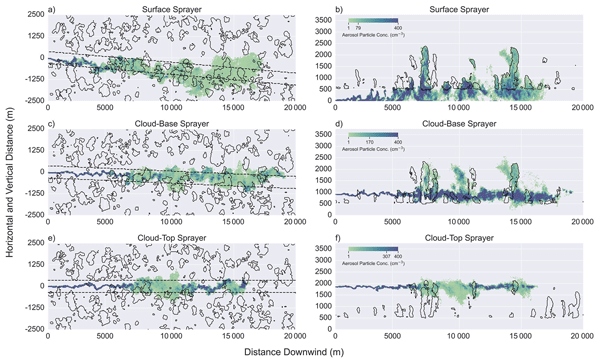
Marine Cloud Brightening (MCB) aims to counter global warming. It suggests to increase cloud reflectance by spraying aerosols from which additional cloud droplets can form. We demonstrate that MCB can be applied to cumulus clouds. The impact of aerosol particles released by a single aerosol sprayer using simulations is analyzed. The study draws conclusions on the optimal placement height of the sprayer to optimize aerosol transport, the ability to form new cloud droplets, and the area affected.
Myriam Agrò, Manuel Bettineschi, Silvia Melina, Diego Aliaga, Andrea Bergomi, Beatrice Biffi, Alessandro Bigi, Giancarlo Ciarelli, Cristina Colombi, Paola Fermo, Ivan Grigioni, Veli-Matti Kerminen, Markku Kulmala, Janne Lampilahti, Angela Marinoni, Celestine Oliewo, Juha Sulo, Gianluigi Valli, Roberta Vecchi, Tuukka Petäjä, Katrianne Lehtipalo, and Federico Bianchi
Atmos. Chem. Phys., 26, 6521–6539, https://doi.org/10.5194/acp-26-6521-2026, https://doi.org/10.5194/acp-26-6521-2026, 2026
Short summary
Short summary
This study investigates new particle formation (NPF) in Milan, the most populated city in the Po Valley (Italy), using one year of particle number size distribution data (1.2–480 nm). NPF is enhanced under cleaner air conditions with lower pollution, reduced condensation sink, stronger ventilation, and stronger northwesterly winds (e.g., Foehn events). In contrast, longer air mass residence time in the Po Valley and higher air mass exposure to anthropogenic emissions suppress it.
Wenhui Zhao, Yi Huang, Steven Siems, and Daniel Harrison
EGUsphere, https://doi.org/10.5194/egusphere-2026-1251, https://doi.org/10.5194/egusphere-2026-1251, 2026
Short summary
Short summary
Using convection-permitting WRF simulations, this study examines how marine cloud brightening over the GBR depends on aerosol emission strength and spatial distribution. Densely spaced sources generate more uniform aerosol enhancements and stronger cloud microphysical responses than sparsely distributed sources, despite identical emissions. CDNC and optical depth increase strongly, indicating a dominant Twomey effect, while cloud water and coverage respond weakly.

Lara S. Richards, Steven T. Siems, Yi Huang, Daniel P. Harrison, and Wenhui Zhao
Weather Clim. Dynam., 7, 109–127, https://doi.org/10.5194/wcd-7-109-2026, https://doi.org/10.5194/wcd-7-109-2026, 2026
Short summary
Short summary
By studying the variability of the trade winds during the Great Barrier Reef coral bleaching season, we show that ocean heating and a higher risk of coral bleaching are linked to the breakdown of the trade winds into either calm and clear conditions or a monsoon-like northerly flow. Years with mass coral bleaching are also associated with more "calm and clear" days in the warmest months and fewer strong trade wind days on the fringe months of the bleaching season.
Sonya L. Fiddes, Matthew T. Woodhouse, Marc D. Mallet, Liam J. Lamprey, Ruhi S. Humphries, Alain Protat, Simon P. Alexander, Hakase Hayashida, Samuel Putland, Branka Miljevic, and Robyn Schofield
Atmos. Chem. Phys., 25, 16451–16477, https://doi.org/10.5194/acp-25-16451-2025, https://doi.org/10.5194/acp-25-16451-2025, 2025
Short summary
Short summary
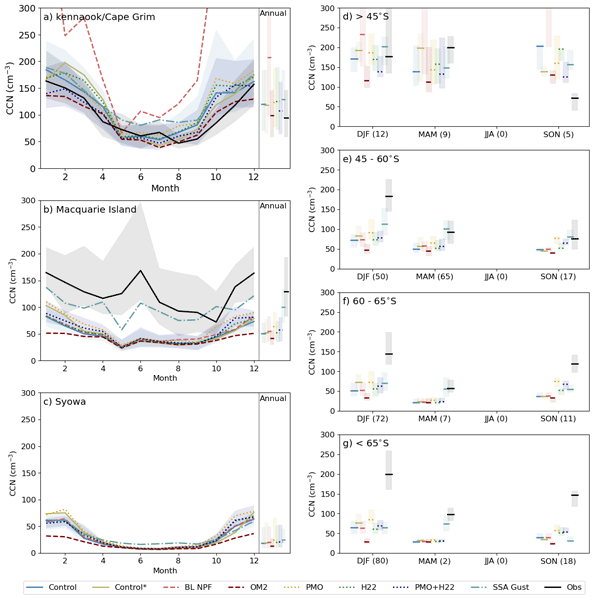
The interaction between natural marine aerosols, clouds and radiation in the Southern Ocean is a major source of uncertainty in climate models. We evaluate the Australian climate model using aerosol observations and find it underestimates aerosol number often by over 50%. Model changes were tested to improve aerosol concentrations, but some of our changes had severe negative effects on the larger climate system, highlighting issues in aerosol-cloud interaction modelling.
Arttu Ylisirniö, Noora Hyttinen, Zijun Li, Mitchell Alton, Aki Nissinen, Iida Pullinen, Pasi Miettinen, Taina Yli-Juuti, and Siegfried Schobesberger
Atmos. Meas. Tech., 18, 6449–6464, https://doi.org/10.5194/amt-18-6449-2025, https://doi.org/10.5194/amt-18-6449-2025, 2025
Short summary
Short summary
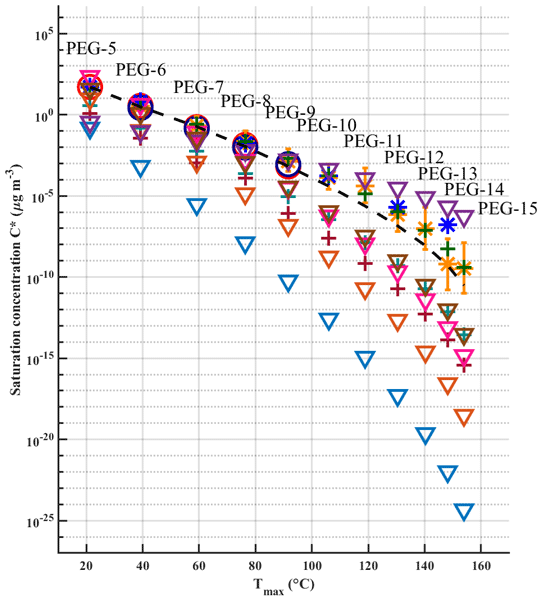
This study increases the knowledge of the low-volatility organic compounds observed in ambient aerosol particles by providing new volatility information about compounds used for calibrating volatility measurement instruments. Previously, such information was not available, and calibration of the instrument had to be extrapolated to cover the whole measurement range. Results of this study will provide the scientific community with better tools for investigating the complexity of ambient aerosols.
Robert G. Ryan, Lilani Toms-Hardman, Alexander Smirnov, Daniel P. Harrison, and Robyn Schofield
Atmos. Chem. Phys., 25, 11183–11197, https://doi.org/10.5194/acp-25-11183-2025, https://doi.org/10.5194/acp-25-11183-2025, 2025
Short summary
Short summary
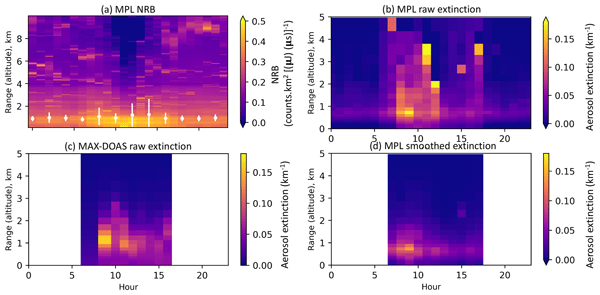
Measurements of aerosol vertical distribution are key for understanding how they interact with clouds and sunlight. Such measurements are currently lacking at the Great Barrier Reef, limiting our ability to validate climate models in this sensitive, ecologically rich environment. Here we use a range of techniques to quantify the vertical variation of aerosols above the Great Barrier Reef for the first time, using the comparison of techniques to also infer aerosol spatial variation.
E. Johanna Horchler, Joel Alroe, Luke Harrison, Luke Cravigan, Daniel P. Harrison, and Zoran D. Ristovski
Atmos. Chem. Phys., 25, 10075–10087, https://doi.org/10.5194/acp-25-10075-2025, https://doi.org/10.5194/acp-25-10075-2025, 2025
Short summary
Short summary
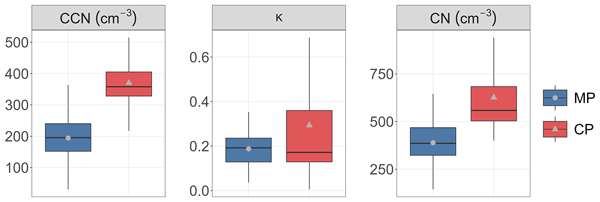
Aerosols play a role in global climate by interacting with incoming solar radiation and by taking up water vapour from the atmosphere to form clouds. Enhancing local-scale cloud cover can reduce sea surface temperatures. Coral bleaching events have increased in the Great Barrier Reef (GBR) as sea surface temperatures have risen. Our study found that the number of aerosols and the cloud-forming ability over the GBR increased if the aerosols were transported from inland Australia rather than the ocean.
Yik-Sze Lau, Zoran Ristovski, and Branka Miljevic
Atmos. Meas. Tech., 18, 3945–3958, https://doi.org/10.5194/amt-18-3945-2025, https://doi.org/10.5194/amt-18-3945-2025, 2025
Short summary
Short summary
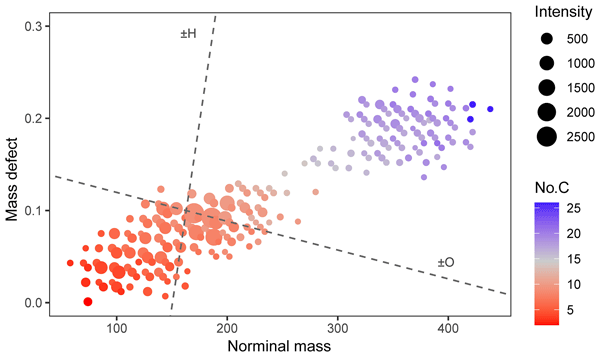
The chemical properties of aerosols in the atmosphere significantly influence their impact on global climate and human health. The current study constructed an instrumental system (HEAC (high-efficiency aerosol collector)/ESI (electrospray ionisation)-Orbitrap-MS (mass spectrometer)) for the real-time chemical analysis of aerosol samples. The combined system successfully identified over 30 chemical compounds in aerosol samples in real time, showing the robustness of the technique for the chemical characterisation of aerosols under atmospherically relevant conditions.
Behnaz Alinaghipour, Sadegh Niazi, Robert Groth, Branka Miljevic, and Zoran Ristovski
Atmos. Meas. Tech., 18, 1063–1071, https://doi.org/10.5194/amt-18-1063-2025, https://doi.org/10.5194/amt-18-1063-2025, 2025
Short summary
Short summary
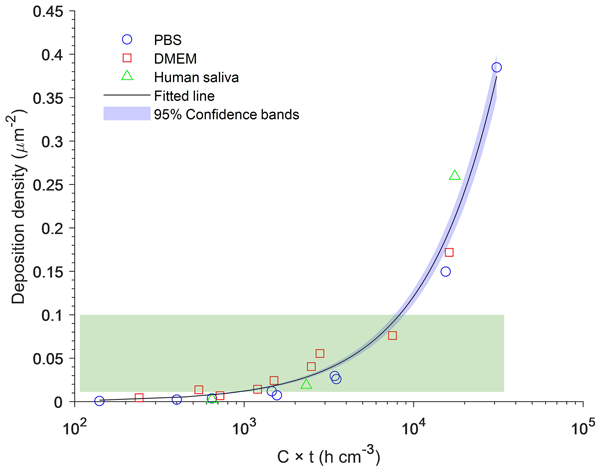
Airborne particles are crucial in environmental and health studies, requiring precise sampling for accurate characterisation. Our study examines the optimal sampling time for the TSI Nanometer Aerosol Sampler 3089 at different input concentrations. Aerosols from low-, medium-, and high-concentration environments were sampled over 1, 3, and 6 h. A linear relationship was observed using a regression model between the deposition densities and the product of input concentration and sampling time.
Matthew Boyer, Diego Aliaga, Lauriane L. J. Quéléver, Silvia Bucci, Hélène Angot, Lubna Dada, Benjamin Heutte, Lisa Beck, Marina Duetsch, Andreas Stohl, Ivo Beck, Tiia Laurila, Nina Sarnela, Roseline C. Thakur, Branka Miljevic, Markku Kulmala, Tuukka Petäjä, Mikko Sipilä, Julia Schmale, and Tuija Jokinen
Atmos. Chem. Phys., 24, 12595–12621, https://doi.org/10.5194/acp-24-12595-2024, https://doi.org/10.5194/acp-24-12595-2024, 2024
Short summary
Short summary
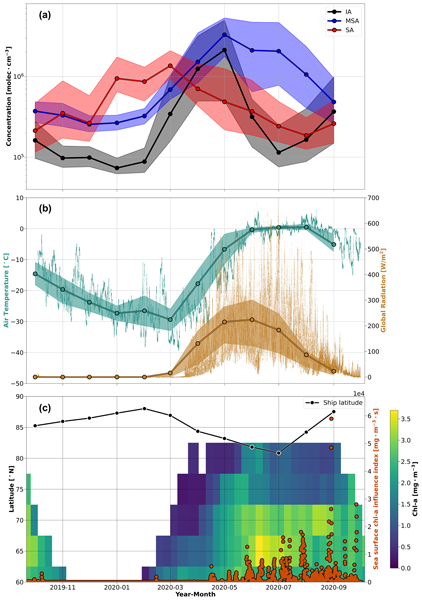
We analyze the seasonal cycle and sources of gases that are relevant for the formation of aerosol particles in the central Arctic. Since theses gases can form new particles, they can influence Arctic climate. We show that the sources of these gases are associated with changes in the Arctic environment during the year, especially with respect to sea ice. Therefore, the concentration of these gases will likely change in the future as the Arctic continues to warm.
Zijun Li, Angela Buchholz, and Noora Hyttinen
Atmos. Chem. Phys., 24, 11717–11725, https://doi.org/10.5194/acp-24-11717-2024, https://doi.org/10.5194/acp-24-11717-2024, 2024
Short summary
Short summary
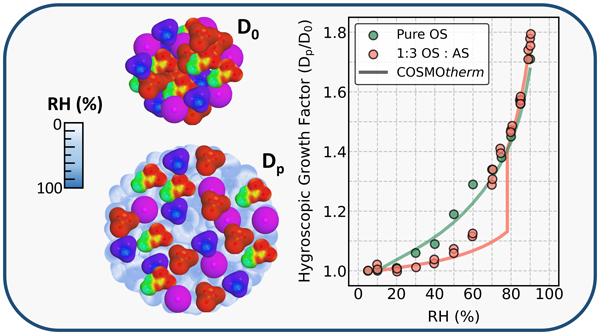
Evaluating organosulfur (OS) hygroscopicity is important for assessing aerosol–cloud climate interactions in the post-fossil-fuel future, when SO2 emissions decrease and OS compounds become increasingly important. Here a state-of-the-art quantum-chemistry-based method was used to predict the hygroscopic growth factors (HGFs) of a group of atmospherically relevant OS compounds and their mixtures with (NH4)2SO4. A good agreement was observed between their model-estimated and experimental HGFs.
Wenhui Zhao, Yi Huang, Steven Siems, Michael Manton, and Daniel Harrison
Atmos. Chem. Phys., 24, 5713–5736, https://doi.org/10.5194/acp-24-5713-2024, https://doi.org/10.5194/acp-24-5713-2024, 2024
Short summary
Short summary
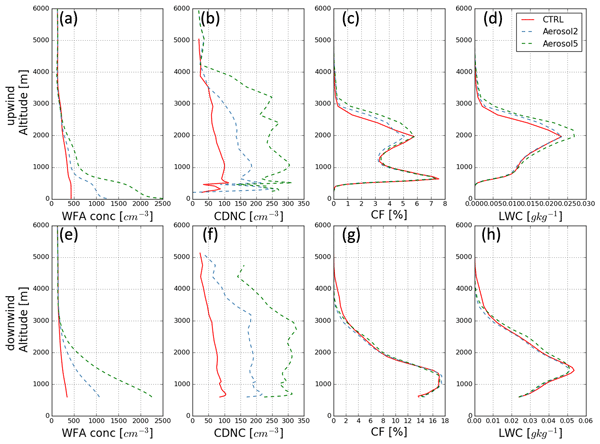
We studied how shallow clouds and rain behave over the Great Barrier Reef (GBR) using a detailed weather model. We found that the shape of the land, especially mountains, and particles in the air play big roles in influencing these clouds. Surprisingly, the sea's temperature had a smaller effect. Our research helps us understand the GBR's climate and how various factors can influence it, where the importance of the local cloud in thermal coral bleaching has recently been identified.
Magdalena Okuljar, Olga Garmash, Miska Olin, Joni Kalliokoski, Hilkka Timonen, Jarkko V. Niemi, Pauli Paasonen, Jenni Kontkanen, Yanjun Zhang, Heidi Hellén, Heino Kuuluvainen, Minna Aurela, Hanna E. Manninen, Mikko Sipilä, Topi Rönkkö, Tuukka Petäjä, Markku Kulmala, Miikka Dal Maso, and Mikael Ehn
Atmos. Chem. Phys., 23, 12965–12983, https://doi.org/10.5194/acp-23-12965-2023, https://doi.org/10.5194/acp-23-12965-2023, 2023
Short summary
Short summary
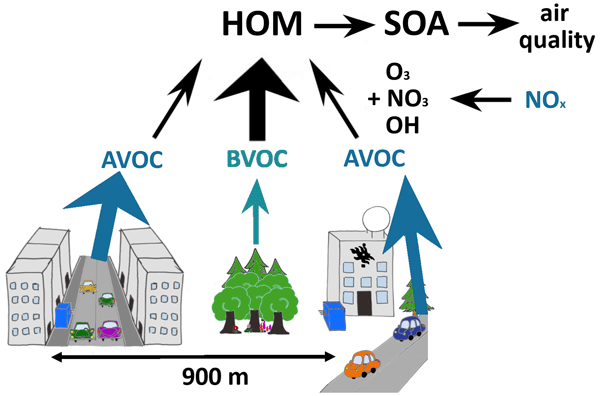
Highly oxygenated organic molecules (HOMs) form secondary organic aerosol that affects air quality and health. In this study, we demonstrate that in a moderately polluted city with abundant vegetation, the composition of HOMs is largely controlled by the effect of NOx on the biogenic volatile organic compound oxidation. Comparing the results from two nearby stations, we show that HOM composition and formation pathways can change considerably within small distances in urban environments.
Zijun Li, Noora Hyttinen, Miika Vainikka, Olli-Pekka Tikkasalo, Siegfried Schobesberger, and Taina Yli-Juuti
Atmos. Chem. Phys., 23, 6863–6877, https://doi.org/10.5194/acp-23-6863-2023, https://doi.org/10.5194/acp-23-6863-2023, 2023
Short summary
Short summary
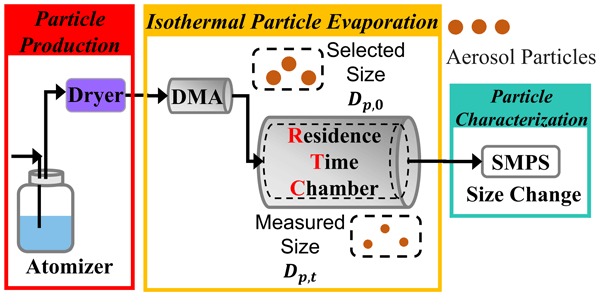
The saturation vapor pressure (psat) of low-volatility organic compounds (LVOCs) governs their partitioning between the gas and particle phases. To estimate the psat of selected LVOCs, we performed particle evaporation measurements in a residence time chamber at a temperature setting relevant to atmospheric aerosol formation and conducted state-of-the-art computational calculations. We found good agreement between the experimentally measured and model-estimated psat values for most LVOCs.
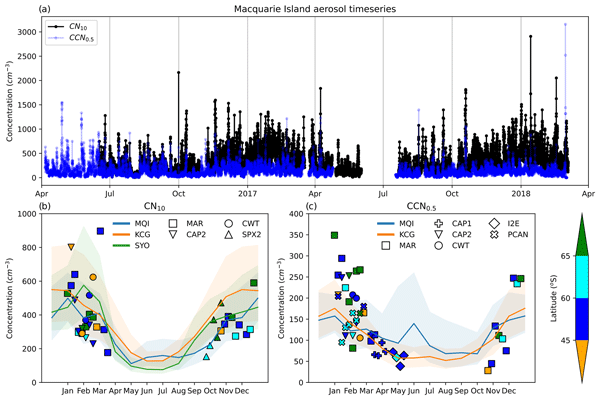
Ruhi S. Humphries, Melita D. Keywood, Jason P. Ward, James Harnwell, Simon P. Alexander, Andrew R. Klekociuk, Keiichiro Hara, Ian M. McRobert, Alain Protat, Joel Alroe, Luke T. Cravigan, Branka Miljevic, Zoran D. Ristovski, Robyn Schofield, Stephen R. Wilson, Connor J. Flynn, Gourihar R. Kulkarni, Gerald G. Mace, Greg M. McFarquhar, Scott D. Chambers, Alastair G. Williams, and Alan D. Griffiths
Atmos. Chem. Phys., 23, 3749–3777, https://doi.org/10.5194/acp-23-3749-2023, https://doi.org/10.5194/acp-23-3749-2023, 2023
Short summary
Short summary
Observations of aerosols in pristine regions are rare but are vital to constraining the natural baseline from which climate simulations are calculated. Here we present recent seasonal observations of aerosols from the Southern Ocean and contrast them with measurements from Antarctica, Australia and regionally relevant voyages. Strong seasonal cycles persist, but striking differences occur at different latitudes. This study highlights the need for more long-term observations in remote regions.
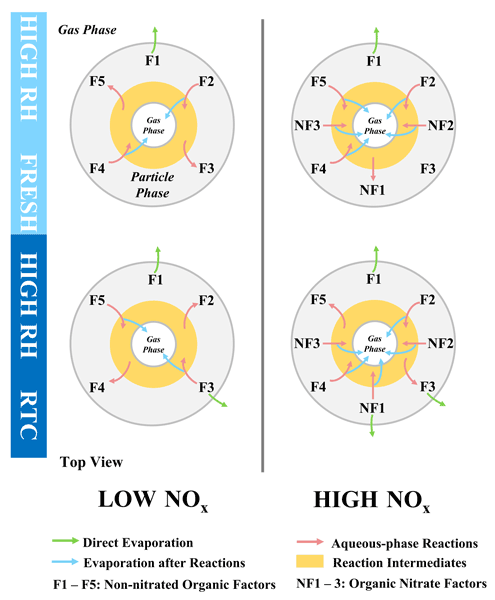
Zijun Li, Angela Buchholz, Luis M. F. Barreira, Arttu Ylisirniö, Liqing Hao, Iida Pullinen, Siegfried Schobesberger, and Annele Virtanen
Atmos. Chem. Phys., 23, 203–220, https://doi.org/10.5194/acp-23-203-2023, https://doi.org/10.5194/acp-23-203-2023, 2023
Short summary
Short summary
Interaction between NOx and biogenic emissions can be important in suburban areas. Our study showed that the addition of NOx during α-pinene SOA formation produced considerable amounts of organic nitrates and affected the composition of non-nitrated organic compounds. The compositional difference consequently altered the primary type of aqueous-phase processes during the isothermal particle evaporation.
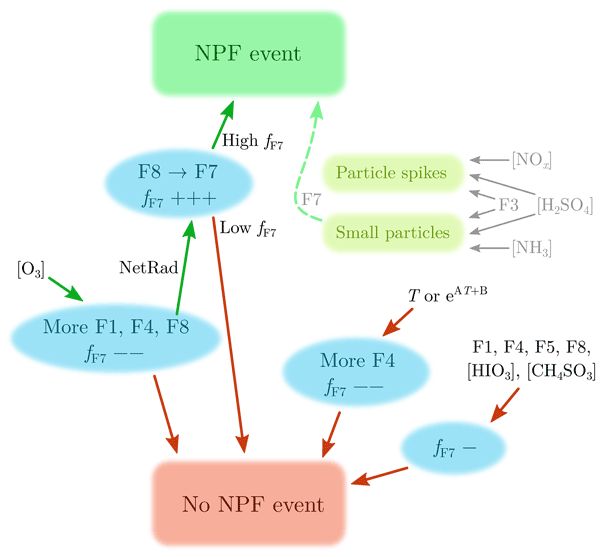
Miska Olin, Magdalena Okuljar, Matti P. Rissanen, Joni Kalliokoski, Jiali Shen, Lubna Dada, Markus Lampimäki, Yusheng Wu, Annalea Lohila, Jonathan Duplissy, Mikko Sipilä, Tuukka Petäjä, Markku Kulmala, and Miikka Dal Maso
Atmos. Chem. Phys., 22, 8097–8115, https://doi.org/10.5194/acp-22-8097-2022, https://doi.org/10.5194/acp-22-8097-2022, 2022
Short summary
Short summary
Atmospheric new particle formation is an important source of the total particle number concentration in the atmosphere. Several parameters for predicting new particle formation events have been suggested before, but the results have been inconclusive. This study proposes an another predicting parameter, related to a specific type of highly oxidized organic molecules, especially for similar locations to the measurement site in this study, which was a coastal agricultural site in Finland.
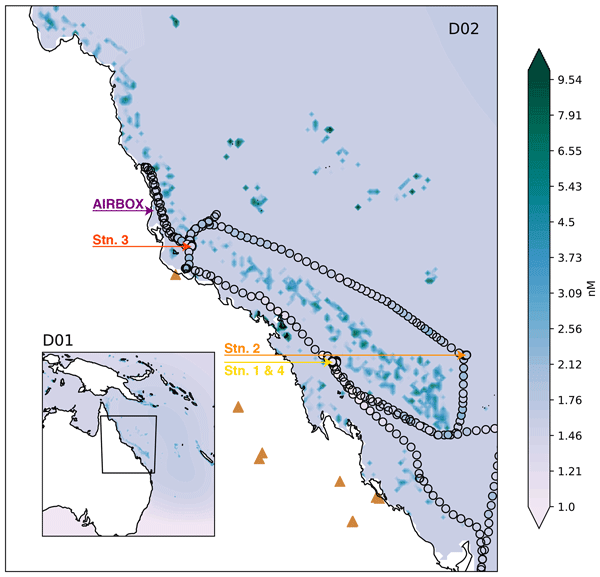
Sonya L. Fiddes, Matthew T. Woodhouse, Steve Utembe, Robyn Schofield, Simon P. Alexander, Joel Alroe, Scott D. Chambers, Zhenyi Chen, Luke Cravigan, Erin Dunne, Ruhi S. Humphries, Graham Johnson, Melita D. Keywood, Todd P. Lane, Branka Miljevic, Yuko Omori, Alain Protat, Zoran Ristovski, Paul Selleck, Hilton B. Swan, Hiroshi Tanimoto, Jason P. Ward, and Alastair G. Williams
Atmos. Chem. Phys., 22, 2419–2445, https://doi.org/10.5194/acp-22-2419-2022, https://doi.org/10.5194/acp-22-2419-2022, 2022
Short summary
Short summary
Coral reefs have been found to produce the climatically relevant chemical compound dimethyl sulfide (DMS). It has been suggested that corals can modify their environment via the production of DMS. We use an atmospheric chemistry model to test this theory at a regional scale for the first time. We find that it is unlikely that coral-reef-derived DMS has an influence over local climate, in part due to the proximity to terrestrial and anthropogenic aerosol sources.
Zijun Li, Angela Buchholz, Arttu Ylisirniö, Luis Barreira, Liqing Hao, Siegfried Schobesberger, Taina Yli-Juuti, and Annele Virtanen
Atmos. Chem. Phys., 21, 18283–18302, https://doi.org/10.5194/acp-21-18283-2021, https://doi.org/10.5194/acp-21-18283-2021, 2021
Short summary
Short summary
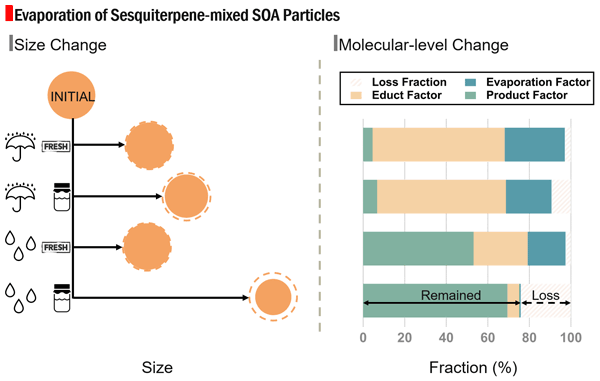
We compared the evolution of two types of secondary organic aerosol (SOA) particles during isothermal evaporation. The sesquiterpene SOA particles demonstrated higher resilience to evaporation than α-pinene SOA particles generated under comparable conditions. In-depth analysis showed that under high-relative-humidity conditions, particulate water drove the evolution of particulate constituents by reducing the particle viscosity and initiating chemical aqueous-phase processes.
Cited articles
Adler, A. I. and Painsky, A.: Feature Importance in Gradient Boosting Trees with Cross-Validation Feature Selection, Entropy, 24, 687, https://doi.org/10.3390/e24050687, 2022.
Andrews, E., Zabala, I., Carrillo-Cardenas, G., Titos, G., Casquero-Vera, J. A., and Hallar, A. G.: Harmonized aerosol size distribution, cloud condensation nuclei, chemistry and optical properties at 10 sites, Sci. Data, 12, 937, https://doi.org/10.1038/s41597-025-04931-y, 2025.
Ansmann, A., Ohneiser, K., Engelmann, R., Radenz, M., Griesche, H., Hofer, J., Althausen, D., Creamean, J. M., Boyer, M. C., Knopf, D. A., Dahlke, S., Maturilli, M., Gebauer, H., Bühl, J., Jimenez, C., Seifert, P., and Wandinger, U.: Annual cycle of aerosol properties over the central Arctic during MOSAiC 2019–2020 – light-extinction, CCN, and INP levels from the boundary layer to the tropopause, Atmos. Chem. Phys., 23, 12821–12849, https://doi.org/10.5194/acp-23-12821-2023, 2023.
Australian Government: Coral bleaching events | AIMS, https://www.aims.gov.au/research-topics/environmental-issues/coral-bleaching/coral-bleaching-events (last access: 10 February 2025), 2024.
Berkelmans, R.: Time-integrated thermal bleaching thresholds of reefs and their variation on the Great Barrier Reef, Mar. Ecol. Prog. Ser., 229, 73–82, https://doi.org/10.3354/meps229073, 2002.
Braga, R. C., Rosenfeld, D., Hernandez, D., Medcraft, C., Efraim, A., Moser, M., Lucke, J., Doss, A., and Harrison, D.: Cloud processing dominates the vertical profiles of aerosols in marine air masses over the Great Barrier Reef, Atmos. Res., 315, 107928, https://doi.org/10.1016/j.atmosres.2025.107928, 2025.
Breiman, L.: Random Forests, Mach. Learn., 45, 5–32, https://doi.org/10.1023/A:1010933404324, 2001.
Brown, B. E.: Coral bleaching: causes and consequences, Coral Reefs, 16, S129–S138, https://doi.org/10.1007/s003380050249, 1997.
Carslaw, K. S., Lee, L. A., Reddington, C. L., Pringle, K. J., Rap, A., Forster, P. M., Mann, G. W., Spracklen, D. V., Woodhouse, M. T., Regayre, L. A., and Pierce, J. R.: Large contribution of natural aerosols to uncertainty in indirect forcing, Nature, 503, 67–71, https://doi.org/10.1038/nature12674, 2013.
Chen, Z., Schofield, R., Rayner, P., Zhang, T., Liu, C., Vincent, C., Fiddes, S., Ryan, R. G., Alroe, J., Ristovski, Z. D., Humphries, R. S., Keywood, M. D., Ward, J., Paton-Walsh, C., Naylor, T., and Shu, X.: Characterization of aerosols over the Great Barrier Reef: The influence of transported continental sources, Sci. Total Environ., 690, 426–437, https://doi.org/10.1016/j.scitotenv.2019.07.007, 2019.
Coddington, O., Lean, J. L., Pilewskie, P., Snow, M., and Lindholm, D.: A Solar Irradiance Climate Data Record, Bull. Am. Meteorol. Soc., 97, 1265–1282, https://doi.org/10.1175/BAMS-D-14-00265.1, 2016.
Courtial, L., Roberty, S., Shick, J. M., Houlbrèque, F., and Ferrier-Pagès, C.: Interactive effects of ultraviolet radiation and thermal stress on two reef-building corals, Limnol. Oceanogr., 62, 1000–1013, https://doi.org/10.1002/lno.10481, 2017.
Cropp, R., Gabric, A., van Tran, D., Jones, G., Swan, H., and Butler, H.: Coral reef aerosol emissions in response to irradiance stress in the Great Barrier Reef, Australia, Ambio, 47, 671–681, https://doi.org/10.1007/s13280-018-1018-y, 2018.
Dall'Osto, M., Monahan, C., Greaney, R., Beddows, D. C. S., Harrison, R. M., Ceburnis, D., and O'Dowd, C. D.: A statistical analysis of North East Atlantic (submicron) aerosol size distributions, Atmos. Chem. Phys., 11, 12567–12578, https://doi.org/10.5194/acp-11-12567-2011, 2011.
Deschaseaux, E. S. M., Dunne, E., Schulz, K. G., Eyre, B. D., and Harrison, D. P.: The Central Great Barrier Reef as a Net Source of Climatically Relevant Biogenic Volatile Organic Compounds, J. Geophys. Res.-Oceans, 130, e2024JC021192, https://doi.org/10.1029/2024JC021192, 2025.
Dietzel, A., Bode, M., Connolly, S. R., and Hughes, T. P.: The population sizes and global extinction risk of reef-building coral species at biogeographic scales, Nat. Ecol. Evol., 5, 663–669, https://doi.org/10.1038/s41559-021-01393-4, 2021.
Doshi-Velez, F. and Kim, B.: Towards A Rigorous Science of Interpretable Machine Learning, https://doi.org/10.48550/arXiv.1702.08608, 2017.
Eckert, C., Monteforte, K. I., Harrison, D. P., and Kelaher, B. P.: Exploring Meteorological Conditions and Microscale Temperature Inversions above the Great Barrier Reef through Drone-Based Measurements, Drones, 7, 695, https://doi.org/10.3390/drones7120695, 2023.
Eckert, C., Hernandez-Jaramillo, D. C., Medcraft, C., Harrison, D. P., and Kelaher, B. P.: Drone-Based Measurement of the Size Distribution and Concentration of Marine Aerosols above the Great Barrier Reef, Drones, 8, 292, https://doi.org/10.3390/drones8070292, 2024.
Fiddes, S. L., Woodhouse, M. T., Utembe, S., Schofield, R., Alexander, S. P., Alroe, J., Chambers, S. D., Chen, Z., Cravigan, L., Dunne, E., Humphries, R. S., Johnson, G., Keywood, M. D., Lane, T. P., Miljevic, B., Omori, Y., Protat, A., Ristovski, Z., Selleck, P., Swan, H. B., Tanimoto, H., Ward, J. P., and Williams, A. G.: The contribution of coral-reef-derived dimethyl sulfide to aerosol burden over the Great Barrier Reef: a modelling study, Atmos. Chem. Phys., 22, 2419–2445, https://doi.org/10.5194/acp-22-2419-2022, 2022.
Fossum, K. N., Ovadnevaite, J., Ceburnis, D., Preißler, J., Snider, J. R., Huang, R.-J., Zuend, A., and O'Dowd, C.: Sea-spray regulates sulfate cloud droplet activation over oceans, Npj Clim. Atmos. Sci., 3, 14, https://doi.org/10.1038/s41612-020-0116-2, 2020.
Fox-Kemper, B., Hewitt, H. T., Xiao, C., Aðalgeirsdóttir, G., Drijfhout, S. S., Edwards, T. L., Golledge, N. R., Hemer, M., Kopp, R., Krinner, G., Mix, A., Notz, D., Nowicki, S., Nurhati, I. S., Ruiz, L., Sallée, J.-B., Slangen, A. B. A., and Yu, Y.: Ocean, Cryosphere and Sea Level Change, in: Climate Change 2021: The Physical Science Basis. Contribution of Working Group I to the Sixth Assessment Report of the Intergovernmental Panel on Climate Change, edited by: Masson-Delmotte, V., Zhai, P., Pirani, S. L., Connors, S. L., Péan, C., Berger, S., Caud, Y., Chen, L., Goldfarb, L., Gomis, M. I., Huang, M., Leitzell, K., Lonnoy, E., Matthews, J. B. R., Maycock, T. K., Waterfield, T., Yelekçi, O., Yu, R., and Zhou, B., Cambridge University Press, Cambridge, United Kingdom and New York, NY, USA, 1211–1362, https://doi.org/10.1017/9781009157896.011, 2021.
Friedman, J. H.: Greedy function approximation: A gradient boosting machine., Ann. Stat., 29, 1189–1232, https://doi.org/10.1214/aos/1013203451, 2001.
Great Barrier Reef Marine Park Authority: Great Barrier Reef (GBR) Features, https://eatlas.org.au/geonetwork/srv/api/records/ac8e8e4f-fc0e-4a01-9c3d-f27e4a8fac3c (last access: 27 February 2025), 2007.
Harris, D. L., Rovere, A., Casella, E., Power, H., Canavesio, R., Collin, A., Pomeroy, A., Webster, J. M., and Parravicini, V.: Coral reef structural complexity provides important coastal protection from waves under rising sea levels, Sci. Adv., 4, eaao4350, https://doi.org/10.1126/sciadv.aao4350, 2018.
Hernandez-Jaramillo, D. C., Medcraft, C., Braga, R. C., Butcherine, P., Doss, A., Kelaher, B., Rosenfeld, D., and Harrison, D. P.: New airborne research facility observes sensitivity of cumulus cloud microphysical properties to aerosol regime over the great barrier reef, Environ. Sci. Atmos., 4, 861–871, https://doi.org/10.1039/D4EA00009A, 2024.
Hernandez-Jaramillo, D. C., Harrison, L., Gunner, G., McGrath, A., Junkermann, W., Lieff, W., Hacker, J., Rosenfeld, D., Kelaher, B., and Harrison, D. P.: First generation outdoor marine cloud brightening trial increases aerosol concentration at cloud base height, Environ. Res. Lett., 20, 054065, https://doi.org/10.1088/1748-9326/adccd7, 2025.
Hersbach, H., Bell, B., Berrisford, P., Biavati, G., Horányi, A., Muñoz Sabater, J., Nicolas, J., Peubey, C., Radu, R., Schepers, D., Simmons, A., Soci, C., Dee, D., and Thépaut, J.-N.: ERA5 hourly data on single levels from 1940 to present, Copernicus Climate Change Service (C3S) Climate Data Store (CDS), https://doi.org/10.24381/cds.adbb2d47, 2023.
Hoppel, W. A., Fitzgerald, J. W., and Larson, R. E.: Aerosol size distributions in air masses advecting off the east coast of the United States, J. Geophys. Res.-Atmos., 90, 2365–2379, https://doi.org/10.1029/JD090iD01p02365, 1985.
Horchler, E. J., Alroe, J., Harrison, L., Cravigan, L., Harrison, D. P., and Ristovski, Z. D.: Measurement report: Aerosol and cloud nuclei properties along the Central and Northern Great Barrier Reef – impact of continental emissions, Atmos. Chem. Phys., 25, 10075–10087, https://doi.org/10.5194/acp-25-10075-2025, 2025.
Hughes, T. P., Barnes, M. L., Bellwood, D. R., Cinner, J. E., Cumming, G. S., Jackson, J. B. C., Kleypas, J., van de Leemput, I. A., Lough, J. M., Morrison, T. H., Palumbi, S. R., van Nes, E. H., and Scheffer, M.: Coral reefs in the Anthropocene, Nature, 546, 82–90, https://doi.org/10.1038/nature22901, 2017a.
Hughes, T. P., Kerry, J. T., Álvarez-Noriega, M., Álvarez-Romero, J. G., Anderson, K. D., Baird, A. H., Babcock, R. C., Beger, M., Bellwood, D. R., Berkelmans, R., Bridge, T. C., Butler, I. R., Byrne, M., Cantin, N. E., Comeau, S., Connolly, S. R., Cumming, G. S., Dalton, S. J., Diaz-Pulido, G., Eakin, C. M., Figueira, W. F., Gilmour, J. P., Harrison, H. B., Heron, S. F., Hoey, A. S., Hobbs, J.-P. A., Hoogenboom, M. O., Kennedy, E. V., Kuo, C., Lough, J. M., Lowe, R. J., Liu, G., McCulloch, M. T., Malcolm, H. A., McWilliam, M. J., Pandolfi, J. M., Pears, R. J., Pratchett, M. S., Schoepf, V., Simpson, T., Skirving, W. J., Sommer, B., Torda, G., Wachenfeld, D. R., Willis, B. L., and Wilson, S. K.: Global warming and recurrent mass bleaching of corals, Nature, 543, 373–377, https://doi.org/10.1038/nature21707, 2017b.
Humphries, R. S., McRobert, I. M., Ponsonby, W. A., Ward, J. P., Keywood, M. D., Loh, Z. M., Krummel, P. B., and Harnwell, J.: Identification of platform exhaust on the RV Investigator, Atmos. Meas. Tech., 12, 3019–3038, https://doi.org/10.5194/amt-12-3019-2019, 2019.
Humphries, R. S., Keywood, M. D., Gribben, S., McRobert, I. M., Ward, J. P., Selleck, P., Taylor, S., Harnwell, J., Flynn, C., Kulkarni, G. R., Mace, G. G., Protat, A., Alexander, S. P., and McFarquhar, G.: Southern Ocean latitudinal gradients of cloud condensation nuclei, Atmos. Chem. Phys., 21, 12757–12782, https://doi.org/10.5194/acp-21-12757-2021, 2021a.
Humphries, R. S., Keywood, M. D., Gribben, S., McRobert, I. M., Ward, J. P., Selleck, P., Taylor, S., Harnwell, J., Flynn, C., Kulkarni, G. R., Mace, G. G., Protat, A., Alexander, S. P., and McFarquhar, G.: Southern Ocean latitudinal gradients of cloud condensation nuclei, Atmos. Chem. Phys., 21, 12757–12782, https://doi.org/10.5194/acp-21-12757-2021, 2021b.
Humphries, R. S., Keywood, M. D., Ward, J. P., Harnwell, J., Alexander, S. P., Klekociuk, A. R., Hara, K., McRobert, I. M., Protat, A., Alroe, J., Cravigan, L. T., Miljevic, B., Ristovski, Z. D., Schofield, R., Wilson, S. R., Flynn, C. J., Kulkarni, G. R., Mace, G. G., McFarquhar, G. M., Chambers, S. D., Williams, A. G., and Griffiths, A. D.: Measurement report: Understanding the seasonal cycle of Southern Ocean aerosols, Atmos. Chem. Phys., 23, 3749–3777, https://doi.org/10.5194/acp-23-3749-2023, 2023.
Isokääntä, S., Kim, P., Mikkonen, S., Kühn, T., Kokkola, H., Yli-Juuti, T., Heikkinen, L., Luoma, K., Petäjä, T., Kipling, Z., Partridge, D., and Virtanen, A.: The effect of clouds and precipitation on the aerosol concentrations and composition in a boreal forest environment, Atmos. Chem. Phys., 22, 11823–11843, https://doi.org/10.5194/acp-22-11823-2022, 2022.
Jackson, R., Gabric, A., and Cropp, R.: Effects of ocean warming and coral bleaching on aerosol emissions in the Great Barrier Reef, Australia, Sci. Rep., 8, 14048, https://doi.org/10.1038/s41598-018-32470-7, 2018.
Kangasluoma, J., Cai, R., Jiang, J., Deng, C., Stolzenburg, D., Ahonen, L. R., Chan, T., Fu, Y., Kim, C., Laurila, T. M., Zhou, Y., Dada, L., Sulo, J., Flagan, R. C., Kulmala, M., Petäjä, T., and Lehtipalo, K.: Overview of measurements and current instrumentation for 1–10 nm aerosol particle number size distributions, J. Aerosol Sci., 148, 105584, https://doi.org/10.1016/j.jaerosci.2020.105584, 2020.
Kawana, K., Miyazaki, Y., Omori, Y., Tanimoto, H., Kagami, S., Suzuki, K., Yamashita, Y., Nishioka, J., Deng, Y., Yai, H., and Mochida, M.: Number-Size Distribution and CCN Activity of Atmospheric Aerosols in the Western North Pacific During Spring Pre-Bloom Period: Influences of Terrestrial and Marine Sources, J. Geophys. Res.-Atmos., 127, e2022JD036690, https://doi.org/10.1029/2022JD036690, 2022.
Knowlton, N., Brainard, R. E., Fisher, R., Moews, M., Plaisance, L., and Caley, M. J.: Coral Reef Biodiversity, in: Life in the World's Oceans, John Wiley & Sons, Ltd, 65–78, https://doi.org/10.1002/9781444325508.ch4, 2010.
Krüger, M. L., Mertes, S., Klimach, T., Cheng, Y. F., Su, H., Schneider, J., Andreae, M. O., Pöschl, U., and Rose, D.: Assessment of cloud supersaturation by size-resolved aerosol particle and cloud condensation nuclei (CCN) measurements, Atmos. Meas. Tech., 7, 2615–2629, https://doi.org/10.5194/amt-7-2615-2014, 2014.
Kulmala, M., Junninen, H., Dada, L., Salma, I., Weidinger, T., Thén, W., Vörösmarty, M., Komsaare, K., Stolzenburg, D., Cai, R., Yan, C., Li, X., Deng, C., Jiang, J., Petäjä, T., Nieminen, T., and Kerminen, V.-M.: Quiet new particle formation in the atmosphere, Front. Environ. Sci., 10, 912385, https://doi.org/10.3389/fenvs.2022.912385, 2022.
Laing, J. R., Jaffe, D. A., and Sedlacek, I. I. I. A. J.: Comparison of Filter-based Absorption Measurements of Biomass Burning Aerosol and Background Aerosol at the Mt. Bachelor Observatory, Aerosol Air Qual. Res., 20, 663–678, https://doi.org/10.4209/aaqr.2019.06.0298, 2020.
Law, C. S., Smith, M. J., Harvey, M. J., Bell, T. G., Cravigan, L. T., Elliott, F. C., Lawson, S. J., Lizotte, M., Marriner, A., McGregor, J., Ristovski, Z., Safi, K. A., Saltzman, E. S., Vaattovaara, P., and Walker, C. F.: Overview and preliminary results of the Surface Ocean Aerosol Production (SOAP) campaign, Atmos. Chem. Phys., 17, 13645–13667, https://doi.org/10.5194/acp-17-13645-2017, 2017.
Lundberg, S. M. and Lee, S.-I.: A Unified Approach to Interpreting Model Predictions, in: Advances in Neural Information Processing Systems, 30, 4765–4774, https://proceedings.neurips.cc/paper_files/paper/2017/hash/8a20a8621978632d76c43dfd28b67767-Abstract.html (last access: 3 September 2026), 2017.
Manshausen, P., Watson-Parris, D., Christensen, M. W., Jalkanen, J.-P., and Stier, P.: Invisible ship tracks show large cloud sensitivity to aerosol, Nature, 610, 101–106, https://doi.org/10.1038/s41586-022-05122-0, 2022.
Marelle, L., Myhre, G., Thomas, J. L., and Raut, J.-C.: Aerosol Background Concentrations Influence Aerosol-Cloud Interactions as Much as the Choice of Aerosol-Cloud Parameterization, Geophys. Res. Lett., 52, e2024GL111780, https://doi.org/10.1029/2024GL111780, 2025.
Marto, J. P., Zhang, J., and Schwab, J. J.: Plume analysis from field evaluations of a portable air quality monitoring system, J. Air Waste Manage. Assoc., 71, 70–80, https://doi.org/10.1080/10962247.2020.1834010, 2021.
Milic, A., Mallet, M. D., Cravigan, L. T., Alroe, J., Ristovski, Z. D., Selleck, P., Lawson, S. J., Ward, J., Desservettaz, M. J., Paton-Walsh, C., Williams, L. R., Keywood, M. D., and Miljevic, B.: Biomass burning and biogenic aerosols in northern Australia during the SAFIRED campaign, Atmos. Chem. Phys., 17, 3945–3961, https://doi.org/10.5194/acp-17-3945-2017, 2017.
Modini, R. L., Ristovski, Z. D., Johnson, G. R., He, C., Surawski, N., Morawska, L., Suni, T., and Kulmala, M.: New particle formation and growth at a remote, sub-tropical coastal location, Atmos. Chem. Phys., 9, 7607–7621, https://doi.org/10.5194/acp-9-7607-2009, 2009.
Noble, S. R. and Hudson, J. G.: Effects of Continental Clouds on Surface Aitken and Accumulation Modes, J. Geophys. Res.-Atmos., 124, 5479–5502, https://doi.org/10.1029/2019JD030297, 2019.
Pedregosa, F., Varoquaux, G., Gramfort, A., Michel, V., Thirion, B., Grisel, O., Blondel, M., Prettenhofer, P., Weiss, R., Dubourg, V., Vanderplas, J., Passos, A., Cournapeau, D., Brucher, M., Perrot, M., and Duchesnay, É.: Scikit-learn: Machine Learning in Python, J. Mach. Learn. Res., 12, 2825–2830, 2011.
Peltola, M., Rose, C., Trueblood, J. V., Gray, S., Harvey, M., and Sellegri, K.: New particle formation in coastal New Zealand with a focus on open-ocean air masses, Atmos. Chem. Phys., 22, 6231–6254, https://doi.org/10.5194/acp-22-6231-2022, 2022.
Petters, M. D. and Kreidenweis, S. M.: A single parameter representation of hygroscopic growth and cloud condensation nucleus activity, Atmos. Chem. Phys., 7, 1961–1971, https://doi.org/10.5194/acp-7-1961-2007, 2007.
Reaka-Kudla, M. L.: The global biodiversity of coral reefs: A comparison with rain forests, in: Biodiversity II: Understanding and Protecting Our Biological Resources, edited by: Reaka-Kudla, M. L., Wilson, D. E., and Wilson, E. O., Joseph Henry Press, Washington, D.C., 83–108, https://www.nationalacademies.org/publications/4901 (last access: 20 January 2025), 1997.
Richards, L. S., Siems, S. T., Huang, Y., Zhao, W., Harrison, D. P., Manton, M. J., and Reeder, M. J.: The meteorological drivers of mass coral bleaching on the central Great Barrier Reef during the 2022 La Niña, Sci. Rep., 14, 23867, https://doi.org/10.1038/s41598-024-74181-2, 2024.
Riemer, N., Ault, A. P., West, M., Craig, R. L., and Curtis, J. H.: Aerosol Mixing State: Measurements, Modeling, and Impacts, Rev. Geophys., 57, 187–249, https://doi.org/10.1029/2018RG000615, 2019.
Rowland, M. J., Lambrides ,Ariana B. J., McNiven ,Ian J., and and Ulm, S.: Great Barrier Reef Indigenous archaeology and occupation of associated reef and continental islands, Australas. J. Environ. Manag., 32, 22–45, https://doi.org/10.1080/14486563.2024.2336969, 2025.
Ryan, R. G., Eckert, C., Kelaher, B. P., Harrison, D. P., and Schofield, R.: Boundary layer height above the Great Barrier Reef studied using drone and Mini-Micropulse LiDAR measurements, J. South. Hemisphere Earth Syst. Sci., 74, ES24008, https://doi.org/10.1071/ES24008, 2024.
Santavy, D. L., Horstmann, C. L., Sharpe, L. M., Yee, S. H., and Ringold, P.: What is it about coral reefs? Translation of ecosystem goods and services relevant to people and their well-being, Ecosphere Wash. DC, 12, 1–27, https://doi.org/10.1002/ecs2.3639, 2021.
Schmale, J., Henning, S., Henzing, B., Keskinen, H., Sellegri, K., Ovadnevaite, J., Bougiatioti, A., Kalivitis, N., Stavroulas, I., Jefferson, A., Park, M., Schlag, P., Kristensson, A., Iwamoto, Y., Pringle, K., Reddington, C., Aalto, P., Äijälä, M., Baltensperger, U., Bialek, J., Birmili, W., Bukowiecki, N., Ehn, M., Fjæraa, A. M., Fiebig, M., Frank, G., Fröhlich, R., Frumau, A., Furuya, M., Hammer, E., Heikkinen, L., Herrmann, E., Holzinger, R., Hyono, H., Kanakidou, M., Kiendler-Scharr, A., Kinouchi, K., Kos, G., Kulmala, M., Mihalopoulos, N., Motos, G., Nenes, A., O'Dowd, C., Paramonov, M., Petäjä, T., Picard, D., Poulain, L., Prévôt, A. S. H., Slowik, J., Sonntag, A., Swietlicki, E., Svenningsson, B., Tsurumaru, H., Wiedensohler, A., Wittbom, C., Ogren, J. A., Matsuki, A., Yum, S. S., Myhre, C. L., Carslaw, K., Stratmann, F., and Gysel, M.: Collocated observations of cloud condensation nuclei, particle size distributions, and chemical composition, Sci. Data, 4, 170003, https://doi.org/10.1038/sdata.2017.3, 2017.
Seinfeld, J. H. and Pandis, S. N.: Atmospheric Chemistry and Physics: From Air Pollution to Climate Change, 3rd edn., John Wiley & Sons, Inc., Hoboken, New Jersey, ISBN 9781119221173, 2016.
Sihto, S.-L., Mikkilä, J., Vanhanen, J., Ehn, M., Liao, L., Lehtipalo, K., Aalto, P. P., Duplissy, J., Petäjä, T., Kerminen, V.-M., Boy, M., and Kulmala, M.: Seasonal variation of CCN concentrations and aerosol activation properties in boreal forest, Atmos. Chem. Phys., 11, 13269–13285, https://doi.org/10.5194/acp-11-13269-2011, 2011.
Stein, A. F., Draxler, R. R., Rolph, G. D., Stunder, B. J. B., Cohen, M. D., and Ngan, F.: NOAA's HYSPLIT Atmospheric Transport and Dispersion Modeling System, Bull. Am. Meteorol. Soc., 96, 2059–2077, https://doi.org/10.1175/BAMS-D-14-00110.1, 2015.
Storelvmo, T., Leirvik, T., Lohmann, U., Phillips, P. C. B., and Wild, M.: Disentangling greenhouse warming and aerosol cooling to reveal Earth's climate sensitivity, Nat. Geosci., 9, 286–289, https://doi.org/10.1038/ngeo2670, 2016.
Sulo, J., Okuljar, M., Alroe, J., Li, Z., Horchler, E. J., Cravigan, L., Miljevic, B., Harrison, L., Harrison, D., and Ristovski, Z.: Coral reef emissions enhance aerosol and cloud-condensation nuclei concentrations over the Great Barrier Reef, Figshare [data set], https://doi.org/10.6084/m9.figshare.30193285.v1, 2025.
Swan, H. B.: The Potential for Great Barrier Reef Regional Climate Regulation via Dimethylsulfide Atmospheric Oxidation Products, Front. Mar. Sci., 9, https://doi.org/10.3389/fmars.2022.869166, 2022.
Swan, H. B., Crough, R. W., Vaattovaara, P., Jones, G. B., Deschaseaux, E. S. M., Eyre, B. D., Miljevic, B., and Ristovski, Z. D.: Dimethyl sulfide and other biogenic volatile organic compound emissions from branching coral and reef seawater: potential sources of secondary aerosol over the Great Barrier Reef, J. Atmos. Chem., 73, 303–328, https://doi.org/10.1007/s10874-016-9327-7, 2016.
Tessendorf, S. A., Weeks, C. E., Axisa, D., and Bruintjes, R. T.: Aerosol characteristics observed in southeast Queensland and implications for cloud microphysics, J. Geophys. Res.-Atmos., 118, 2858–2871, https://doi.org/10.1002/jgrd.50274, 2013.
Vaattovaara, P., Swan, H. B., Jones, G. B., Deschaseaux, E., Miljevic, B., Laaksonen, A., and Ristovski, Z. D.: The Contribution of Sulfate and Oxidized Organics in Climatically Important Ultrafine Particles at a Coral Reef Environment, Zenodo, https://doi.org/10.5281/zenodo.1092156, 2014.
Wiedensohler, A., Wiesner, A., Weinhold, K., Birmili, W., Hermann, M., Merkel, M., Müller, T., Pfeifer, S., Schmidt, A., Tuch, T., Velarde, F., Quincey, P., Seeger, S., and Nowak, A.: Mobility particle size spectrometers: Calibration procedures and measurement uncertainties, Aerosol Sci. Technol., 52, 146–164, https://doi.org/10.1080/02786826.2017.1387229, 2018.
Yang, L. and Shami, A.: On hyperparameter optimization of machine learning algorithms: Theory and practice, Neurocomputing, 415, 295–316, https://doi.org/10.1016/j.neucom.2020.07.061, 2020.
Zhao, W., Huang, Y., Siems, S., and Manton, M.: A characterization of clouds over the Great Barrier Reef and the role of local forcing, Int. J. Climatol., 42, 6647–6664, https://doi.org/10.1002/joc.7660, 2022.
Zhao, W., Huang, Y., Siems, S., Manton, M., and Harrison, D.: Interactions between trade wind clouds and local forcings over the Great Barrier Reef: a case study using convection-permitting simulations, Atmos. Chem. Phys., 24, 5713–5736, https://doi.org/10.5194/acp-24-5713-2024, 2024.
Short summary
The Great Barrier Reef is the world’s largest coral reef system, and the air above it plays a role in cloud formation. Using direct measurements taken over several years, this study shows that although the reef has low aerosol concentrations, air that passes directly over coral reefs contains more very small particles, providing the first direct evidence that reefs add particles to the atmosphere. These locally produced particles make a measurable contribution to cloud formation over the reef.
The Great Barrier Reef is the world’s largest coral reef system, and the air above it plays a...


Altmetrics
Final-revised paper
Preprint